The single most important step I took as a professional artist was the decision to create my own opportunities.
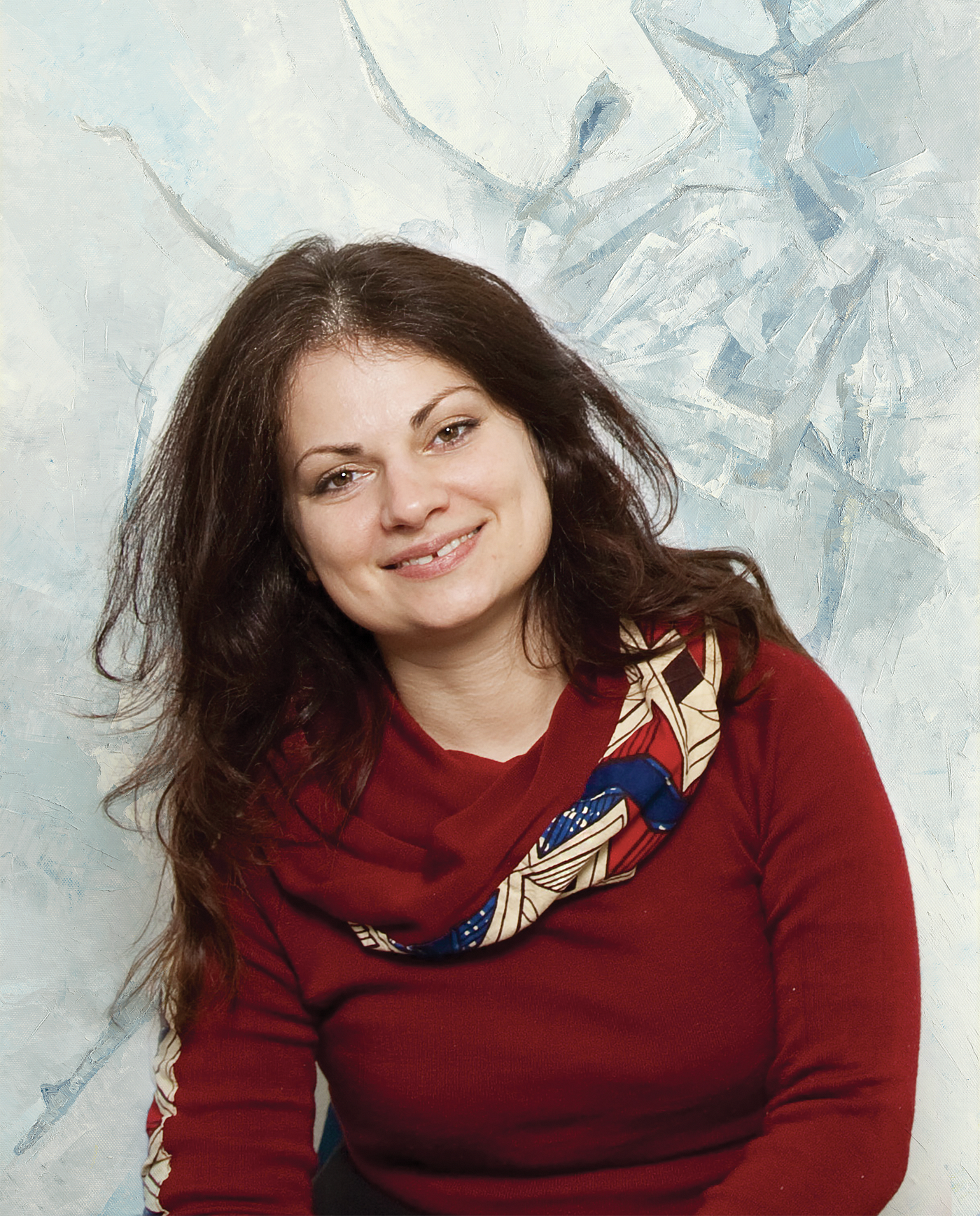
As a part of our series about “5 Things I Wish Someone Told Me When I First Became An Artist” I had the pleasure of interviewing Paola Minekov.
Paola Minekov is a contemporary artist, known for her vibrant paintings that explore movement, identity and transformation. Combining classical techniques with cutting edge technology, her artwork resonates with collectors, art enthusiasts, and interior designers seeking unique pieces that bring a sense of depth and emotion to their spaces. Find her portfolio at https://paola.art
Thank you so much for doing this with us! Can you tell us the story of how you grew up?
Igrew up in communist Bulgaria. Both of my parents are artists and of course I grew up surrounded by their art… and their artist friends. While this may not be what you imagine when you think of the Eastern Bloc at the time, it was a bohemian childhood. The summer holidays lasted forever — well over 3 months because my mother is something of a rebel and often prioritized plein air painting trips with her own art students over primary school… I was lucky that both of my parents were around a lot, the concept of 9–5 wasn’t something I knew as a child. I got to hang out with them in their studios, playing with clay and oil paint from a very early age.
Granted, most artists don’t have this lifestyle, my father had a very successful art career as a sculptor and therefore they didn’t need to hold jobs unrelated to their art practice. In those days Bulgaria was still promoting the communist regime, often through art and popular culture, so there was a lot of work and artists lived the good life, in relative terms. We still lived in a poor country which went through political turmoil, and there is a lot to be said about the generations lost to the communist regime. But I’ll not go into this here. My childhood was full of art, yet to put it mildly, these early years may have skewed up my expectations of what my life as a professional artist would look like when I grew up.
Can you share a story with us about what brought you to this specific career path?
It was almost predetermined, I used to spend the majority of my time drawing and painting so of course I went to an art high school. Like many young people, I went through a period of revolting against my parents. I quit my higher education in art and got a degree in multimedia design instead. A few years after I realized that my heart was set on painting after all. I still enjoy new media and some of my art series, like my digital portraits, blend traditional painting and digital art.
Can you tell us the most interesting story that happened to you since you began your career?
I used to really like moving, and I don’t just mean from one city to the next… I’ve lived in a few different countries and taken a bit from each place and its people and infused my art with it. I think it’s inspiring, a big adventure and it can become addictive. I say ‘used to’, because I have young children and I feel they need a stable home, instead of getting uprooted every few years but I don’t discount moving again once they are older. For now, I like living in the UK and I have made it my home.
What are some of the most interesting or exciting projects you are working on now?
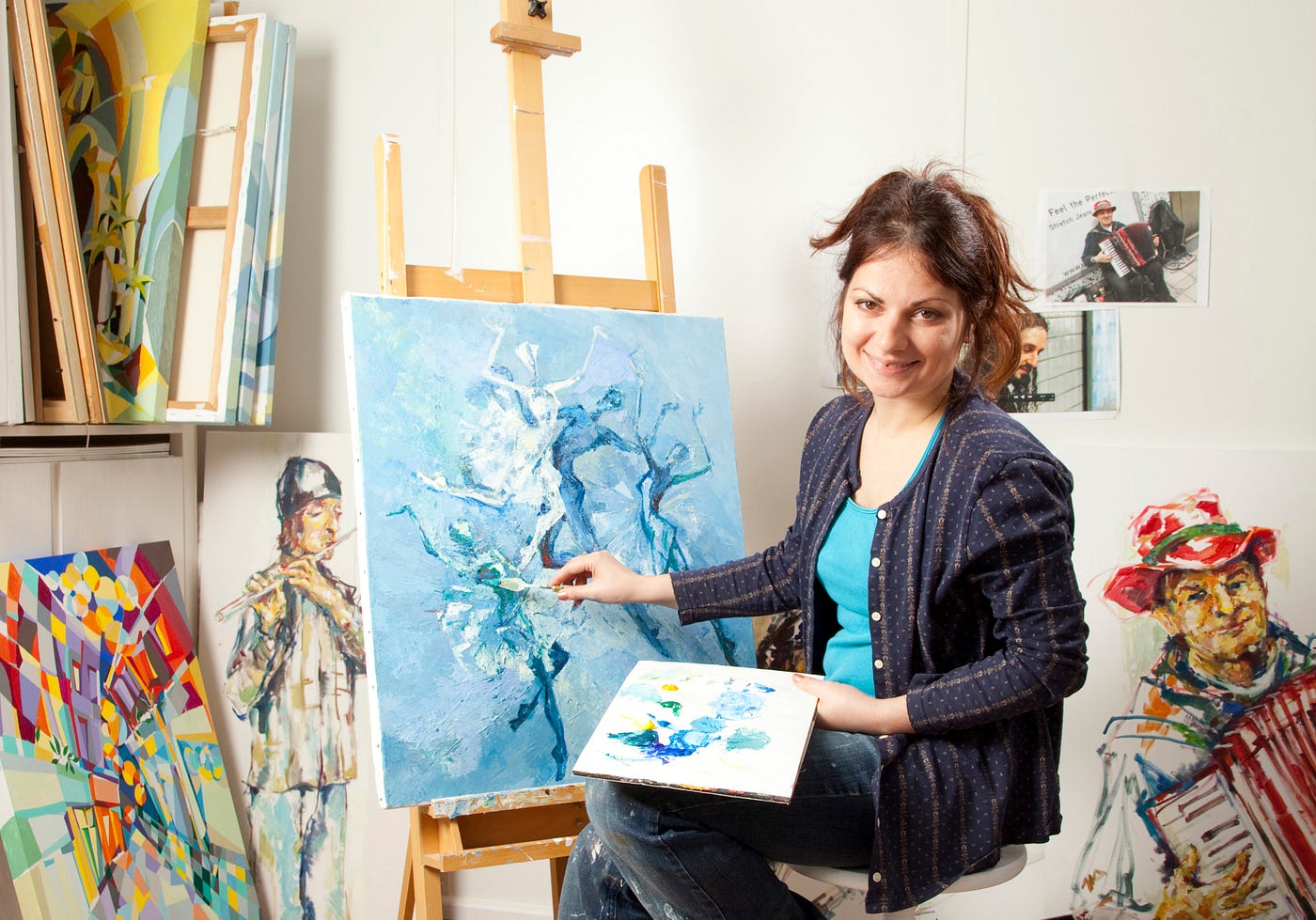
I have always had an interest in dance and capturing movement and have a series of ballet themed oil paintings. Lately, I’ve been thinking more in the direction of dance as a ritual and ceremony, so I’m going back to basics, exploring the tradition and meaning of dance in different cultures. Also looking at a potential collaboration with a documentary maker to explore the topic further!
Who are some of the most interesting people you have interacted with? What was that like? Do you have any stories?
The most interesting people I’ve met are undoubtedly other artists. Art can be a very solitary career choice yet on the other hand artists are a colorful, fascinating crowd. I’m lucky to have found a supportive community to create and exhibit with.
Where do you draw inspiration from? Can you share a story about that?
Everything and anything, really.. I mentioned dance, light and movement earlier. I think capturing motion on a static media, like canvas, is both fascinating and challenging, and I like a good challenge! For example, I’m obsessed with color, it brings so much to life, doesn’t it?! But I also have a series of artworks on the theme of emotions and because emotions are easier to depict in color (cue color psychology, it is an actual science, not art speak), I of course opted to paint the series in monochrome, just to challenge myself. I do tend to paint my experiences as a way of making sense of them. Some of my work is driven by aesthetics and some by concepts.
How have you used your success to bring goodness to the world?
Yes, I have had the opportunity to participate in various charitable events and throughout my career I’ve taken part in global events like the Elephant Parade and the Big Egg Hunt as well as smaller, more local charitable initiatives.
I’m also a firm believer that in 2024 we need to leave the notion of the ‘starving artists’ behind. It’s not romantic. Together with artist Nathalia Giacomino I recently founded Creations Atelier, an arts organization which supports artists with their online presence and brings experts in the fields of PR, marketing, sales and Online Presence as a whole to teach artists how to market themselves effectively.
What are your “5 things I wish someone told me when I first started” and why. Please share a story or example for each.
- The single most important step I took as a professional artist was the decision to create my own opportunities. Based on the advice of an artist I like, for the first year of my career I applied to various opportunities. I did 2–3 events a month and I can tell you this was a grueling routine. But I got a lot of experience exhibiting, fast. However in the process I realized that in order to stand out, you must be the star of your own show. So, I began creating my own larger projects.
- Consistency — The process of creating is what sets the wheels of creative thinking in motion and seemingly unrelated ideas and associations come together.
- Taking the first step in building lasting relationships. Networking opens many doors but you likely need to make the first step, pick up the phone, ask for an intro, buy someone a coffee… It’s something people find hard, because it means putting yourself out there and reaching out to others but perhaps that’s exactly why it works. I’ve met some of my most valuable and trustworthy relationships this way.
- Set ambitious goals and you’ll reach further than if you set seemingly achievable goals. It’s almost a no brainer, this one. Yet, we teach the children from very young to set achievable goals. When we write our business plans, we write achievable goals too. But taking the plan a few steps further than what seems achievable makes it much more likely that you’ll actually get somewhere.
- Intuition — Once I started listening to my instincts and following my inner voice, I felt like I had unlocked a hidden creative power. This applies to every part of life, not only creativity.
You are a person of great influence. If you could inspire a movement that would bring the most amount of good to the most amount of people, what would that be? You never know what your idea can trigger. :-)
I would restructure the educational system, and put an emphasis on creativity, because it helps develop critical thinking, teaches you to look at the big picture first and make unexpected associations, follows the child’s interests and challenges authority. I quite like the concepts of democratic education.
We have been blessed that some of the biggest names in Business, VC funding, Sports, and Entertainment read this column. Is there a person in the world, or in the US whom you would love to have a private breakfast or lunch with, and why? He or she just might see this.
I have an admission to make. I’m really terrible when it comes to following celebrities or famous people. But perhaps Damien Hirst. It must be fascinating to be him.
What is the best way our readers can follow you on social media?
You can find me on Facebook and Instagram:
https://www.instagram.com/paolaminekov
https://www.facebook.com/paolaminekov
View my work at https://paola.art
This was very inspiring. Thank you so much for joining us!