Asking a mute patient to tell me their name and date of birth. The lesson I learned was to pay attention to the little details in the chart, not just the “to-dos.”
As a part of our series about women who are shaking things up in their industry, we had the pleasure of interviewing Naomi Alphonso.
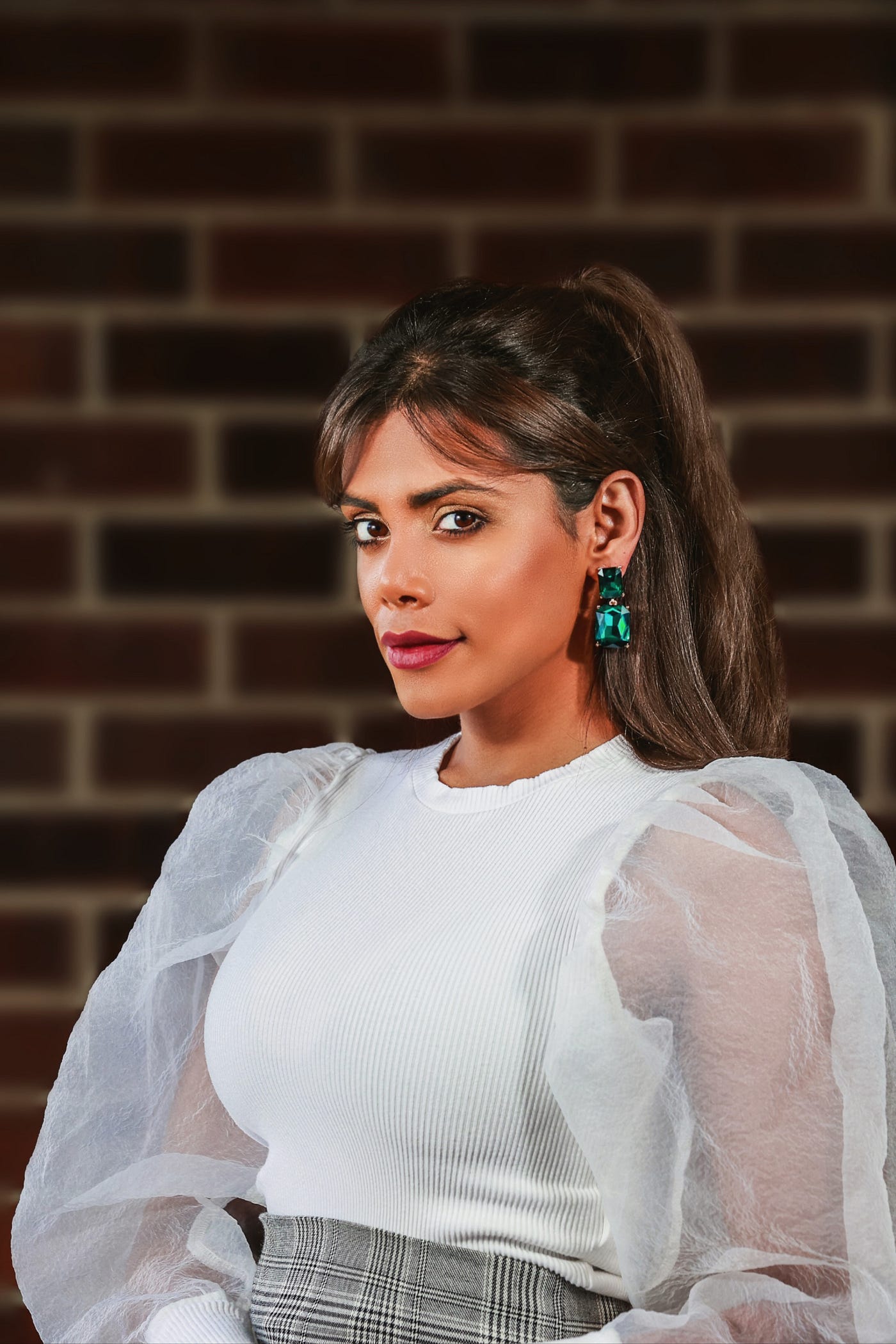
Naomi Alphonso, a Registered Nurse with over 10 years of experience in the healthcare industry, is the founder of Vital RN, a healthcare consulting and nursing service provider. As a highly motivated, empathetic professional, Naomi is known for her outstanding clinical, critical thinking, interpersonal, and leadership skills. With a focus on bridging the gaps between providers and patients, she works tirelessly to improve healthcare systems, standardize the quality of care, and embrace technological innovations. At Vital RN, Naomi and her team specialize in various fields, such as home health, palliative care, hospice, workers compensation case management, legal consulting, and concierge healthcare, providing tailored solutions to advance healthcare delivery and optimize client practices. Vital RN is being intentional about implementing technology to avoid creating further demographic disparities in healthcare.
Thank you so much for doing this with us! Before we dig in, our readers would like to get to know you a bit more. Can you tell us a bit about your “backstory”? What led you to this career path?
Having grown up in a country where about 73% of the population lacks access to basic healthcare, the system has always been of interest to me. I started my career in healthcare and worked my way through multiple operational tiers, finding a niche in the field of nursing. I enjoy thinking outside the box, and problem-solving. I’ve noticed, in healthcare, every provider has their own sub-system of doing things. While that autonomy is wonderful, it can sometimes create more uncertainty for our patients. I embrace change that is backed by data. After all, we are all striving to be efficient and provide the same result in this line of work. This is what brought me over to the consulting side. I want to assess the effectiveness of processes we have in place from the provider and from the patient’s lens to fill gaps, develop more efficient models, and standardize the quality of care delivered, while customizing the care received. This will fortify a trusting relationship between Healthcare Organizations and the consumer, our patients, leaving us with better outcomes across the board.
Can you tell our readers what it is about the work you’re doing that’s disruptive?
There are three notions and elements that translate to disruptive work:
Curiosity: Curiosity means seeing things through the client's and the customer's eyes.
Receptivity: Understanding how consumer behavior changes and adjusting our models of care to the demographic we are serving as opposed to making these patients fit the mold.
I saw this as an opportunity where there were areas that could be improved upon, and I knew I had the skills and experience to make these improvements because I saw the outcomes of them when implemented in the lives of my friends and family through advocacy services.
However, it took a level of fearlessness: I invested money, time, and resources toward this mission that I believe in. Whether or not it deviates from other similar services out there is irrelevant. What matters is the fact there is very much a need for this type of service. I want to front line meeting that demand.
And most importantly a fresh pair of eyes on ongoing matters that will always be a part of my life and what I care about.
Can you share a story about the funniest mistake you made when you were first starting? Can you tell us what lesson you learned from that?
Asking a mute patient to tell me their name and date of birth. The lesson I learned was to pay attention to the little details in the chart, not just the “to-dos.” A trusting relationship is the foundation to improving patient outcomes. Being underprepared is never an option, being overprepared is the only option and how I hold myself and my team accountable for all our customers and patients we serve. I want them to feel as comfortable as they can when in my care or my team’s care.
We all need a little help along the journey. Who have been some of your mentors? Can you share a story about how they made an impact?
I have been blessed with a few outstanding mentors. My undergraduate Biology professor, Dr. Theodora Pinou, is someone I credit for pushing me to question things. She started out as the intimidating professor who had no trouble handing out bad grades. I soon began to admire her brutally honest feedback and way of pushing you to be accountable and deliver the best version of whatever you set out to do. I have been fortunate to learn from her, travel to several countries where we participated in animal conservation projects, and over the years, our relationship has evolved into a friendship.
In today’s parlance, being disruptive is usually a positive adjective. But is disrupting always good? When do we say the converse, that a system or structure has ‘withstood the test of time’? Can you articulate to our readers when disrupting an industry is positive, and when disrupting an industry is ‘not so positive’?
Can you share some examples of what you mean?
Disrupting an industry is positive when the current state of affairs in the industry is not functioning in a way that is true to its original mission and purpose. Traditionally, healthcare professionals invested their time, money, sweat, blood, and tears in developing elite patient care skills in order to be able to be completely committed to helping patients heal in the most organic and long-lasting way. Unfortunately the focus of healthcare — and the decisions of how to best provide the care patients need — and about the care, support and development of healthcare workers has moved from healthcare providers to government agencies, insurance companies, healthcare facility board of directors and accountants whose focus is on profit, power, and not on the patient and the healthcare provider.
Currently, nurses are frequently being treated as a necessary expense and piece of equipment- like asset — and not a precious, vital and professional team member on the same level as a physician. As a result, they are the first to be downsized, and forced to work longer shifts to compensate for staffing shortages. Their pay and benefits do not reflect the impact they have on patient care and facility success. So, they are trapped between needing to work more hours but being excluded from being able to do so in a way that does not burn them out and threaten their physical, emotional, and financial health.
I have created a model where nurses can still work in their part-time positions but also become true advocates for patient’s health. I have also evolved my skills to offer a wide variety of guidance and consultation to companies to maximize the actual health care, their company healthcare benefits, and wellness programs are supposed to deliver. For patients, I help them navigate the jungle of healthcare facilities, insurance, drug costs and finding real support in their quest to get well and stay well.
For companies — I help them keep their valued employees healthy, happy, and productive. This increases efficiency, productivity, profitability, longevity and retention of staff and their reputation as a company people want to work for and work with.
Can you share five of the best words of advice you’ve gotten along your journey? Please give a story or example for each.
Always follow your instinct: I’ve had a few instances during my nursing career where the patient looked great on paper. However, my instincts kicked in and helped my find out otherwise.
We are sure you aren’t done. How are you going to shake things up next?
Hiring a team of like-minded people to expand the Vital RN reach. I am trying to build a team driven by the same underlying motivation to do what it is they do best, which is helping others.
I’d also like to focus on a new market segment- Go after new types of customers. There will be new issues relative to these new demographics. More all-encompassing resources and experience on the team to tackle complex problem sets so our clients can come to us for all their needs and care. I would also like to expand my reach to the younger demographic. I think there is a large focus on vanity and fad following at a very early age. If we put the same effort into bringing light to lifestyle choices, promoting functional fitness and a more holistic health approach, we could mitigate a lot of the issues that we see in our adult and geriatric population.
Lastly, I would LOVE to draw focus to our workforce in general. Stress is detrimental to our health. As a society, we need to drive an emphasis of the importance of work-life balance culture. People need to replenish. You can’t pour from a cup that’s empty. We are so focused on the question of “What do you do?” Often times we forget to ask our employees “How are YOU? And I don’t mean just you… how is everything that makes you, YOU?” Time does not stop for anyone, and the person we hired 2, 3 years ago is likely in a different chapter of life. We want our employees to evolve with the needs of our companies, we too must reciprocate to create balance and a healthy work environment.
Do you have a book, podcast, or talk that’s had a deep impact on your thinking? Can you share a story with us? Can you explain why it was so resonant with you?
The Jordan Peterson Podcast, specifically the “Don’t waste your life” episode… it gave me the motivation to use my talents to do better and give back, because we are on this earth for an unpredictable amount of time. I want to do with it, the best I can because that is ultimately how I have always received the greatest level of satisfaction in my day to day.
Can you please give us your favorite “Life Lesson Quote”? Can you share how that was relevant to you in your life?
“The only way that we can live, is if we grow. The only way that we can grow is if we change. The only way that we can change is if we learn. The only way we can learn is if we are exposed. And the only way that we can become exposed is if we throw ourselves out into the open. Do it.”
-C. JoyBell C.
You are a person of great influence. If you could inspire a movement that would bring the most amount of good to the most amount of people, what would that be? You never know what your idea can trigger.
It would have to be something that involved getting the community together outside. Nature, exercise, healthy food, and good energy from the people and places we surround ourselves with are contributing factors to our overall health and well-being. We need more of it.
How can our readers follow you online?
This was very inspiring. Thank you so much for joining us!
Thank you for the opportunity to share my story