At university, it's easy to stay motivated because your professors and advisors keep you accountable. After university, to bring this project into the real world, I had to replicate that same infrastructure for repeatable success, so I created my own personal board of advisors who would hold me accountable.
Muhammad Saleh, Founder of Matchstick, On 5 Things You Need To Know To Create a Highly Successful App
There are millions of apps out there. Many are very successful, but most are not. What are the steps taken by successful app makers that distinguish them from unsuccessful ones? In addition, many people have ideas for an app but don't know where to begin. What are the steps you need to take to create a successful app? As part of this series, I had the pleasure of interviewing Muhammad Saleh.
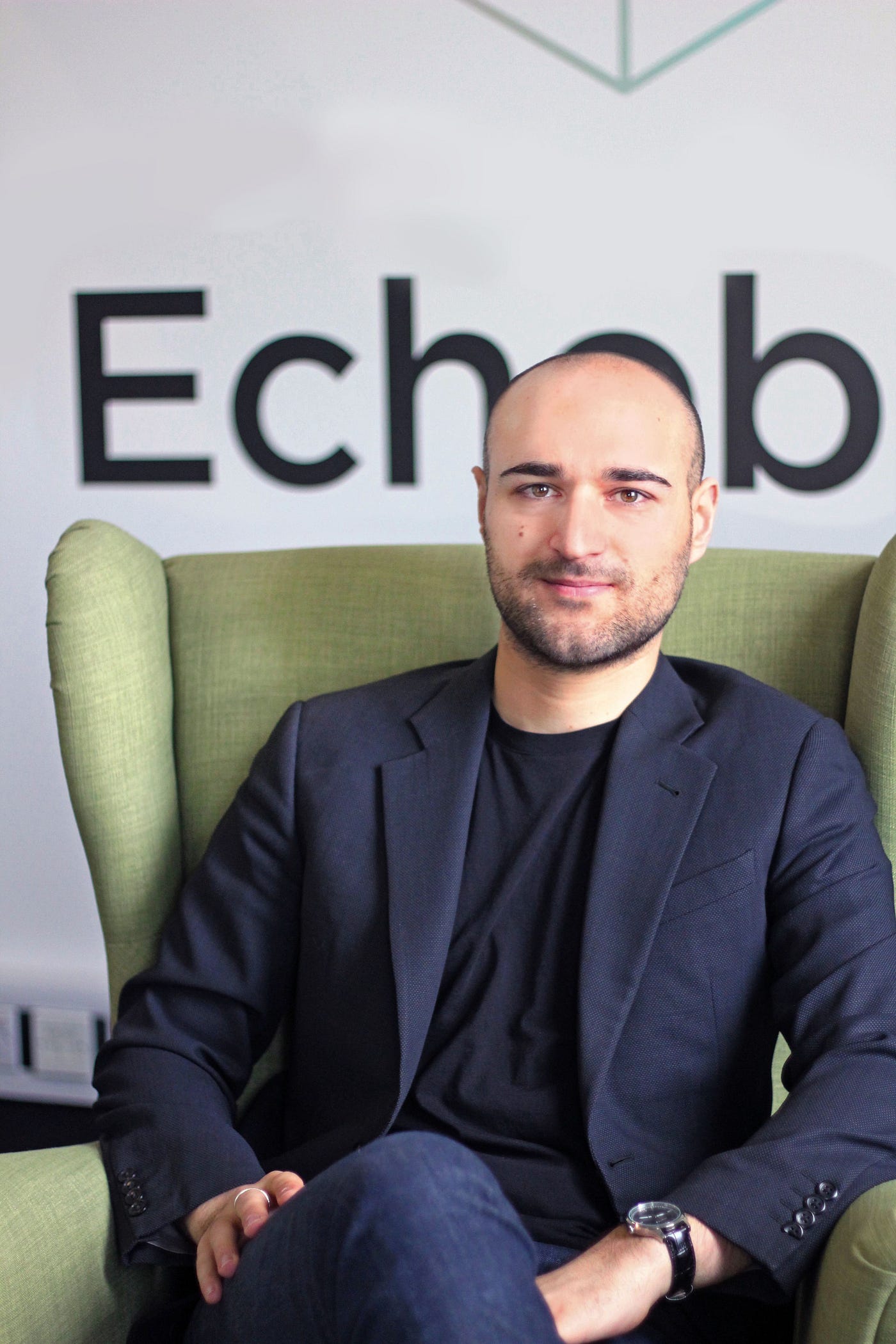
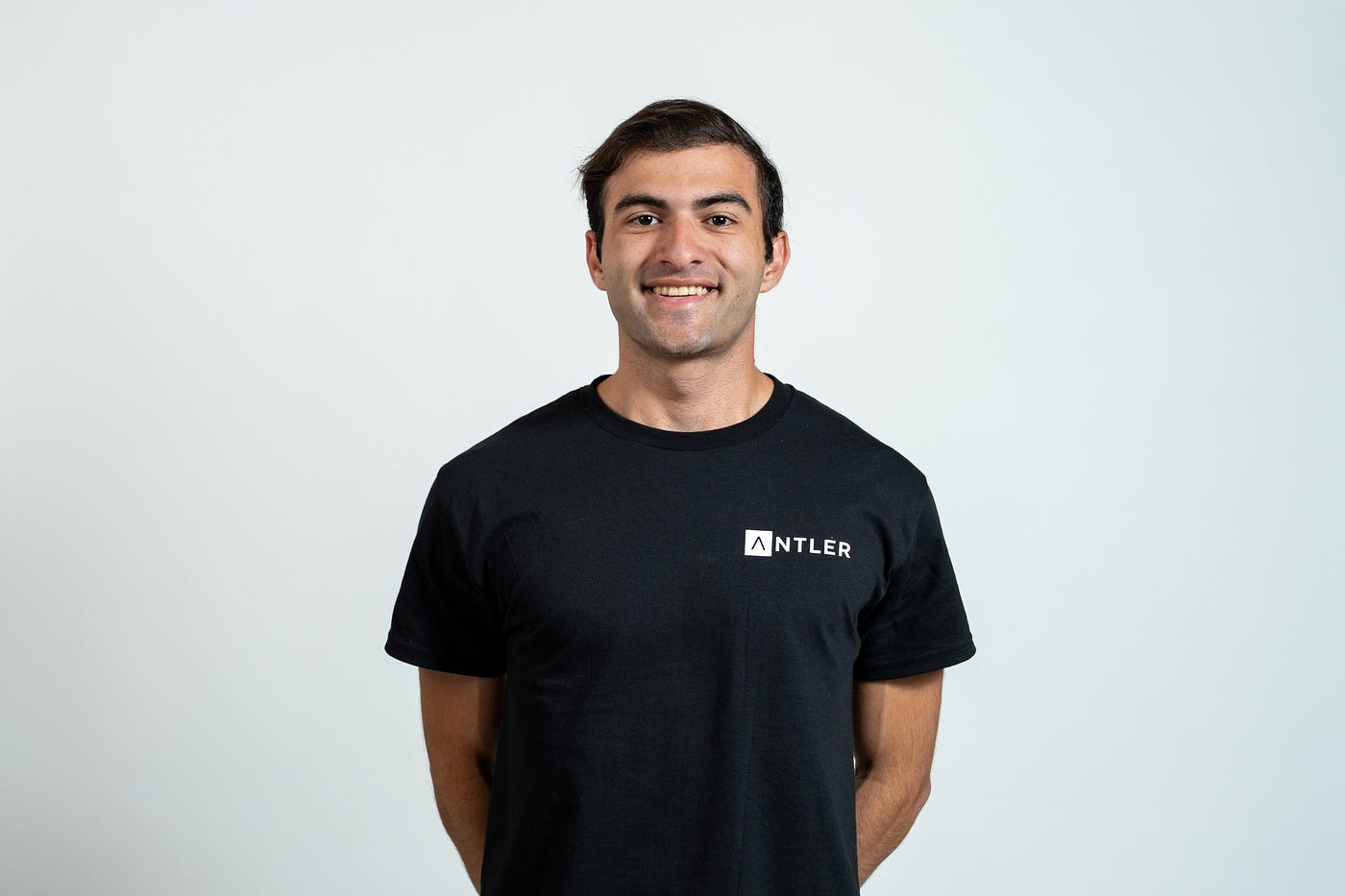
Muhammad Saleh is the Co-founder and CEO of Matchstick. He was awarded a full academic scholarship to study computer science, not in a classroom, but while traveling and working in seven different countries (US, Korea, Taiwan, India, Argentina, the UK, and Germany) with Minerva University. He has worked at both venture-backed tech startups and Fortune 500 companies as a product manager, and most recently focused on product and go-to-market strategy as Head of Strategic Projects at a seed-stage AI startup called Kollegio AI. Currently, Saleh is a founder in residence at Antler, an early-stage startup accelerator that has backed companies from inception, including Lovable and Micro1.
Thank you so much for joining us! Before we dive in, our readers would love to "get to know you" a bit better. Can you tell us a bit about your 'backstory' and how you grew up?
I'm originally from Kashmir. Growing up, my father would get posted to a new city or country every two years, and I spent most of my childhood all over the world. That constant change instilled a certain type of drive, adaptability, and knack for solving hard problems in me, so much so that by the time I was in high school, I wanted to build things that had a positive impact on the world and the people around me. In college, I learned that the best way to accelerate the amount of impact I could create in the world was to increase the rate of my learning and growth, so I became open to different experiences and opportunities, such as building a tech startup, and here we are.
Most of us have been around a lot longer than apps have. What were your hobbies and interests in your youth before anyone knew what an 'app' was?
I grew up playing lots of sports, and sportsmanship defines a big part of my life. I was a professional swimmer at the age of 16, competing in the national games. Recently, I've picked up tennis.
I also like to travel. I backpacked most of Europe in the summer of my junior year. My first trip was from Lisbon to Berlin, 15 cities and 7 countries in 4 weeks, before my semester started.
When I'm at home, I like to cook. I call myself a self-trained culinary artist. I learn new recipes and improve the ones I already know. My favorite dish to make is Sheshtok Chicken Handi.
It has been said that our mistakes are our greatest teachers. Can you share a story about the funniest mistake you made when you were first starting? Can you tell us what lessons or 'takeaways' you learned from that?
In the early days of Matchstick, when we were speaking with our customers to validate our idea, we got connected to one of the top matchmakers in the US. We had a conversation to understand her needs and validate our idea. The matchmaker liked it so much that she said she would pay us to build it for her.
It was ironic and funny, because her persistence in buying the product was actually strengthening our belief in building it further. We eventually offered to let the matchmaker use it as an early-stage customer, and said we would not build the product for her. She disagreed, and we parted ways. Looking back, we could have negotiated better to find middle ground.
Entrepreneurship is a marathon, not a sprint—though I suppose sometimes it's both at the same time. What kept you motivated to develop your first minimum viable product, and how have you kept your momentum since then?
Definitely, it's a marathon with sprints. Matchstick started out of my dorm room, since it was my final-year project at Minerva. At university, it's easy to stay motivated because your professors and advisors keep you accountable. After university, to bring this project into the real world, I had to replicate that same infrastructure for repeatable success, so I created my own personal board of advisors who would hold me accountable, and joined communities like Antler where I could meet like-minded founders who kept me motivated by building things that were bigger than themselves.
I tend to meet two types of app developers; people who are passionate about app development and technology and people who started an app because they saw it as a means to solve a problem. Which camp would you put yourself in, and how did you arrive there?
I would say both. I saw a problem in real life and wanted to use technology to solve it. Growing up, my mother was a matrimonial matchmaker. She paired couples, and I saw the happiness that filled their lives. My sisters found their partners through matchmakers as well. These matchmakers faced one problem: when a client came to them, willing to pay up to a million dollars to help them find the love of their life, the matchmakers relied on their small internal databases and couldn't find a match, creating a hair-on-fire problem for them. I wanted to help these women solopreneurs, like my mother, scale their work and grow their businesses.
Ok, thank you for all that. Now let's shift to the main focus of this interview. Can you tell us a bit about your app? How does it help people? What do you think makes it stand out? What are you most proud of?
Matchstick is a place for matchmakers to connect and find new clients. We built Matchstick so matchmakers could collaborate with one another and increase the size of their databases, not merely by 2x or 3x, but in proportion to the number of matchmakers on the platform. In addition to the marketplace, we built an AI recruiting tool that helps matchmakers search billions of profiles, find the exact matches they are looking for on social media platforms, and attract more customers.
Direct consumers can search for matchmakers tailored to their needs and sign up to access the services of a $10,000 matchmaker at no cost. We also want to lower the barriers to becoming a matchmaker. We believe anyone can become a matchmaker. Our goal is to put Matchstick in everyone's hands, helping people find the one for their family, friends, or themselves.
Approximately how many users or subscribers does your app currently have? Can you share with our readers three of the main steps you've taken to build such a large community?
We are currently working with leading matchmaking companies in Texas, New York, and California, and we have a waitlist of over 100 matchmakers that we are slowly rolling the product out to. Huge shoutout to Julia McCurley from Something More Matchmaking for becoming an early adopter, as well as our ambassador and advisor for Matchstick.
Here are the three things that helped us build community:
1. We built the product in public. When my team and I started working on the idea, we created an online community group where matchmakers could join and connect with one another. That not only helped us understand who our users were and what their biggest problems were, but it also helped us validate our idea. We would share prototypes with matchmakers, ask them whether they were helpful, and get their feedback. We also interviewed a lot of matchmakers from that community to understand their needs.
2. Our next step was to use the momentum of a community of thousands to push a product out into the world, so once our MVP was ready, we launched a waitlist for early access. The power of the community got us over 100 sign-ups within a week, and then we filtered through those to invite the most influential matchmakers for a one-month pilot to use and test the product at a fraction of the cost. The pilot was a great way for partners to get a taste of the product, and they signed up after the pilot ended.
3. Once the matchmakers were on board, we opened access to the general public. Anyone still looking for a life partner can sign up on our platform, and if they are a match for a client, one of the matchmakers on Matchstick will reach out to them, so they get the value of a top-tier matchmaker free of cost. We recently started this channel with just friends and family, and we are happy to share that access with the readers of this article as well.
What is your monetization model? How do you monetize your community of users? Have you considered other monetization options? Why did you not use those?
We offer an annual subscription model to partner with matchmakers and help them find new clients and matches for their clients. We do not offer a monthly subscription, because we tested it and found that success in matchmaking does not show up overnight. It takes some time to help someone make the most important decision of their lives.
We did think about a commission on each transfer of a client between matchmakers, but the transaction can happen outside of our platform, the ticket size can be very small, and the nature of the transaction is irregular (matchmakers can refer clients to each other and never exchange money), so the business model didn't make sense.
It's 100 percent free for members of the public interested in matchmaking services to sign up and get matched with a matchmaker's client. We also have an AI search that allows you to find the matchmaker who best fits your requirements and can help you achieve your goals, also free of cost. If you sign up on our platform, we will reach out to share best fit matchmaker options for you, if you're interested.
Can you tell our readers about the most unconventional tactic you've used to test, market, or gain feedback on a product? What did you try, what was unique about it, and what was the outcome?
We charged our earliest users to test an unfinished product.
Most startups hand out free trials to get people in the door. We did the opposite. Once our MVP was ready, we filtered through the waitlist, invited the most influential matchmakers, and asked them to pay for a one-month pilot at a fraction of what the product costs today.
Pricing your product completely changes how users provide feedback and use the product. A free user tells you the product is nice. A paying user tells you what is broken, because they have something at stake. It was also a filter for us, because the matchmakers who were willing to pay were the ones who actually had the problem we were trying to solve.
The outcome was that the pilot became our sales process. Partners got a taste of the product, and they signed up after the pilot ended. The ones who did not sign up gave us the most honest feedback we have ever received, and some of it changed what we built next.
What are some of the strategies you have used to improve your products and build on their success?
The most important thing a founder can do is talk to your users and build something they want. I use the extra minutes at the end of weekly and monthly check-ins to ask users what is working and what can be improved. It's surprising how much you can learn by asking your users, "What would you like this feature to do?"
Secondly, track success after you have built the product. It is very important to use a product analytics platform like Hotjar or Mixpanel to track and analyze your user behavior, double down on features that resonate, and sunset the features that do not provide value to them.
Thank you. Here is the main question of our interview. Based on your experience and success, what are the five most important things one should know in order to create a very successful app? If you can, please share a story or an example for each.
1. Market: It's always about the market, not the technology. It's like surfing. Goal is to catch the wave. The higher the wave, the further you'll go. Investors usually look for a billion dollar market, because if a company captures even a small fraction of it, the payout is still huge. So research how big the market is today and how big it will be in 5 to 10 years. Does it have competitors? Competition is a good sign of a mature market, but ask yourself whether those competitors are incumbents, and whether the market is ready for disruption. Your technology needs a competitive wedge against the giants, and after that it's all distribution. When we sized our market, we found roughly 5,000 matchmakers in the US, each serving about 20 clients a year at $10,000 a client. That is a billion dollar market sitting inside the dating industry, and most of it still runs on spreadsheets and phone calls.
2. Customers: Talk to your customers. Find out what they do, where they spend their time, and why they like one thing over another. What are their problems and their biggest challenges? Understand what product they are using today and why it is causing them pain. How big is the problem for them, and how often do they face it? That is what tells you whether they are going to pay. We spoke with hundreds of matchmakers over a year, and what convinced us to build came out in their own words. They were running social media campaigns, hosting events, and hiring recruiters out of their own pocket, just to find one person to introduce to a client who had already paid them up to a million dollars. When someone is spending their own money on a duct-tape workaround, you know the problem is real.
3. Idea: If your users had a magic wand, what would they wish for? That is the vision you want to set for your product. Ask yourself, do I have a solution that gives the customer 10x the value of what they use today? Otherwise the user won't switch. Change is a huge cost and no one likes it. Calculate how much value the product creates for the user over a given period of time, because that is how you'll price it. When we asked matchmakers what they would wish for, no one said better software for storing client profiles. They all said the same thing: find me more matches for my clients, so we built the operating system for matchmakers, where they could share clients with one another and find new clients using AI. It's good to start by doing things that don't scale. We ran the first hundred searches on Matchstick ourselves to show our users the value; however, you should think early about how to get from 10 users to 100.
4. Team: The founder's job is to carry the energy and passion for the mission across the company — first to your early hires, then to your investors, and then to your customers. If you hire champions and align the right incentives, the machine will run itself. Ask yourself whether you have a team that can take you from zero to one. Hire people who have an unfair advantage that makes them the best person to build this piece of software with you, and make sure you and your co-founder have complementary skill sets. My co-founder Haris is my first cousin. He studied computer science at Duke and built AI operating systems as an engineer at Dell. He writes the code while I run product and go-to-market. Why are we the best people to build Matchstick? Our real unfair advantage is that both of our mothers were matchmakers, and our sisters found their partners through them. We have seen the value matchmakers bring to the table, and we truly believe we can build the technology to help them achieve more in their work.
5. Traction: It's the fuel to your fire, and the momentum that will help you reach the top of the mountain. Traction combined with your vision is what paves your path forward. You always want to present your idea as 80% vision and 20% traction. That formula is what lands your first hires, investors, and customers, because it is not about where you are, it is about where you want to be. When we started Matchstick, we believed in the vision of creating a world where anyone can be a matchmaker, whether they do it as a business, for their family members, or even for themselves, and have the technology to find the right life partner and make the most important decision of their life. We will soon cross six figures in revenue, and we're very excited for what's next. Google built a trillion-dollar business by being the first to solve internet search. A similar opportunity awaits whoever first solves soulmate search.
If you focus on these five things, and stay small enough long enough, you'll be big enough soon enough.
Here is a video of me sharing my "5 Things You Need To Know To Create a Highly Successful App": https://youtu.be/WL9G4-D05fg
You are a person of great influence. If you could start a movement that would bring the most amount of good to the most amount of people, what would that be? You never know what your idea can trigger. :-)
I want to start a movement where everyone takes some time out of their day to help someone, and it can be in any regard. Help people cross the road, teach someone how to swim, share your meal with someone. I think if we all take some time out to do it, the world would be a better place, and this change starts with me, today.
How can our readers further follow your work online?
Matchmakers and people looking to connect with matchmakers can sign up on www.matchstick.site. If anyone has a question, they can reach out to me at my email, msaleh@uni.minerva.edu.
This was very inspiring. Thank you so much for joining us!
It was a pleasure, thank you for having me!