We learned the hard way that anytime you are doing something disruptive, there are going to be people who aggressively resist change.
Wellness
Morgan Hewett and Kyle Pierce of Options MD: The Principle That True Health Disruption Requires Putting Patients Back in the Driver Seat
The cofounders of Options MD discuss how machine learning and personalized psychiatric pharmacotherapy can dramatically reduce the time it takes to find the right treatment.
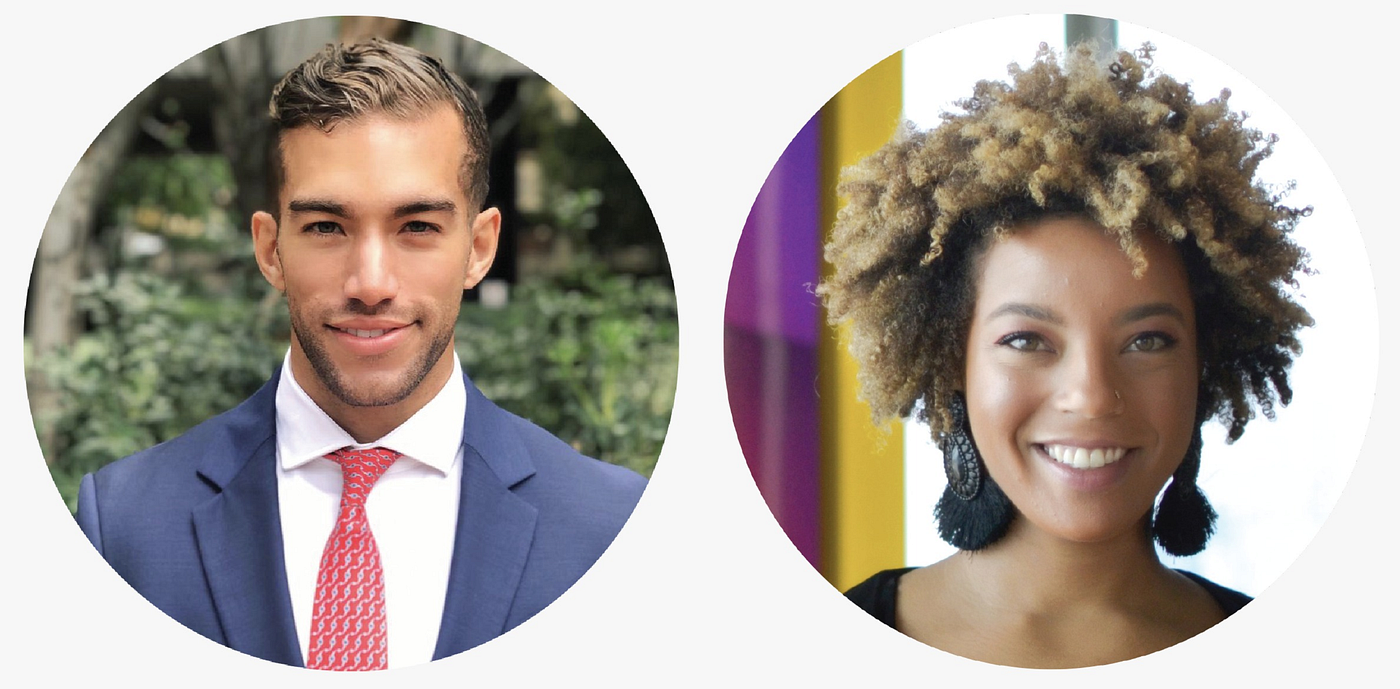
As a part of our series about business leaders who are shaking things up in their industry, I had the pleasure of interviewing Morgan Hewett and Kyle Pierce.
Morgan and Kyle are the cofounders of Options MD, the Techstars company that helps people with treatment-resistant illnesses finally find medications that work. Did you know that 30% of people with mental health conditions are “treatment-resistant”, meaning that they will have to try up to 20 medications before finding one that is successful? Options MD helps these people find and stay on the right treatment faster by using machine learning to match people to better medications and more experienced doctors, as well as providing mentorship and guidance in regards to navigating the complex mental health system.
Thank you so much for doing this with us! Before we dig in, our readers would like to get to know you a bit more. Can you tell us a bit about your “backstory”? What led you to this particular career path?
Eight years ago, two tragic events occurred in our lives that would haunt and eventually drive us to launch our business, Options MD. Kyle, a healthcare attorney focused on data privacy, lost a close friend to suicide. A young college student, she was sexually assaulted on campus. In the aftermath of her trauma, she received virtually no support from her university. As Kyle puts it, “the memory of her, of our friendship, her death, it has been driving me in this business. It’s the reason I’m so motivated to make this happen, but it’s hard too. A few days ago, I read the words ‘mental health’ and her name, and I broke down crying. I felt like it all rushed back.”
Around the same time, one of Morgan’s family members attempted suicide. After that episode, Morgan’s family member started to receive mental health treatment, but none of the options seemed to work. “He must have tried dozens of medications,” Morgan says. “He would go to a new treatment facility and be prescribed some new medication. Our family would hold its collective breath and then, boom, six months later, he’s suicidal again. It was this awful cycle that lasted about seven years. Now he’s finally found a medication that he really likes. It’s working for him, which is great. I wish it hadn’t taken so many years to find the right fix.”
Around this time, Morgan launched Facebook’s healthcare marketing division, helping the world’s largest pharmaceutical companies recruit and engage with patients. In April 2020, plagued by guilt and feeling that there had to be a better way to approach mental health for our community, we recruited a team of data scientists and clinicians to build Options MD. At its core, it is an easy solution to help people with severe and treatment-resistant mental illnesses find treatments that work, and have less side effects. We hope to reduce the time it takes to find the right treatment from years to days.
Can you tell our readers what it is about the work you’re doing that’s disruptive?
As few as 11% of patients with depression will respond positively to the first medication they try. As many as 30% of patients will not respond positively to the first three medications they try, and these patients will be classified as “treatment-resistant” by physicians.
After researching the problem and consulting dozens of psychiatrists, we learned that the patients themselves are not the problem. While there are over 300 combinations of medications and dosages, 80% of the time, doctors only prescribe 1 of the same 3. This problem is caused by a lack of personalization in psychiatric pharmacotherapy.
Alternatively, personalization is at the core of everything that Options MD does. We use machine learning to help patients and their doctors learn about which treatment could be the right fit for them. For our most difficult-to-treat patients, we help provide them access to cutting edge therapies like Transcranial Magnetic Stimulation (TMS) as well as ketamine. We then stick with the patient through the entire treatment process, connecting them with mentors who help to keep the patient motivated, as well as continuously collecting quantitative and qualitative feedback from patients about their new treatment, helping to consistently improve our treatment recommendation algorithms.

Can you share a story about the funniest mistake you made when you were first starting? Can you tell us what lesson you learned from that?
Not every doctor trusts technology. When we first pitched Options MD to psychiatrists for feedback and potential partnership opportunities, one doctor would not let us even finish one sentence. He kept on cutting us off, saying that there was no place for technology in the patient-doctor experience and that patients should solely rely on their doctors for medical advice. He didn’t even think that patients should use the internet to research their medication! We learned the hard way that anytime you are doing something disruptive, there are going to be people who aggressively resist change. You may never win these people over, and you have to simply accept that and focus on people who see the need for change.
We all need a little help along the journey. Who have been some of your mentors? Can you share a story about how they made an impact?
We just graduated from the United Healthcare Accelerator, which is powered by Techstars and is a mentorship driven program. During the three months of the accelerator, we were connected to seven mentors who we met with on a weekly basis. These mentors significantly changed our go-to-market strategy, helped form our first marketing campaigns and helped to prepare us for fundraising. We wouldn’t be where we are today without them!
In today’s parlance, being disruptive is usually a positive adjective. But is disrupting always good? When do we say the converse, that a system or structure has ‘withstood the test of time’? Can you articulate to our readers when disrupting an industry is positive, and when disrupting an industry is ‘not so positive’? Can you share some examples of what you mean?
It’s always positive to disrupt the healthcare industry if the patient benefits in that disruption. Given this country’s for-profit healthcare industry, the patient experience has historically played second-fiddle to corporate profits. Our company, Options MD, is part of a larger trend that has been called “the consumerization of healthcare.” Companies that are part of this trend are positively putting the patient back in the driver seat of their health, giving them more control of the healthcare decisions and associated costs.
Can you share 3 of the best words of advice you’ve gotten along your journey? Please give a story or example for each.
- Before we learned of our acceptance into Techstars, a mentor once told us: “never take the journey for granted and always remember how it felt in these early days.” As founders we are constantly pushing so hard to advance our company to the next level, we often forget to take the moment to be present for milestones and accomplishments along the way. When the mentor was speaking to us, he admitted that he had gotten so caught up in his venture that he forgot what it felt like to build and be creative the way we were able to be. We have thought of his words on multiple occasions and try to apply them to every step in our journey.
- “Don’t be afraid to lean on each other as both co-founders and friends”
- We have been best friends for nearly a decade and that foundation has supported our ability to push forward even in the toughest moments. This journey can be tough.
- “Don’t ever forget why you are doing this”
- When talking through roadblocks with a mentor, he gave us this advice which is probably the most important we have ever gotten on this journey. Options MD is incredibly personal to both of us and was born out of immense heartache. Our family and friends are the reason we will continue to fearlessly fight for a path to freedom from depression and other illnesses.
We are sure you aren’t done. How are you going to shake things up next?
The total addressable market for a solution like ours, one that helps people with “treatment-resistant” conditions finally find a medication that works, is $180B and it only starts with mental health. After we tackle the most difficult-to-treat patients with mental health conditions like depression, anxiety, and bipolar disorder, we’ll move on to other conditions that patients struggle to find the right treatment for, like chronic pain and irritable bowel syndrome.
Do you have a book, podcast, or talk that’s had a deep impact on your thinking? Can you share a story with us? Can you explain why it was so resonant with you?
In 2018, we had the privilege of listening to a talk by Nobel Peace Prize Laureate, Professor Muhammad Yunus, about social business. Yunus defined social business as “a financially sustainable business that is created and designed to address a social problem”. He emphasized the fact that businesses can make a significant amount of money while also weaving social impact into their product offering and operations. This mindset describes the way that we now govern our business — always putting the needs of the patients we serve first.
Can you please give us your favorite “Life Lesson Quote”? Can you share how that was relevant to you in your life?
For us, we truly believe that our best teacher is our last mistake. We don’t have all the answers, but as we move confidently in a direction to address the treatment options for sufferers of treatment-resistant illnesses, we are always looking for ways to learn and improve. We have worked on features we thought would be game changing, but by always getting back to basics and speaking directly to those people we are trying to help, we have learned that we were missing the mark. For us there is no pride in needing to adjust our approach because our end goal is truly to help people.
You are a person of great influence. If you could inspire a movement that would bring the most amount of good to the most amount of people, what would that be? You never know what your idea can trigger. :-)
The movement that we would like to inspire is fearless entrepreneurship. Our business intentionally targets the most difficult-to-treat patients, patients that have been ignored by 99% of other healthcare startups. We do this because of our personal conviction that everyone deserves access to the right treatment and that no patient should be left behind. We hope to inspire other entrepreneurs to not settle for the low-hanging-fruit and instead try to solve extremely challenging problems.
How can our readers follow you online?
If you are reading this and if you or someone you love is currently suffering from severe or treatment-resistant depression (ie you’ve already tried a few medications, but still can’t find a treatment that works), then we urge you to join our free Facebook community, called Options MD- Support for People with Treatment-Resistant Depression. You can find it here: www.facebook.com/groups/optionsmd
You can also follow us on Facebook (https://www.facebook.com/OptionsMDMentalHealth) or Instagram (https://www.instagram.com/optionsmd/).
Thank you for these great insights!
JH
Written by
Jason Hartman
Editor & Journalist · Authority MagazineJason Hartman is a senior columnist at Authority Magazine covering Business and Tech, conducting primary-source Q&A interviews with founders, executives, and industry leaders.

Published inAuthority MagazineTop Lessons, Top Authorities · 42K Followers
Exclusive, curated interviews with the leaders and changemakers shaping tomorrow. Leadership lessons, industry deep dives, and executive profiles.