When we started the company we literally had nothing. We went to Best Buy and bought two cordless phones for $40.00. We worked out of a small artist space in Venice. A couple times we shared a bed on business trips to cut down on costs.
Mike Dill and Lowell Shapiro from Black Box Management On How To Take Your Company From Good To Great
INTERVIEW QUESTIONS.
(If you are unable to download it, please click File-Download)
Please answer the questions, and leave the questions formatted as they are in the document. We may schedule a follow-up call or skype to round things out.
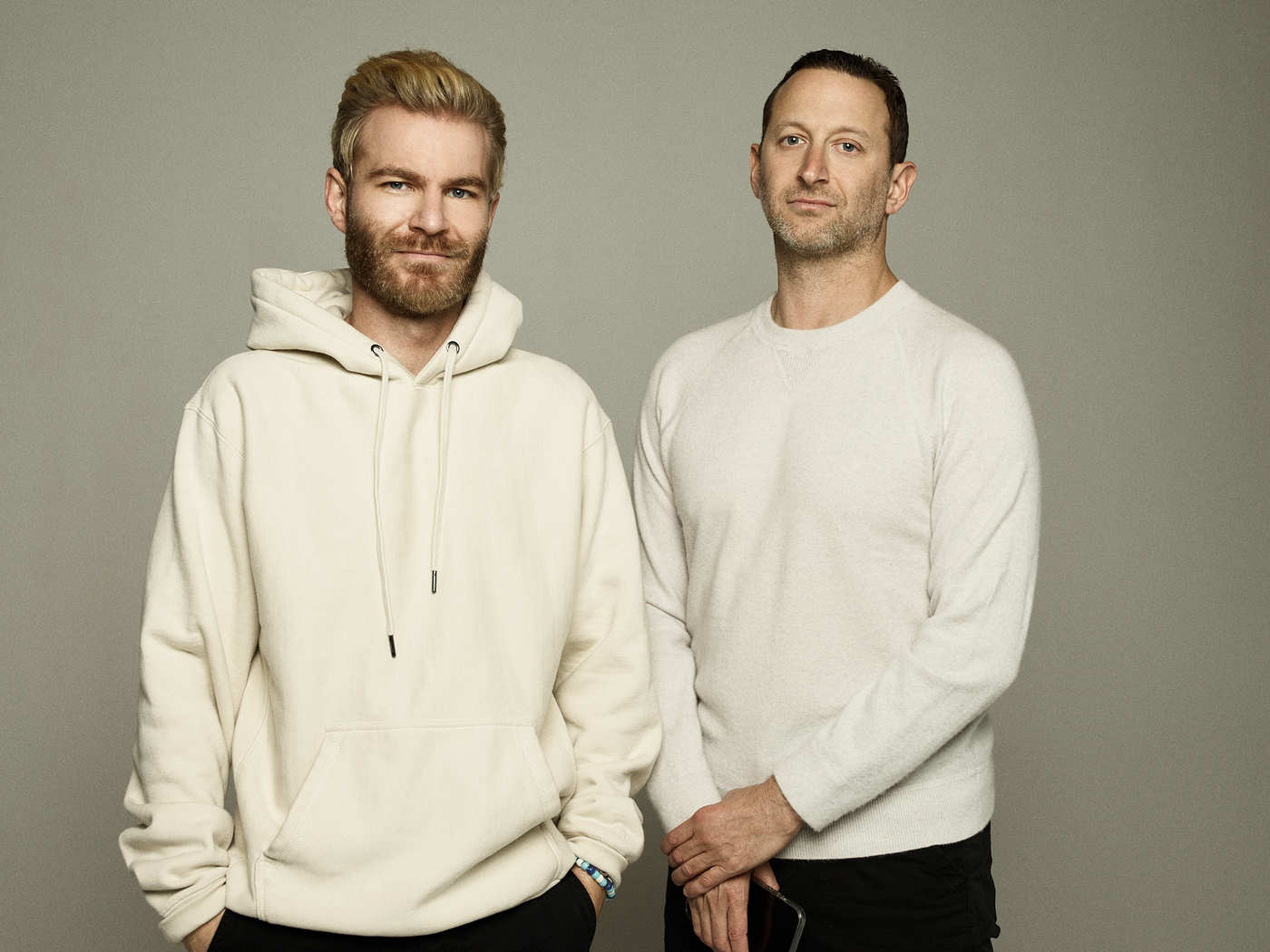
As part of my series about the “How To Take Your Company From Good To Great”, I had the pleasure of interviewing Mike Dill and Lowell Shapiro, founders of Black Box Management.
Mike Dill and Lowell Shapiro founded Black Box Management after working at CAA and WME with a vision of representing clients holistically and having meaningful relationships and business knowledge in the key areas of entertainment. From the start, they were focused on finding the best projects and creators no matter where they came from, including taking chances on a Philadelphia radiologist and a catering company driver, now both successful clients. Ten years later, the two are managing close to 50 clients including high-profile writers, directors, showrunners, actors, comedians and documentarians. Mike and Lowell are childhood friends and met at Skylake Yosemite Camp.
Thank you so much for joining us in this interview series! Before we dive in, our readers would love to “get to know you” a bit better. Can you tell us a bit about your ‘backstory’ and how you got started?
LOWELL: Believe it or not, we originally met at summer camp when we were 13. We shared a cabin together and our counselors were Andy Samberg and NBC Chief White House Correspondent Peter Alexander. We both grew up in L.A. and kept in touch through high school and college. Mike went off to NYU and I stayed in L.A. and went to USC. After college we both landed jobs at the agencies. Mike at CAA and me at WME. I left WME to get my MBA in Boston and then returned to L.A. and worked for Mark Cuban’s venture start-up Content Partners. Mike left the CAA TV Packaging Group to launch the U.S. scripted division of Shed Media UK.
MIKE: We reconnected and realized that we had a shared vision of the representation business and how we could improve it. The idea was simple - represent clients holistically, that is in all areas of the film and streaming businesses, in order to maximize opportunities and relationships across the entire spectrum of the business. We approached Marty Bauer, the co-founder and former President of UTA with this vision and plan. He helped guide us through the perils and pitfalls early on. We are so grateful for his knowledge and insight.
LOWELL: It’s been ten years now since we started, hard to believe.
Can you tell us a story about the hard times that you faced when you first started your journey? Did you ever consider giving up? Where did you get the drive to continue even though things were so hard?
MIKE: When we started the company we literally had nothing. We went to Best Buy and bought two cordless phones for $40.00. We worked out of a small artist space in Venice. A couple times we shared a bed on business trips to cut down on costs.
LOWELL: One time we were in Vancouver on the set of a film and my flight was at 7 AM the next morning. I decided to forgo the hotel my last night and instead roamed the streets of Vancouver Island until 5 AM and then hopped in a cab and went to the airport.
MIKE: We definitely went on a few international flights to Korea and Hong Kong and kept finding ourselves sitting in the back of the plane.
Can you share a story about the funniest mistake you made when you were first starting? Can you tell us what lessons or ‘takeaways’ you learned from that?
LOWELL: When I was an assistant at William Morris my boss asked me to book a lunch reservation for him on Monday. On Monday, my boss asked me if I confirmed the reservation with the restaurant. I replied of course, and sent him on his way. Bad news. The restaurant was closed on Monday. I had never made a reservation for him. He reamed me.
What do you think makes your company stand out? Can you share a story?
LOWELL: Our clients are in many ways reflections of our own interests and desires and I think as a result we approach our business with a unique ambition and energy. We want to be proactive because we want our clients and their voices to succeed. By working in all areas of film and TV we are truly able to grow and evolve our clients’ careers.
MIKE: At the end of the day we stand out because of who we are and the type of people we represent.
Which tips would you recommend to your colleagues in your industry to help them to thrive and not “burn out”?
MIKE: Just be patient. Everything takes time and oftentimes results can disappoint. That’s OK. We aren’t curing cancer, so we always need to remember how lucky we all are to make art and entertainment all day.
None of us are able to achieve success without some help along the way. Is there a particular person who you are grateful towards who helped get you to where you are? Can you share a story?
LOWELL: We really have had to do so much of the heavy lifting with this business on our own. We wish we could say that we had great mentors behind us, but the reality is we didn’t have anyone. Marty was a great resource to us in many ways, understanding the psychology and human nature that can overwhelm relationships and interactions in our industry.
Ok thank you for all that. Now let’s shift to the main focus of this interview. The title of this series is “How to take your company from good to great”. Let’s start with defining our terms. How would you define a “good” company, what does that look like? How would you define a “great” company, what does that look like?
LOWELL: In the business of representation, a good company is one that has a solid client base of talent and the ability to pivot into new areas of business and develop successful revenue streams within them.
MIKE: A great company is able to do all of this, but stand for something greater. When we were kids we loved Death Row Records. We used to buy albums just because Death Row produced them. That was a great company. We want people to know that if someone is a Black Box client they are thought of as being great.
Based on your experience and success, what are the five most important things one should know in order to lead a company from Good to Great? Please share a story or an example for each.
Our five principles to success are:
Have A Vision: You need to know where you are going before you can get there.
Time Waits For No Man: Wise words from the Dean of Students in HOUSE PARTY 2.
Never Apologize for Selling Your Clients: If you believe in who you are selling, the naysayers don’t matter.
Become an Expert: The better you are at one thing, the more people will look to you for help with that thing.
Act Like You’ve Been There Before: Be cool.
Extensive research suggests that “purpose driven businesses” are more successful in many areas. Can you help articulate for our readers a few reasons why a business should consider becoming a purpose driven business, or consider having a social impact angle?
MIKE: In this day and age it is so important for companies to help stand for something more than just making profits. Having a social impact inherently comes through many of the projects that we package and produce on behalf of our clients. We also always give to charitable organizations that do work that reflects our values.
LOWELL: This year we gave to the East Los Angeles Women’s Center and the Committee to Protect Journalists.
What would you advise to a business leader who initially went through years of successive growth, but has now reached a standstill. From your experience do you have any general advice about how to boost growth and “restart their engines”?
MIKE: You must find ways to reinvent yourself. New stories to tell, new people to meet, new clients to engage with, and you must do so in a relentless and detached style.
Generating new business, increasing your profits, or at least maintaining your financial stability can be challenging during good times, even more so during turbulent times. Can you share some of the strategies you use to keep forging ahead and not lose growth traction during a difficult economy?
LOWELL: Since the pandemic, we have had to radically transform how we approach new business. We have adopted a much more aggressive and proactive approach than we had in the past. This is partially due to the fact that we are not able to socialize, attend screenings, events, set visits, etc. as we used to. We’ve accepted that the next class of clients we sign are going to come from the internet, so the more time we spend cultivating relationships on it and building our own presence the better.
In your experience, which aspect of running a company tends to be most underestimated? Can you explain or give an example?
LOWELL: Collections are always time consuming and at times challenging. Chasing money for clients is never fun, especially when you are dealing with the bureaucratic nature of big corporations.
As you know, “conversion” means to convert a visit into a sale. In your experience what are the best strategies a business should use to increase conversion rates?
MIKE: For us, conversion is signing a new client and then monetizing that client. The best way to do this is to be completely honest and transparent in all of your actions and relationships. If our customers and clients trust us and have a clear idea of our plans, they generally will be on board for the ride.
Of course, the main way to increase conversion rates is to create a trusted and beloved brand. Can you share a few ways that a business can earn a reputation as a trusted and beloved brand?
Make someone money. Then do the same for their friends, peers, and competitors. Success is easily transmissible when you put the energy out there.
Great customer service and great customer experience are essential to build a beloved brand and essential to be successful in general. In your experience what are a few of the most important things a business leader should know in order to create a Wow! Customer Experience?
LOWELL: Radical honesty and transparency. Make the customer feel like when they come to you all of their questions are being answered so that their fear evaporates.
What are the most common mistakes you have seen CEOs & founders make when they start a business? What can be done to avoid those errors?
MIKE: Throughout our decade in business we have seen many peers and competitors come and go. It’s a tough business, and you need a thick skin to survive it, and that can be a tough reality for a lot of people. I think the big mistake we have seen some of our peers make is having a lack of diversity in their business. You have to have a lot of different balls in the air, and if you place all of your eggs in one basket you're not giving yourself a great chance of surviving in the long run.
LOWELL: A lot of our peers didn’t realize this or were not able to actualize it, so they had great things happening for them, selling this script, starring in this project, producing this film, but at the end of the day, just a few years later many are struggling to maintain a place within in the industry.
Thank you for all of that. We are nearly done. You are a person of great influence. If you could start a movement that would bring the most amount of good to the most amount of people, what would that be? You never know what your idea can trigger. :-)
MIKE: We both love to travel and explore new places. We truly understand the value of these experiences and if there is one thing we would both be passionate about enabling others to do, especially those less fortunate, it would be the ability to travel and see the world. To travel is to grow.
How can our readers further follow you online?
Check out Black Box Mgmt. on all of your favorite social media channels.
This was very inspiring. Thank you so much for the time you spent with this!