When starting my career, I thought a lot about the idea of applying new, emerging tech to legacy-driven, complex, often overlooked industries.
Business
Mike DeGiorgio of Crexi: Why Starting As An Industry Outsider Gives You The Power To Challenge Legacy Assumptions
The founder and CEO of Crexi shares how his non-traditional path and early adaptability shaped a tech platform transforming the commercial real estate landscape.
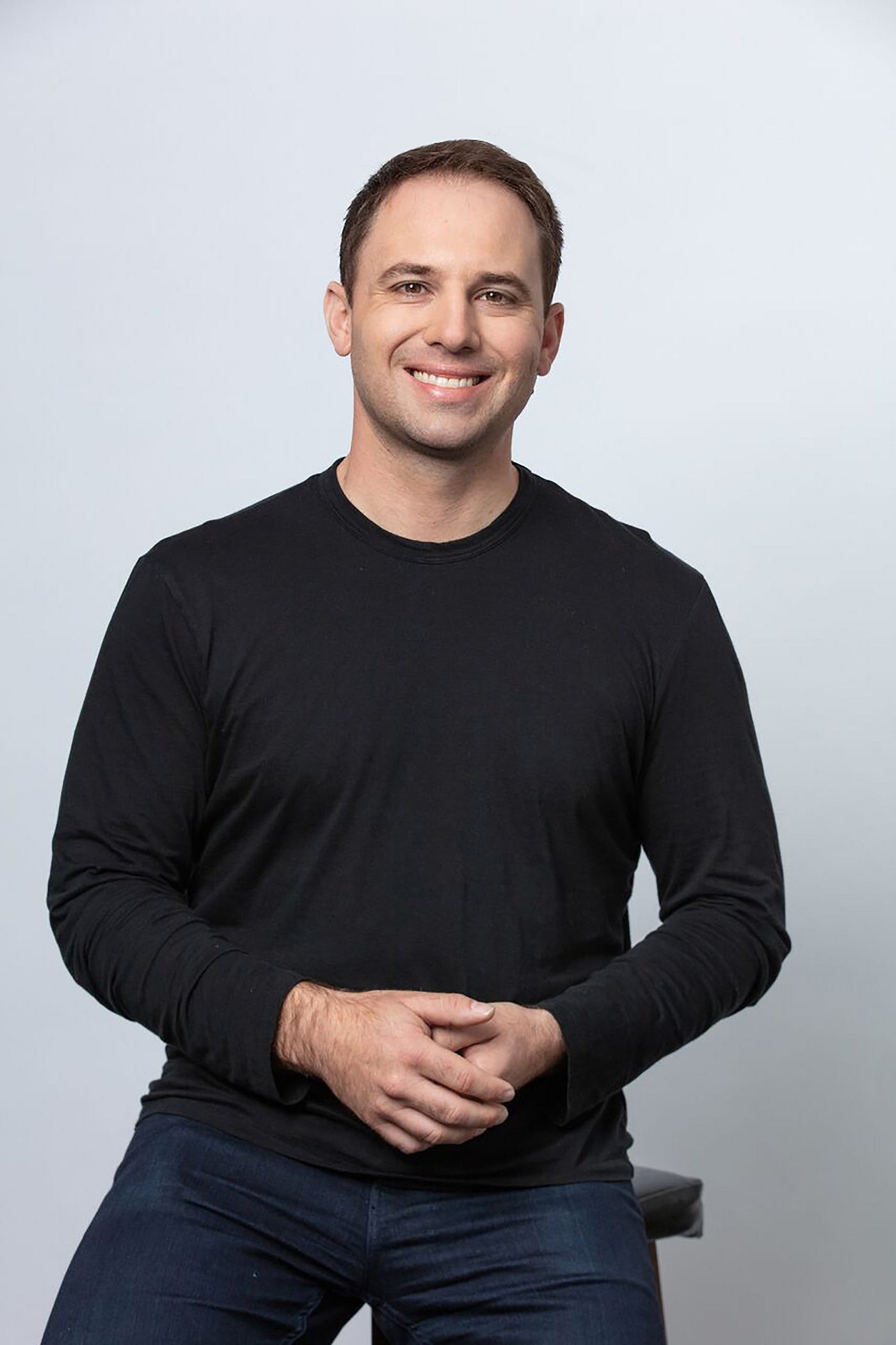
As a part of our series about business leaders who are shaking things up in their industry, I had the pleasure of interviewing Mike DeGiorgio.
Mike DeGiorgio is the founder and CEO of Crexi, the commercial real estate industry’s fastest-growing technology platform. Under his leadership, Crexi hosted the world’s largest single-asset online real estate transaction, expanded its presence with offices in New York, Raleigh, Dallas, Phoenix, and Miami, in addition to its Los Angeles headquarters, facilitated over $1 trillion in transactions to date, and empowers over 3 million buyers, brokers, and tenants to explore more than $2 trillion in property value across the country. Previously, DeGiorgio helped establish Auction.com, now known as Ten-X. He earned a business degree from Northern Illinois University, where he has served as a visiting lecturer on tech entrepreneurship and earned an Outstanding Young Alumni Award. DeGiorgio was also one of Globe St.’s 2022 CRE Tech Influencers.
Thank you so much for doing this with us! Before we dig in, our readers would like to get to know you a bit more. Can you tell us a bit about your “backstory”? What led you to this particular career path?
I’ve always been interested in technology and the possibilities it opens for people. When starting my career, I thought a lot about the idea of applying new, emerging tech to legacy-driven, complex, often overlooked industries. Commercial real estate was not only a massive asset class, but one nearly untouched by technology. It’s also an industry that can create generational wealth–and for me, that was an exciting prospect.
My path in life has been fairly non-traditional, but I was determined to build something big. There are advantages that come from starting out as an outsider. You can challenge assumptions others take for granted. Where others see setbacks, you see opportunity. The tension between tradition and what’s new and divergent has always been interesting to me. There’s a lot that can come from exploring that tension, and the potential you can uncover for yourself and others if you push forward with tenacity and optimism.
That’s what led me to build Crexi. It’s a privilege to be here today, working with a team of over 250 incredible thinkers, doers, makers, the very best experts in the business, serving millions of leaders across the country, and playing a leading role in the future of the commercial real estate economy.
Can you tell our readers what it is about the work you’re doing that’s disruptive?
Crexi empowers commercial real estate. Our platform expands access to the most up-to-date and accurate data, which enables people to analyze, market and trade commercial property faster, easier, and more seamlessly.
Our work is about meaningful, long-term, sustained transformation. It’s about connecting the CRE ecosystem and streamlining and digitizing processes. It’s about driving progress, step by step, feature by feature, business by business. And it’s about designing solutions that make customers’ businesses easier to run and the CRE space easier to navigate, eliminating barriers to entry.
What we’ve set out to do is make things better: to fuel our industry day in and day out and nurture innovation within the CRE community. If disruption happens, it’s a nice plus.
Can you share a story about the funniest mistake you made when you were first starting? Can you tell us what lesson you learned from that?
I can’t think of a funny mistake because I don’t view mistakes that way. There’s usually a lesson to be learned. So let me start with the biggest lesson that comes to mind. I’m someone who is focused on the “now,” and on what’s ahead. But time and time again, I’m reminded about the importance of reflection.
Earlier in my career, I’d filter every request or opportunity that came my way through the lens of urgency and immediacy. I had to learn the difference between what’s urgent and what’s important. I’ve seen first-hand how important it is to take a step back, to be deliberate about what you channel your time and attention into, to look at your impact, and to celebrate every milestone you’ve accomplished with the people who have been part of your journey.
We all need a little help along the journey. Who have been some of your mentors? Can you share a story about how they made an impact?
My parents made the biggest impact by teaching me about what it takes to have good integrity. They showed me that ultimately what makes you successful is caring about others and adding value to people’s lives. They also raised me to always see the good in others, to treat everybody with respect, to model the behaviors I hope others will mirror, the trust and loyalty I hope to elicit, and to always give my best before I expect something in return. Life is fragile, and it’s not always fair. I had two amazing parents, so I will always point to them as where I’ve been most fortunate in life.
In today’s parlance, being disruptive is usually a positive adjective. But is disrupting always good? When do we say the converse, that a system or structure has ‘withstood the test of time’? Can you articulate to our readers when disrupting an industry is positive, and when disrupting an industry is ‘not so positive’? Can you share some examples of what you mean?
Disruption can be an immense force for good, for positive change, improvement, and evolution. I think there is a difference between tangible, meaningful transformation, and disruption that’s labeled without any real impact. It’s important that we separate the two. Is technology at the very center of the disruptive product or experience in question, in a way that puts people’s needs first? In what ways does it benefit people or augment what’s uniquely human? Does it lead us into a new frontier, a major breakthrough, a better experience or world?
Can you share five of the best words of advice you’ve gotten along your journey? Please give a story or example for each.
The challenges you’ll confront can help you build your biggest strengths.
Growing up, I moved every two or three years. Just when I became ingrained into a community, I was pulled out of it, having to move to a different city, a different state, a different environment, a different culture. I had to learn to adapt quickly, to find ways to connect with people and build communities as I went along.
Remember that what you practice, you get good at.
Comfort and progress don’t go together well. If the circumstances prompt you to push yourself out of your comfort zone, don’t fight it. Change is good–don’t be afraid to seek it out. Stay agile, nimble, flexible, and keep experimenting.
When you have a vision and if it’s something you believe in, you owe it to yourself to chase it. This was a defining piece of advice from one of my early mentors, who pushed me to start Crexi.
There are many possible paths to entrepreneurship, particularly in tech. If you’re constantly aiming to learn, focusing on finding the right environment for you, figuring out ways to add value to any business, that is one of the strongest foundations you can build for the future.
We are sure you aren’t done. How are you going to shake things up next?
I’m going to keep aiming to make things better. Empowering and advancing our industry, and using technology to help people and add value to their lives, is at the very core of what I stand for. There’s a good purpose in this journey we’re all on together, and I look forward to exploring where it leads.
Do you have a book, podcast, or talk that’s had a deep impact on your thinking? Can you share a story with us? Can you explain why it was so resonant with you?
Memoirs like The Hard Thing About Hard Things and Shoe Dog, from thinkers I deeply admire, are good reminders that some of the greatest success stories of all time — the ones that have resulted in some of the biggest businesses in the world — have all come with their fair share of struggle. Overcoming obstacles, joining forces across industries to eliminate barriers to innovation, and hopefully paving a path for others is part of the joy of building a business and putting something new into the world.
Another interesting book is The Outsiders, a collection of stories about eight unconventional CEOs who broke records and outperformed their peers by challenging the status quo. It sparks an interesting idea around the limits of best practices and the problem with modeling the future based on the containers of the past, and highlights the importance of forging a clear and unique path forward.
Can you please give us your favorite “Life Lesson Quote”? Can you share how that was relevant to you in your life?
Growing up, there were three simple principles my parents instilled in me: be kind, work hard, and treat others with care and respect. That internal compass has been a very powerful tool for me. It’s not all supposed to be easy or perfectly fair, but if we come from a place of caring, of doing our best, of being there for others, that’s a significant win for everyone in the long run.
You are a person of great influence. If you could inspire a movement that would bring the most amount of good to the most amount of people, what would that be? You never know what your idea can trigger. :-)
I think we all need to remember that humanity is a team sport. If we start to see the best in each other, if we come from a place of being of service and focus on the things that connect us, there’s no limit to what we can achieve.
How can our readers follow you online?
Go to crexi.com, follow us on LinkedIn, Twitter, and Instagram, or connect with me on LinkedIn.
This was very inspiring. Thank you so much for joining us!
Thank you for having me. It was a pleasure speaking with you.
FG
Written by
Fotis Georgiadis
Editor & Journalist · Authority MagazineFotis Georgiadis is a senior columnist at Authority Magazine covering Tech and Business, conducting primary-source Q&A interviews with founders, executives, and industry leaders.

Published inAuthority MagazineTop Lessons, Top Authorities · 42K Followers
Exclusive, curated interviews with the leaders and changemakers shaping tomorrow. Leadership lessons, industry deep dives, and executive profiles.