
There came a time during my time as an accounting major when I realized that I could never sit behind a desk and stare at a balance sheet all day.
The XFactor.io founder and CrowdStrike veteran shares how identifying superpower X factors within team members drives hyper-growth and organizational success.
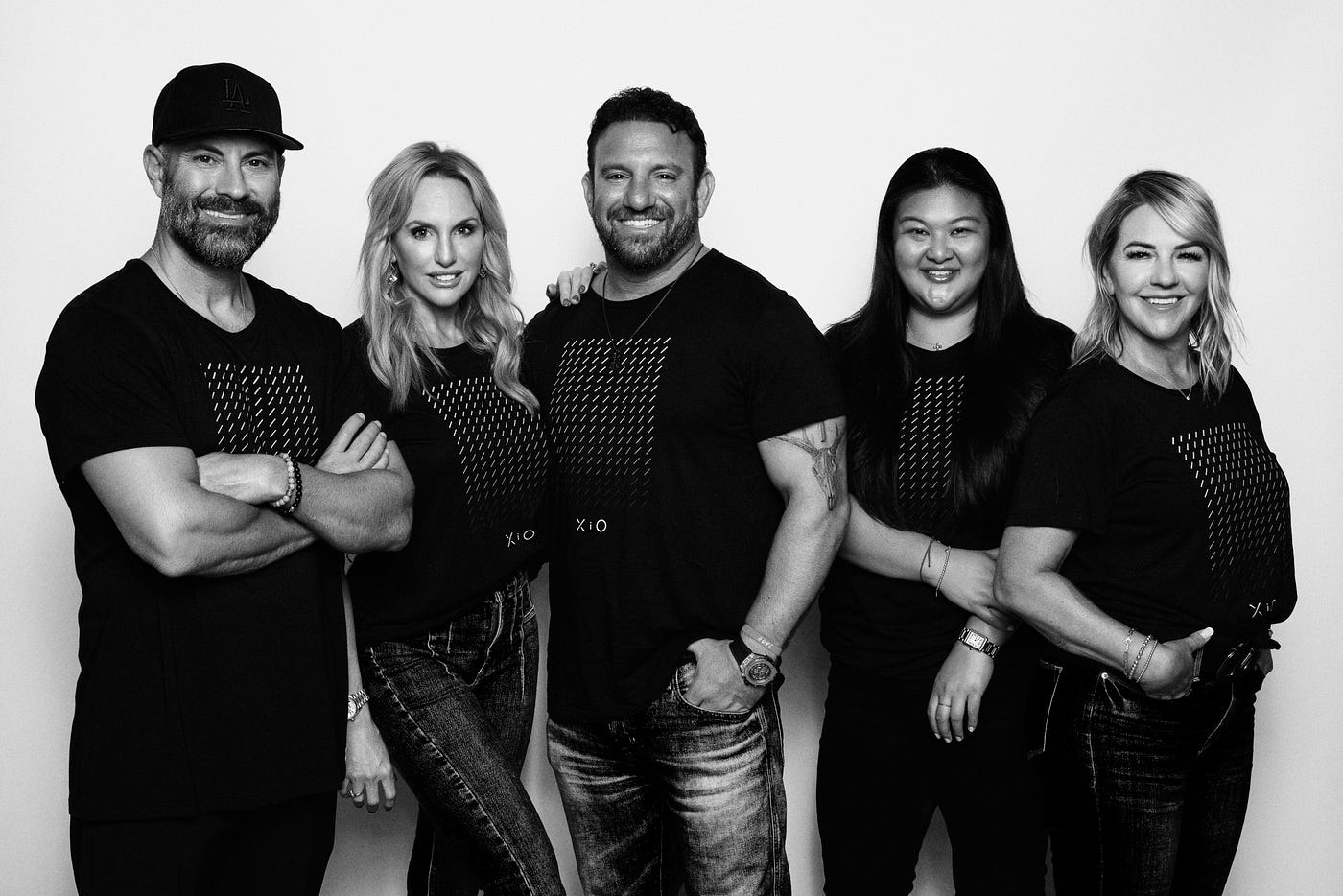
There came a time during my time as an accounting major when I realized that I could never sit behind a desk and stare at a balance sheet all day.
Startups usually start with a small cohort of close colleagues. But what happens when you add a bunch of new people into this close cohort? How do you maintain the company culture? In addition, what is needed to successfully scale a business to increase market share or to increase offerings? How can a small startup grow successfully to a midsize and then large company? To address these questions, we are talking to successful business leaders who can share stories and insights from their experiences about the “5 Things You Need To Know To Successfully Scale Your Business”. As a part of this series, we had the distinct pleasure of interviewing Mike Carpenter.
Mike Carpenter is the founder & CEO of XFactor.io, and Venture Advisor at Lightspeed Venture Partners. Formerly, Mike was the former President of Global Sales and Field Operations at CrowdStrike, where he was instrumental in expanding the sales organization worldwide and generating business growth at incredible scale, leading to their IPO in 2019. . Prior to CrowdStrike, he served as president, Global Sales and Field Operations at Tanium and is part of the Board of Directors for Armis Security.
Thank you for joining us in this interview series. Our readers would love to “get to know you” a bit better. Can you tell us a bit about your ‘backstory’?
Thanks for having me. My name is Mike Carpenter and I’m the co-founder and CEO of XFactor.io, a newly-launched company that provides technology and services for enterprises, startups and venture capitalists to optimize their annual operations planning. I’m also a Venture Advisor for Lightspeed Venture Partners, supporting and helping scale the firm’s enterprise portfolio teams, and I most recently served as President of Global Sales Operations at CrowdStrike.
Over the course of my 25-year career, I’ve been focused on scaling companies by identifying the “X factors” within organizations: the often small changes my team or I could make to drive growth. That strategy has supercharged the success of my global teams, and it’s essentially where the idea of XFactor.io originated. Turning the traditional operations planning model on its head, XFactor.io streamlines and de-risks business decision-making with an AI-powered platform that provides recommendations based on real-time data and market intelligence to identify those “X factors” and drive success at any company. It has massive potential for helping companies scale, accurately quantifying the value of a VC investment, and unifying organizations during the planning process.
You’ve had a remarkable career journey. Can you highlight a key decision in your career that helped you get to where you are today?
There came a time during my time as an accounting major when I realized that I could never sit behind a desk and stare at a balance sheet all day. It was a risk to turn down a “safe” job my senior year of college, especially because I didn’t grow up without financial worries, but I felt destined to create something — to give in to my entrepreneurial spirit. Ultimately, I made the right decision and could still use the skills I gained in accounting courses throughout my career, but making that initial jump can be really challenging.
Early on in my career, I also started to realize that I had to be constantly learning and evolving to stay successful. There’s no use in relying on the same hacks time and time again — I learned to evolve every 90 or so days to stay on top of my game, reinventing myself and how I approached problem-solving to continually grow my skills. This approach also led me down the path of always planning for success rather than executing blindly. These two realizations really shaped the rest of my career.
What’s the most impactful initiative you’ve led that you’re particularly proud of?
I am most proud of the altruistic view I have brought to my work. I realize that some people may think an “altruistic salesperson” is an oxymoron — I’m probably one of very few salespeople that has never checked a commission report. In my view, my job — no matter the role — is to lead people to create positive change, to do things differently and better. It’s not about my paycheck.
Sometimes our mistakes can be our greatest teachers. Can you share a mistake you’ve made and the lesson you took away from it?
Early in my career, I made a decision to let someone go that worked for me because they weren’t delivering on their sales quota, primarily due to some bad streaks of luck. I later realized that I should have kept that employee, and could have turned around their bad luck by leading them rather than managing them. I wrote about this in my book, “Everything You’ve Never Tried: Breaking the Rules to Compete and Succeed Like a Sales Leader.” Turns out, there are innumerable circumstances that can affect how successful sales professionals are in their roles. Most of the time, a person’s success is predicated on whether their territories are set up for success. For instance, somebody who is a hard-working, driven salesperson may struggle if they are assigned to a difficult region — and a less motivated individual could look like a rockstar in a region that’s already successful. Learning from this mistake, I changed my leadership mentality completely: just like I had found “X factors” to drive success in our business operations, I could identify those same superpowers within my team members, and work with them to reach their milestones while leaning on their unique strengths.
How has mentorship played a role in your career, whether receiving mentorship or offering it to others?
I’ve had a lot of great mentors, and I have also learned just as much from people who were bad leaders. Learning to emulate my better mentors — and remembering how not to end up like my bad ones — has made a huge difference in my leadership and in the way I perceive my teams.
Developing your leadership style takes time and practice. Who do you model your leadership style after? What are some key character traits you try to emulate?
I lead from the front. This means that I help my teams recognize and focus on their strengths and assess potential gaps — and try to never micromanage. Fear-based leadership, as I’ve seen throughout my own career, can never create lasting success or maintain a strong company culture. It’s on leaders like myself to empower our employees and help them celebrate their unique abilities.
I’ve learned from some excellent leaders — Joe Sexton and Michael Herning coming immediately to mind. The way that Joe treated people and communicated with them inspired me — he was an altruistic leader. He communicated in such a way that everyone felt like they knew him well, even if they hadn’t spoken before or worked closely together.
Mike was another standout mentor early in my career and one of my first investors. He taught me the vital lesson that you don’t necessarily have to win if it means someone else is losing. He would never take a win if someone else was on the losing end of it, and for me, this mindset created a shift. For many of us, it can naturally feel good sometimes when you win at the expense of someone else. Mike came into my life at the perfect time — I realized that he was succeeding without the risk of someone losing on the other end, and he restored my faith in what I did.
Thank you for sharing that with us. Let’s talk about scaling a business from a small startup to a midsize and then large company. Based on your experience, can you share with our readers the “5 Things You Need To Know To Successfully Scale Your Business”? Please give a story or example for each.
To successfully scale a business, the organization needs to think about the use case for what they’re building, why they are building it, and who they are building it for. Years ago, I participated in a team exercise as part of a leadership event, where the organizers set up a competition with the task of building bikes. They split everyone up into six groups and gave us tools to build our bikes, and once each team was finished, they ranked us from first to last, indicating who had won and who lost. Afterward, the organizers asked us what we had learned, and all of our answers were about how we built their bikes efficiently, with the goal of winning the competition. We then learned that the bikes were for local kids who were waiting outside to pick up their new bikes, and everyone’s faces dropped. We knew these bikes weren’t made well enough for the kids to ride them, we just wanted to get them built. This exercise taught us that as business leaders, your user, the value you provide to them and why you’re the one providing it must be central to what you do.
Two other critical elements in scaling a business are planning and culture. Leaders must have an ever-evolving plan to succeed — you wouldn’t fly a plane with last week’s data. The path to success is driven by a realistic and always-on plan. Without one, there’s no single direction to unify your group, which causes misinformation, dissensions, delays, and lost revenue.
Leaders must also create a culture where everybody is holding themselves more accountable than they’re holding their peers, keeping teams unified and responsible. Having an established goal also helps teams determine their “why” and stay motivated and connected to what their business does.
Can you share a few of the mistakes that companies make when they try to scale a business? What would you suggest to address those errors?
A big mistake that companies are making is creating plans that are not useful. Developing a traditional annual operating plan is a 9-month process where the actual plan becomes obsolete in the first two months of the year. The underlying problem is that go-to-market and operations planning has historically been executed in a siloed fashion, based on misaligned priorities, insufficient data, and subjective perspectives. As such, many businesses have experienced the cost of bad decision-making. To successfully go-to-market, your operating plan must constantly evolve with what the data is telling you about the market and your internal resources. When trying to scale a business, companies need to focus resources on continuously innovating to capitalize on every GTM opportunity.
Scaling includes bringing new people into the organization. How can a company preserve its company culture and ethos when new people are brought in?
To maintain its culture at scale, an organization needs to focus on three things: transparency, consistency, and having a mission. Transparency ensures open communication among employees and makes sure teams are aligned on values, whereas consistency translates to reliability. If people learn which good practices drive results, they become more consistent in daily tasks across the organization to achieve those outcomes. Having a mission is also extremely important– it’s the reason why you are doing what you’re doing and is the root of all your processes. Getting everyone on the same page means you’re all rowing in the same direction, accelerating the path to your organization’s goals.
Many times, a key aspect of scaling your business is scaling your team’s knowledge and internal procedures. What tools or techniques have helped your teams be successful at scaling internally?
One critical process for scaling internally is enablement– leaders have to delegate trust and verify. You can also enable a group with training that includes everything from what the culture stands for to how to use the available tools in their daily jobs. Leaders also have to keep employees educated on the broader company strategy and involve them in the planning process. The planning process gives you direction and something to manage against; many companies forget about this and simply train new employees on the tools or platforms they use. The planning process is an opportunity to unify everyone toward the same mission. This sense of community encourages team members to be innovative, come up with ideas, and make sacrifices for the broader group.
What software or tools do you recommend to help onboard new hires?
Organizations must take advantage of innovations in AI, predictive modeling and automation to be successful. We’re at a time in the world where manual processes and stale data limit an organization’s ability to adjust to market, customer and competitive changes in real-time. By arming employees with AI and digitally powered processes, organizations can not only onboard employees more quickly, but also empower them to drive better outcomes. The organizations that are most successful onboarding new hires will determine how to balance the use of these new innovative technologies with effective management techniques that build truly collaborative, supportive and productive teams.
Because of your role, you are a person of significant influence. If you could inspire a movement that would bring the most amount of good to the most people, what would that be? You never know what your ideas can trigger.
I think unification over separation is critically important in all aspects of both work and life in general. Separation is still important and has a place through identification, whether by gender, religion, sexuality, etc., everyone deserves to have and be respected for their own identity. Where separation hits a point of diminishing returns is when you start to create animosity and your own barriers to growth. This can be incredibly destructive to vibrational energy and how it influences the planet and beyond. Unification, on the other hand, can create real power by building a community of unique individuals coming together for a common cause. The world needs to have a shift toward unification, as it could have a major influence on the things we don’t understand and how they’re connected, like cancer, global warming, etc.
How can our readers further follow your work online?
XFactor.io and I can both be found on LinkedIn here! Also, if readers are interested in learning about the motions for selling across all sectors, I wrote a book titled “Everything You’ve Never Tried: Breaking the Rules to Compete and Succeed Like a Sales Leader”, available on Amazon.
This was truly meaningful! Thank you so much for your time and for sharing your expertise!
The Authority Magazine Editorial Desk produces, verifies, and edits long-form primary-source interviews with executives, innovators, clinicians, creators, and social impact leaders across Business, Tech, Pop Culture, Wellness, and Social Impact.

Exclusive, curated interviews with the leaders and changemakers shaping tomorrow. Leadership lessons, industry deep dives, and executive profiles.

Ragoth Bala of The Cumin Club shares how he transformed personal dietary struggles into a thriving global e-commerce brand delivering authentic Indian vegetarian meal kits.
 Yitzi Weiner
Canada's first Top Chef winner and multi-award-winning culinary artist shares his hard-earned lessons on leadership, mentorship, and building a successful restaurant group.

Chidi Ashley, founder and CEO of Luxe Tribes, shares how she leveraged digital nomad experiences and rigorous risk management to build a premier luxury travel brand for millennial professionals.

The founder and CEO of Confetti Group shares how skipping university, embracing calculated risk, and trusting intuition built a multi-country brand portfolio.
The Simple Modern CEO reveals how bootstrapping, prioritizing healthy team culture, and securing major national retail accounts built a category-leading consumer brand.

The co-founders of Kindred share their expert insights on transitioning from identifying critical consumer problems to engineering disruptive business solutions.

The Michelin-starred chef and author shares his journey from community kitchens in Amritsar to the heights of global gastronomy, offering timeless lessons on patience, art, and endurance.

The founding owner of Milan Art Institute shares how she survived a brutal industry blacklist and transformed her passion into a thriving global profession.