The publishing journey is rarely a smooth one. There are countless moments of doubt. Early in my career, I faced numerous rejections from publishers. However, I never let that discourage me.
Science Fiction and Fantasy are hugely popular genres. What does it take for a writer today to write compelling and successful Science Fiction and Fantasy stories? Authority Magazine started a new series called “How To Write Compelling Science Fiction and Fantasy Stories”. In this series, we are talking to anyone who is a Science Fiction or Fantasy author, or an authority or expert on how to write compelling Science Fiction and Fantasy.
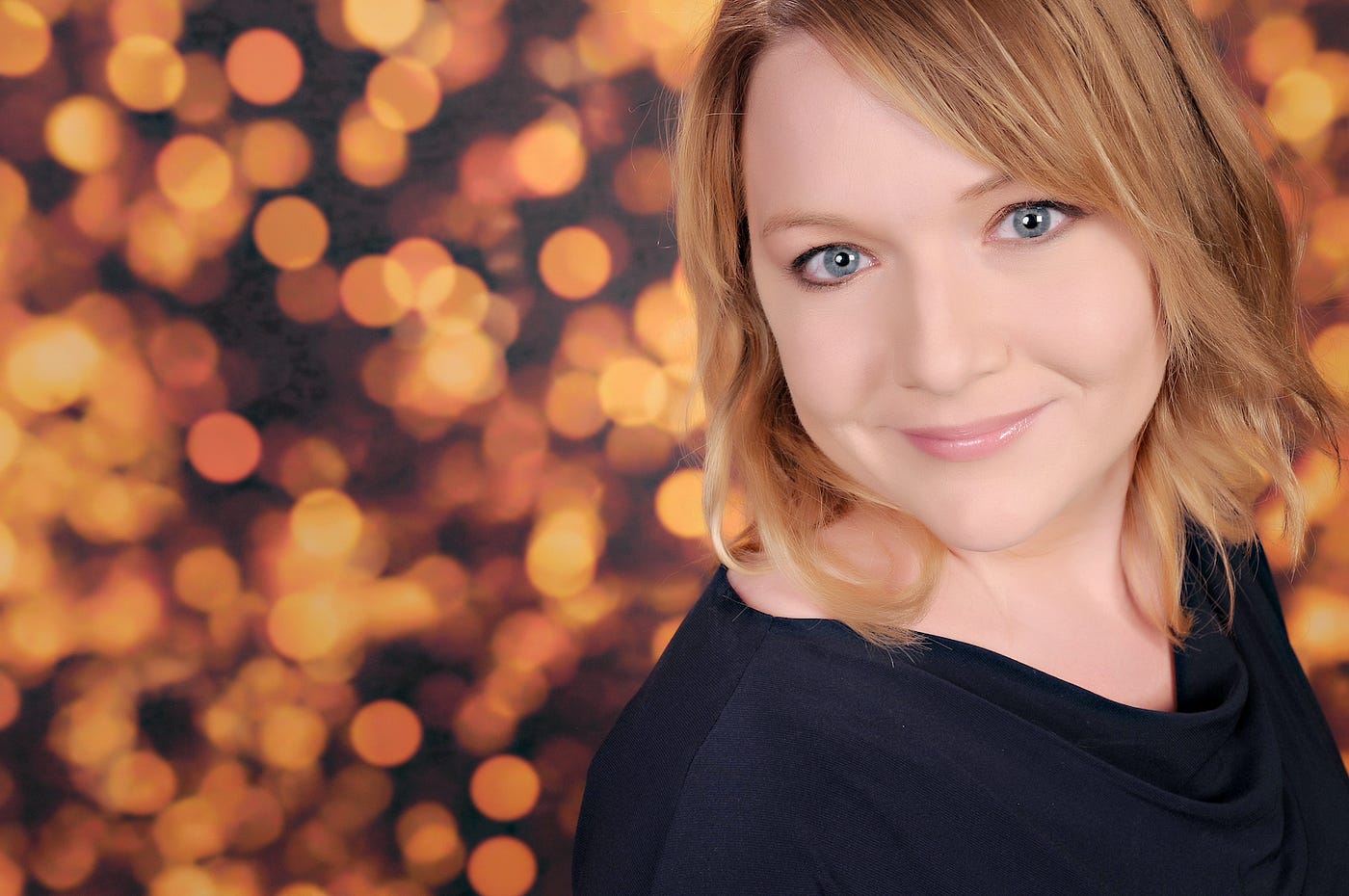
As a part of this series, I had the pleasure of interviewing Michelle M. Pillow.
Michelle M. Pillow is a prolific NY Times & USA TODAY bestselling author with millions of books sold. Known for her work in science fiction and fantasy, her rich world-building creates portals for the imagination. Fan favorites include the sci-fi romance Qurilixen World (a multi-series collection), the epic fantasy Realm Immortal series, and the brand-new urban fantasy series Merely Mortal. Though it has yet to happen, she dreams of being a zombie in a horror movie. She came close as a refugee extra on SyFy’s Z Nation. Michelle loves to interact with readers. Visit her at https://MichellePillow.com and on social media.
Thank you so much for joining us in this interview series! Before we dive into the main focus of our interview, our readers would love to “get to know you” a bit better. Can you share a story about what first drew you to writing over other forms of storytelling?
I have always loved imagining stories and getting lost inside books, paintings, and photographs. When I was ten, my dad gave me my first camera. I always thought I would tell stories with pictures, capturing that one perfect moment. As I grew older, writing became my chosen form of expression because it allowed me to explore the world on a deeper level. Unlike other modes of storytelling, writing gives me the freedom to build entire universes and get into the minds of my characters. I remember writing my first intentional story, feeling the magic only creating can produce. I thought I was the next Edgar Allen Poe. My teacher disagreed. But that feeling of creation, of bringing something entirely new to life, is what drew me to writing and keeps me excited. This year, I celebrate my twentieth authorversary. I can’t imagine doing anything else.
You are a successful author. Which three character traits do you think were most instrumental to your success? Can you please share a story or example for each?
There are many levels to what I consider successful, and each person can celebrate many successes on their journey. I like to remind authors to celebrate the wins—finishing the book, putting that first submission out there into the world, etc.—these are all wins. But to answer for me: perseverance, creativity, and empathy.
Perseverance: The publishing journey is rarely a smooth one. There are countless moments of doubt. Early in my career, I faced numerous rejections from publishers. However, I never let that discourage me. Instead, I used it as motivation to improve my craft and keep pushing forward. This perseverance paid off when I finally landed my first book deal, proving that determination can overcome even the toughest obstacle, which for me has been self-doubt.
Creativity: Creativity is the lifeblood of a writer. It allows us to create new worlds, characters, and stories that captivate readers. In my novel Merely Mortal, for instance, blending elements of urban fantasy with rich character development required a deep well of creativity ad planning. Crafting an environment where mortals and supernatural beings coexist involves inventing unique rules and systems that make the story both believable and enchanting.
Empathy: Understanding and connecting with my characters on a deep emotional level is crucial. Empathy allows me to write characters that readers can relate to and care about. It allows me to accept they are not perfect and have flaws. When writing Merely Mortal, I spent a lot of time thinking about the main character’s struggles and emotions, trying to see the world through her eyes. I do not agree with all of her decisions, but they are true to her. This connection helps me create a character that feels real and resonates with readers.
Can you tell us a bit about the interesting or exciting projects you are working on or wish to create? What are your goals for these projects?
I’m working on book two of the urban fantasy Merely Mortal series, Mostly Shattered (October 2024). This series focuses on the interactions between the mortal and supernatural worlds, while exploring themes of identity, belonging, and self-discovery. My goal is to create a story that keeps readers on the edge of their seats while also being relatable. At its core, Tamara’s journey is about finding her place in the world when she often feels like the odd woman out in her family and social circles. That journey is one I can personally relate to, and hopefully, readers can too.
Another project I'm excited about is the expansion of the Qurilixen World, an epic sci-fi fantasy romance universe that has become a reader favorite. This multi-series world began with the Dragon Lords, a series that intertwines dragon shifter royalty with humans, set in a medieval-esque futuristic other-planet society. These star-crossed lovers unfold across an alien landscape. The Qurilixen World isn't just about one series; it's an expansive universe that includes the interconnected series Lords of the Var, Qurilixen Lords, Space Lords, Captured by a Dragon-shifter, Galaxy Alien Mail Order Brides, and Dynasty Lords.
Each installment features different characters—shifters, space pirates, warriors, and various alien incarnations—allowing readers to explore diverse stories within a cohesive world. The fun is writing individual stories within a complex universe. To date, there are over forty books in the collection, but readers can start at any series installment and follow along easily.
Wonderful. Let’s now shift to the main focus of our interview. Let’s begin with a basic definition so that all of us are on the same page. How do you define sci-fi or fantasy? How is it different from speculative fiction?
They are all very closely related, and I enjoy writing under all three umbrellas. Sci-fi and fantasy transport readers to worlds beyond our current reality. Sci-fi explores futuristic concepts and technologies grounded in scientific principles. Fantasy, on the other hand, explores magical realms, mythical creatures, and supernatural elements. Oftentimes, there is a quest or journey involved. Speculative fiction encompasses both sci-fi and fantasy, along with other subgenres that explore the unknown—gothic, paranormal, magic realism, for example. These genres often blend into each other.
It seems that despite countless changes in media and communication technologies, novels and written fiction always survive, and as the rate of change increases with technology, written sci-fi becomes more popular. Why do you think that is?
Written fiction provides a personalized experience. As technology advances, our curiosity about the future and the unknown grows, as do our fears. Change can be scary. Sci-fi novels allow readers to explore new concepts, engaging our imaginations and intellects in ways that visual media sometimes cannot. Reading is a quiet, reflective process that allows us to absorb and think. The written word offers a unique space for readers to envision entire worlds and scenarios in their minds, making the experience deeply personal and engaging. Through stories, we can escape and work through our own conflicted feelings. I also think there is something to science fiction writers’ imaginations driving tech innovation forward. Before you can make something, you need the idea. I’m still waiting on the Star Trek transporters.
In your opinion, what are the benefits to reading sci-fi, and how do they compare to watching sci-fi on film and television?
Reading allows us to tell our own story in our minds. Authors lead the way with description, but the reader pictures the world and characters and inserts themselves into the stories. No two readers actually read the same story. Their lives influence the experience with nuances. It’s a very immersive and personal experience. Books also let the reader delve deeper into the character's thought processes and reasoning.
With film, the stories are told to us. The characters and worlds are laid out for us by others. It’s very entertaining, but there are time constraints to the medium. It’s easy to get lost in the action and shiny objects. With a book, you can take all the time you want to explore and imagine the space within your mind—almost like a guided meditation. That very basic generalization doesn’t mean films can make you think and books can’t be fast and exciting.
I love both mediums.
What authors and artists, dead or alive, inspired you to write?
I like to read broadly. Throughout my writing journey, I've been inspired by several remarkable authors. Anne Rice inspires with her lush prose and intricate characterizations. Her ability to seamlessly blend romance, fantasy, and the supernatural created a blueprint for the kind of storytelling I aim to achieve. I admire Rice's exploration of dark, complex themes and her talent for creating vividly atmospheric worlds.
Jane Austen is timeless. I admire her wit and observations of human nature. Reading Pride and Prejudice as a high schooler not only ignited my passion for historical narratives but also taught me the power of character-driven stories. I like her portrayal of societal norms and the multifaceted characters who navigate within the restrictions of their worlds.
John Steinbeck's Travels with Charley was one of my favorites. I love social anthropology and studying different cultures. I admired his appreciation for capturing the essence of different settings and the diversity of human experience. It is a travelogue in which he travels in a camper across America to meet different people. Though it came out later that it's not completely 100% autobiographical and some liberties were taken for the sake of the story, it resonates with my own desire to explore different cultures and environments within my novels.
If you could ask your favorite Science Fiction and Fantasy author a question, what would it be?
Yeah, I can’t pick just one. It’s like asking a reader to pick one book:
Tolkien – Can I just sit here and watch your mind create?
Ray Bradbury – Same question. I love hearing the writer’s process.
Sarah J. Maas, Patricia Briggs, Ilona Andrews duo, Kim Harrison, Seanan McGuire, Laurell K. Hamilton, Faith Hunter… I admire your talents. Can we just sit, drink coffee, and talk craft?
Brandon Sanderson – Can we do a Kickstarter together? LOL. Seriously though, I’d love to talk craft and business.
We’d like to learn more about your writing. How would you describe yourself as an author? Can you please share a specific passage that you think exemplifies your style?
As an author, I want to write worlds and characters that resonate with readers on an emotional level. I enjoy genre-blending, and often, my books could be shelved under multiple genres. I use elements of fantasy, mystery, thrillers, romance, and the paranormal to explore what it means to be human. A passage from Merely Mortal that showcases my style is:
“It can die.”
It. Not she. Not Tamara. Not even that dreaded nickname I hate, Tammy. It.
At five years old, I hadn’t even grasped the concept of what death meant, and yet those words, the way they were said, had stuck with me. In many ways, those words defined my childhood. All my life, I’ve been treated like some delicate butterfly that the supernatural world wanted to squish because that’s what monsters do when they’re bored. They hurt delicate things. I need to be careful. I need protection.
I need to not draw attention to myself.
So how is it I’m alive and standing outside a mausoleum at the funeral of three of the most formidable supernaturals I know—knew—my immediate family?
Based on your own experience and success, what are the “Five Things You Need To Write Compelling Science Fiction and Fantasy Stories?” If you can, please share a story or example for each.
1. Creativity: For me, creativity is all about problem solving. In order to create something new, I first come up with a problem to solve. For instance, what if language was never invented? How would we communicate? How would we tell stories?
When creating Merely Mortal, I imagined: what if a powerful supernatural family had a mortal baby who grew up ordinary? From there, I asked more questions that my lead character needed to answer. I set about creating conflicts and obstacles she had to overcome throughout her journey.
For me, creativity starts with problem solving.
2. Research: Nothing builds confidence like knowing the facts. From there, the sky's the limit. Ground your creative, fantastical solutions in the real world. In a world of magic, having a basis in reality can make your story more believable. In my futuristic sci-fi books, I base much of the worldbuilding on human history, folklore, and mythology, even though they take place on another planet.
In magical worlds, for example, if your character uses magic, that energy has to manifest from somewhere—and what is the cost? If it just is, just because, that could be less realistic to the reader. In my Warlocks MacGregor series, to answer this, the warlocks borrow energy from surrounding nature, but if they take too much, they can kill off an entire forest.
It's all about embedding your ideas in a reality that readers can recognize.
3. Development: Focus on world-building and character development. This takes time. Characters need to be nurtured. The world needs to be built. Plots need to be tested. Create a world that feels real and lived-in, with detailed geography and social structures. For example, in my sci-fi series set on the planet Qurilixen, I built the planet’s history and customs, which informed the story without being explicitly detailed within the book. Establishing the rules from the beginning is crucial.
Develop characters with depth and complexity. They shouldn’t be perfect or have all the answers—unless always having the answer is their flaw. In Merely Mortal, Tamara is a mortal in a supernatural world. Her flaw is not that she’s mortal but that she doubts herself and her place in the world. That self-doubt often leads her to make poor decisions. She would be less interesting if she did everything right. Perfect characters are less engaging, so embrace their flaws and growth.
4. Emotional Resonance: I hope that my stories elicit an emotional response from the reader. I test my protagonists, asking questions they need to answer and creating obstacles they need to overcome. So, my advice is to ensure your story resonates emotionally with readers. The themes of identity, belonging, and resilience in Merely Mortal are designed to connect with readers on a deeper level. Fiction gives us a tool to explore ourselves. Sometimes, it’s easier to see ourselves reflected through the lens of a different world, like a futuristic society or historical realm. With paranormal creatures, we can explore what it means to be human, process our humanity and our mortality, and even confront our fear of death.
I want readers to become fully immersed and to read themselves into the story, whether they agree or disagree with the characters. Seeing characters deal with problems (even dealing with them poorly) helps us to navigate our own issues.
5. Book Besties: I would be nowhere without the support of my book community. This is the network of author friends, readers, my family, and mentors who have given me advice and support over the years. I have a best friend, Mandy M. Roth, who published her first book at the same time I did, at the same publisher. She’s been a constant pillar of support as we navigate our journeys. Readers are amazing. They talk about books, sign up for ARCs (Advance Reader Copies), and volunteer to beta read. I’m lucky to have a family that is amazingly supportive. I have to give a shout-out to all of them with my heartfelt gratitude for all they do for me. I truly wouldn’t be able to do what I love without them.
We are very blessed that some of the biggest names in Entertainment, Business, VC funding, and Sports read this column. Is there a person in the world, or in the US, with whom you would love to have a private breakfast or lunch, and why? He or she might just see this, especially if we both tag them :-)
I am deeply curious, and I love talking to people from all walks of life and hearing their stories. I think there is something to be learned from everyone.
There are some strong women in the film industry who I find fascinating that I would love to chat with. Sarah Polley for one. From the few articles I’ve read, she seems like she’d be an intriguing conversation. I first remember seeing her in Dawn of the Dead, though I’m sure that wasn’t the first time. I love horror movies, and that one had a fun, campy soundtrack. Only later did I realize she was also a writer and director. I thought Alias Grace was well-written and told.
Another would be Shonda Rhimes. She has the ability to make people become emotionally invested in her characters, which I greatly admire and aspire to do. This is going to be a broad paraphrase, but I remember reading once that she wants to create characters that people identify with but also who are not mirror images of themselves. It’s how we learn from each other and grow. Bridgerton is a great example of this concept. I work in the romance genre, and her adaptation has taken the community by storm.
Honestly, I admire anyone who is out there in the world doing their thing and trying to make it a better place.
How can our readers further follow your work online?
Readers can follow my work through my website at michellepillow.com, where I share updates on new releases, blog posts, and other news. You can also find me on social media for more behind-the-scenes insights and interactions. Signing up for my newsletter is a great way to stay informed about upcoming projects, sales, and exclusive content.
Facebook - https://facebook.com/AuthorMichellePillow
Twitter - https://twitter.com/MichellePillow
Instagram - https://instagram.com/michellempillow
TikTok - https://tiktok.com/@michellempillow
Website - https://michellepillow.com
Thank you for these excellent insights, and we greatly appreciate the time you spent. We wish you continued success.
Thank you for having me!