Doing everything yourself isn’t a badge of honor, it is a sign of poor leadership. This was actually a huge lesson for me.
Business
Michael P. Kearns of Virtasant: The Principle of Delegating Early to Scale Professional Services Beyond Traditional Models
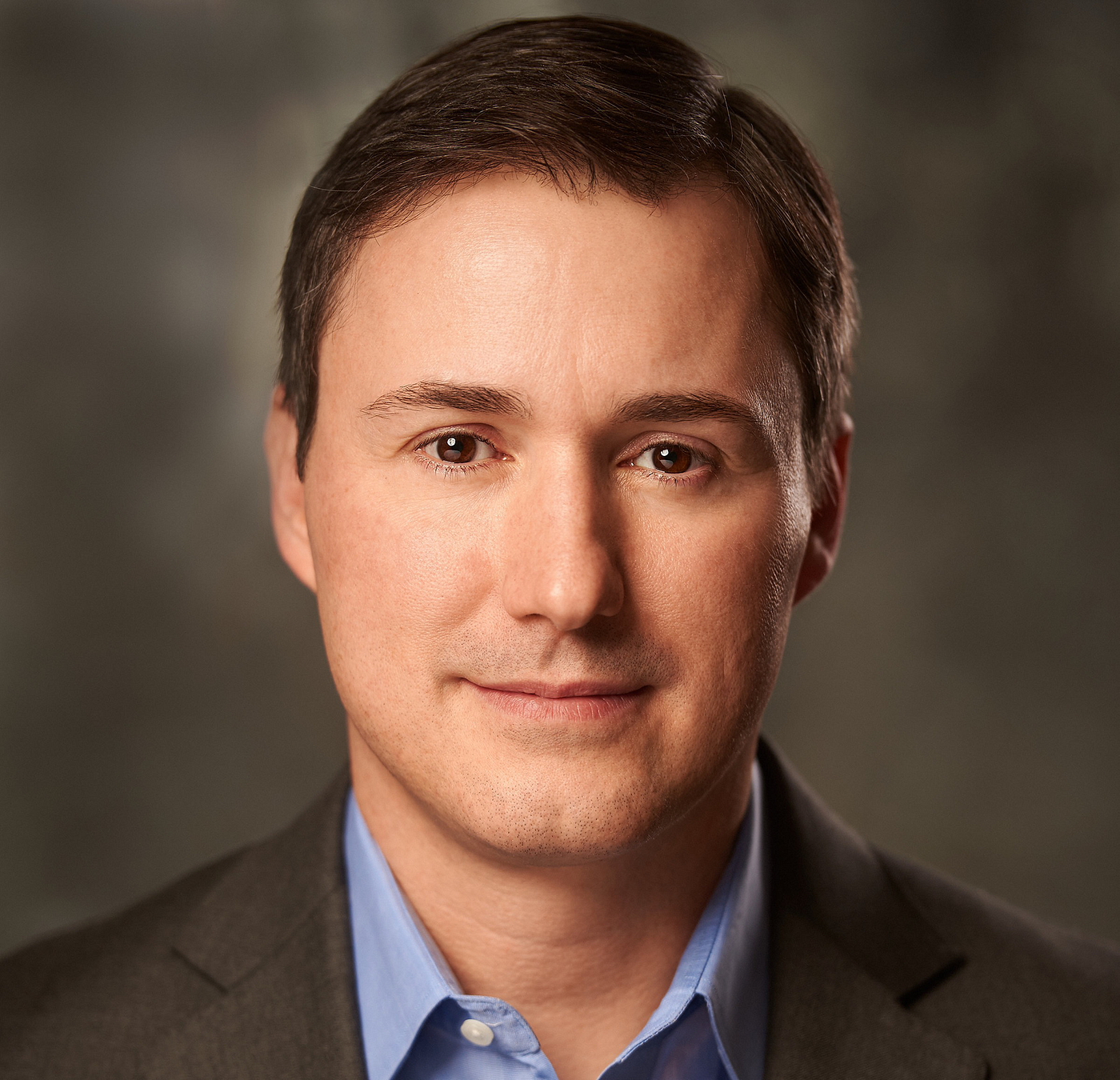
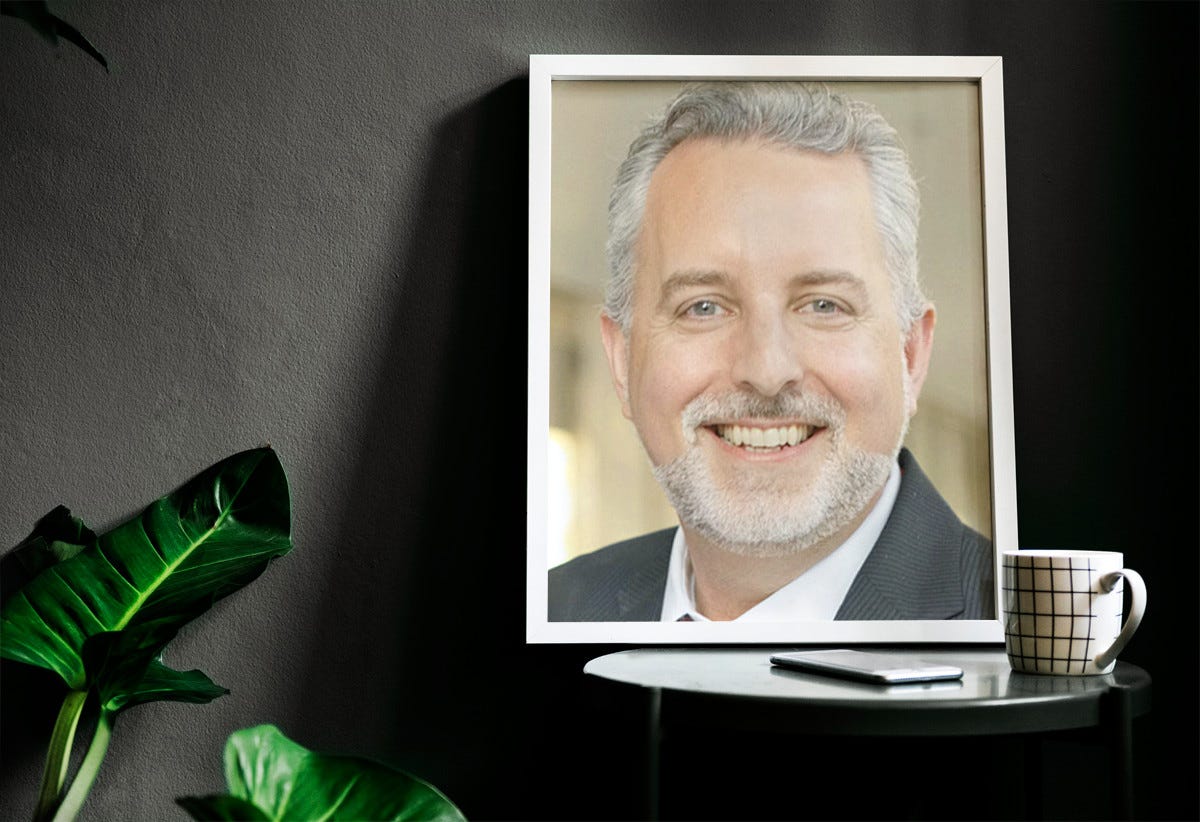
I had the pleasure of interviewing Michael Kearns the founder and CEO of Virtasant, a cloud technology company that specializes in helping organizations leverage the power of public cloud platforms.
The company’s mission is to provide organizations with the ability to drive outcomes on-demand by leveraging Virtasant’s proprietary methods, tools, and automation, combined with a highly-vetted network of experts. Currently, Virtasant is one of the world’s largest fully-remote organizations, with a global network with over 4,000 professionals in 130 countries.
Michael has had the opportunity to build and lead many high-growth businesses. At Toptal, a leading freelance platform, he established and led Toptal Enterprise, a business unit focused on bringing the power of global freelance talent to the world’s largest companies. Under his leadership as Vice President and General Manager, it saw 6,000% growth, signed more than 500 enterprises globally, and delivered over 2,000 client engagements in 4 years. As a Managing Director at Slalom, he was part of the early executive leadership team that built one of the most successful consulting start-ups in the past 20 years. Michael has also served in executive roles at ThoughtWorks and Accenture.
Michael earned his undergraduate degree from the University of Michigan and his MBA from the University of Colorado Leeds School of Business. He enjoys the many outdoor activities that living in Colorado has to offer with his family, including his two young children. Much of Michael’s time is spent focused on finding new ways to distribute opportunities more evenly throughout the world, unlocking the untapped potential and power of geographically distributed teams and remote work.
Thank you so much for doing this with us! Before we dig in, our readers would like to get to know you a bit more. Can you tell us a bit about your “backstory”? What led you to this particular career path?
After graduating from college, I knew I didn’t want a typical career path. For me, variety and the opportunity to learn many different industries and businesses was most important to me, and at the time the best way to get that type of experience was consulting. At the time it seemed like the best choice for someone who didn’t really know what they wanted to do, but knew they didn’t want a typical static job.
Can you tell our readers what it is about the work you’re doing that’s disruptive?
The consulting/professional services space hasn’t really changed in a very long time. Perhaps the largest change in the past 30 years was the move to offshoring/outsourcing, but that change really started in the mid-90s. We want to dramatically change the industry — make it more predictable, efficient, and digitally native. Today, the industry is still dominated by simply billing clients for hours worked by individuals, with very little digitisation of the service and very little repeatability.
Can you share a story about the funniest mistake you made when you were first starting? Can you tell us what lesson you learned from that?
I’m not sure if this story fits what is being asked, but when I was on my very first project out of college as a consultant, I went mountain climbing in Washington. There was thick cloud cover when we got up to start our climb early in the morning, but later in the day, we broke through the clouds to incredible sunshine to reach the summit. It was pouring rain in Seattle, and snowing where we setup our camp, so the last thing any of us thought about was sunscreen.
When I woke up the next morning and walked out to get some breakfast, one of the people I climbed with gasped and said “have you seen your face?”. Horrible blistering all over my face (and it hurt like hell to laugh……). I had a big client meeting (one of my first ever in my career) on Monday, which I had to walk into with my face completely covered in blisters and aloe. Lesson here is — always use sunscreen.
We all need a little help along the journey. Who have been some of your mentors? Can you share a story about how they made an impact?
One of the most impactful mentors I’ve had was John Tobin, who is the founder of Slalom Consulting. I was lucky enough to work with him in the earlier days of Slalom, and there is probably no other person I’ve learned more from. He had an emphasis on fairness, transparency, and commitment to all stakeholders, clients and employees. Those qualities are truly amazing, and is something that still guides much of my thinking today.
Another person that had a big impact on how I approach building Virtasant, particularly in the earlier days, is the co-founder of Toptal, Breanden Beneschott. We always had a unique relationship, where I actually had more experience, particularly in client-service business, but his journey to build Toptal was truly inspirational, and I learned so much from his early stories. Stories about him traveling around the world, to how he personally built the Toptal talent network, his approach to digital lead generation. He built a truly unique company, and I learned so much from the stories of the early days that I apply to my journey today.
In today’s parlance, being disruptive is usually a positive adjective. But is disrupting always good? When do we say the converse, that a system or structure has ‘withstood the test of time’? Can you articulate to our readers when disrupting an industry is positive, and when disrupting an industry is ‘not so positive’? Can you share some examples of what you mean?
I think that really depends on who/what is being disrupted. If the disruption is to competitors or to an industry, I think that type of change is inevitable, and while one could debate whether it is good or bad (shareholders lose value, employees lose jobs), it has to happen for industries and society to progress. The more important question is are people better off overall, and what are we doing to support the people who are negatively impacted. For example, ride sharing is clearly better for consumers and disruptive to legacy industries, but what about the impact to workers? Are ride sharing drivers better off than the people they are replacing (cab drivers, rental car agents, etc.)? We hear a lot about the power of freelance at the moment, but are freelancers truly better off? The real answer is complex, but needs to be considered when changing paradigms significantly.
Can you share 3 of the best words of advice you’ve gotten along your journey? Please give a story or example for each.
- Doing everything yourself isn’t a badge of honor, it is a sign of poor leadership. This was actually a huge lesson for me. In the earlier days of Slalom, most of the key leaders were doing everything — hiring, billing at clients, selling new work, building the business, operations — literally everything. As we matured as a company, it was like a switch flipped, and all of a sudden we realized — if we are doing everything, we can’t scale. It seems obvious, but for most Type A people, it’s easier to buy into the idea of doing it all yourself, only to realize delegation provides support and freedom. It is crucial to delegate if you want to scale your business. Remember, a strong team will always outperform an individual, no matter how hard the individual works.
- Do the right thing, always. There is more on that below, but this is really something that has stuck with me, and it has been a consistent theme throughout my life, particularly since I began my professional life. In business, it is actually amazing how common it is for companies to not treat their employees or their customers well, especially when doing the right thing is hard or when the work isn’t being noti
- Don’t get stuck overanalyzing — try different things and learn quickly. This is one that I think gets a ton of press, delivered in many different forms, but I think it often isn’t applied well, particularly in bigger corporate settings. Most organizations spend months (even years) analyzing every angle of a decision, then spend months or years implementing that decision, then spend months or years trying to justify why making that decision was the right one to make. For me, a better way is to build a culture of experimentation where there is no expectation that anyone is always right, and that the best thing people can do is try, quickly identify where/why ideas don’t work, and adjust accordingly. It is surprising how hard it is to get people to be comfortable with being wrong and with failure.
Lead generation is one of the most important aspects of any business. Can you share some of the strategies you use to generate good, qualified leads?
Virtasant is in the B2B professional services space, with a focus on enterprise companies. This is a notoriously tricky, relationship-based business from a lead generation perspective, and digital lead generation techniques are yet to take hold in the same way as in the B2C space. We’ve found that a multi-channel approach, that includes a wide range of lead generation methods, works the best. But in the enterprise B2B space, patience is probably the most important ingredient.
We are sure you aren’t done. How are you going to shake things up next?
Virtasant has a very, very long road to continue working in the massive B2B professional services industry. Our primary focus is how to continue to leverage global scale and automation to provide a truly unique, digitized, predictable model to professional services. We are investing a ton of time and effort into building AI-based automation and IP, while continuing to build a global community of professionals to drive the company forward.
Do you have a book, podcast, or talk that’s had a deep impact on your thinking? Can you share a story with us? Can you explain why it was so resonant with you?
One of the most impactful books I’ve read in the past few years has been “Give Work” by Leila Janah. The book’s basic premise is that the best way to help others is to give them an opportunity. This is something I truly believe in and is central to much of what I hope to do with Virtasant in the long-term. Right now, while talent is distributed throughout the world, opportunities are far too concentrated in a limited number of places, only accessible to people from a limited range of backgrounds. I hope that we can have a part in changing that, and I think it is one of the most important problems in the world to solve.
Can you please give us your favorite “Life Lesson Quote”? Can you share how that was relevant to you in your life?
“Do the right thing, always.” It is amazing how powerful this concept is and how seemingly obvious, yet so hard to consistently apply and we forget how impactful it can be, particularly in business. It is actually amazing how rare this type of behaviour can truly be. In order to run a successful business, it isn’t about taking the easy road or doing the superficial stuff, when in fact it is about making the hard decisions. The ones that may make things more difficult for you or your company, but are the right things to do. I’ve found that in the short term, making the hard yet right decisions don’t always pay off. However, choosing to go with the hard choice will always pay dividends.
You are a person of great influence. If you could inspire a movement that would bring the most amount of good to the most amount of people, what would that be?
I believe it is important to understand how workers are affected by disruption. Over the next 10 to 20 years automation will be in every aspect of our lives and it will affect many people. We will see dislocation at an unprecedented scale. Therefore companies need to focus on how to help people who have been affected. Stopping progress is not the answer, but companies have a responsibility to help the people who are on the losing side of this change. Both in the US and around the world marginalized communities will be impacted the most. As a company, I think we have an opportunity to be a leader in supporting the people that are and will be dislocated. If we can help find new opportunities to every person that is dislocated, to me, that would be transformational. In order to accomplish this goal it will require us to bring transparency to labor markets, remove geographical barriers, drive more flexibility in work, and totally rethink how we train people for new opportunities. Lack of opportunity is the root cause to so many problems in the world, this is something that we need to fix.
How can our readers follow you online?
The best way to connect with me is on LinkedIn. https://www.linkedin.com/in/michaelpkearns/
JH
Written by
Jason Hartman
Editor & Journalist · Authority MagazineJason Hartman is a senior columnist at Authority Magazine covering Business and Tech, conducting primary-source Q&A interviews with founders, executives, and industry leaders.

Published inAuthority MagazineTop Lessons, Top Authorities · 42K Followers
Exclusive, curated interviews with the leaders and changemakers shaping tomorrow. Leadership lessons, industry deep dives, and executive profiles.