
In many areas, I believe, from academia to industry to writing it is the dogged determination that some problem be solved and a realization that trial and error are unavoidable if ultimate success is to be achieved.
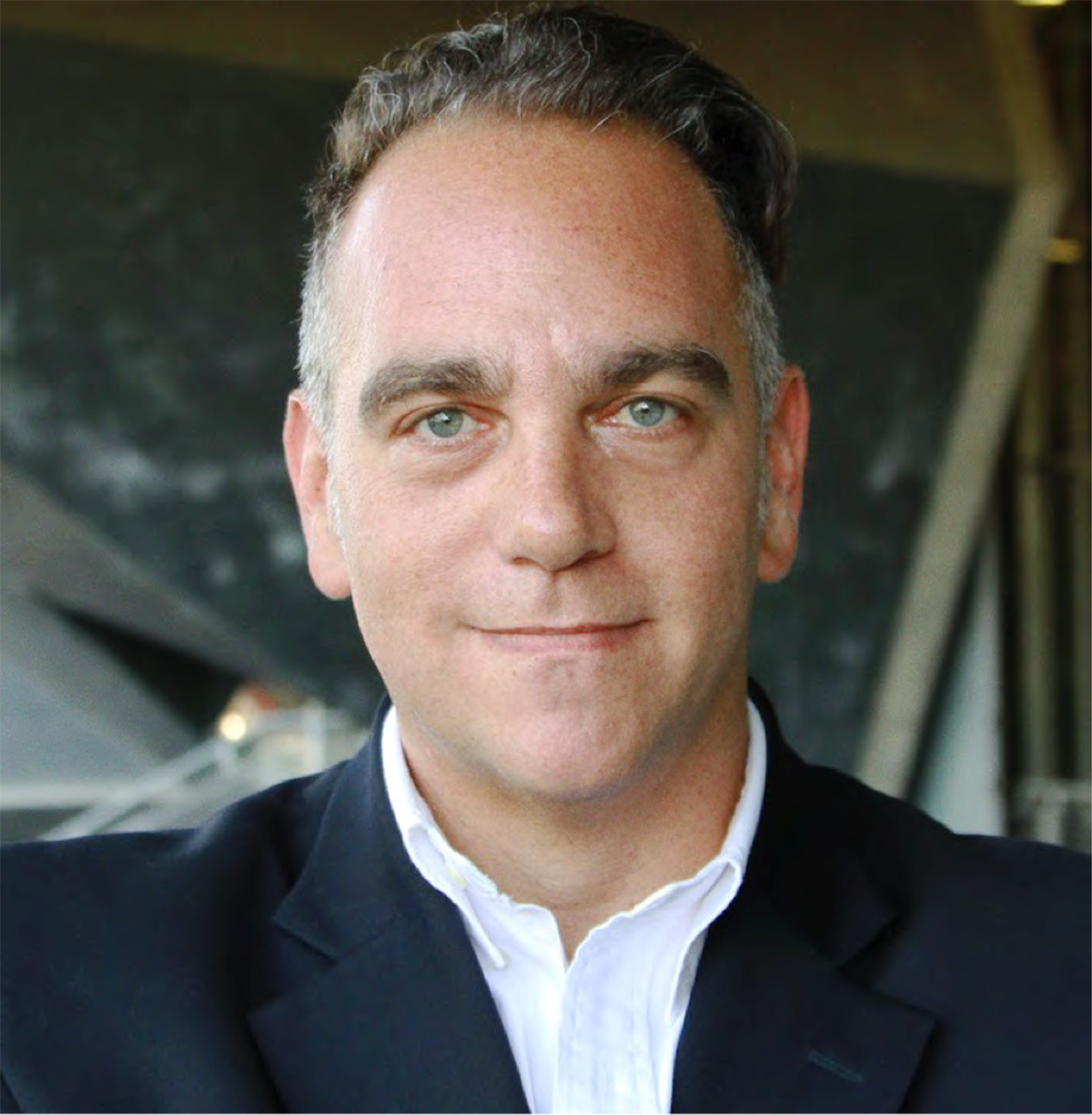
Michael James Scharen On The Book That Changed His Life
INTERVIEW QUESTIONS:
Books have the power to shape, influence, and change our lives. Why is that so? What goes into a book that can shape lives? To address this we are interviewing people who can share a story about a book that changed their life, and why. As a part of our series, I had the pleasure of interviewing Michael J. Scharen.
Mr. Scharen holds a Bachelor of Science degree in Physics from Montana State University with a Master of Arts in Physics from Kent State University, OH. He has several years experience in R&D with ceramic superconductor materials and devices, two-way pagers and fiberoptics with patents and peer reviewed papers. He has two publications as first author with Nobel Prize winning physicist, J. Robert Schrieffer with five science-fiction novels to date while coding his blog/sales website -- michaelsbookcorner.com.
Thank you so much for doing this with us! Before we dig in, our readers would like to get to know you a bit more. Can you tell us a bit about your “backstory” and how you grew up?
I grew up in Montana – primarily in Billings, Kalispell and finally Bozeman where I went to University. Both of my parents grew up on farms in the Depression and raised their kids in no-nonsense fashion. I excelled in mathematics and science in school and was rather geeky – preferring kits for building ships, planes, or model rockets to organized sports. My studies were self-guided as I knew I wanted to work in some technical field.
Let's talk about what you are doing now, and how you achieved the success that you currently enjoy. Can you tell our readers a bit about the work you are doing?
Early on I was engaged in R&D with my first position in the fledgling field of ceramic high transition temperature superconductors. This was a dream job with a highly talented group of people where much was accomplished. I later worked as a manufacturing engineer which gave me experience in the practical side of implimenting new technologies. As in my school years, I freely admit that I was not the smartest kid in the class, but I understood that success came largely from brute force and determination as much as native insight. It is the practice of any art which consolidates or crystallizes true understanding. This I am finding to be true in my new career as a writer. Rather than hemming and hawing over writer’s block or the latest word count, it is more productive to concentrate on the project at hand. What many do not realize when they decide to become an author is that the work does not end when the manuscript is done. There are many technical details involved in preparing e-book or audiobook formats, creating websites, digital marketing and SEO. A technical background has helped me in countless ways in this regard.
You are a successful leader. Which three character traits do you think were most instrumental to your success? Can you please share a story or example for each?
As mentioned above, a stick-to-it mentality for any project is essential. In many areas, I believe, from academia to industry to writing it is the dogged determination that some problem be solved and a realization that trial and error are unavoidable if ultimate success is to be achieved. This is one trait I so admire in Elon Musk. Granted he has billions to spend, but then again, so does Jeff Bezos who has put nothing into orbit. Musk is not afraid to try and fail in a very public way but always with an eye on the desired outcome.
As previously stated, seeing the forest for the trees may sound cliche, but there is much wisdom in it. In my first position as a professional engineer, I was assigned the routine screening of electrical properties for thin film superconductors. The instrumentation I inherited constantly broke wire leads or had issues with leaks. It was designed by an academic and so suitable for a limited number of experiments. It was up to me, with my background plus trial and error to improve the apparatus for practical use and high throughput. This process I repeated many times and still abide by today. To paraphrase Mr. Musk, “Building one rocket is easy. Building twenty or a hundred is a completely different problem.” He is explaining the big picture. The goal is to build something that will not break in the hands of in-house technicians or outside customers.
This second trait segues into the third. Early on, I would tell people, “Physicists are just to dumb to know that a problem cannot be solved.” In this I compared my education to training I observed among engineers, whom I admire greatly, but could be pidgeonholed by restricted thinking. Since physics dabbles in areas spread across several disciplines from chemistry to electrical or mechanical engineering, one gets a good taste of the possible. I’ve often solved problems with engineers where we came at the same puzzle from our unique individual angles to find a solution. What I’ve instinctively known but which has truly hit home with the advancement in the internet is that many problems have already been solved. I find if I can come up with the question of why or how something can be done, there is a YouTube video or article out there describing the exact situation. I have worked for people with the Not-Invented-Here approach whereby managers were too proud to borrow from others. They would rather waste time reinventing the wheel than seek out existing solutions.
What’s the WHY behind the work that you do? Please share a story about this if you can.
For years, in the back of my mind, I wanted to sit down and write something. However, this was such a foreign area that my usual determination could not get past step one. In each attempt I would psyche myself out. A few years ago, I began spending evenings with an elderly friend. It was our routine to watch a movie each night after dinner. Needless to say, if one sees enough films or reads enough books, one discovers just how many turkeys there are in circulation – including several among the most successful. I often wondered how so many stinkers could be made and who paid to make them. I’ve been a lifelong science-fiction fan but that area is certainly not immune from poor and/or unbelievable plots.
Early in 2020, I sat down again at the computer to try to tackle the very concepts gleaned from that book, and several others, which changed my life. Science-fiction has always been acceptable for delving into concepts many find uncomfortable. My interest in writing combined with so many thoughts that had been welling within me for years and they coalesced into not just one book, but five. I began writing in February or March and by December I had two novels plus another three making up a trilogy prequel. My determination to prove that my writing was at least as good, if not better than the torturous tales I had ingested drove me on.
None of us are able to achieve success without some help along the way. Is there a particular person who you are grateful towards who helped get you to where you are? Can you share a story about that?
I cannot name the person here for the purposes of maintaining privacy, but there is one in particular who has helped me tremendously and still does. Needless to say, at a very trying time in my life, where there seemed to be no hope, she reached out to me and believed in me. She felt there was something worthwhile that needed to be saved. My early confidence had all but disappeared but was then revived. The struggle to come back from very dark times has been aided by this person and I will be forever grateful.
Awesome! Let’s now jump to the primary focus of our interview. I’m an author and I believe that books have the power to change lives. Can you please tell our readers about “The Book That Changed Your Life”? Can you share a story about how it impacted you?
One book which has really changed my life, or at least my perspective, is Government: Indicted by Marc Stevens. I had followed Mr. Stevens' podcasts for some time and purchased his second book. The first is called Adventures in LegalLand. Though I was familiar with his challenges to the status quo, this book is a marvel in the exercise of critical thinking and analysis.
Having a background in the hard sciences and engineering I was both surprised and embarrassed at the number of institutions and social conventions I had taken for granted -- without proof. Mr. Stevens has a gift for logical thought through the elegant use of the Socratic Method. Essentially he asks questions designed to root out real facts or evidence for proving an argument. Government: Indicted makes inquiries regarding the basis of the State and its assumed authority. As it turns out, no such proof has ever been provided –- admitted to by at least one law professor. Government prosecutors argue without evidence despite their own rules. In addition, the book delves into the psychology behind government -- explaining why so many accept such a patently absurd concept.
The book is a thorough examination of the standard arguments made by governments, their courts, and defenders as each are picked apart one by one. Numerous logical fallacies would include argumentum ad baculum, appeal to authority or the usual circular approach -- namely -- the law applies because the law says so. Examples of where important laws contradict themselves within the same statute are highlighted on top of questions regarding the very origins of jurisdiction.
Classic psychological experiments such as the Milgram Experiment on Authority or the Ashe studies of conformity in groups are discussed to illustrate how human beings display a herd mentality of compliance. Much of the world around us is taken at face value because this is what has been instilled in us from an early age. This book, among others, was instrumental in changing my casual acceptance of so many things without proof or logical explanation. It is a lesson taught by Plato's Parable of the Cave or The Matrix warning of complacency or blind acceptance.
This book and others like it such as Lysander Spooner’s essay No Treason: The Constitution of No Authority, Murray Rothbard’s Conceived in Liberty, The Underground History of American Education by John Taylor Gatto or The Creature From Jekyll Island by G. Edward Griffin are tremendously eye opening. One could say that I’ve become something of a minor evangelist for anarchy. Of course most do not know that the true meaning of the word anarchy is without rulers. Anarchy does not mean there are no rules. This is a distinction lost or purposely distorted by governments and their lackeys in the media.
Government: Indicted has served as a source and inspiration for my books to date. In them, I describe the free colonies on Mars which have shunned the arbitrary, top-down, violent hierarchies of government. They have abandoned rulers in favor of living in a society based upon voluntary contract and interaction. Furthermore, I go into detail for how this is achieved. There are many examples in history which I will not cover here, but suffice to say I also draw on those as part of my mission to educate the reader. I cover alternatives to traditional police, courts, the defense of private property and other matters. At the same time the plots are full of adventure and humor. Readers can be entertained while picking up notions outside of their everyday thinking. The author, Mr. Stevens does have a sense of humor similar to my own in pointing out the foibles and absurdities of alleged authority.
In my daily life, I have largely abandoned the traditional presentation and analysis of what is called news. Upon being shaken up by this book, I am far more critical and do not take so many things at face value. With a new perspective, the big lies are easy to see through. It is interesting that what so many label as conspiracy theory has nothing to do with conspiracy at all. Their labelling is part of the public shaming and projection most fraudsters engage in. Merely pointing out the contradictions evident in plain sight is enough to be pillaried. No conspirators need be named in questioning the weak explanations behind mask mandates or so-called anthropogenic climate change.
What was the moment or series of events that made you decide that you wanted to take a specific course of action based on the inspiration from the book? Can you share a story about that?
Mr. Stevens book forced me to examine nearly every accepted truth regarding the most important aspects of our lives. Until then I had seen each unexplained event or social movement in isolation. Some events appear unrelated but the same methods are used to push agendas or to achieve some aim of social engineering. These would include the standard cult practices of labeling, public shaming, the use of popular logical fallacies such as the strawman, appeal to authority, or the bandwagon. When those do not work then violence is the next step – with the presumed peace keepers stepping aside.
Then, as one steps back to analyze the proliferation of ridiculous trends one begins to see patterns. Of course we largely have no control over such movements. One must never underestimate the power and danger present in large groups of ignorant people. In my books, blog, or on social media I offer alternatives to the mass indoctrination which so many do not question.
Can you articulate why you think books in particular have the power to create movements, revolutions, and true change?
Since the invention of the printing press books have been extramely powerful. This was noticed immediately by the self-appointed elite. In the 17th century it was forbidden for the English press to print arguments made in Parliament. Postal services have always been a monopoly of the State. There is no other purpose for this than the control of information. Thomas Paine’s pamphlets were hugely influential before the War of Independence. The fax machine played a role in the downfall of the USSR and today balloons are sent aloft into North Korea with flash drives as their payload. When enough people have their eyes opened or are introduced to much better alternatives than than those they’ve been forced to accept, that is when change can occur. Books are a potent channel for the distribution of knowledge. One must caution, however, that not all change is for the better. The readers must understand and make the correct choices.
A well written book is still superior to a Twitter campaign, though that may be changing. In a book, a cogent case may incite one action or another or merely provide examples. A book may contain an extended set of arguments in either fictional or non-fictional form. This is one aim of my books. Such can be done in an entertaining way which may better serve to keep the reader engaged. Books may contain many levels to move through emotion, humor, or reason. Though Atlas Shrugged was very well done with chillingly instructive lessons and warnings, it is best not to go off on three page rants as Ms. Rand was inclined to do. There are many ways to get a message across without losing the reader.
A book has many aspects, of course. For example, you have the writing style, the narrative tense, the topic, the genre, the design, the cover, the size, etc. In your opinion, what are the main, essential ingredients needed to create a book that can change lives?
I’ve been told that a cover is important. I’m sure that they have a role to play but how many are truly memorable? I suppose it serves as a hook for a new reader but often the relevance to the contents is negigible. As with the cover, the genre may not always match the story. There seems to be a bleeding of fantasy or horror into science fiction. Genres are difficult to define, though my books aim for the more classic era of sci-fi. For a book to change lives, there must be a sound topic or topics at the heart. In the case of fiction, the characters and plot must be engaging throughout or the message will not get through. A shear escapist book will not change lives but a good adventure threaded with witty dialog and lessons the readers can take with them will move people.
In the case of non-fiction, I find a straight diatribe on theory is not so moving. I’m drawn more to real world examples -- contemporary or historical. As with Mr. Stevens’ book, Government: Indicted or others such as Conceived in Liberty there are many cases outlined to illustrate the author’s point. Anecdotes from the writer’s personal experience or little-known historical facts stand out in the reader’s mind. Thus, the messages become more ingrained and less apt to be forgotten. The best books will be so engaging as to invite rereading with even greater absorption.
What are your “5 Things I Wish Someone Told Me Before I Started My Career” and why? (Please share a story or example for each.)
1. I remember meeting a friend a few years after graduation. He said to me, “Before I started a regular job, I never realized how many people in the world are just winging it!” On this we concurred. I had encountered a few people at that point and several years later who, for all of their education and letters, seemed to know very little. These were people with degrees from Stanford, Cal Tech, Berkeley, and Oxford. A surprising number from these exhalted institutions with Ph.D.s in Physics seemed to know very little and could even be dangerous in a laboratory. At the same time, several with lesser degrees who cared more about what they were doing could easily outshine such people. Often it is the more quiet and reserved who have the most knowledge. The lesson for me was that titles may be impressive but to reserve judgement.
2. Somewhat related to my first item was the lesson that institutions our society accepts as pristeen and unsullied all have their dark sides. Academia is no different. As with any other endeavour, those involved are not made up of a single archetype but a spectrum of personalities and behaviors. The first case I came across was my informal advisor who was a good physicist but had one notable lapse. He asked one of his graduate students to hand over his data for another to publish. My friend did not comply. This was the first case of academic fraud I had encountered. The second case was at a private company which had already had govermnent funds yanked for poor performance. Management later let researchers trot out made-up data for current and potential investors. Let’s not put so much faith in those wearing white lab coats.
3. Appearances can be deceiving. A project or company receiving a lot of funding or hype does not mean it is worthy. I observed this early on in the distribution of government funding. Government agencies are required to send out a percentage of their budget in the form of grants. The czars in charge of these monies are quite often supporting their friends and cronies rather than putting this money to good use. I worked for a company which received such grants. The monies we saw were spent to good purpose. Certainly, not all projects produced fruit, but this was the nature of the beast. However, grants were handed out to utterly ridiculous projects or those that were completely redundant or trivial. We were even advised early on to set up an office in Washington D.C. to keep up the lobbying full time. One of our competitors did this while we beat them on every front. Government waste is a given but in my early career this surprised me.
4. On the writing front, perhaps someone could have told me that finishing a manuscript is only the beginning. Likely I knew this at some level, but was playing it by ear. I did not go the traditional publishing route or have books bound in print, but there was much to do. First I had to figure out how to create an e-book. After a few false starts, I found Sigil and learned about .epub and .mobi formats. Then came the audiobooks and Audacity. The website has taken several revisions to get to the current state. Of course, the website has to be seen. Much of the SEO and internet tricks needed research, implementation, and backfilling. The website is on its third iteration. To do the website correctly, I needed to learn JavaScript, CSS, PHP, MySQL, APIs, and AMPHTML – which later became unnecessary. Of course one can pay for any or all such services but if one wishes to retain true control and understanding it is better to do it oneself.
5. Related to writing or any other direct sales to the public is advertising. I do not believe I am alone in my disdain for the constant marketing blitz we all endure. As anyone in business knows, this is necessary and not inherently evil. We all have to get the word out otherwise no one will know what we have to sell. Just how to go about this in an amazingly crowded marketplace would have been useful knowledge, indeed. It is one thing to loathe advertisers, but the shoe is on the other foot when you are trying to get your product noticed. To top things off, the landscape changes ever so quickly. Should you be on Twitter, Instagram, or Pinterest? How often do you need to generate content? How much time does it take to create meaningful content such as blogging or editing videos? These are questions it would have been nice to have answered ahead of time.
My “5 Things” Video on YouTube
The world, of course, needs progress in many areas. What movement do you hope someone (or you!) starts next? Can you explain why that is so important?
Though many have tried or are trying, I believe a truth and logic movement is in order. Many institutions either from inception – like government or many corporate behemouths -- do not believe in facts or accountability. It cuts into their ill-gotten profit margins. There is incredible resistance – largely stemming from a societal Stockholm Syndrome compelling us to defend our abusers. Some of us remember the before and after of the great anti-smoking campaign. Such must be included in a small minority of beneficial social movements. The women’s movement or the fight for civil rights are other good examples only to be hijacked later for private agendas. We have seen, in limited sense, that society can be transformed in a short time.
Truth and logic should expend their ammunition on much greater targets. This includes the concept of rulers and ruled which we’ve suffered for millennia. The movement must aim for the elimination of governments (another name for killers, thieves, liars, and dupes), small numbers of people controlling the value of money, and those telling us we’re being poisoned by plant food, mild differences in temperature or any number of schemes. So many stories are designed to create panic or false scarcity in order to pick our pockets more efficiently while further restricting our liberties.
Such a movement is important as critical thinking skills are needed now more than ever. Logic, as part of the Trivium, was even taught in public schools at one time, but no more. Evidently this is too dangerous for the overlords. Children are told that stealing is wrong, but if you call yourself a government then everything is just fine. We’re taught
Double-Speak and Double-Think from a young age. Though we make fun of the old ways whereby fathers taught sons and mothers taught daughters, at the end of the day children had some usable skills and coping mechanisms. Of course we do not want to return to the days of hereditary serfdom, but are we not living a modern equivalent -- with less preparation? Granted, our vocations are not handed down and pre-ordained but, nonetheless, we do inherit that same medieval mindset of servitude. In the end it is our own self-limiting fears preventing us from realizing mankind’s true potential.
How can our readers further follow your work online?
Website – michaelsbookcorner.com
goodreads.com Author's Page
Thank you so much for taking the time to share with us and our readers. We know that it will make a tremendous difference and impact thousands of lives. We are excited to connect further and we wish you so much joy in your next success.
About the interviewer: Sara Connell is a bestselling author and the founder of Thought Leader Academy where she helps coaches, writers and entrepreneurs become best selling authors, TEDx and paid speakers. She has been featured on The Oprah Winfrey Show, Good Morning America, The View, FOX Chicago, NPR, Katie Couric and TEDx. Her writing has appeared in: The New York Times, Forbes, and many publications. Access her free masterclass: How to Write A Bestselling Book That Changes Lives (in less than 3 months) HERE