While many marketers get caught up in the competition, I learned that marketing through the customer lens is the hallmark of success.
Authority Magazine’s Marketing Strategies From The Top: Michael Collins
https://www.linkedin.com/pulse/how-asking-questions-can-unlock-power-innovate-michael-j-collins/
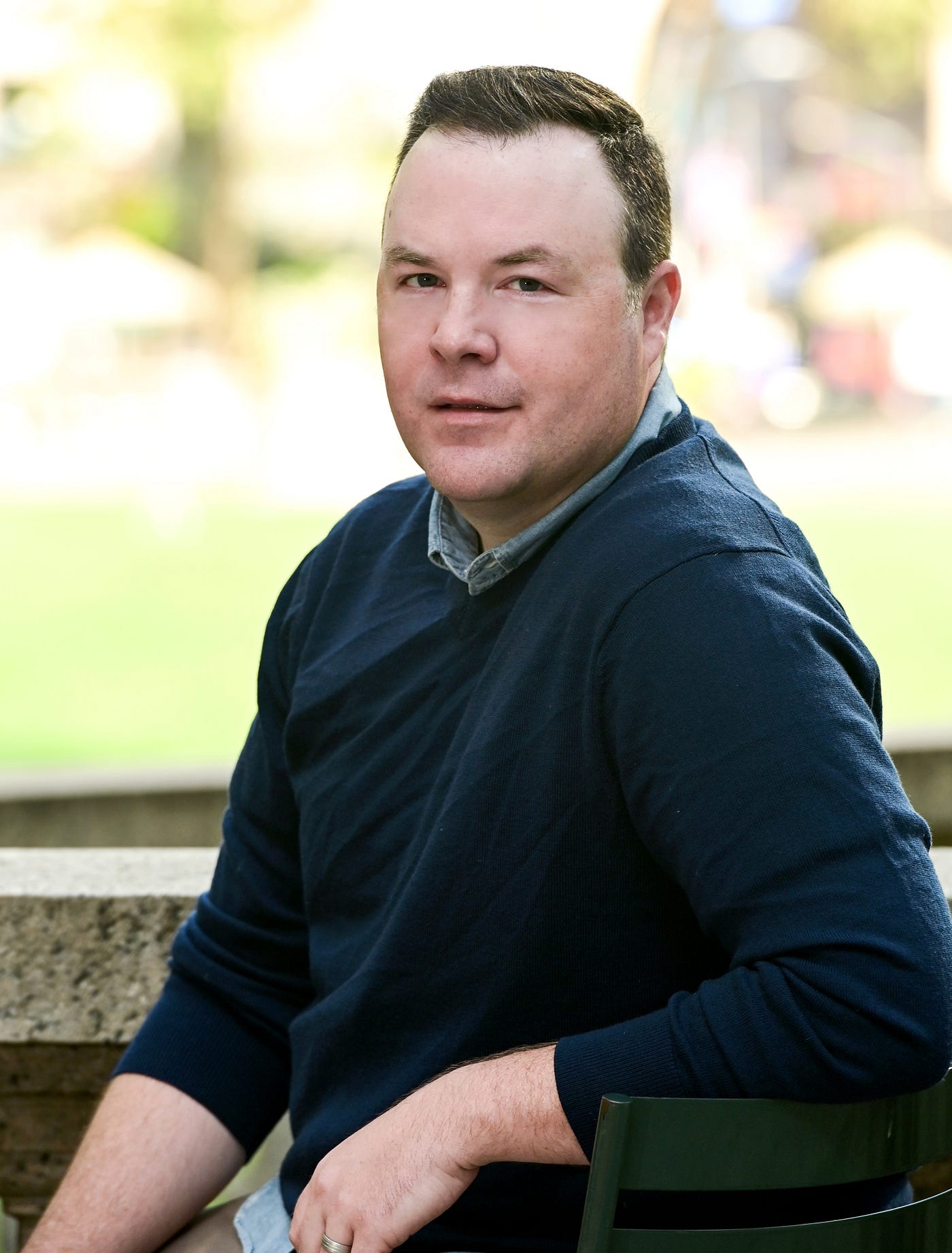
As a part of our series about “Marketing Strategies From The Top” I had the pleasure of interviewing Michael Collins, Managing Director and Chief Marketing Officer at CFA Institute
Michael Collins is accountable for leading global marketing, communications, and customer experience. He collaborates across the CFA Institute community to drive growth through effective planning, execution, and measurement. Prior to joining CFA Institute, he worked for both public and private companies including J.P. Morgan, Rockefeller & Company, Iomega, SAGA Software, Mercator Software, Gevity HR, and Computer Sciences Corporation (now DXC Technology). Mr. Collins holds a BA degree in communications from Rowan University in New Jersey. You can connect with him on Twitter and LinkedIn.
Thank you so much for doing this with us! Before we dig in, our readers would love to learn a bit more about you. Can you tell us a story about what brought you to this specific career path?
After starting college as a music major, I quickly realized that music was more of a hobby for me. My father was the publisher of daily and Sunday newspapers in Illinois and New Jersey, and I decided to pursue a major in journalism instead. One of my professors told me no matter what job I would hold in the future; writing would always be a valuable skill. And he was right, especially give my career as a global marketer! My first job out of college was a marketing position at a natural gas utility. From there, I worked at an integrated marketing agency where I was exposed to all different aspects of the marketing mix. There I learned the fundamentals of B2C and B2B marketing, which I still apply to my daily work as CMO at CFA Institute.
Can you share a story about the funniest marketing mistake you made when you were first starting? Can you tell us what lesson you learned from that?
In my first job at a natural gas utility company, I was responsible for writing and distributing the news of interest and safety information that accompanied monthly billing statements to our customers. Let’s just say I made a critical proofreading error. Instead of the word “public,” the letter “l” was unintentionally left out of the word. Thankfully, the mistake was caught before the mailer was distributed. I quickly learned the lesson that details matter.
Are you able to identify a “tipping point” in your career when you started to see success? Did you start doing anything different? Are there takeaways or lessons that others can learn from that?
In 1994, I became Senior Director of Worldwide Marketing at Iomega, a personal technology storage company (way before the days of broadband and Dropbox). It was my first time working at a hyper growth company; in fact, our revenue increased from $140 million to nearly $2 billion in 36 months. This was a distinct shift in my career and the point at which I truly understood the integral role of the end customer. While many marketers get caught up in the competition, I learned that marketing through the customer lens is the hallmark of success.
What do you think makes your company stand out? Can you share a story?
The mission of the CFA Institute is what most defines us: to lead the investment profession globally by promoting the highest standards of ethics, education, and professional excellence for the ultimate benefit of society. This focus on benefiting society is at the core of who we are and what we do. By providing the highest levels of education and training, we are helping investment management professionals provide sound financial guidance to individuals who need it most. In this way, CFA Institute is truly focused on finance for good.
Are you working on any exciting new projects now? How do you think that will help people?
One of the CFA Institute projects I’m most passionate about right now is called Spark. It’s a global demand generation campaign with a major focus on the Gen Z audience. The idea is to educate students nearing the end of their college education (as well as early- to mid-career professionals) about the wealth of benefits they can unlock by taking the CFA Program. By building demand and awareness for our program, we are creating a direct path to the next generation of financial leaders.
What advice would you give to other marketers to thrive and avoid burnout?
I think it’s extremely important for marketers to make their work a team effort. I’ve seen many marketers fall into the trap of doing everything themselves to ensure things are done to their liking. However, leaning on a team, especially a diverse and inclusive one, yields much better results. In fact, I think one of the secrets to my success has been hiring teams that bring strengths that I don’t necessarily have and empowering them to do their best work and be their best selves.
The pandemic has completely transformed the way we work. Flexibility is key to ensuring that my team and I stay engaged and productive. I believe that the new 100% is now closer to 75% to 80% since there is significantly less separation between work and home. I try my best to be flexible with deadlines and expectations for my team so that they have the freedom to approach their work in the manner that’s most convenient for them. This includes encouraging them to take screen breaks and carve out time for self-care!
None of us can achieve success without some help along the way. Is there a particular person who you are grateful towards who helped get you to where you are? Can you share a story about that?
When I was hired to run Iomega’s global marketing practice, I was less seasoned in the nuances of consumer marketing, and I knew I needed guidance and education to succeed. At the time, my boss said, “I don’t have the time to help you with this, but I know someone who does.” He connected me with a consultant named Doug Rose who became one of my greatest mentors. By educating me about the ins and outs of consumer marketing and helping me think strategically about reaching the end customer, Doug was instrumental to my success.
I’ve always believed in having a mentor, a topic I’ve covered extensively on LinkedIn. With a mentor in your corner, they can help invigorate your level of confidence in yourself because you’re able to run things by them and, if they really are truly a mentor and not just somebody who wants to pump you up and make you feel better, they’ll be honest with you. They can tell you if you’re in the right or the wrong, or if you have a little more thinking to do about something. The right mentors can make a meaningful difference in your career trajectory and ultimate success.
Ok super. Let’s now shift to the main part of our discussion. There are hundreds of memorable marketing campaigns that have become part of the lexicon of our culture. What is your favorite marketing or branding campaign from history? Can you explain why you like that so much?
There have been so many stellar marketing campaigns in history. If I had to choose one it would be State Street Global Advisors’ “Fearless Girl” campaign. As you may recall, in honor of International Women’s Day 2017, State Street introduced the Fearless Girl statue to the world to encourage companies to appoint more women to positions of leadership. Throughout the years, this remarkably creative idea has been built upon to create a global phenomenon, generating many awards and billions of media impressions. What I love most is that it was a simple, cost-effective idea driven by the power of social media. And the impact has been astounding. Since the launch of the campaign, nearly 1,500 companies were identified for not having a woman on their board and 862 of those identified have added a female director. Now that’s what I call a powerful marketing campaign!
If you could break down a very successful campaign into a “blueprint”, what would that blueprint look like? Please share some stories or examples of your ideas.
Every successful campaign needs a strong foundation, just like any structural building. In marketing, the foundation should consist of two main parts: the customer and relevant market insights. Building the campaign around what the customer needs and what the market dictates helps make marketing campaigns more meaningful and successful. Once the foundation is set, campaigns then need the right infrastructure. Just like a building needs plumbing, electric and ventilation systems to work, the best campaigns need a cross-functional team of experts from technology, finance, legal and other key departments to ensure the campaign meets its benchmarks and runs smoothly.
Companies like Google and Facebook have totally disrupted how companies’ market over the past 15 years. At the same time, consumers have become more jaded and resistant to anything “salesy”. In your industry, where do you see the future of marketing going?
Without a doubt, the future of marketing is all about personalization. I believe that personalization is key to unlocking customer relationships. After all, research shows that more than half of online buyers are happy to exchange personal data in return for personalized offers or discounts, and 58% say personalized experiences are important when buying from a company. By identifying the biggest moments of receptivity for their brand’s story, marketers can connect with the right people at the right time via the right channel. As technology and AI continues to advance, marketers will be able to further hyper-personalize the customer experience with ease. And those who lean into personalization efforts will be celebrating their loyal group of followers.
Can you please tell us the 5 things you wish someone told you before you started? Can you please share a story or example for each.
The first thing I wish someone told me is to take at least level one of the CFA program to get a strong foundational understanding of investment management. Even though I wasn’t pursuing an investment management career, I realize how much knowledge I would have accumulated and used to make sure my financial health was sound right from the start. In addition, I’ve seen first-hand the impact CFA Charterholders have on people’s lives and learning how they approach their work and hone their craft would have been invaluable information for me to hold in my personal and professional lives.
The second thing I wish I had learned is being strategic about job changes. Early on in my career I changed jobs quite often to accelerate my learning curve and because I had various bosses who left one company and asked me to come to the next company with them— for more responsibility and more money. While I think changing jobs helped me develop extensive and well-rounded marketing experiences, it worked against me later in my career when hiring managers wanted to know why I had moved so often. Although I had a good narrative to explain my rationale, I wish someone would have told me early on to be measured in my changes. It’s not good to move to the next job too often nor is it good to stay too long. A mentor earlier on may have helped me in this regard.
The third thing I wish I knew was to live in target rich geographic areas. What I mean by this is if you want to work in tech, it makes sense to live in Austin, the Bay Area, or another tech hub. If you want to work in government, live in your state capital or in Washington, DC. In my experience, I ended up moving to different areas of the country for specific job opportunities. Once it was time to move on, I found that there weren’t a lot of other companies in that area that needed someone with my skills. That ended up causing me to either commute extensively to a new role or relocate, both of which were disruptive.
The fourth thing is staying physically fit. It wasn’t until I had worked for 20 years and was out of shape that I finally put the time and resources into getting and staying fit. It has made a world of difference in terms of my focus and energy.
Finally, I wish someone had told me to take an international work assignment. I had the opportunity in my mid-30s to live abroad and I’ve regretted not taking advantage ever since. Not only would it have provided a rich cultural experience, but I know that many companies value people who have lived and worked abroad.
Can you share a few examples of marketing tools or marketing technology that you think can dramatically empower small business owners to become more effective marketers?
For small businesses in particular, I can’t overemphasize the importance of using an effective CRM system. Identifying new and servicing existing clients is fundamental to small business success and having a system that helps maximize those relationships is key. In addition, not all small businesses have high levels of marketing expertise and experience. In this case, I always recommend outsourcing some work to a small marketing agency that can help you reach your marketing goals effectively and efficiently.
What books, podcasts, documentaries, or other resources do you use to sharpen your marketing skills?
I learn most from other marketing colleagues. By hearing about what they’re working on and how they approach key challenges in our industry, I’m able to keep my skills evolving. For example, I’m a big reader of Forbes. I think they do a stellar job covering the latest marketing trends and showcasing the most impactful campaigns. I really enjoyed authoring a column for Forbes in 2020 to share some of my own thinking with my peers. I also love listening to Renegade Marketers Unite! a podcast that features insight-rich interviews from CMO colleagues across a wide range of industries. And I never miss an opportunity to attend a meeting of the Association of National Advertisers (ANA).
Who is your hero? Can you explain or share a story about why that person resonates with you?
My hero is my father. I’ve learned so much from him throughout my life, but the chief lesson he imparted was this: if you have the choice between hiring someone has 85% of the required skills, but is a hard worker, team player and sees the glass half full and someone with 100% of the skills, but their attitude is less of a fit, always go for the former.
As with so many people, I learned some of my most important business lessons from my dad. My father always valued the person’s character over their skill. Their work ethic, personality, ability to get along with people, mattered to him. I’ve carried my father’s advice with me throughout my career. In every organization I’ve been in, I’ve looked for the people who—regardless of what their skill level was—really wanted to be there. Because skill ensures proficiency, but it doesn’t ensure comradery or accountability or any of the things that are so much more important to developing people and succeeding as a team.
You are a person of great influence. If you could inspire a movement that would bring the most amount of good to the most amount of people, what would that be? You never know what your idea can trigger. :-)
If I could inspire any movement, it would be one that fosters risk-taking. I truly believe that too many people miss out on amazing opportunities because they’re afraid to take risks in their career. If more people took chances, think about how much innovation could be unleashed.