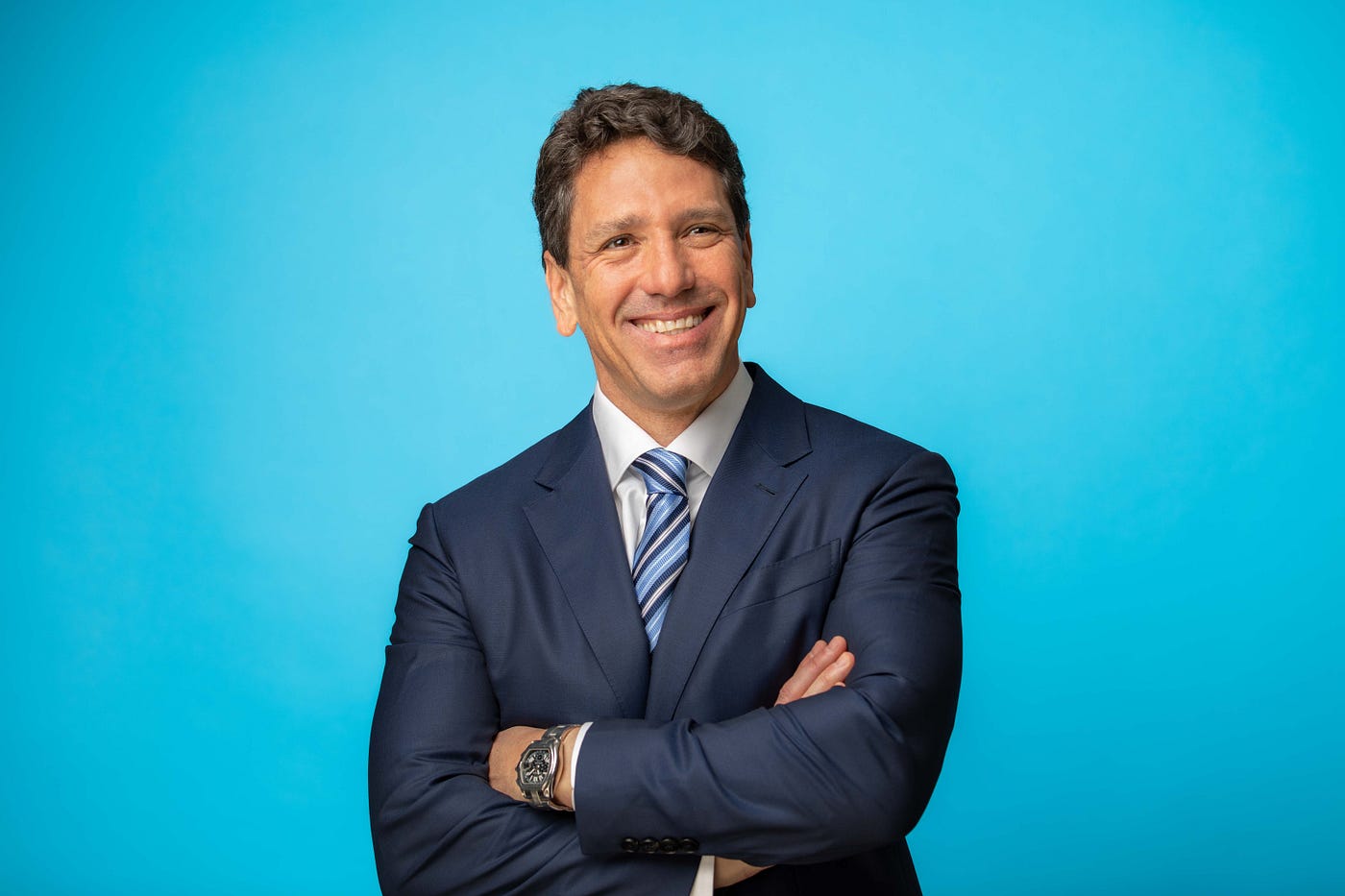
The biggest one that comes to mind is the decision that we made to pivot the company into medtech. I don’t take sole credit for this decision — it came from a great process with my team and our board.
Business
Matt Trerotola: Inside the Strategic Pivot to Transform an Industrial Conglomerate Into a Medtech Leader
The CEO and board chair of Enovis shares how shifting a massive industrial enterprise into orthopedic medical technology required bold conviction and complex operational execution.
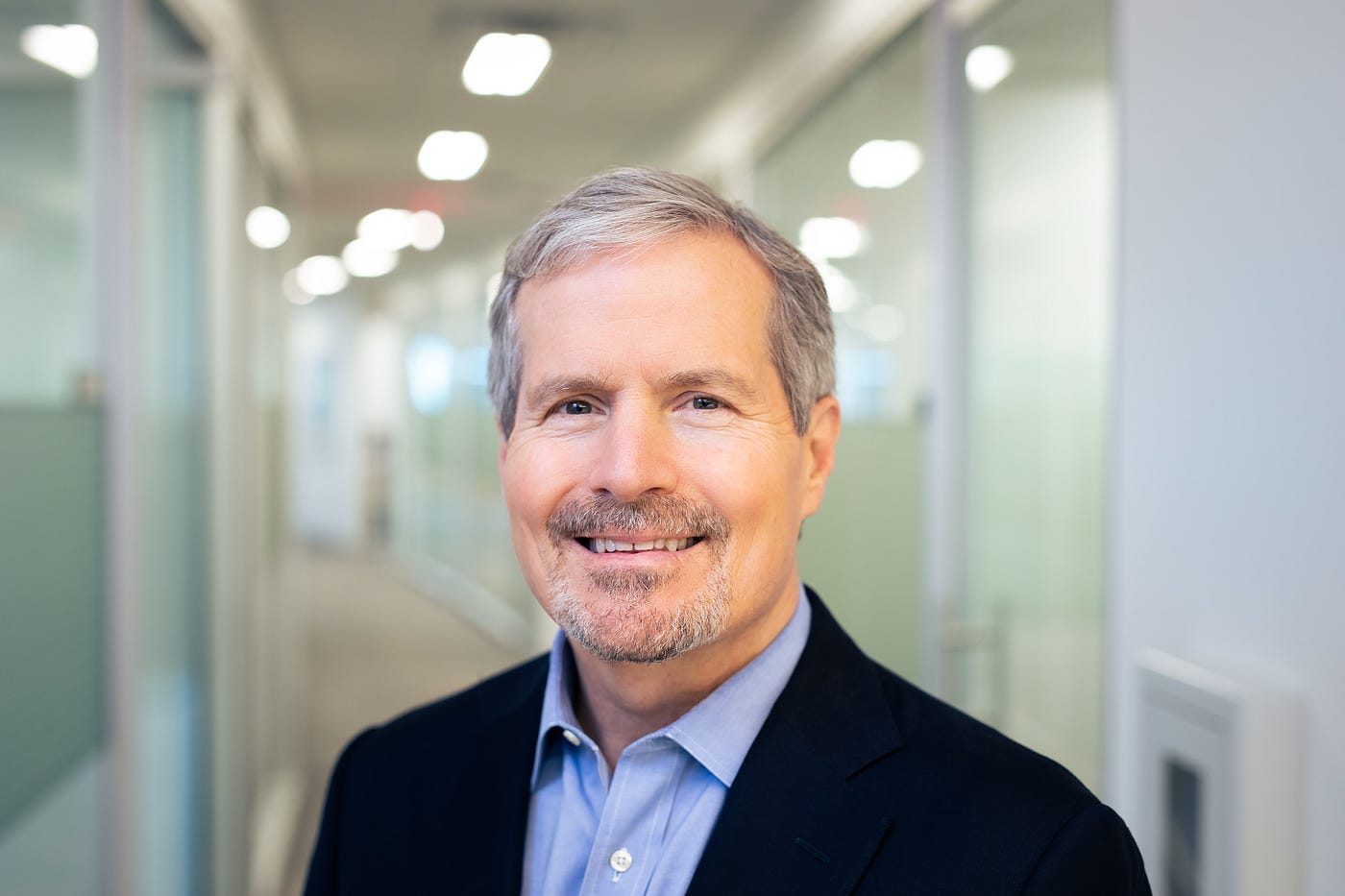
As a part of our series called ‘Five Things I Wish Someone Told Me Before I Became A CEO’ we had the pleasure of interviewing Matt Trerotola.
Matthew L. Trerotola is Chair of the Board of Directors and Chief Executive Officer at Enovis Enovis Corporation (NYSE: ENOV) is an innovation-driven medical technology growth company dedicated to developing clinically differentiated solutions that generate measurably better patient outcomes and transform workflows. Powered by a culture of continuous improvement, global talent and innovation, the Company’s extensive range of products, services and integrated technologies fuels active lifestyles in orthopedics and beyond. Trerotola has spent most of his career in various roles at DuPont, Danaher Corporation, and McKinsey & Company. Prior to joining Enovis (Colfax at the time) where he served as a director of the Company since July 2015, Trerotola was an executive vice president at DuPont.
Thank you so much for joining us in this interview series! Before we dig in, our readers would like to get to know you a bit more. Can you tell us a bit about your “backstory”? What led you to this particular career path?
My father was a leader in business. He spent most of his career at DuPont and retired as a senior sales and marketing executive. I always admired him growing up and wanted to be like him. And so, I got a chemical engineering degree and started my career working as a salesperson at DuPont. I later got my MBA and spent some time at McKinsey and Co., where I learned a lot about strategy. I spent some time at a fantastic company called Danaher, learning a lot about general management and acquisitions. Eight years ago, I got the chance to join Colfax as its CEO. It was a great opportunity to lead an industrial business. Colfax was involved in a range of industrial businesses, everything from welding products to huge fans and compressors that are used in power plants and mines. Since I joined, we’ve completely reshaped our company through a series of acquisitions and divestitures and have created Enovis™ — a medtech growth company focused on orthopedics. I’ve spent the last eight years applying a lot of the experience from my earlier career to work with the team to create the exciting company that we are today.
Can you share the most interesting story that happened to you since you began leading your company?
During our transformation into Enovis, we acquired an orthopedics company back in 2019, DJO, known for its DonJoy® athletic braces. As we were working on that deal, it was around the beginning of football season. In one of the very first plays of the NFL season’s Thursday night kickoff, a quarterback slid on the field and the brace he was wearing was completely mangled. The trainers had to actually cut the brace off of him. And everyone could see the big label on the brace he was wearing — our main competitor! People started texting me in disbelief that our competitor’s product just blew up on live, national television. That’s when I realized what a big transition this really is, going from being an industrial products company to a medical products company. There are really a lot of people (not just NFL quarterbacks) who count on our implants and our braces and other products day in, day out to lead healthy, active lives. And that’s certainly something I’m very proud of.
Can you share a story about the funniest mistake you made when you were first starting? Can you tell us what lesson you learned from that?
This goes back to before my time at this company. I was about 40. I got a job leading a business and went on some travels around the world to meet the organization. This was just at the beginning of the business casual trend, which I loved because I never really liked wearing a tie. I would go casual anytime I could. And so I went on this trip, and one of the places we went was Luxembourg, where we had a very large site. We had an important dinner event, and I showed up without a tie, really embracing the business casual look. But the event was at a very nice restaurant in town where you had to wear a tie. They had to pick a tie for me out of a box they had at the restaurant, and they picked a really ugly tie. People literally joked about it for years afterward. I guess the lesson here is to always ask, don’t assume.
None of us are able to achieve success without some help along the way. Is there a particular person who you are grateful towards who helped get you to where you are? Can you share a story about that?
There are several people. First off, my wife Beth has been with me for my entire career — through probably a dozen moves, and she has been a terrific and patient champion and supporter. As far as mentorship, there are two that really stand out. One is Phil Knisely, who was one of the executive vice presidents at Danaher when I was there. He was an extraordinary businessperson with a remarkable ability to make the complex simple — whether it was about strategy, organization, or operations. He was performance-oriented, but always a person you could count on to jump in and help the team. I learned a great deal from him, and still go back to him and ask questions from time to time. And another great mentor I had was Ellen Kullman. She ultimately became the CEO of DuPont. She gave me my first general management opportunity and taught me a lot about how to think about the business on two horizons — both the short-term execution and where you’re taking the business strategically. She used to talk about the leader’s role bringing “heat, light, and water” to biggest opportunities and problems. I also learned a lot from her about identifying and developing emerging and diverse talent.
Leadership often entails making difficult decisions or hard choices between two apparently good paths. Can you share a story with us about a hard decision or choice you had to make as a leader?
There have been a lot of those. The biggest one that comes to mind is the decision that we made to pivot the company into medtech. I don’t take sole credit for this decision — it came from a great process with my team and our board. Another choice we could have made would have been to just bulk up and grow in the more cyclical industrial businesses that we had — there certainly was a path there. But we chose instead a path that required bold conviction and complex execution. Medical technology has better long-term growth opportunities, but there were plenty of risks in the transition. So, that decision to pivot the company was a huge one, the biggest one that I’ve ever made in my career. Ultimately, I think we made a great decision. Enovis is on a great path and really building momentum in the medtech space. And some of the businesses we spun off or sold are also doing great.
Most of our readers — in fact, most people — think they have a pretty good idea of what a CEO or executive does. But in just a few words can you explain what an executive does that is different from the responsibilities of the other leaders?
Well, the buck stops at the CEO as the single person in the company that is ultimately accountable for everything. That includes short-term success, long-term success, and just about everything that happens daily, monthly, and annually. While everyone else at the company reports to a boss or a supervisor, the CEO doesn’t have one boss, but reports to the board of directors. CEOs sit at this interface between the whole organization — which is dedicated to serving customers — on one side, and then on the other side the board of directors that exists to make sure the company is serving the shareholders. The CEO sits in the middle, working to make sure that all the stakeholders are being served, and in the right way.
What are the “myths” that you would like to dispel about being a CEO or executive? Can you explain what you mean?
Most of what you see written about CEOs are exceptions. You hear about the fantastic geniuses who create whole new companies or who turn around American icons, and you also hear about the catastrophic failures who either have giant ethical lapses or preside over the demise of an American icon. You hear about extreme cases. But the reality is that most of us are just normal people. We worked hard to get to where we are, and we’re doing the best we can to serve the stakeholders of the company and create a great enterprise that has a great track record. We go home in the evening to our family and our pets. We have good days and bad days. We are normal people doing the best we can to create the best possible company we can.
What is the most striking difference between your actual job and how you thought the job would be?
I always knew that a CEO’s job involves a lot of decision-making and prioritization and putting the right people in the right seats. It’s easy to see all the elements of what you need to do as a CEO, but until you sit in the chair, you can really underappreciate the role that momentum plays in bringing all of these things together to create great lasting performance. There’s momentum that you need to build day by day and month by month. A little bit of success leads to more success. Good products lead to great products. Great products lead to more confident channels that gain more share. Putting great people in roles leads to more great people that they hire and develop. Then eventually, shareholders see good things and expect more good things. So, I’ve had to do all the things I knew I was going do, but then also to try to figure out how do we create lasting, accelerating momentum? We’ve made it our company’s purpose — Creating Better Together.
Do you think everyone is cut out to be an executive? In your opinion, which specific traits increase the likelihood that a person will be a successful executive and what type of person should avoid aspiring to be an executive? Can you explain what you mean?
That’s a tough question. I think people should have big dreams and as leaders we should try to help them reach their full potential. There are a lot of different kinds of executive positions in companies. As people learn about themselves and learn about their strengths, they can always learn to navigate toward an executive position that fits their capabilities and interests.
What advice would you give to other business leaders to help create a fantastic work culture? Can you share a story or an example?
The best advice I can give is to keep it real. If you try to create a culture you do not believe in your heart and soul, you will fail. There is no way to fake culture. One of the things that landed me at Colfax — now Enovis — is that I spent a part of my career at Danaher in a continuous improvement culture that I believed in, in a huge way. I was extremely excited to join a company like Colfax, which already had seeds of a continuous improvement culture. And I think you have to recognize that culture is a journey. You can have all the PowerPoints in the world, all the values on paper, but these are just the starting point. You work hard on culture until you gain momentum, and then the culture just continues to recreate itself.
How have you used your success to make the world a better place?
Almost ten years ago, I really wanted to get involved with a nonprofit organization and start to give some of my time, money and capabilities to an organization that I believed in very much. After looking at a number of opportunities, I got involved in the Boys and Girls Club of Delaware, where I have a position on the corporate board. It’s an extraordinary organization that serves youth throughout the state and creates a safe place for kids to grow and learn. Their parents can drop them off and have subsidized childcare that enables them to go and work while the kids are learning and growing. As they get older there are teen programs that help them prepare for college or a career and also develop leadership, character, life skills. I’ve spent over nine years on the board and have contributed in every way that I can, including leading the strategic plan process for the CEO several times. I’m incredibly proud of what the organization does. It’s also part of a fantastic national organization.
What are your “Five Things I Wish Someone Told Me Before I Became A CEO” and why? (Please share a story or example for each.)
The first one is if you are not careful, people will stop telling you what they really think. And as a CEO, you need to know what people really think. But sometimes people are afraid of taking the unpopular or alternative view.
The second thing that I wish people had told me is that no matter how hard you try and what you achieve, there will always be critics. It’s hard to please all the people all the time, so a CEO should have thick skin. For example, pick the CEO you admire most, and take some time reading all of the things that have been said about him or her. CEOs have admirers, but also critics.
Thirdly, something that every CEO wishes they had been told before is this: Pandemics really happen. There’s no CEO today whose experience has not been defined by the pandemic. Before 2020 you could do all the risk scenarios in the world, all the thinking about crisis management. You could do anything and everything and now, post-2020, all of that seems like folly. What we went through and what we had to do as leaders — nobody could have ever told us how much we would have to figure out.
The fourth thing I wish someone had told me has to do with the importance of gaining organizational momentum. It takes time to build so you need to start right away and be patient but persistent.
And the last piece of advice I wish I had gotten is don’t sing karaoke at a leadership conference. I’ll just leave it at that.
You are a person of great influence. If you could inspire a movement that would bring the most amount of good for the greatest number of people, what would that be? You never know what your idea can trigger.
The opioid epidemic that we have in our country is tragic. The amount of damage being done at every level of society by opioids versus how little it even gets talked about is astonishing to me and extremely sad. We live in a day and age where with the right amount of awareness and resources we could dramatically change the trajectory of this situation. This would be the movement that I would start.
Can you please give us your favorite “Life Lesson Quote”? Can you share how that was relevant to you in your life?
There is a quote I like that is particularly relevant for CEOs and other leaders — “we can’t control what hits us (positive or negative) but we can control what we do with it”. For a company, it applies in terms of all the opportunities and challenges that can come up. It’s important to make the most of opportunities and when storms come, stay focused on what you actually can control as an organization. We need to focus on what we can control and not get distracted or overwhelmed by the things that are beyond our control.
This was very inspiring. Thank you so much for joining us!
About the Interviewer: Douglas E. Noll, JD, MA was born nearly blind, crippled with club feet, partially deaf, and left-handed. He overcame all of these obstacles to become a successful civil trial lawyer. In 2000, he abandoned his law practice to become a peacemaker. His calling is to serve humanity, and he executes his calling at many levels. He is an award-winning author, teacher, and trainer. He is a highly experienced mediator. Doug’s work carries him from international work to helping people resolve deep interpersonal and ideological conflicts. Doug teaches his innovative de-escalation skill that calms any angry person in 90 seconds or less. With Laurel Kaufer, Doug founded Prison of Peace in 2009. The Prison of Peace project trains life and long terms incarcerated people to be powerful peacemakers and mediators. He has been deeply moved by inmates who have learned and applied deep, empathic listening skills, leadership skills, and problem-solving skills to reduce violence in their prison communities. Their dedication to learning, improving, and serving their communities motivates him to expand the principles of Prison of Peace so that every human wanting to learn the skills of peace may do so. Doug’s awards include California Lawyer Magazine Lawyer of the Year, Best Lawyers in America Lawyer of the Year, Purpose Prize Fellow, International Academy of Mediators Syd Leezak Award of Excellence, National Academy of Distinguished Neutrals Neutral of the Year. His four books have won a number of awards and commendations. Doug’s podcast, Listen With Leaders, is now accepting guests. Click on this link to learn more and apply.

Published inAuthority MagazineTop Lessons, Top Authorities · 42K Followers
Exclusive, curated interviews with the leaders and changemakers shaping tomorrow. Leadership lessons, industry deep dives, and executive profiles.