
Conflict is unavoidable- there is no way to do the dance of an intimate relationship without occasionally stepping on each other’s toes. It’s simply a relationship reality that couples must learn to deal with.
Note From Nancy Landrum: As a relationship coach, I understand the challenge of practicing what I teach! I have a great deal of respect and admiration for teachers, therapists, and coaches who “walk their talk.” I’m eager to hear your story, and thank you for sharing it with our readers!
Mark Verber, Owner of EPIC Counseling Solutions on Five Keys to Happy, Lasting Marriages
Marriage is a complex journey that combines love, partnership, and mutual growth. To explore the foundations of successful marriages, we are talking to experienced marriage and family therapists. who guide couples through their challenges and triumphs. This series will delve into professional advice and strategies that foster long-lasting, fulfilling relationships. As a part of this series I had the pleasure of interviewing Mark Verber, MS, LPC.
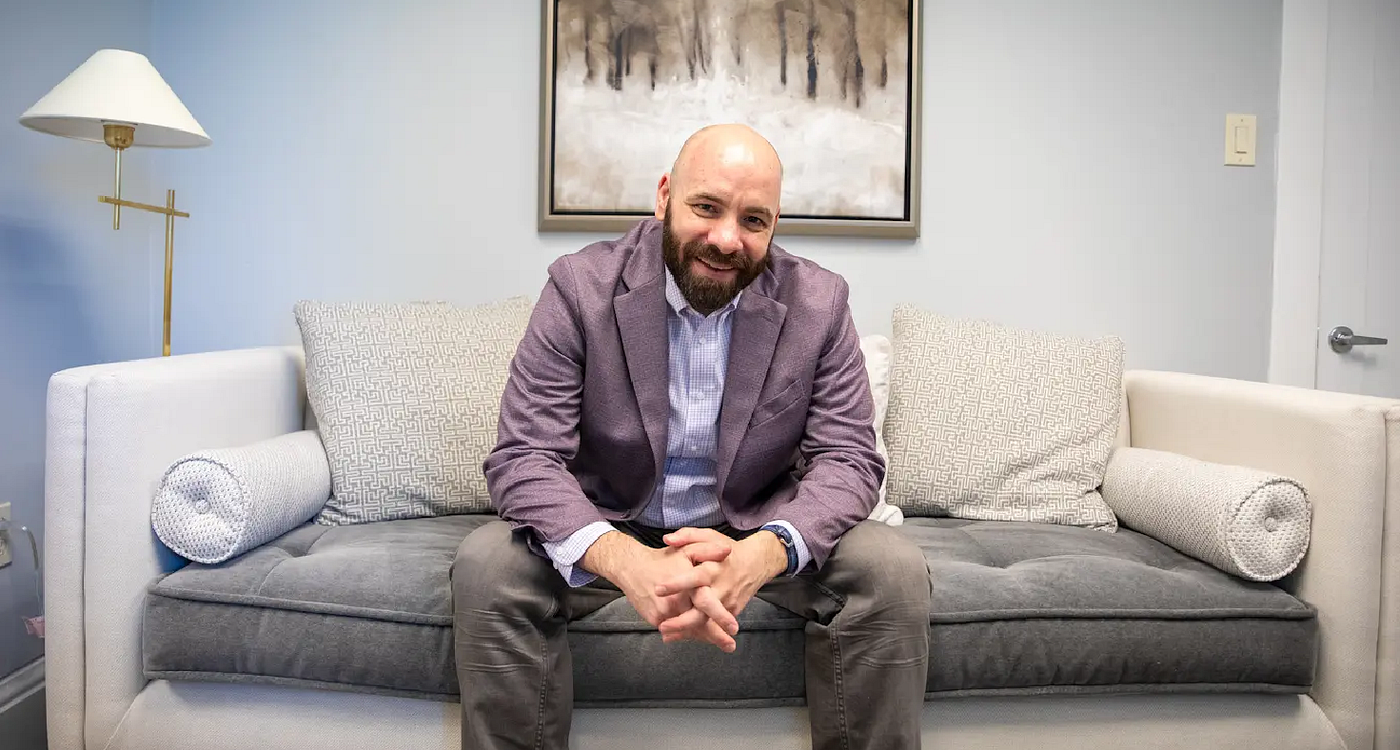
Mark is a licensed professional counselor and the owner of EPIC Counseling Solutions. His straightforward and strength-based approach prioritizes compassion and creativity to empower couples in all stages of their relationship to resolve conflicts, rediscover joy, and redefine their future together. Mark was recognized by Harrisburg Magazine as “Simply the Best” Therapist in 2021. He lives in Central Pennsylvania with his wife and son. https://epiccounselingsolutions.com/
Thank you so much for doing this with us! Can you tell us a story about what inspired you to become a therapist?
The summer after my freshman year of college I took a job at my former high school working for what they called the Buddy Program. The concept was to pair a recent graduate with a current middle school student that had been identified as “at risk” due to difficult circumstances at home. I’ll never forget picking up my buddy on the very first day. Five minutes into the car ride he told me that if his stepfather hit his mother one more time he was going to sneak into his room while he was sleeping and hit him with a lead pipe. Then he told me he already had the lead pipe. I realized very quickly that the experience was going to be something very different than the traditional summer camp vibe I had been anticipating. When he started talking about the reality of his life, I had no idea what to say. However, it occurred to me I didn’t need to. He was being vulnerable with me because I had been identified as a helper. I didn’t need to be an expert to be helpful. He desperately wanted someone to listen, and more than anything needed someone to be present for him and with him. It was my responsibility to be a caretaker for his vulnerability- to both honor it and not let it go to waste. I didn’t know at that moment that I would become a therapist, but for the first time ever I thought that I could. And perhaps I should.
What are some common misconceptions about marriage that you frequently encounter in your work?
The most common misconceptions about marriage are that it comes naturally, that it stays the same, that it gets easier, and that love is enough. These misconceptions all boil down to the same theme- that a successful marriage should be effortless. It’s understandable where this comes from. Relationships are so easy in the beginning. Humans are wired that way, to ensure we bond together and survive. However, the truth is rather counterintuitive- relationships often become more difficult over time. This is especially the case as things become more complicated with having children, busier work lives, etc. The danger of believing these misconceptions is that they prevent you from actually doing the work it takes to achieve a successful marriage. Once couples buy into the fact it takes work, they’re almost always willing to do it.
How can couples keep the romance alive, especially after many years together?
Couples that keep the romance alive do so through intentionality and flexibility. Romance needs to be consistently prioritized and reimagined over the course of a relationship to remain fulfilling and avoid being a source of frustration. Intimacy comes from both familiarity and mystery. Couples that have been together for a long time are typically very comfortable with one another. Those that keep the romance alive use that comfort level as a pathway to courage and vulnerability. In the process they cultivate a new level of emotional and physical intimacy. However, partners in a successful relationship should be like a spark plug- they need to have the right amount of gap between them. If they are too close, without a good balance of independent interests and activities, or are too distant- they will struggle to connect romantically and otherwise. A long relationship can provide a deepened emotional connection and battle tested companionship that should supplement romance, not supplant it.
What are some common conflicts that couples face, and how can they resolve these conflicts in a healthy manner?
Some of the most common conflicts for couples revolve around communication, parenting, money, sex, chores, work/life balance, and extended family dynamics. However, ultimately underneath the surface content of almost any disagreement is a more fundamental conflict stemming from a sense of disconnection and disregard. This comes from a misalignment of priorities, a sense of unfairness, feeling unheard, and a lack of responsiveness to concerns.
Conflict is unavoidable- there is no way to do the dance of an intimate relationship without occasionally stepping on each other’s toes. It’s simply a relationship reality that couples must learn to deal with. I like to tell couples that conflict is like the check engine light on your car. It is an alert system. It tells you that there is something important to pay attention to. Like with the check engine light, you can ignore it and probably get away with it for a while. However, eventually you will find yourself broken down on the side of the road.
For conflict to be productive couples need a good plan and process to navigate it that is both intentional and structured. Here are some tips couples can use:
Do it in person. The speed of texting is what we love about it, but with conflict speed is counterproductive. When couples text, they give up the ability to convey tone, read body language, make eye contact, and correct misunderstandings quickly.
The Right time is of the essence. The number one thing that goes wrong in conflict is timing. If it’s a bad time for either partner, it’s not going to go well. Make sure you have a soft spot to land before you leap into conflict. When in doubt, ask.
One topic at a time. When conflict goes awry, it is like a pinball machine bouncing from one topic to the text. Choose one issue to address, and table the rest for another time.
Address behavior, not character. Make the issue the issue, not your partner. While there are obvious overlaps, people are more receptive to changes that they can actually make. It’s much easier to start picking up your laundry than it is to stop being lazy.
Keep it short and sweet. No human being can effectively engage in conflict over an extended period of time. The diminishing returns not only reach zero, they become negative rather quickly. You are much better off having 15 productive minutes of conflict four times, then one bad hour.
How important is trust in maintaining a strong marital bond? What strategies do you recommend for rebuilding trust after it has been broken?
A relationship can exist without trust, but it won’t thrive without it. Trust is the ultimate trump card in relationships. As long as you have it you don’t need to think about it. However, if it is lost it’s all you think about. We view trust as a part of the collective experience in the context of relationships. However, it is mostly an individual phenomenon. Trust in a relationship is like two aligned bicycle tires, separate but in sync. If one of those tires pops and the other remains intact- they are both immobilized. Trust is built and broken on perception as much as action. Someone can be unfaithful for 20 years without their partner knowing it. The perception would be of a trusting relationship. However, once the affair is discovered trust will be destroyed. That same partner could be completely faithful for the next 20 years, and yet trust may not be restored. Not simply because of actions, but because of perception.
The challenge of restoring trust involves a committed effort from both partners. The unfairness of it all is that the person who had no part in violating trust suffers the most and carries the heaviest burden to repair it. When trust is lost the wounded partner usually seeks guarantees. Searching through phones, reading text messages, and tracking locations. It’s understandable under the circumstances but should be seen as a temporary band aid. As long as there is checking, there is no trust. Trust by definition is faith and confidence without confirmation. Transparency, accountability, and patience are paramount through the rebuilding process. Incremental fibers of good faith need to be weaved together bit by bit, and with each step another section of scaffolding put in place can be pared away. When repairing a relationship trust is the last thing to come back- but when it’s earned it’s worth it. Couples counseling can also be very helpful and sometimes necessary in providing a safe space and a skilled guide to facilitate this process.
Can you share some practical communication techniques that couples can use to improve their relationship?
View a conversation as a game of catch. In a good conversation the message, like the ball, is secured and considered before being sent back. When there’s a misfire or someone drops the ball, it’s simply picked up and returned. The two most important elements of any game of catch or conversation are velocity and reciprocity. A steady pace and equal participation create a good rhythm. With your partner we’re striving to lob a nerf ball at a catcher’s mitt- plenty of cushion and surface area. When a conversation goes off the rails it is more like trying to catch a nine ball with a pool cue.
Validate before you negate. Validation is about letting your partner know they are making sense to you. The bottom line is that they want to know you get it. You do this by effectively connecting the dots out loud for them. It’s important to recognize that you don’t need to agree with them in order to validate. Agreement is a luxury.
Turn complaints into requests. Renowned therapist Esther Perel famously says that “Behind every criticism is a veiled wish.” In relationships we have a tendency to lead with criticism and never get to the wish. Imagine how much more effective it would be to turn complaints into requests. Instead of making the complaint “You don’t make time for me,” you could say “Let’s plan a date night for this Saturday.” A series of requests offered and honored is the foundation for a more connected and fulfilling relationship in literally no extra time.
Communicate Like A PRO. Communication is too important to be guided by wishful thinking or left to chance. This is especially true when there is a particular event to tackle together that can add stress and require extra coordination, like a wedding or family holiday. Instead, consider communicating like a PRO:
Proactive: Like the best professional teams, you should proactively have a game plan discussed beforehand. An ounce of prevention is worth a pound of cure.
Responsive: Be mindful of when there is a rise in tension or a loss of momentum. Have a shared language and ability to responsively call a timeout when the situation demands.
On Schedule: Agree in advance to touch base on schedule at a certain time, just like halftime. It could be as simple as “Everything okay?” Or it might be “The heavy hors d’oeuvres aren’t holding, we need to find a drive thru before I get hangry.”
What are five skills or concepts that you’ve found beneficial in your marriage that you also share when working with couples?
Number 1 – Prioritize The 3 Re’s
The 3 Re’s are being Receptive, Responsive, and Repetitive. It’s about listening to your partner, taking action on what they are saying, and doing it consistently. Everything builds from this. In relationships you either pay attention or you pay the price. Listening is how you know it, and acting is how you show it. However, consistency is what’s most important. Because with consistency comes confidence. Confidence in each other, the relationship, and the future. Confidence creates the capability to turn inevitable challenges into insignificant speed bumps. The 3 Re’s are what it takes to be a good partner and the beauty of relationships is that two good partners make for one great relationship.
Number 2 – Create Moments of Intention
It goes without saying that spending time together as a couple is essential. Without it the rest of this list is a moot point. However, carving out time together is one of the biggest obstacles that couples face. We can’t wait for time; we have to create time.
Time together is the oxygen that sustains relationships, and we can’t hold our breath all week and expect to catch up on the weekend. Vacations and date nights are great, but they aren’t always going to happen. Finding time can be like trying to put a jigsaw puzzle together when the pieces simply don’t fit. But sometimes we just need smaller pieces.
The goal is to create moments of intention that serve as reliable relationship touchstones. This can include rituals of connection seamlessly incorporated throughout your day, as well as scheduled times that can be short as long as they are set in stone.
If you don’t have time for a meal together, perhaps coffee. If not a hike, then a short jaunt around the neighborhood. If not a long conversation, then at least a phone free 15 minutes to download the day. In relationships, being efficient isn’t always productive. Creating small but meaningful moments of intention forces you to slow down but allows you to go further.
Number 3 – Have Difficult Conversations
I know what you’re thinking- difficult conversations don’t sound very appealing, shouldn’t we be trying to have easier conversations? Easy is great when you can get it, but if they’re all easy we’re missing something. If you sweep enough under rug, eventually you’re going to trip over it. The good news is that difficult conversations lead to easier relationships. Successful relationships don’t avoid difficult conversations, they take advantage of them.
It starts with timing. If it’s a bad time for either partner, it’s not going to go well. Don’t feel pressured to have a difficult conversation right away or all at once- as long as you commit to having it. It’s better to go to bed angry than really angry.
Difficult conversations are more than a necessity, they’re an opportunity. When approached with the right balance of grit and grace they are a tool couples can use to deepen understanding and strengthen connection. While they may involve some friction- friction can be the start of traction.
Number 4 – Bowl with Bumpers
Relationship strain is inevitable, the negative impact it can have is not. Successful marriages find a way to address concerns, correct miscommunication, and repair hurt feelings quickly and effectively. I call this bowling with bumpers. You’re not going to bowl strikes every time, but the ability to repair is like having bumpers so couples can miss the mark and still bounce back without landing in the gutter.
When your partner is upset it should be your number one priority. However, in the midst of conflict we have the least amount of perspective, compassion, and reason. We overcome this by how we prepare in advance and repair afterwards. So, don’t wait to repair. Waiting for the perfect time or words usually leads to lots of waiting and few perfect words. Be the first to flinch. A good apology is a relationship superpower that is always at your disposal. And forgiveness is a gift to both partners. If you want a long relationship you need to have a short memory.
Number 5 - Evolve to Thrive
Relationships are so magical and intoxicating in the beginning that we hold them to an ideal we learn from fairytales and fortune cookies. Nothing deserves to be romanticized more than relationships- however, the reality is rarely as poetic or perfect.
Relationships are living things, and like people they go through growth spurts and growing pains. The attention and support that a 2-year-old child needs to be successful is very different than what a 12-year-old or 22-year-old needs. Relationships are the same way. They need to evolve to thrive.
When we let go of what our relationship was, we open ourselves up to what it can be. While this may not be easy, a relationship is worthwhile, not despite being difficult, but because it’s difficult. Marriage is an opportunity to become better in order to be part of something greater. Couples have a chance to rise to the challenge together so that they don’t have to succumb to it alone. But, they either grow as partners or they grow apart.
How hard is it to practice what you teach couples in therapy?
It’s really easy…as long as I’m not tired, stressed, distracted, overwhelmed, conflicted, emotional, or dysregulated in any way. Which basically means, it can be very challenging. Knowledge is much easier to accrue than wisdom is to apply. There is no question that being married definitely makes me a better marriage counselor, and being a marriage counselor makes me a better husband. However, neither makes me perfect. I like to joke that while I may be considered a relationship expert, my wife doesn’t always agree. The biggest benefit of the overlapping experiences is being able to really empathize with both how difficult relationships can be, but also how rewarding they can be.
None of us are able to achieve success without some help along the way. Who has been the inspiration or model for your marriage? Can you share a story about that?
I have been really fortunate that I didn’t have to look far for amazing marriage role models. I like to say that proximity is power. The closer we are to something, the greater an impression it has on us. It doesn’t matter if it is a hot stove or role models. My parents have been married for 52 years and have served as inspiring models for my own marriage. They always had a shared vision and were mutually invested in its execution. At the center of it all is an enduring love, and something beyond respect that can almost be called reverence. Looking back, I realize my parent’s marriage wasn’t perfect, but it was precisely how the “imperfections” were handled that has made it so successful. Disagreements never lasted long, and they never carried over to other times or parts of the relationship. They had a process to address but also contain conflict that served as “firewalls.” This is something I endeavor to practice in my marriage as well as teach all the couples I work with. Even if an issue burns hot, it shouldn’t burn the house down.
It wasn’t until nearly 50 years into my parents’ marriage, when faced with their greatest challenge, that I truly appreciated how strong their bond is. My mother experienced a rapid onset of dementia, and practically overnight there was a drastic upheaval and complete role reversal. My mother, the third-generation nurse and consummate caretaker was now tended to with the utmost diligence and sensitivity by my father- the always strong, problem-solving provider. While their reality and roles changed, their priorities didn’t.
It helped me realize that with my parents, problems never changed priorities and circumstances didn’t impact commitment. This can be a counterintuitive concept. Why wouldn’t problems be the priority? If problems became priorities, then our focus would constantly be drawn away from the reason behind solving problems. Those reasons should always be the priorities. The goal is to address problems with urgency, yet not allow them to supersede priorities. For my parents, family always was and remains the priority. I’d like to think my brothers and I have more than benefitted from this, we’ve embraced it. There is no greater evidence of this than seeing the close relationship and affection their grandkids have for Nana and Grandpa. The adversity my parents faced has only deepened their admiration and demonstrated how steadfast their commitment to each other is. They continue to model the most important aspect of marriage- doing whatever it takes to support each other even at the most difficult times.
Is there any particular book or concept that helped you overcome a turning point in your marriage?
The greatest turning point in our marriage was the birth of our son. The best word I can think of to describe the experience is transformational. When you have a child you learn that there’s not just one new person in the home, there’s three. Everyone has changed. It’s been the best thing to ever happen to us, but as any parent can attest, it’s also a difficult adjustment. It really exemplifies the fact that opportunities and challenges are the flip side of the same coin. It’s nearly impossible to have one without the other. When you have a child, it instantaneously widens your perspective and narrows your purpose. Prior to having a kid, you may hit a few potholes as you are cruising along, but after a kid those same potholes happen while traveling at high speeds with no shocks and low on oil. Yet, the view through the windshield is the best it’s ever been.
Books by those I consider to be the Mount Rushmore of modern marriage such as John Gottman, Sue Johnson, Esther Perel, Terry Real, Harville Hendrix, and Stan Tatkin have all been immensely helpful. However, there is something else that I read the most- the marriage vows I wrote to my wife. I emailed them to myself years ago and refer to them whenever a situation warrants a reminder. There are two lines in particular that now stand out to me the most:
“Being with you makes failing seem safe yet success seem certain.”
This really sums it up. I’m forever grateful to have a wife whose unconditional support comforts me, and whose confidence in me emboldens me. I know that regardless of the outcome- we’re good.
“I hear the way you talk about me, and I vow to be as good a man as you believe I am.”
What more could anyone ask for than having a partner who inspires you to be better, and yet already sees you as your best.
I have come to learn that what it takes to achieve a successful balance as both partners and parents can be distilled into one concept. You can no longer meet each other halfway. That simply won’t cut it. You need to be willing to extend yourself all the way, because there will simply be times when your partner simply isn’t able to. This is doing whatever it takes to support each other at the most difficult times put into practice.
How have you used your success to bring goodness to the world?
I like to think that if I’m doing my job well, I never see my best work. Therapists work on an island of sorts- independently and in a confidential setting. Progress isn’t always immediate or tangible. At times I joke that I wish I was a carpenter. By the end of each day, I would see walls built that weren’t there before. Progress would be concrete and come alive before my eyes. The benefit of being a therapist is that I know that even if I can’t make someone’s life better right away, I can still make their hour better. And you do very much see progress. There is no way to measure the value of helping to alleviate distress. However, if a person leaves counseling with more confidence than they came- what are they now capable of accomplishing? How many children have been spared the adverse effects of divorce from marriages saved by counseling? If a cycle of abuse is disarmed and disrupted, how many generations will escape a previously inevitable fate? I’m incredibly grateful to have a job where I never need to look for inspiration, because it walks through the door every hour. If I can help those I see to be the best versions of themselves, they will bring more goodness to the world than I ever could.
You are a person of great influence. If you could inspire a movement that would bring the most amount of good to the most amount of people, what would that be? You never know what your idea can trigger. :-)
My dream is to inspire a movement that would make therapy not just more accessible, but more approachable. When it comes to seeing a therapist, people often find the barrier to entry too high to reach. For many it boils down to overcoming the unknown. The first step can feel like a huge leap of faith. Some fear that talking about an unsettling topic will make it worse (The opposite is almost always true). Others are apprehensive that they will be judged or blamed. Some are petrified they will find out once and for all that there really is no hope for them.
While it has gotten better, there is still an unfortunate amount of stigma, which comes mostly from fear and ignorance. No one is blamed for having a brain aneurysm, nor are they expected to cure it on their own. Unfortunately, this same compassionate perspective and message is not sent to those enduring relationship distress or mental health challenges. There is a longstanding belief in our culture that we should be “rugged individualists” that pull ourselves up from the bootstraps. While this core value is beneficial in some ways, with mental health and relationships it can be unrealistic and unhealthy.
Imagine if seeing a therapist was viewed in the same way as going to the gym? People go to the gym for all sorts of reasons. They may be rehabbing from an injury or trauma, increasing strength or flexibility, maintaining a certain level of overall fitness, or trying to exceed their peak performance. Those are some of the same motivations for people seeking therapy. Yet, one is glorified, and the other is stigmatized. We would all benefit if as many people posted selfies from the therapy waiting room as the gym locker room. I would love to see #TherapySelfie start popping up in social media timelines and feeds all over the world.
Can you please give us your favorite "Life Lesson Quotes"? Can you share how that was relevant to you in your life?
“I’ve learned that people will forget what you said, people will forget what you did, but people will never forget how you made them feel” - Maya Angelou.
I have always found that this quote conveys better than any other the essence of what a therapist does.
“I learned that if you work hard and creatively, you can have just about anything you want, but not everything you want.” - Ray Dalio
I find this quote both inspiring and challenging. In a sentence he describes that life is essentially limitless as long as you choose the right limits.
“Just keep punching” - Steve Verber (Dad)
My dad is known for his advice, so it was hard to choose just one quote. However, in his honor I decided to Keep it Simple. When my wife and I were going through the trials and tribulations of our infertility journey, my dad would always tell me to “just keep punching.” Sometimes this is the best we can do, and yet it is something we can always do. And it is usually enough.
“Be useful as well as ornamental” - Shelly Verber (Mom)
This is something that my mother used to hear from her grandmother, and that she in turn said to us growing up. I’m quite sure that I have become less ornamental with age, but I like to think I have become more useful. It’s the foundation of my work, as the first thing I ask potential new clients when they contact my office is “how can I be helpful?” It’s really not all that different than that car ride many years ago when my new buddy identified me as a helper- and I was inspired to become one.
We are very blessed that some of the biggest names in Business, VC funding, Sports, and Entertainment read this column. Is there a person in the world, or in the US with whom you would love to have a private breakfast or lunch with, and why? He or she might just see this if we tag them :-)
I think it would be fantastic to meet Mark Cuban, but I feel like he could set me straight in just a few minutes and wouldn’t need a whole meal to do it. So, I would love to share a meal with Bruce Springsteen. I’m not only a big fan of his music, but really admire his ability to tell compelling stories through his songs that have moved people for over 50 years. I have also really appreciated how he has spoken more about his own life the past few years including mental health and relationship challenges. Therapists have a much smaller audience than rockstars, but we’re both trying to make connections that inspire people in meaningful ways. I would love the chance to break bread with the Boss to listen to one of the best storytellers of all time do just that.
How can our readers follow your work online?
Website: https://epiccounselingsolutions.com/
Youtube: https://www.youtube.com/@epiccounselingsolutions
Facebook: https://www.facebook.com/profile.php?id=100088463186803
Thank you so much for joining us. This was very inspirational.
About the Interviewer: At 79 years young, Nancy guides couples to transformative relationship skills, specializing in strategies for stepfamilies to succeed. Nancy brings her MA in Spiritual Psychology, personal experience and research proven strategies to guide couples to healthy communication skills and relationship happiness. Nancy has contributed to multiple media outlets including Huffington Post, Psych Central, and Woman’s Day magazine, to name a few. Nancy coaches in person, on Zoom, in her online courses at www.MillionaireMarriageClub.com , on "Relationship Rehab" TV and Talk and has authored eight books, including "How to Stay Married & Love It!" and "Stepping TwoGether: Building a Strong Stepfamily". Nancy's goal is to lower the divorce rate globally.