
Effective listening conveys respect for another person, it shows them that what they say matters to you. It builds connection and positive regard. As a therapist, deep listening is my most powerful tool for relationship building.
It’s hard to be a good listener. We are programmed to want to talk, and to share. It takes effort to stop and to listen. But anyone who has achieved great success will tell you that listening is such an important quality to have. What are some ways that influential people have learned to listen, to succeed both personally and professionally? As a part of this series, I had the pleasure of interviewing Marabai Rose.
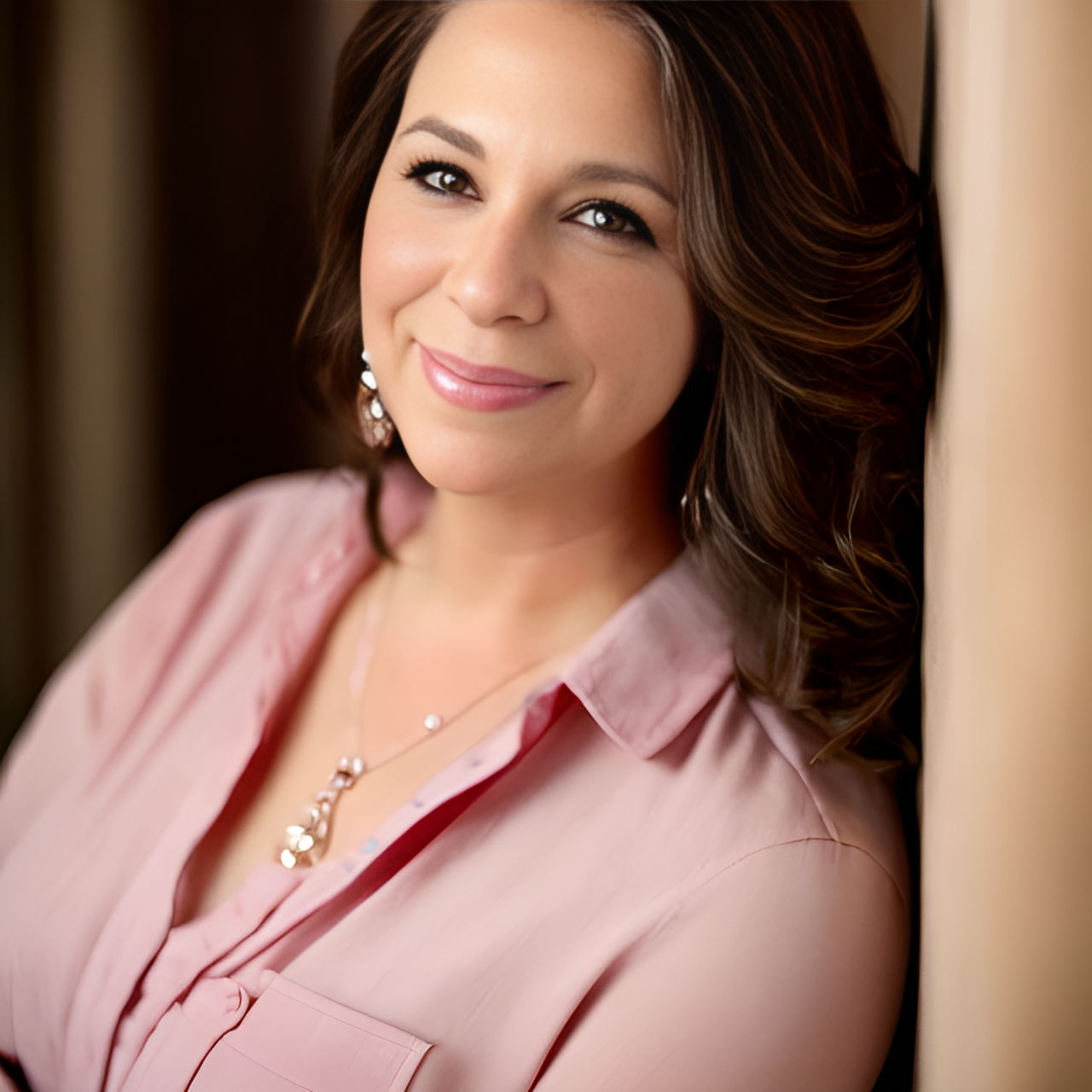
Bio: Marabai Rose was raised by a pack of hippies amongst the rolling hills of Southern Indiana, where she still lives. Marabai is a mental health therapist, a business owner, an author, and produces and hosts a podcast called, Badass: Tales of Resilience. Marabai’s memoir Holding Hope: One Family’s Odyssey Through Lyme Disease and Psychosis was published in October of 2022, and is available through Amazon, and available to order through your local bookstore.
Thank you so much for doing this with us! Before we start, our readers would love to “get to know you” a bit better. Can you tell us a bit about your childhood backstory?
I was raised in an intentional community by parents and elders who were trying to live by a different set of values than the ones they were raised with. This was largely good for me, as I received a lot of love, and was taught to place value on kindness, compassion, and relationships. My mom is a Sufi, and I was raised with Rumi, and the belief that love is a healing force. I would say there was a certain amount of benign neglect, and moments where I am sure my parents wished they had a road map for raising us. The ‘without a road map’ rearing went a little sideways at times, as there were very few boundaries set in place. I think it made me a fairly open-minded person, as my parents’ bohemian lifestyle made room for all sorts of people and practices. I have carried the positive elements of my childhood into my work as a therapist, treating people in a loving and compassionate manner. I have definitely needed to educate myself on boundaries, structure, and social norms. However, I do not wish my childhood was different. I am grateful for the community that I still have today.
Can you please give us your favorite "Life Lesson Quote"? Can you share how that was relevant to you in your life?
James Baldwin said, “Not everything that is faced can be changed, but nothing can be changed until it is faced.” It takes a lot of courage to face the hard truths in life. I know that it was very challenging for me to see the ways in which my marriage was unhealthy for me, and to accept that I could not save my husband from his mental illness. When I finally could face it, it changed my life in the best of ways. There are so many things going on in the world that people struggle to face, like the real and persistent impact of racism, the damage being done to our planet by pollution and climate change, and the ways in which we are losing connection and increasingly in conflict with each other in the US. I see the value in listening to the experiences of everyone, with as much receptivity as we can manage, and then trying to find some space where we can work from where the edges, where our experiences meet or come closer.
Is there a particular book, podcast, or film that made a significant impact on you? Can you share a story or explain why it resonated with you so much?
I have often thought about Sue Monk Kidd’s The Secret Life of Bees. There is a character, May Boatright, who feels the pain of the world so acutely, that she decides she can’t suffer like this any longer and takes her own life. I am an empath, and I feel my compassion deeply. May’s plight helps me remember that we all have to find ways to lay the suffering of the world down sometimes, to find joy, and take delight in the world and in ourselves. Without it, we will drown in the sorrows of the world. In my own relationships May’s story has also helped me begin balancing my compassion for others with compassion for myself.
Let’s now shift to the main part of our discussion. Let’s begin with a definition of terms so that each of us and our readers are on the same page. What exactly does being a good listener mean?
Being a good listener is largely about your level of attentiveness to another person as they are speaking. If culturally appropriate, we can show we are listening by making eye contact, nodding or changing our facial expressions in response to what a person is saying, and when they are done speaking we can acknowledge what they have said before adding our piece.
Why is effective listening such an important quality? Can you give a story or example to explain what you mean?
Effective listening conveys respect for another person, it shows them that what they say matters to you. It builds connection and positive regard.
As a therapist, deep listening is my most powerful tool for relationship building. I will often have clients do all their paperwork, and take care of all the ‘business’ details before our first session, so that in that session, I can simply listen to their concerns. I find that when I allow a client to fully express themselves, and then let them know that I heard them by using reflective listening ( “I hear you saying _______”, or “It sounds like X is really troubling you”) that trust begins to form quickly.
From your experience or perspective, what are some of the common barriers that hold someone back from being a good listener?
We often become so focused on what we plan to say next in a conversation, that we quit listening to the person who is currently speaking. If we don’t focus on them while they are speaking, and then don’t acknowledge what they said, it leaves the other person feeling invisible, or unimportant.
Sometimes when we disagree, we want to jump right into our counter-point, but it becomes immediately harder to get another person to be receptive to our points, when we are not receptive to theirs. Listening and agreeing are two entirely different things. We can let someone know that we heard what they said, and then let them know that we have a different opinion.
What are some practical techniques that have helped you become a more effective listener?
Reflective listening is a way to communicate to another person that we have heard what they said. In it’s most technical form it is simply repeating back what someone has said to you, and sounds like, “I hear you saying _______”, or “It sounds like__________”. In most business and social settings we can make it less rigid, so that it flows better.
Example: Mike and Adam are at a party, and have just struck up their first conversation ever. The topic of travel comes up.
Mike: Yeah, I have been on all the continents. I spent a lot of time travelling in between jobs, or whenever I could put together enough PTO. That was before kids.
Adam: It sounds like you have been all over. What was your favorite continent? Is there anything that stands out?
Adam could also insert some information about himself after acknowledging what Mike said:
Adam: It sounds like you have been all over. I love travel. My favorite continent was Asia, especially Southeast Asia, Thailand and Cambodia were really cool. Did you ever get over there?
Here is the central question of our discussion. What are five ways that listening effectively can help someone succeed personally and professionally? If you can, please share a story or an example for each.
1 . People will probably like you more if you listen effectively.
People like to feel heard, it creates a positive feeling in them, which they will associate with being around you. Think of a person in your life who you are very fond of, and ask yourself if you feel listened to by them? Chances are you do. Now think of a person who you do not like to be around, and ask yourself if you feel listened to by them? Not so much, right? Listening and likeability are very related.
2 . In a business setting, effective listening can signal that you will be a good collaborator or employee.
We have all had experiences of having to work with someone who isn’t receptive to what we have to say. It is super frustrating to have spoken with someone about something, and then have them act like that conversation never happened. Or, to feel like they can’t even see your point of view. Being an effective listener in your business interactions lets people who you may be working with know that this is not you. You will listen and be responsive to what they have to say. I know I would much rather collaborate with a person who listens to me. I think most of us would.
3 . You will learn more.
Truly listening allows us to learn about others, and the things that they are knowledgeable about. More knowledge is never a bad thing. Seeing others as potential teachers puts us in a growth mindset. Every conversation is an opportunity to learn and grow, if we can just listen.
4 . Learning how to be an effective listener will improve your personal relationships.
When we sense that we aren’t being heard by our closest people, it can feel very hurtful, and cause us to go into a defensive head space. That head space is where the worst arguments occur. Simply letting our important people know that we have heard them when they share something with us, allows us to maintain connection, even if we see things differently. It also invites the person you are speaking with to be more receptive to your point of view.
5 . Learning how to be an effective listener may save you from embarrassment.
If you haven’t been able to break the habit of only thinking about what you will say next when someone else is speaking, you may miss important pieces of information that you will need later. For example, if your team leader mentions a deadline in a meeting, and you are too busy thinking about the idea that you want to put forward, you may be in a sticky situation when you discover that the deadline for new proposals passed last week. Socially, it will save you from those awkward moments where someone reminds you that they already told you x, y, or z. Of course, if you are like me and have ADHD, this might happen anyway, but effective listening at least gives you a fighting chance.
You are a person of great influence. If you could inspire a movement that would bring the most amount of good to the most amount of people, what would that be?
That is a big question! I would love to live in a world where the dignity and worth of each person is respected. I think this paradigm shift would have far reaching consequences. For example, if all environmental policy was set with the dignity and worth of all people in mind, then we might not create policies that endanger certain groups, we might not feel as emboldened to pollute poor communities, or ship trash to certain areas of the world that are more impoverished. It would certainly have an impact on racism, and sexism, homophobia, and ableism, as not respecting the dignity and worth of these humans is at the core of the ism. It would be a view that favors income equality, as everyone would be seen as worthy, and we could work toward everyone having living situations that don’t diminish their dignity and worth.
Is there a person in the world whom you would love to have lunch with, and why? Maybe we can tag them and see what happens!
I would love to have lunch with Arielle Schwartz. She is a trauma therapist who I really resonate with. I have done a training with her, and our ways of practicing are very aligned. It would be a treat to pick her brain.
How can our readers continue to follow your work online?
Yes. My website is marabairose.com, I am also on FB and Instagram https://www.facebook.com/marabai and @marabai.rose, as well as LinkedIn. My podcast, Badass: Tales of Resilience can be found anywhere you get your podcasts. My book, Holding Hope: One Family’s Odyssey Through Lyme Disease and Psychosis, is available on Amazon, and can be ordered at any bookstore.
Thank you so much for sharing these important insights. We wish you continued success and good health!
About the Interviewer: Douglas E. Noll, JD, MA was born nearly blind, crippled with club feet, partially deaf, and left-handed. He overcame all of these obstacles to become a successful civil trial lawyer. In 2000, he abandoned his law practice to become a peacemaker. His calling is to serve humanity, and he executes his calling at many levels. He is an award-winning author, teacher, and trainer. He is a highly experienced mediator. Doug’s work carries him from international work to helping people resolve deep interpersonal and ideological conflicts. Doug teaches his innovative de-escalation skill that calms any angry person in 90 seconds or less. With Laurel Kaufer, Doug founded Prison of Peace in 2009. The Prison of Peace project trains life and long terms incarcerated people to be powerful peacemakers and mediators. He has been deeply moved by inmates who have learned and applied deep, empathic listening skills, leadership skills, and problem-solving skills to reduce violence in their prison communities. Their dedication to learning, improving, and serving their communities motivates him to expand the principles of Prison of Peace so that every human wanting to learn the skills of peace may do so. Doug’s awards include California Lawyer Magazine Lawyer of the Year, Best Lawyers in America Lawyer of the Year, Purpose Prize Fellow, International Academy of Mediators Syd Leezak Award of Excellence, National Academy of Distinguished Neutrals Neutral of the Year. His four books have won a number of awards and commendations. Doug’s podcast, Listen With Leaders, is now accepting guests. Click on this link to learn more and apply.