Through Poshmark, we’ve created a way for people to easily buy and sell fashion, but we’ve also built a platform that has empowered millions of people across the country to easily open up businesses and become entrepreneurs, right from their phones.
What is your “backstory”?
I grew up in India, where I spent many summers in my grandfather’s wholesale shop helping pack boxes and watching deals be made. Everywhere I looked, I saw things I could change and improve, which sparked my entrepreneurial drive to change things, fix things and help people. Both of the companies that I founded have had a simple focus: to change something that is hard or impossible to do, and by doing that, help millions of people achieve their goals.
I received a BTech from IIT Kanpur, and moved to the U.S. to get my MS from UT Austin, and then an MBA from Haas School of Business.
My background is in technology, and I held executive positions at Versant, Versata, and Sybase, before going on to found my first company, Kaboodle, which pioneered the concept of social shopping. I sold Kaboodle to Hearst in 2007, and set off to build a community-centric platform that combined a social network with a robust marketplace.
I was introduced to my co-founder, Tracy Sun, through our first investor, Mayfield, who knew our interests and perspectives would be complementary. We combined Tracy’s fashion experience with my product and business vision, recruited technology superstars — our co-founders Gautam Golwala and Chetan Pungaliya with whom I also worked with at Kaboodle — and launched Poshmark from my garage in 2011. Together, we took a huge bet to build an end-to-end fashion marketplace entirely inside an easy to use mobile app with two simple guiding principles: buying and selling on Poshmark should be simple and fun.
Which person or which company do you most admire and why?
I’ve always admired Tesla, because they’ve taken something complex and made it a simple and elegant experience. Tesla’s innovative technology is a great example of a company that uses technology to simplify life.
How have you used your success to bring goodness to the world?
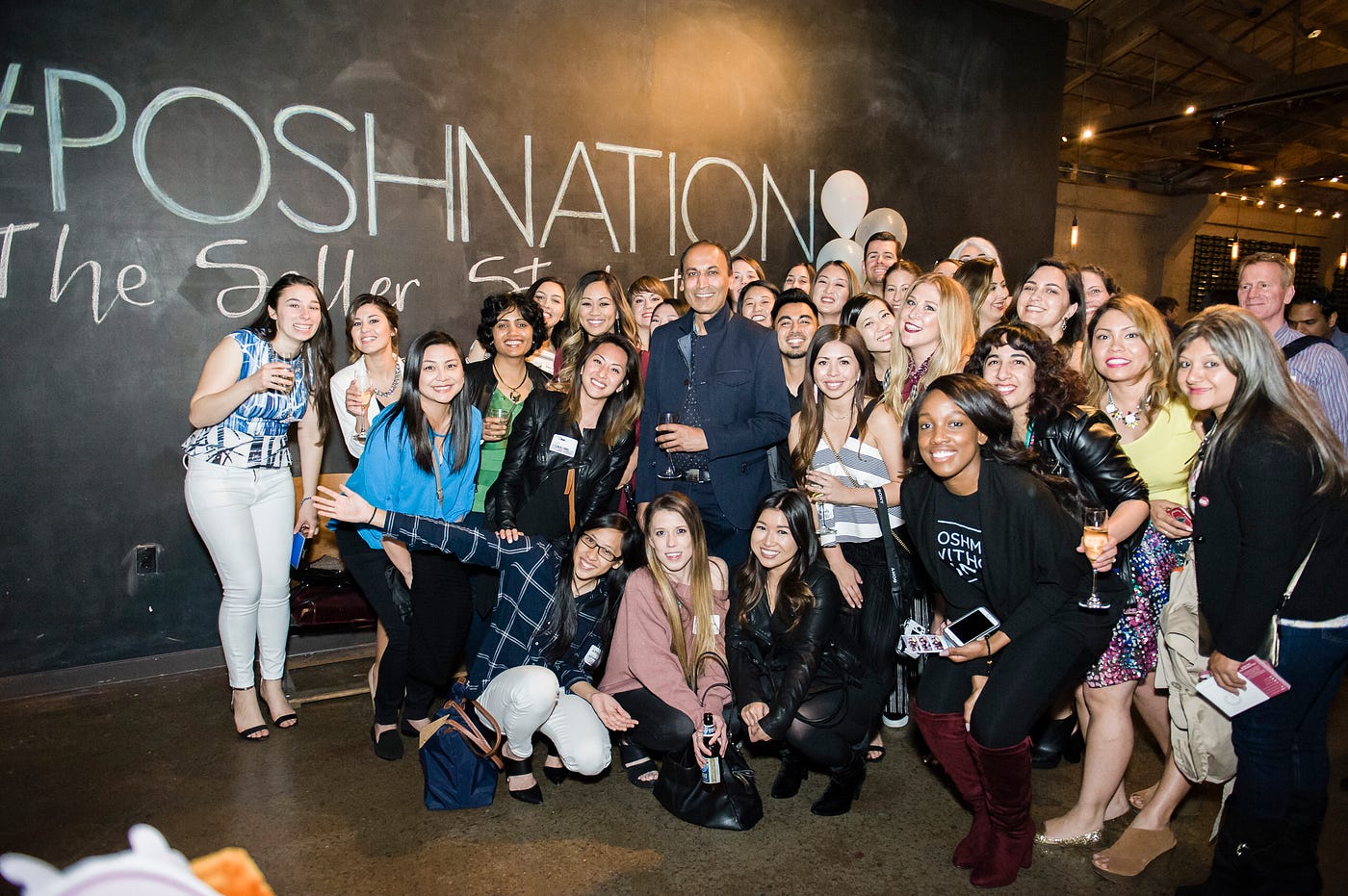
Through Poshmark, we’ve created a way for people to easily buy and sell fashion, but we’ve also built a platform that has empowered millions of people across the country to easily open up businesses and become entrepreneurs, right from their phones. When I hear about a mom who’s selling on Poshmark full-time, creating a flexible schedule to stay home with her child and building a booming business on the app, or a person who sells on Poshmark and has been able to buy a home, fund a wedding or pay for grad school, it brings me so much joy. We’ve built a strong, unstoppable community of entrepreneurs and that is truly powerful. Our community is built on love, and they rally together like no other. For example, we recently hosted our first-ever in-app charity event in August to support those affected by Hurricane Harvey. We held a special Posh Party, a virtual, in-app shopping event, and asked the community to come together, pledging $1 for every 50 shares made to the party. The Poshmark community shared 2.2 million items, and as a result, we donated $44,000 to United Way, to help with both short and long term Hurricane Harvey relief efforts.
What are your “5 things I wish someone told me when I first started” and why. Please share a story or example for each.
- People are the most important asset to your business, so always prioritize them first. Nine out of the first 10 team members who joined us are still here today, which helps set the culture and context as the company continues to scale.
- Your venture’s growth is limited only by your ability to grow. When you stop growing, your company stops growing.
- Make lemonade out of lemons. In each setback, there are seeds of opportunity. For example, when postal inspectors came to impose a fine on Poshmark, we turned this into a long-term partnership between USPS and Poshmark, which continues to strengthen every day.
- The culture of the organization matters at every stage. Its importance cannot be overstated — you have to work on it constantly.
- Try to enjoy the everyday moments along the journey. Unintuitive as it may seem, the day-to-day is more enjoyable than any milestone achieved.