
Traditionally, nonprofits do not work together. They put a big fence around their post and say, 'Those are our donors, that’s our event, you can’t talk to them.' We don’t do that.
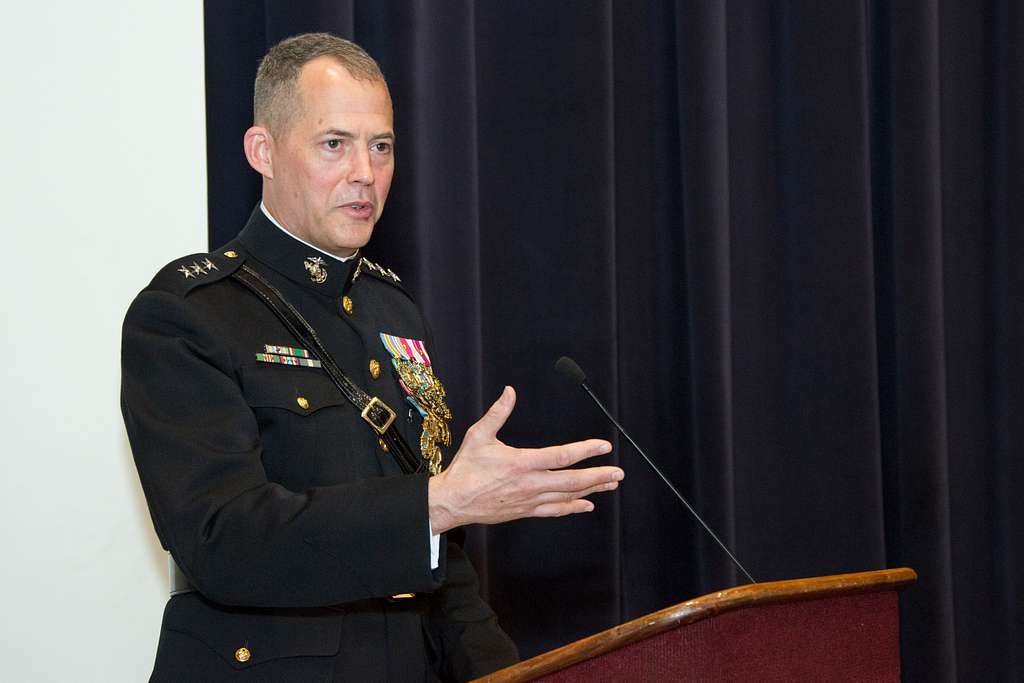
I had the pleasure of talking with Lieutenant General Robert R. Ruark, USMC (Ret.), the President and CEO of the Navy-Marine Corps Relief Society and a retired three-star general who spent 36 years in the United States Marine Corps. One of the most consequential turning points in his military career involved a terrible grade, a letter from a college professor, and a check for twenty dollars.
As a young second lieutenant undergoing training at the Marine Corps’ Basic School, Ruark was determined to become an infantry officer. During his seventh week of training, he was given an opportunity to demonstrate his abilities as a squad leader. Things went badly. He was reprimanded, received a miserable grade, and went home that evening wondering whether his ambitions had collapsed before his career had properly begun.
Waiting for him was a letter from a former professor at Miami University. A paper Ruark had written on the Toyota Production System had earned third place in a statewide competition. Enclosed was a twenty-dollar prize. At the bottom of the letter, his professor offered a suggestion: “P.S., I think you should really consider logistics as a career.”
The following morning, Ruark asked his platoon commander to change his military specialty.
That decision would eventually place him in charge of some of the most demanding logistical operations in the American military. It also illustrates something distinctive about Ruark. Although he spent decades rising through an institution built around command, he attributes much of his success to his willingness to listen.
Born in Baltimore, Ruark grew up in a household shaped by military discipline. His father had served as an Air Force fighter pilot before leaving the military for a civilian career, a decision he would come to regret. The family moved frequently, eventually settling in Youngstown, Ohio. Ruark remembers his senior year of high school as the period when he finally began taking his father’s guidance seriously. His academic performance and priorities changed.
“I never wanted to go back to the old Bob,” he recalled.
Ruark attended Miami University on a Naval ROTC scholarship, graduating cum laude in 1981 with a degree in business production and operations management. Over the following three and a half decades, he advanced from serving as a logistician in an infantry battalion to directing logistics for U.S. Central Command and the Joint Staff. He commanded the 1st Marine Logistics Group in Iraq, worked under generals James Mattis and John Kelly, and concluded his active-duty career as Military Deputy to the Under Secretary of Defense for Personnel and Readiness.
For all the prominence of those assignments, logistics remains an often overlooked dimension of military service. Behind the more recognizable images of military operations lies an enormous undertaking involving transportation, maintenance, supplies, personnel, and the coordination of resources under exceptionally difficult circumstances. Decisions made far from the front lines can determine whether those on them are able to accomplish their missions.
Ruark’s work after retirement has brought him closer to another frequently overlooked dimension of military readiness: the financial and personal well-being of individual service members and their families.
When he retired in 2017, Ruark imagined that his experience might lead to a corporate logistics position. Instead, another trusted military leader encouraged him to consider becoming CEO of the Marine Corps Scholarship Foundation.
Ruark knew so little about the nonprofit sector at the time that he asked whether the organization would cover his travel expenses. He hadn’t realized that nonprofit executives could earn salaries.
He accepted the position, spending four years at the Scholarship Foundation before another recommendation eventually brought him to the Navy-Marine Corps Relief Society.
“I guess I’m a nonprofit dude now,” he said with a humble smile.
The challenges his organization addresses are remarkably ordinary, particularly when contrasted with the extraordinary responsibilities entrusted to military personnel. A young Marine’s car breaks down. A Sailor needs to fly home following a death in the family. A military spouse struggles to find employment after another relocation. A mother navigates the demands of caring for a newborn while her husband is deployed overseas.
The Society provides interest-free loans, emergency grants, financial education, scholarships, affordable uniforms, and visiting nurse services. Its work is supported by an extensive volunteer network, which Ruark says comprises approximately twenty volunteers for every employee.
The demands of that work are personal for Ruark, whose wife served as a Marine and later as a Navy physician assistant. He understands the difficulties military spouses encounter when trying to maintain professional careers alongside the demands of military life.
Under his leadership, the Society also collaborates with other military aid organizations, pooling fundraising efforts and assisting service members across military branches. It is an approach that runs counter to the competition for donors that frequently characterizes the nonprofit world.
Ruark describes his organization’s mission in unusually straightforward terms: take care of Sailors and Marines.
Near the end of our conversation, he offered an image of a duck gliding quietly across the water while its feet paddle furiously beneath the surface.
It is an especially fitting metaphor for someone who has spent much of his professional life making sure that other people have what they need to succeed. From coordinating military logistics to helping young families withstand unexpected financial emergencies, Ruark’s career offers a compelling perspective on the less visible responsibilities of leadership, and on the importance of caring for the people upon whom an institution depends.
Yitzi Weiner: General Ruark, it is such an honor to meet you. Before we dive in deep and talk about your amazing work and what you are doing with the Relief Society, our readers would love to learn about your personal origin story. Can you share a story from your childhood and how you grew up, particularly the seeds of all the leadership that has come since then?
Robert Ruark: Thank you for asking. I don’t think it was very amazing when I was a kid, to be honest with you. I had a dad who was an Air Force fighter pilot for four years, and then he got out. He always said it was the worst mistake of his life, and his second mistake was not flying for the airlines. Instead, he went to work for a company called A&P in Baltimore and stayed with them for about 20 years until they went out of business. That was not good, and it was another reminder to stay in the military if you want a pension, because he never got one.
We moved around every four years as Dad got promoted, and we ended up in a place called Youngstown, Ohio. From there, I went to college on an ROTC scholarship. The big change in my life was that during my senior year of high school, I finally submitted to my dad’s way of doing things, and it was the best thing that ever happened. I studied hard, stopped doing sports I shouldn’t have been doing, and worked on leadership and a lot of other things. My life changed, and I never wanted to go back to the old Bob.
Because my dad always told me his biggest mistake was leaving the Air Force, that probably drilled into me that I needed to think about a career in the military. He had trained me well for it with the discipline in the house, and I have stayed with it even nine years after I retired. I spent four years with the Marine Corps Scholarship Foundation, and then I came here to help out Sailors and Marines. We are the official charity of the Navy and the Marine Corps, so I work directly for the Commandant of the Marine Corps and the Chief of Naval Operations. I can’t get out of line. I also married a gal who was a Marine and later a Navy physician assistant. I guess I’m a nonprofit dude now, and it has been nine years, and I really like it.
Yitzi Weiner: Unbelievable. I’m sure it is difficult to single out from all the incredible experiences in your career, but can you share two stories that stand out in your mind from your time in the military?
Robert Ruark: Lord, sure. The first one is probably when I was a second lieutenant. When you are in the Marine Corps as a second lieutenant, you go through 26 weeks of The Basic School, which is like an extended boot camp, and they teach you a lot there. We always knew that to be in the real heart of the Marine Corps was to be in the infantry, so I was dead set on that.
In the seventh week of training, we were doing the squad live-fire and maneuver course, and I was the squad leader, which is a big deal. I thought, “Here’s my chance to show what I’ve got.” Well, it didn’t go so well. The worst part was when we were supposed to assault the objective, which was about the size of a couple of greens on a golf course. I was supposed to pop a pyrotechnic into the air to signal the base of fire to cease, since machine gun rounds were landing in front of us, and then we would assault from the flank and surprise the enemy, which of course was nothing but mock-ups. I still don’t know what I did, but I must have handled the pyrotechnic wrong. I got yelled at and received a horrible grade.
I came home that night pretty upset with myself, thinking, “Man, it’s all over now.” That same night, I got a letter from a professor at Miami University, where I went to college. I had been in his production and operations management class, which was a lot of fun. He sent me a note saying, “Hey, Bob, the good news is you got a check for $20 for third place in the state contest on the paper you wrote on the Toyota Production System. P.S., I think you should really consider logistics as a career.” That was about all I needed. The next morning, Saturday morning, I went in to see my platoon commander, who was in charge of training all 43 of us, and I asked, “Hey, can you switch me to logistics?” He said, “Yeah, I can. I’ve got too many people who want infantry.”
It turned out to be the right thing for me, because that was what I studied in college and picked up from my father. That led to a career where I went all the way from an infantry battalion logistician to the Joint Staff’s senior logistician, in the middle of two wars. At Central Command, I was the senior logistician for General Mattis. It is normally a job that goes to someone in the Army, so it was neat to be a Marine in that role. It was a lot of long days, and I think that is probably why I’m here today: I took the hard jobs, and I listened to the advice of folks I really respected. I didn’t always listen so well growing up, but I certainly listened later in life when I finally decided to do things my dad’s way. He isn’t around anymore, but he’s probably watching me somewhere. In fact, I haven’t told that story to many people.
Yitzi Weiner: That’s an incredible story. We really appreciate your vulnerability in sharing that. Do you have another story that stands out?
Robert Ruark: Oh, gosh, I’ve got a ton of them from the Marine Corps and from working for some very senior people. I’ve got a good one for you. I was a brand-new one-star general around 2007 or 2008, and they gave me this wonderful command I had been waiting for my whole life. It was the biggest logistics command in the Marine Corps, about 8,000 people, and we were deploying to Iraq. I was finally going to get to go to the Iraq War.
Within a couple of months of getting there, the Iraqi Army was getting overwhelmed in a place called Basra, about 350 miles away, way outside our zone of action. Those are boundaries we aren’t supposed to operate outside of, because the area is divided between the Army, the Marine Corps, and the Iraqi Army. The Iraqi Army was getting their butts kicked in Basra by an uprising, and it put the entire mission in Iraq in jeopardy.
They were trying to send reinforcements from a big division we were working with, and their vehicles were breaking down everywhere. They loaded ammunition wrong and it blew up in a truck, their vehicle maintenance was terrible, and they just weren’t able to get down there. Finally, I told my folks, “Okay, we’re going down.” Two days before we left, we had a 45-person unit with trucks, trailers, munitions, and all kinds of capabilities getting ready for a 300-mile road trip to southeastern Iraq in Basra.
My operations officer, a colonel, came in and asked, “Hey, sir, have you told General Kelly about this?” Now, General Kelly was General John Kelly, later a four-star general and White House Chief of Staff, and at that time my boss. I said, “Nope.” I thought, “Man, I could be in trouble. I’m sending people out of our zone.” I felt it was the right thing to do. The lesson in leadership from that came when somebody mentioned it to General Kelly, and he just said, “Do it. It’s a great idea.” Almost every other commander would have said, “You can’t do that without my authority. I’m not going to approve that.” Not him. He was a man focused on doing the right thing, and I still admire him for that. He could have easily taken the other road, and a lot of senior officers probably would have.
I don’t normally tell that story to audiences, either. When you’re around people like General Mattis and General Kelly, you are working for people who are much deeper than most, and certainly deeper than me. Those are the kinds of experiences that made me want to keep supporting Sailors and Marines after my days in uniform were over, because they were always so good and always answered the call.
Yitzi Weiner: Can you tell us a bit more about what the Navy-Marine Corps Relief Society does and all the work you are doing today?
Robert Ruark: We do a lot of things. All of the military aid societies team up once a year to raise money for those we support; this is about our fifth year doing it. The reality is that we support other services on bases where we have offices, and they do the same for us, so we are very joint. Traditionally, nonprofits do not work together. They put a big fence around their post and say, “Those are our donors, that’s our event, you can’t talk to them.” We don’t do that. In fact, we just had lunch together yesterday, and we have sponsors who support all of us because they like that we are joint.
This started about four or five years ago, right when I got here. Every year we join together to raise funds under a different theme. This year it is ReadySetGive.org, kind of like a football analogy for what a quarterback says at the line of scrimmage: instead of “ready, set, hut,” we say “ready, set, give.” Our core focus is taking care of junior service members. We certainly help families and folks who are more senior, too, and this year in particular has been really significant. Between Operation Epic Fury, where 1,300 service members were evacuated from Bahrain on no notice and we met them in airports to give them grants across our offices in Europe and the United States, and three super typhoons in Guam, where we gave out between a million and a half and two million dollars in grants, it has been a major year.
We all do similar things and help each other out. When we have Sailors on Army bases, Army Emergency Relief helps them. The Air Force Aid Society is there for everybody as well, and you can count the Coast Guard in, too. Essentially, we are out to help the junior enlisted, the junior Sailors and junior Marines who face deployments, family emergencies, and unexpected bills. Over half of them are married, and they often can’t get on-base housing because they haven’t been there long enough. They have to go out in town, pay a fortune, and commute 30 or 40 miles to work. It is hell on a car and really tough on the family. You’re not home until late when you’re getting ready to deploy, and then you deploy.
When a family is starting out and the spouse is at home with a new baby trying to figure out nursing and newborn care, we have a Visiting Nurse Program that provides health education and resource referrals. People also know us for financial assistance, including grants, interest-free loans, and disaster relief. Between Guam, Epic Fury, and a host of other needs, we have given out more in grants than ever before in my society, nearly four to five million dollars this year.
The really neat thing about all of us is that our objective is never to build up our financial holdings. We have a reserve fund, and others have endowed funds, but the board gives me one objective: take care of my Sailors and Marines. Because we work directly for the service chiefs, I don’t want Admiral Caudle or General Smith coming down on me saying we aren’t doing what we should to take care of our people. We will always err on the side of the young Sailor or Marine, and so will the other societies.
Once a year, we show the public that just as we fight together, train together, and run exercises together, we work together on the nonprofit side too. This year, Lockheed Martin is providing a $1 million match for the fifth year in a row, matching every dollar up to $1 million. Each year we get a little more publicity, and I’m always elected to do the interviews to raise awareness that service members don’t make a lot of money, yet they are essential. You don’t have a military without the junior enlisted. Today they are so smart, though with everything computerized on an iPhone, managing money has gotten even harder. So all of us sit down and build budgets with them, and most of them have never seen a budget before.
They can also come back to us for loans or grants whenever needed, and they use our thrift stores and uniform lockers, where they can buy items for about one-tenth the price of out in town. We all offer scholarships as well, especially for spouses. That is a big deal, because many spouses are just as educated and qualified to work as the service member, if not more so, yet they are constantly moving. As soon as a potential employer finds out they are a military family, they often choose not to hire them because they want stability. I know that from personal experience with my own wife. The pay is fair, though it isn’t a lot, and our real mission is to take care of them. That is why we do the $1 million match every year, and we appreciate any support that comes in.
Yitzi Weiner: Do you only work with people currently in the military, or do you also work with veterans?
Robert Ruark: We support those in uniform on active duty, which is about 1.3 million across the force today, along with Reservists on active duty for more than 30 days, and all retirees. For the Navy and Marine Corps, that is a population of well over a million: about 550,000 retirees and roughly the same number on active duty. If veterans are recalled to active duty for 30 days as Reservists or decide to return to active duty, we will support them, though veterans in general are normally outside our population.
Yitzi Weiner: A reader might ask, why does a private nonprofit organization have to address these issues? Why can’t the military itself handle all of this?
Robert Ruark: I don’t think there is an official answer to that, so I’ll give you my personal opinion. If the military has a choice between funding more warfighters, capability, and equipment to accomplish their mission for America, that would be my decision too. Knowing you have an organization out there that can take care of these personal needs behind the scenes, without even going through the chain of command, is huge. For instance, if a Sailor or Marine stationed in Okinawa has to take emergency leave to fly back to America because of a death in the family, they can come to us, and we will take care of the funding.
Active duty leadership wants to make sure those needs are handled, and a nonprofit can do it more efficiently, with dedicated time and a massive volunteer base. We have 20 volunteers for every employee here. Look at our thrift stores: we take serviceable uniforms turned in by Sailors and Marines who are retiring or moving to civilian life, inspect them, and sell them at about one-tenth the cost. I have seen so many happy Sailors and Marines walk out saying, “Guess how much I saved on these khakis or this flight jacket.” You wouldn’t want active-duty forces running thrift shops. That is a nonprofit’s work, and everybody wins.
The same goes for our Visiting Nurse Program. When a service member deploys and the spouse is at home in her last trimester or the first six to nine months with a newborn, our nurses do home visits, Zoom calls, phone calls, health education, resource referrals, and mother-baby wellness checks. Until I was married, I didn’t know much about the Society while I was in uniform, and when I found out about it, I thought, “Wow, this is a gem. I wish I had known about it earlier.” Coming from military backgrounds, we are very conservative and don’t brag about what we do, so we probably should talk about it more. This one time a year, with the $1 million match, we get out there to tell America what we do for those who wear the cloth of this nation.
Yitzi Weiner: This is our signature question. General Ruark, you have been blessed with a lot of success and must have learned a great deal from your experiences. Looking back all the way to the beginning of your military career, can you share five things you’ve learned over the years that someone starting out today can really benefit from?
Robert Ruark: Number one, if you are starting out in a military career, do your best to find a specialty that agrees with you. If you are in the wrong specialty, it is tough, so work on that while you are being recruited. Tell them if you want to be a software coder, a data processor, a ship engine expert, or a missile technician. Recruiters will often work with you on that. By personal example, I ended up in the right specialty, and it made all the difference.
Second, do a lot of research and listen to people you really respect, including your recruiters, about which service to join and what schools to pursue.
Third, and maybe the best advice I can give, is to take it year by year. Everybody I saw in high school or college who declared, “I’m going to do 20 years,” never stayed 20 years. My dad always told me to take it year by year, really day by day, and see how you feel. Don’t make big commitments about staying in for two decades, because then you feel a heavy weight on your shoulders. There are so many different careers out there.
Fourth, when you have a really good commander or mentor who gives you advice, pay attention, even if you don’t want to hear it at the time. Advice from people around me changed my life. For example, I was in logistics school preparing to head to a maintenance unit in Hawaii, though I had always wanted to be in an infantry battalion. A Marine in class with me who had been in for four years told me, “All you have to do is write a letter to the personnel officer at the base in Hawaii and tell them you want to go to an infantry battalion.” I did that, and it happened. Later, senior leaders I trusted suggested I go to Parris Island to the drill field at boot camp in order to get command. I listened to them, did it, and it was the right move. Take your career tour by tour, and when people above you whom you trust offer suggestions to grow your responsibility, listen closely.
Fifth, when you eventually leave the military, and we all leave one day, listen to advice from people who know you about what to do next. When I retired after doing logistics my whole life, I thought maybe I could work for FedEx. Well, I did get to FedEx, though as a nonprofit guy meeting Fred Smith, which was one of the biggest thrills of my life, regarding a legendary gift he decided to make to the Marine Corps Scholarship Foundation. I only joined that nonprofit because a retired general told me, “You really ought to do this. I want you to apply for this job.” Looking back, any level of success I’ve had is largely because I listened rather than acting first and wishing I had asked questions later. I worked for some fantastic leaders, and I was very fortunate.
Yitzi Weiner: Here is our final aspirational question that we ask in all of our interviews. General Ruark, because of your career and the organization you lead, you are a person of enormous influence. If you could spread an idea or inspire a movement that would bring the most amount of good to the most amount of people, what would that be? You never know what your idea can inspire.
Robert Ruark: I grew up in a very disciplined home, and throughout my career I had some very good leaders. Every now and then you will have a bad leader, too, and it is important to have one so you know what not to do. What I think a lot of people miss is that they are being coached along the way, and if they don’t realize it, they can make the wrong decision. Certain people come into your life at specific stages to offer great challenges and advice, and if you listen, it opens doors.
For example, two weeks after I retired from 36 years in the Marine Corps, I went to a Marine Corps Scholarship Foundation event in Washington, D.C. A retired three-star general who used to run Marine Corps aviation came up and started talking to me. I had always thought he was kind of an ogre, though I knew he was a very smart, very good officer, and he turned out to be pretty nice. Two weeks later, he called me on my cell phone. I answered, “Yes, sir.” He asked, “Hey, Bob, what do you think about the Marine Corps Scholarship Foundation?” I said, “Well, I’ve always gone to their events, I really like it.” He said, “No, that’s not what I mean. What do you think about being the CEO?” I asked, “Would they pay my travel and expenses?” I didn’t even know you could earn a salary at a nonprofit. He told me, “Check the 990.” I had no idea what a 990 was, so I looked up the financial form and realized, “Oh, they actually pay for that.” Even as a nonprofit, you have to run soundly to meet operating expenses as they grow. I took the job.
The same thing happened with this role. About a year after I finished my four-year contract at the Scholarship Foundation, a retired colonel I had worked with and trusted sent me a note asking what I thought about the Relief Society. I had always wanted to learn what they did, so I applied, and here I am. I could have easily said no to all of those opportunities. You get little hints throughout your life, and if you don’t listen to them, you might miss out. Give them a fair shake.
Yitzi Weiner: That’s amazing. I wasn’t planning to ask this, though I think you are a great person to ask. A lot of people I talk to have a general sense of unease and disquiet about what is going on in the world. You are surrounded by some of the brightest, most talented people in America. What gives you optimism for the next 20 years?
Robert Ruark: The American system can’t be messed with. You can get knuckleheads in office, you can get knuckleheads in leadership positions, and you can get great people. The bottom line is that the system is going to right itself when it is off course, or bring itself back to the center. I love the way it is built. I love civilian control of the military, and I love that we can’t really have a dictator. I don’t care what they say in the news, you are not going to have a dictator in office. We have three branches of government with heavy checks and balances. Despite all the right-side, left-side noise in the press, particularly here in Washington, D.C., which I can’t stand, the system works, and we need to keep letting it work.
I still believe we have the greatest country in the world. I have been fortunate to visit and live briefly in countries that aren’t so well off, so there is no question in my mind. I also have great confidence in our close allies and in our way of doing business. It may not be perfect, yet we are always going to survive, and you should have a lot of confidence if you live here. Ultimately, there are organizations that take care of people when they need help; you just have to find them. Some nonprofits get a lot of attention because big names give to them, and that doesn’t bother me. We aren’t out there for press; we are out there to take care of those in uniform and do the right thing, and people eventually recognize that. It’s like the analogy of a duck looking calm and quiet above the surface of the water while paddling like mad underneath. That’s the way we need to be.
Yitzi Weiner: That is beautiful. General Ruark, how can our readers continue to follow your work, learn more, and support the Navy-Marine Corps Relief Society?
Robert Ruark: Thank you so much, Yitzi. This has been a fun interview. Normally I just talk about the campaign, so I really appreciate this. I looked at your career, too, and you’ve done quite a bit yourself. Congratulations to you and your family. And did I tell you I was born in Baltimore? My father went to the University of Maryland and played lacrosse. His claim to fame was that in a lacrosse game, a guy named Jim Brown from Syracuse gave him a body check that broke his head, and he couldn’t play lacrosse his senior year. He loved to tell that story. We’re Baltimoreans, and I used to go to Colts games to see Johnny Unitas when I was six or seven years old. It was a lot of fun.
Yitzi Weiner: I’d love to meet you in person one day. We’re practically neighbors.
Robert Ruark: We’d be glad to invite you to our annual ball in March in Arlington if you can make it. We’ll certainly send you an invitation.
Yitzi Weiner: I would be honored to come. Thank you so much for your service. On behalf of myself and my family, we are truly grateful for your service and for the entire military.
Robert Ruark: Thank you very much. You’re worth it. It was an honor to do this today, good luck with Authority Magazine, and I look forward to seeing you in the future.