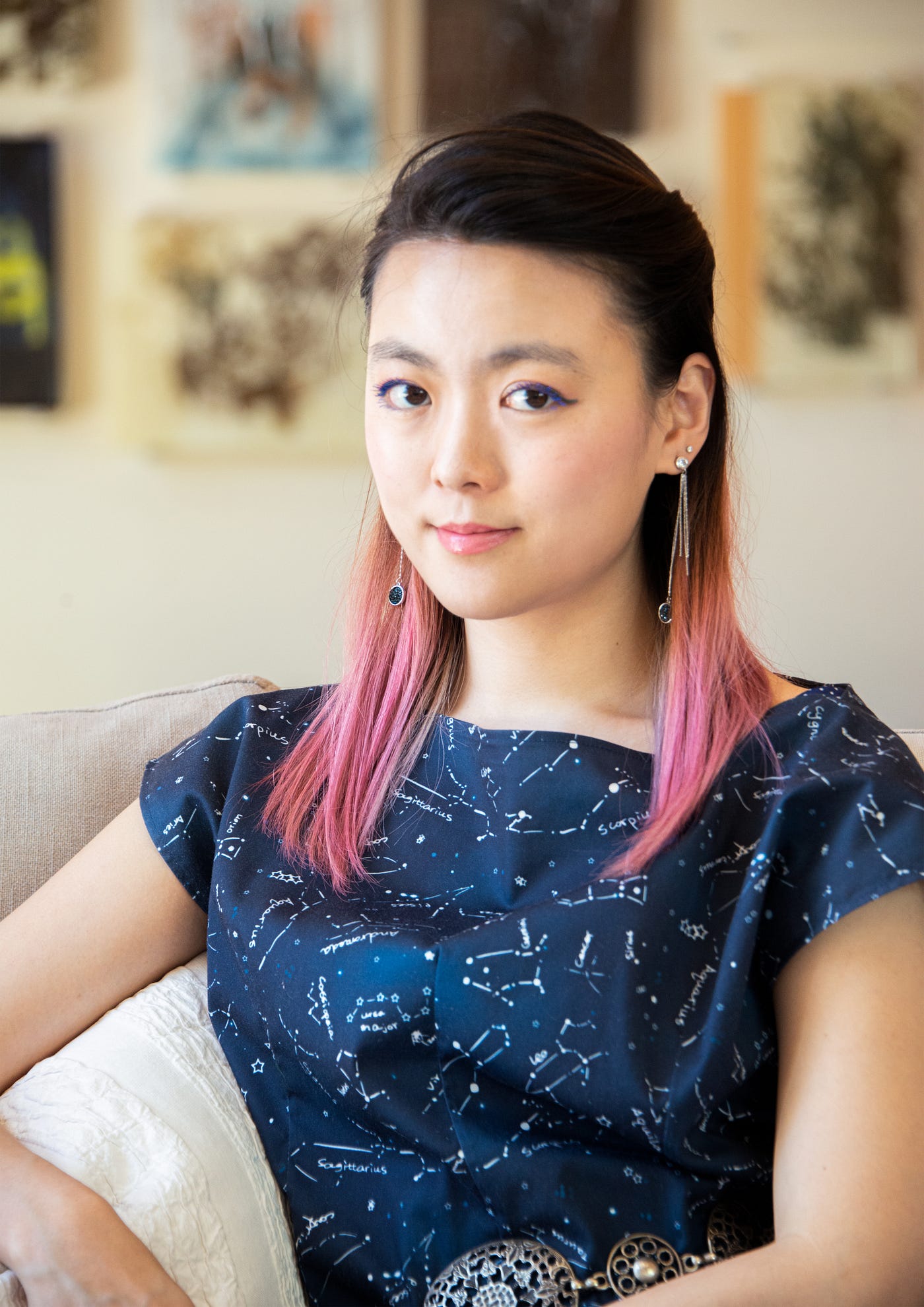
As an engineer, scientist, and designer, my natural instinct has always been to focus on solving difficult technical problems and creating something innovative.
As a part of our series about the women leading the Artificial Intelligence industry, we had the pleasure to interview Kitty Yeung.
Dr. Kitty Yeung is a physicist, engineer and artist. She is pursuing her mission by founding Wear It AI, after serving as the founder CEO of fashion-tech incubation at Microsoft and as the Senior Director of AI at Browzwear. Dr. Kitty Yeung is a recognised Tatler Gen.T Honoree for bringing physics, technology and fashion to a whole new level, impacting Fashion & Beauty, Retail & Ecommerce, Sustainability and Technology. She received her PhD in Applied Physics from Harvard University and MSci and BA in Natural Sciences from the University of Cambridge, and worked as a research scientist, hardware engineer, UX designer, senior program manager and senior quantum architect at IBM, Intel and Microsoft.
Thank you so much for joining us in this interview series! Can you share with us the ‘backstory” of how you decided to pursue this career path in AI?
My journey into AI actually started 10 years ago at the intersection of physics, fashion, and technology. With a PhD in Applied Physics from Harvard and jobs at giant tech companies, I’ve always been working on the forefront of technologies can transform the physical world. But it was my experience as a fashion-tech designer and entrepreneur that made me realize just how urgently the fashion industry needed transformation.
Building my own tech-fashion brand, Art by Physicist, I experienced firsthand how painful and inefficient manufacturing could be. It took 9 months to a year to get any new designs developed from samples to products with much manual labor and back-end-forth with manufacturers and costed about $5000 per new style. And even after overcoming the challenges of design and manufacturing, selling the products was another enormous hurdle.
As a creator who had also built social media accounts reaching over 1 million followers, I understood both sides of the equation. Traditional influencer marketing is incredibly expensive and unpredictable. A brand might pay $1,000 for a single influencer post, ship physical products, wait weeks for content, and still have no guarantee that the campaign will generate sales.
So going from 0 to 1 was very difficult for indie brands. Meanwhile, the established supply chain was built on mass volume and overproduction. The environmental impact of fashion was heartbreaking, from wasted materials to headstocks and high return rates.
I kept asking myself: Why, with all the technological advances we’ve made, is bringing a correct fashion product from creation to consumer still so difficult?
At Microsoft, I had the opportunity to build an extraordinary team from Microsoft AI and the CTO’s Office. We co-founded internal startups and developed foundational AI technologies across OpenAI-related initiatives, Microsoft advertising, commerce, and retail products. We realized we could bring these capabilities together to solve the fashion industry’s challenges end to end. What started as an internal Microsoft startup grew into an ambitious vision, with business projections showing the potential for $2.1 billion in top-line revenue. But the technology was ahead of its time, and ultimately, Microsoft wasn’t the right environment to bring this vision to its full potential.
We believed in the opportunity too much to stop there.
The technology that would become Wear It AI first made its public debut as an interactive AI-fashion art experience at London’s Victoria and Albert Museum during Digital Design Weekend in 2023. The overwhelmingly positive response was a defining moment. It showed us that AI could make fashion more interactive, personal, sustainable and accessible in ways people had never experienced before.
Today, we’re building a platform that transforms how fashion is created, marketed, and sold. Instead of relying on expensive, one-off influencer campaigns, brands can leverage AI to let everyday consumers become creators, generate authentic content featuring real products, and turn that content into scalable distribution and sales.
Our vision is simple: Every Shopper is a Creator. Every Creator is a Distribution Channel.
For me, AI has never been about technology for technology’s sake. It’s about solving real problems I’ve experienced personally, empowering creativity, and fundamentally reimagining how an entire industry works.
What lessons can others learn from your story?
Sell before you build. Make sure you’re creating something people actually want before investing time and resources into making it.
As an engineer, scientist, and designer, my natural instinct has always been to focus on solving difficult technical problems and creating something innovative. But being an entrepreneur taught me that building great technology (or clothing!) doesn’t automatically mean building a great business. You can spend years perfecting a product, only to discover that customers aren’t willing to pay for it.
I’ve learned to reverse that process. Start by talking to potential customers, understanding their pain points, and, most importantly, trying to sell the solution before it even exists. A customer’s willingness to pay is a much stronger signal than compliments or expressions of interest.
This is especially important in AI, where technology evolves so rapidly that it’s tempting to keep building new features simply because they’re possible. But the goal isn’t to build the most impressive AI technology. It’s to solve a problem so valuable that people are willing to pay for the solution.
My advice to other founders is to validate demand early, start selling as soon as possible, and let real customer feedback guide what you build. Don’t be afraid to launch something imperfect, iterate quickly, or change direction. The market will teach you more than months of building in isolation.
Ultimately, innovation creates possibilities, but customer demand creates a business.
Can you tell our readers about the most interesting projects you are working on now?
Wear It AI is reinventing fashion commerce by turning every shopper into a creator and every creator into a distribution channel.
Today, brands spend enormous amounts of money on traditional influencer marketing, while everyday consumers have very little opportunity to participate in the value they create. We’re changing that with an AI-powered platform where anyone can virtually style themselves with real products from brands, create beautiful fashion content, share their looks, and earn money.
For brands, this transforms user-generated content into a scalable, measurable marketing and sales channel. Instead of paying $1,000 for a single influencer post, brands can activate hundreds of creators at a fraction of the cost, without shipping physical samples or organizing photoshoots.
We’ve already built an ecosystem of over 30,000 creators, integrated more than 200+ global fashion brands, and made over 5 million products accessible through our platform.
Our mission is to democratize fashion influence and make commerce more creative, accessible, sustainable and efficient. In fact, it is also tackling an even more fundamental challenge: bringing AI into the physical world. With the frontend connecting brands and creators, the backend we are building is a Physical AI platform that bridges the gap between imagination and manufacturing. Imagine describing a product you want, or simply uploading an image, and having AI translate that idea into an engineering-ready design, complete with geometries, dimensions, material requirements, manufacturing constraints, and production instructions.
What excites me most is the potential to fundamentally change the economics of sales and manufacturing. Instead of mass-producing products based on uncertain demand, imagine a future where consumers can co-create exactly what they want, and products are manufactured on demand, with far less waste and inventory risk.
Ultimately, I envision a world where the barriers between creativity, production, and commerce disappear. Anyone with an idea can become a designer, anyone with an audience can become a business, and AI makes it possible to bring products from imagination to reality at unprecedented speed and scale.
None of us are able to achieve success without some help along the way. Is there a particular person who you are grateful towards who helped get you to where you are? Can you share a story about that?
I’m incredibly grateful to the investors who believed in us and our vision, especially those who supported us when we were still at a very early stage. As a scientist, engineer, and entrepreneur, I’ve learned that one of the hardest parts of building something truly innovative isn’t developing the technology. It’s convincing others to believe in a future that doesn’t exist yet. When you’re building something that challenges how an entire industry operates, there often isn’t an established business model or a clear precedent to point to.
I remember conversations with early investors when we were still developing our vision. We had ambitious ideas, deep technical expertise, and tremendous conviction, but there were still many unknowns. What meant the most to me was that these investors didn’t simply evaluate where we were at that moment. They saw where we could go. They believed in our team’s ability to execute, adapt, and turn a bold vision into a real business.
What are the 3 things that most excite you about the AI industry? Why?
- AI is democratizing creativity and entrepreneurship. For the first time in history, the ability to create is becoming independent of technical expertise, financial resources, or access to traditional infrastructure. Someone with an idea can now generate designs, develop software, produce marketing content, and potentially build an entire business without needing a large team or significant upfront investment.
- AI is moving from the digital world into the physical world. We’ve witnessed extraordinary breakthroughs in language models, image generation, video, and coding. But the physical world remains largely untouched. Designing and manufacturing a real product requires an understanding of geometry, physics, materials, engineering constraints, and production processes. Imagine being able to describe something you want, have AI design it according to real-world physical constraints, and automatically generate everything needed to manufacture it. As a physicist, I find this especially fascinating. AI systems will need to go beyond recognizing patterns to understanding how the physical world works. The next frontier isn’t just AI that can generate ideas, but AI that can turn those ideas into physical reality.
- AI is fundamentally changing the economics of businesses and entire industries. What excites me most isn’t simply that AI can perform existing tasks faster or more cheaply. It’s that AI enables entirely new business models that weren’t economically feasible before.
What are the 3 things that concern you about the AI industry? Why?
While I’m incredibly optimistic about the future of AI, there are three things that concern me most: the gap between technological innovation and real-world value, the concentration of AI capabilities in the hands of a few powerful players, and the risks of deploying AI without sufficient understanding of its limitations.
Today, we’re seeing enormous investments in AI infrastructure, increasingly sophisticated models, and countless startups building applications around them. Yet many companies still struggle to demonstrate sustainable business models, meaningful customer demand, or long-term competitive advantages. My experience building Wear It AI taught me to start with real customer pain points and work backward toward the technology. AI should solve problems that matter, not create impressive demonstrations that nobody needs.
One of the most exciting promises of AI is that it can make powerful capabilities accessible to everyone. But there’s also a real risk that the benefits become concentrated among a handful of companies that control the most computing infrastructure, data, distribution channels, and foundation models. I don’t believe the answer is to resist technological progress. Instead, we need to develop business models that allow more people to participate in and benefit from AI-driven economies.
We’re moving toward AI systems that can act in the physical world before we fully understand how to make them reliable. As someone with a background in applied physics who is now working on Physical AI, this is a concern I think about frequently. The physical world operates according to constraints that can’t be ignored. Materials have limitations, structures must withstand forces, and manufacturing processes have tolerances. An AI-generated design might look beautiful and convincing but be physically impossible to manufacture or unsafe to use. We need AI systems that understand more than patterns in training data. They must incorporate physics, engineering constraints, verification, and real-world feedback.
As you know, there is an ongoing debate between prominent scientists, (personified as a debate between Elon Musk and Mark Zuckerberg,) about whether advanced AI has the future potential to pose a danger to humanity. What is your position about this?
I don’t think the debate should be framed as a choice between being optimistic about AI and being afraid of it. We need both ambition and responsibility.
As a physicist and AI entrepreneur, I tend to approach this question from a scientific and practical perspective. Throughout history, transformative technologies, from nuclear energy to biotechnology, have created extraordinary opportunities alongside significant risks. AI is no different, except that its development is happening at an unprecedented pace.
The same technology can always be used by other who may create a future we don’t want to live in (for example, a world where we all attach ourselves in sensors living in pods that connect us to a virtual world while the robots run the physical world). So the opportunity is in our hands to create an alternative future. I also believe we should be careful not to let fear of hypothetical future dangers distract us from solving the problems AI can address today, including climate change, healthcare, education, and industrial sustainability.
What can be done to prevent such concerns from materializing? And what can be done to assure the public that there is nothing to be concerned about?
We have an opportunity today to build an alternative, where AI empowers people to participate more actively in the real world, create physical things, pursue their passions, and enjoy richer human experiences. That is part of what motivates my work in Physical AI. I want AI to make the physical world more accessible to people, rather than replacing our engagement with it.
I believe the best way to build public trust is through education, transparency, and tangible benefits. People should understand what AI can and cannot do, have meaningful control over how it affects their lives, and experience its positive impact firsthand. Trust should be earned through evidence, not promises.
How have you used your success to bring goodness to the world? Can you share a story?
I’ve always believed that the greatest value of success is the opportunity to empower others and make knowledge, technology, and creativity more accessible to everyone.
Before building AI, one of the most meaningful examples from my career comes from my time at Microsoft, where I worked as a Senior Quantum Architect and led quantum computing education initiatives. Quantum computing is an incredibly exciting field, but it’s also intimidating to many people. Most educational resources were either highly technical academic papers or simplified explanations that didn’t actually teach people how the technology worked. I wanted to change that.
When the COVID-19 pandemic began in 2020, I started a personal project to teach quantum computing through comics. Every week, I drew illustrations explaining concepts such as superposition, entanglement, quantum gates, and algorithms. My goal was to make quantum physics approachable and enjoyable without sacrificing scientific rigor.
What began as a personal creative experiment quickly grew into something much bigger. I started teaching free online classes through HackadayU, co-hosted by Microsoft Reactor. For 20 sessions, people from around the world joined me every Sunday to learn quantum computing, from fundamental physics to programming actual quantum algorithms. The comics eventually became a published book, Quantum Computing & Some Physics: The Quantum Computing Comics Notebook.
At Microsoft, I also had the privilege of leading the development of the company’s official quantum computing educational resources, including Microsoft Learn’s quantum modules and the Quantum Learning website. These resources helped make quantum computing education available to a much broader audience, including students, developers, and people without formal backgrounds in quantum physics.
That experience reinforced something I believe deeply: Intelligence and creativity are everywhere, but opportunity and access are not. Sometimes, all it takes to unlock someone’s potential is to explain something in a different way.
I carry that philosophy into my entrepreneurial work today.
With Wear It AI, we’re democratizing fashion creation and commerce, giving everyday people access to creative tools and opportunities to earn money from their content. With Baked, we’re working toward a future where anyone with an idea can design and manufacture physical products, even without specialized engineering knowledge or expensive infrastructure.
I’m also passionate about sustainability. Having experienced the waste and inefficiencies of the fashion industry firsthand, I want to help create systems where products are made based on real consumer demand, rather than producing massive inventories that may never sell.
For me, these projects are all connected by the same mission: using science and technology to remove barriers, unlock human potential, and give more people the power to create.
I think success is most meaningful when what you’ve built enables others to achieve something they previously thought was impossible.
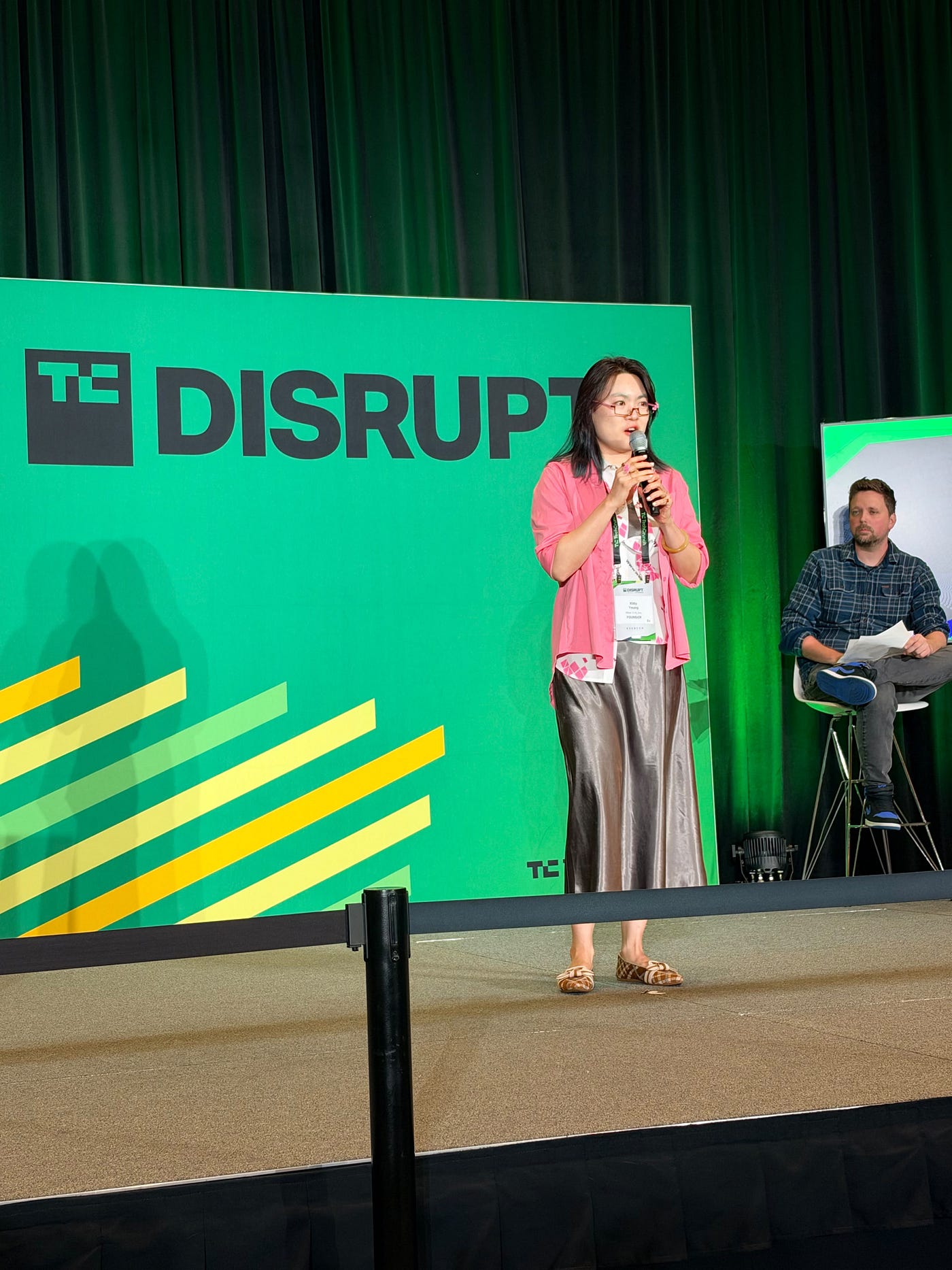
As you know, there are not that many women in your industry. Can you share 5 things you need to thrive as a woman in the AI industry?
1. Confidence in your own abilities. Don’t wait until you feel 100% ready. Believe in your expertise, speak up, and take opportunities even when you’re the only woman in the room.
2. A strong support network. Surround yourself with mentors, peers, investors, and allies who believe in your potential, challenge you, and open doors.
3. Continuous learning and curiosity. AI evolves incredibly fast. Stay curious, embrace change, and never stop experimenting with new technologies.
4. Resilience and persistence. You will encounter skepticism, rejection, and bias. Don’t let others’ expectations define your ambitions. Let your work speak for itself.
5. The courage to lead and think big. Don’t limit yourself to participating in the AI revolution. Build companies, develop groundbreaking technologies, and help shape the future of the industry.
Can you advise what is needed to engage more women into the AI industry?
We need to introduce girls to STEM and AI early, in ways that spark curiosity and creativity. There should be more initiatives that connect technology to people’s passions, whether that’s art, fashion, healthcare, or sustainability. We should change the perception that AI is only for computer scientists. Some of the most exciting AI breakthroughs will come from people who combine technical knowledge with expertise in other disciplines. My own journey from physics and fashion design to AI entrepreneurship is an example of that.
Ultimately, we don’t just need more women working in AI. We need more women shaping what AI becomes.
What is your favorite “Life Lesson Quote”? Can you share a story of how that had relevance to your own life?
“Always listen to experts. They’ll tell you what can’t be done, and why. Then do it.” — Robert A. Heinlein
This quote has guided me throughout my career as a physicist, inventor, designer, and entrepreneur.
I’ve always been drawn to problems that sit at the intersection of different disciplines, where conventional wisdom often says something is impossible or impractical.
When we first started developing AI-powered fashion technology at Microsoft, there were many reasons why it shouldn’t have worked. The technology was too early, the computational costs were high, and the fashion industry was notoriously difficult to transform. Eventually, we realized that Microsoft wasn’t the right environment to pursue the vision. But instead of giving up, we founded Wear It AI and continued building. What once seemed like an ambitious experiment became a real platform connecting tens of thousands of creators with global fashion brands.
I’ve experienced similar challenges throughout my journey, from combining electronics with fashion design to teaching quantum computing through comics and now developing AI systems that can turn creative ideas into manufacturable physical products.
What I’ve learned is that experts are incredibly valuable at explaining why something is difficult, but their understanding of today’s limitations doesn’t necessarily define what’s possible tomorrow.
As a scientist, I respect evidence and physical laws. But as an inventor and entrepreneur, I also know that many limitations are simply consequences of how things have always been done.
My philosophy is to listen carefully, understand the obstacles, and then find a different way.
If everyone already knows how to do something, it’s probably not where the most exciting innovation will happen.
You are a person of great influence. If you could start a movement that would bring the most amount of good to the most amount of people, what would that be? You never know what your idea can trigger. :-)
I actually started this movement years ago, and I’m still in the middle of it today.
The movement is about democratizing creativity and empowering everyone to become a creator, an innovator, and an entrepreneur. I believe everyone has ideas worth bringing to life, but too often, the barriers of technology, resources, and access prevent them from realizing their potential.
When I started the work that eventually became Wear It AI at Microsoft, I envisioned a future where AI could remove these barriers and fundamentally transform how people create, produce, and sell things. It was an ambitious vision, and there were plenty of reasons people thought it wouldn’t work. The technology was too early, the industry was too complicated, and the challenges seemed overwhelming.
But I never gave up.
When Microsoft wasn’t the right place to continue, we took the vision outside and founded Wear It AI. What began as an internal initiative has grown into a platform empowering tens of thousands of creators. The most important message of my movement is simple: Never give up on a vision you truly believe in.
Of course, that doesn’t mean stubbornly following the same path when something isn’t working. It means being willing to change your approach, learn from failures, adapt to new realities, and keep finding ways forward without losing sight of what you’re trying to achieve.
I’m still in the middle of this journey. There are new challenges every day, and the future I’m working toward is far from fully realized. But I believe meaningful change takes time, persistence, and people who are willing to keep going even when the odds seem impossible.
If I could inspire a movement, I would want people to realize that they don’t have to wait for permission, perfect conditions, or someone else’s approval to start building the future they believe in.
How can our readers follow you on social media?
https://www.linkedin.com/in/kittyyeung1/ https://www.instagram.com/@wearit.ai_official
This was very inspiring. Thank you so much for joining us!