My experience as an athlete has positioned me as a social entrepreneur. I’ve learned to look at the big picture instead of the day-to-day ups and downs.
Pop Culture
Kenny Lofton of CenterBlock: Why Former MLB All-Star Believes The Biggest Trap In Business Is That No One Is Watching
The former MLB center fielder turned blockchain entrepreneur shares how 17 seasons in professional sports taught him the resilience needed to build successful tech companies.
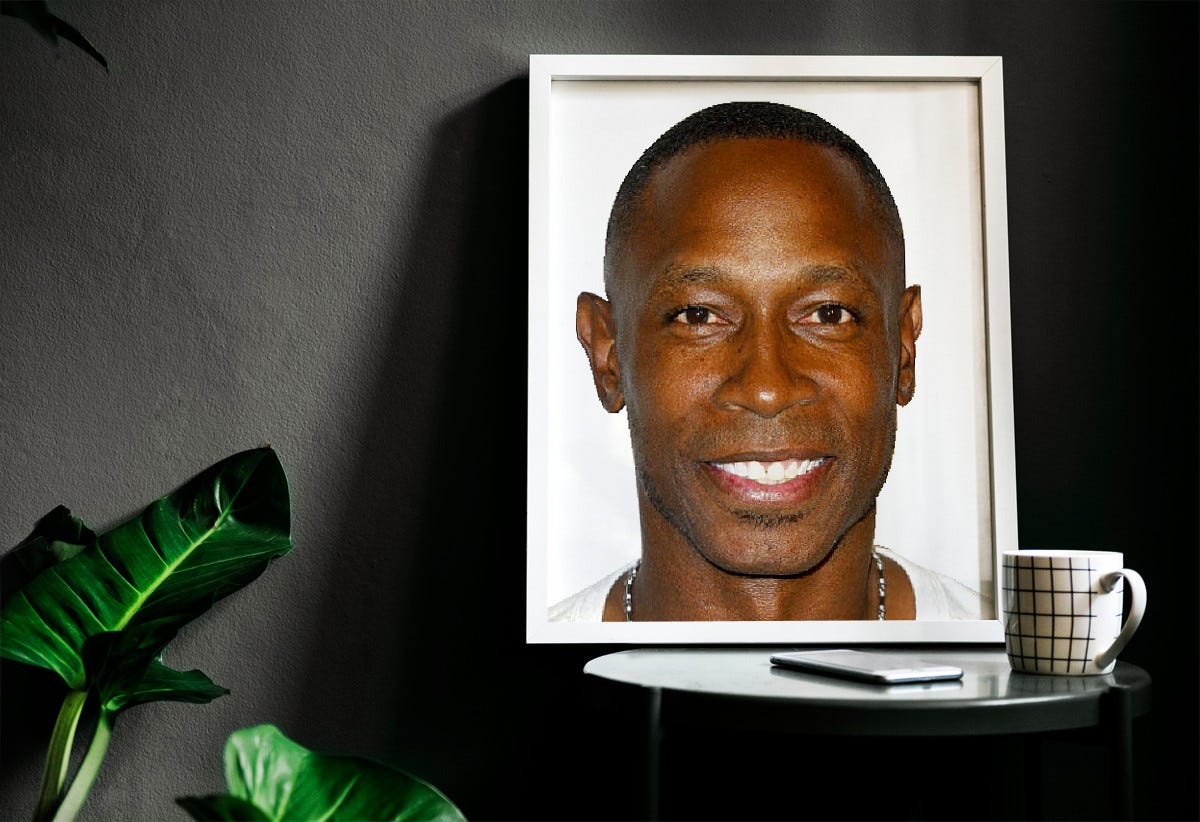
As a part of our series about the work ethic lessons we can learn from professional athletes, I had the pleasure of interviewing Kenny Lofton.
Kenny Lofton is a former Major League Baseball (MLB) center fielder, where he was a six-time All-Star and four-time Gold Glove winner and amongst the all-time leaders in stolen bases. He is the co-founder of blockchain solutions platform CenterBlock Asset Management and film company Filmpool.
After spending 17 seasons in the MLB, signing hundreds of thousands of memorabilia, and having a successful career in film production, Lofton quickly recognized the value proposition that NFTs could create for professional athletes, entertainers, and brands.
As a leading expert in blockchain and cryptocurrency technologies, Lofton founded CenterBlock to invest in decentralized finance technologies, NFT assets, and related blockchain technologies.
In response to the 5 billion dollar sports memorabilia and $50 billion NFT industry, Lofton is launching an NFT marketplace called Proxime focused on creating and employing NFP assets for young creatives.
Thank you so much for doing this with us! It is a great honor. Our readers would love to learn more about your personal background. Can you tell us the story of how you grew up?
I grew up in East Chicago, Indiana, surrounded by aunts, uncles, and cousins. My cousins and I played sports growing up. Our area had many gangs, so playing sports was the only outlet.
What or who inspired you to pursue your career as a high-level professional athlete?
My extended family encouraged my athletic pursuits, and they challenged me along the way to keep moving in the direction of sports. I excelled in both basketball and baseball throughout high school. I was offered many college basketball scholarships and ultimately attended the University of Arizona. I focused on basketball for the first three years in college but then decided it was time to get back into my main passion -baseball. I loved playing baseball.
None of us can achieve success without some help along the way. Was there a particular person who you feel gave you the most help or encouragement to be who you are today? Can you share a story about that?
I credit my grandmother for helping me be who I am today. She instilled the qualities and character traits that guided me throughout my career. My grandmother was all about working hard, being trustworthy, staying humble, being dependable, helping people in need, and practicing self-control. She didn’t have much financially, but she was generous with whatever she had and gave time and energy to help her children, her grandchildren, and the neighborhood’s children.
Can you share the funniest or most interesting mistake that occurred to you in the course of your sports career? What lesson or take away did you learn from that?
The funniest mistake I made playing professional baseball happened when I was a rookie playing for the Cleveland Indians. We were playing the New York Yankees at the Yankee Stadium. Indians were at-bat, no outs, and I was on first base. There was a catchable fly ball to the outfield. I should’ve stayed at first base, ready to run if the ball dropped. My brain told me there were two outs, so I took off running when the ball was hit — big mistake. Yankees caught the ball and threw me out at the first base.
The Cleveland Indians manager Mike Hargrove pulled me aside when I got to the dugout. To my surprise, instead of yelling at me for making such a stupid mistake, he dropped two rocks into my hand and said, “that’s what two looks like.” Hargrove made his point with humor, and I appreciated it.
What did I learn from that mistake? Focus, focus, focus. Don’t get lazy and let your mind wander, especially in a critical situation with responsibilities.
As an athlete, you often face high-stakes situations that involve a lot of pressure. Most of us tend to wither in the face of such pressure and stress. Can you share with our readers 3 or 4 strategies that you use to optimize your mind for peak performance before high pressure, high stress situations?
Staying calm and relaxed is how I optimize my mind before a high-stress situation. I tell myself not to make the problem more significant than what it is. It’s essential to be prepared and consistently practice my craft to adapt to all the high-risk factors of being a professional athlete.
Can you tell us the story of your transition from a professional athlete to a successful business-person?
My transition from being a professional athlete to business was something I prepared for in the years leading up to my retirement from Major League Baseball. I studied Media Arts in college and met actors and directors during my baseball career that gave me some insight into the film and TV industry. I also met many non-entertainment-related businesspeople while playing professional baseball. I enjoyed hearing about the strategies they employed and the challenges they overcame in their companies.
After a successful 17-year MLB career, I’m now positioning myself as an expert in blockchain technology and NFT. I look forward to exploring this new chapter in my life.
What are some of the most interesting or exciting new projects you are working on now?
I recently launched an NFT company with my business partner J’on Dennis called CenterBlock Asset Management. CenterBlock is one of the first NFT management companies to enter the market. At CenterBlock, we assist professional athletes, entertainers, influencers, and corporations with the ideation, development, deployment, and management of their NFT portfolios.
I’m also creating an NFT Studio. The studio will include a beta marketplace that allows minting and purchasing NFTs with credit and debit cards on multiple blockchains.
Do you think your experience as a professional athlete gave you skills that make you a better entrepreneur? Can you give a story or example about what you mean?
My experience as an athlete has positioned me as a social entrepreneur. I’ve learned to look at the big picture instead of the day-to-day ups and downs. The professional baseball season is 162 games in about 185 days. You have to learn quickly from the most recent loss or win, then clear your mind and prepare for the next game, often within 24 hours. You can’t hold onto too much from the previous game, or you won’t be at your best for the next one.
Playing professional baseball for 17 years taught me that winning or losing isn’t in my control, even if I prepare and practice for a game. I’m part of a team. We win, and we lose as a team. Every member of a team must put in the work. If I gave up on baseball because my team lost a game, I would never have made it out of the Little League. Mistakes and failures are disappointing, but they are also part of the process that leads to winning and success.
Entrepreneurs and professional athletes share a common “hustle culture”. Can you share your “5 Work Ethic Lessons That Entrepreneurs Can Learn From Athletes”? Please share a story or an example for each.
a. In sports, you play in front of millions of people. They can see if you are giving 100% effort. In business, you can sometimes get away with less than 100% effort because no one’s watching. Regardless of whether you play sports or not, always give the task at hand everything you’ve got.
b. Practice, practice, practice. Or prepare, prepare, prepare. Even if the game or meeting doesn’t go your way, you’ll know you gave it your best shot.
c. Assess your strengths and weaknesses. If you want to win, you must know everything about your power and abilities. If you don’t know what your weakness is then you’ll have a hard time making improvements and getting better.
d. Teamwork is best when your team members have strengths that are different than yours. If you have done an honest assessment of your skillset, then you’ll know who you need to add to your team and how to work well with everyone’s personalities.
e. Learn from mistakes and quickly move forward. We have all made mistakes, and we’re going to make more mistakes, but we can’t hold onto them because the load becomes too heavy and we become frozen in place after a while.
What would you advise to a young person who aspires to follow your footsteps and emulate your career?
Take advantage of their strengths and don’t allow weaknesses to be an excuse. Continue to develop your strengths, but don’t neglect your weaknesses. I didn’t hit with power when I played baseball, but I became known for running fast. I let my speed make up for my lack of power and had a supportive team that carried strengths in other areas. Rarely can an athlete be all things, but they can be exceptional in a few places.
How have you used your success to bring goodness to the world?
I prefer to think about helping others by being a good neighbor. We associate a neighbor as someone who lives next door, but to me, a neighbor gives back to the community in which they live and work.
I like supporting non-profit organizations that target at-risk youth. I was once an at-risk youth. However, because of my grandmother’s strong, steady hand, I had the skills and character necessary to end up where I am today. Did I make mistakes? Of course. I learned from them, and I continue to learn to this day. I want young creators to not give up on their dreams and work on being the best in their industry.
If you could inspire a movement that would bring the most amount of good to the most amount of people, what would that be?
If I could inspire a movement to bring good to people, it would be by encouraging my “golden rule.” Treating others as you would want to be treated. This saying goes a long way toward restoring families, relationships, trust, confidence, and opportunity. We all want someone to give us a hand up and a kind word when we’re struggling. Wouldn’t it be great if leaders of business, banking, and the government used their knowledge, experience, and influence to make opportunities available for others to walk through the same doors they did?
Can you share your favorite “Life Lesson Quote”? Why does that resonate with you so much?
One of my favorite life quotes belongs to my grandmother, who said, “may the work I’ve done speak for me.” My grandmother preached about life, relationships, family, neighbors, and her faith in God. She rarely spoke about herself and rarely complained about her life. She had no time for self-pity; she had work to do. She had kids and grandkids to watch over. She had people she needed to feed. My grandmother passed away a while ago, but her example influences me today.
Is there a person in the world, or in the US whom you would love to have a private breakfast or lunch with, and why?
I would love to have a private breakfast or lunch with Elon Musk. The man is brilliant, eccentric, forward-thinking, and fearless. He has accomplished so much, yet he’s lost none of the motivation that got him to where he is and he continues to be hard-working, thoughtful, and innovative. Elon Musk built a space company, a car company, a tunnel construction company, and an artificial intelligence company — what else is on his “to-do list?”
This was very meaningful, thank you so much! We wish you continued success!
ES
Written by
Edward Sylvan
Editor & Journalist · Authority MagazineAuthority Magazine Columnist & Contributor

Published inAuthority MagazineTop Lessons, Top Authorities · 42K Followers
Exclusive, curated interviews with the leaders and changemakers shaping tomorrow. Leadership lessons, industry deep dives, and executive profiles.