In graduate school I was trained in Cognitive Behavioral Therapy, and as I began seeing clients, I noticed it didn’t always work for the brightest, busiest minds: ask a brilliant person to argue with her own thoughts, and she will win the argument every time, against herself.
As a part of this series, I had the distinct pleasure of interviewing Kathryn Ely.
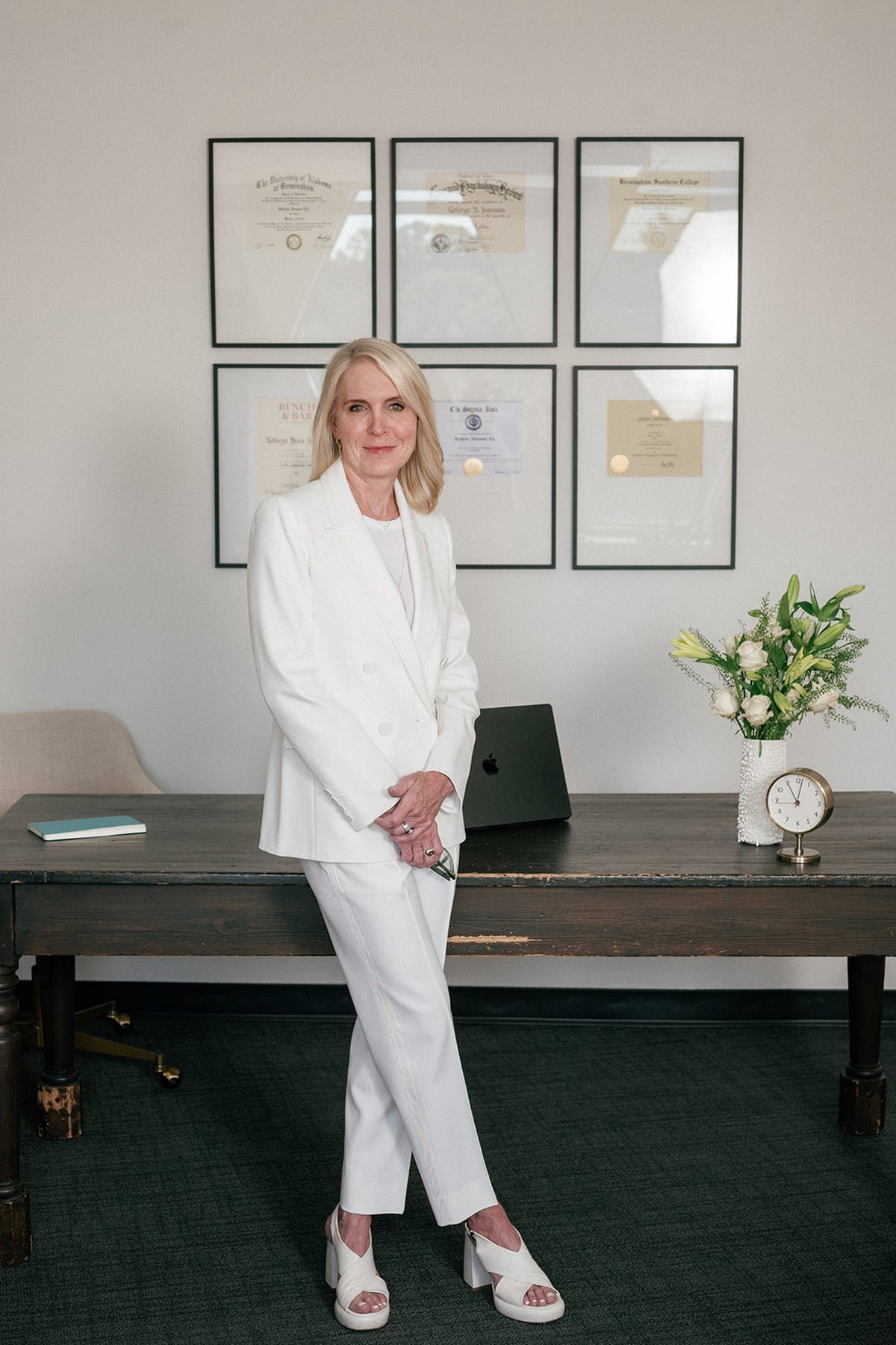
Kathryn Ely, LPC, JD, is the owner of Empower Counseling & Coaching, a group mental health practice for women, by women, in Birmingham, Alabama. She helps lawyers, doctors, and executive moms who are their families’ primary breadwinners move from burnout to sustainable excellence and harmony in their lives.
Thank you so much for joining us in this interview series! Our readers would love to learn more about you and your personal background. Can you please share your personal story? What has brought you to this point in your life?
I didn’t learn burnout from a textbook. I lived it, as a practicing attorney and mother of three who measured her worth by how much she could carry. In graduate school I was trained in Cognitive Behavioral Therapy, and as I began seeing clients, I noticed it didn’t always work for the brightest, busiest minds: ask a brilliant person to argue with her own thoughts, and she will win the argument every time, against herself. So I went looking for something else and found Acceptance and Commitment Therapy, which my program never taught, and I learned everything about it I could. I tried it on myself first, and I could hardly believe the transformation; for the first time, the relentless voice in my head lost its grip, not because I had silenced it, but because I had stopped letting it drive. For the last 9 years, I have used ACT to help my clients make that same shift, and today it is the foundation of everything my team does.
What is your “WHY” behind what you do? What fuels you?
What fuels me is a pattern I have seen in my office for years: the most capable, accomplished women I know are walking around convinced they aren’t doing any of it well enough. Our culture has quietly taught women to be unreasonable with themselves, to build successful careers while also serving as CEO of the household and the children, and to treat anything short of excelling at all of it as failure. It breaks my heart, because the women who believe this most deeply are always the most capable, well-equipped, fantastic women I know. Over time, that belief quietly steals the joy from the very lives they have worked so hard to build, and that is where burnout begins. My mission is to help these women see themselves clearly: to recognize not only everything they do, but the invisible mental load of everything they carry and remember. Nothing brings me more joy than watching a brilliant woman finally appreciate her own value and fully enjoy the life she created.
Sometimes our mistakes can be our greatest teachers. Can you share a story about a mistake or failure which you now appreciate has taught you a valuable lesson?
My biggest mistake as a leader was building a group practice before I knew what I wanted it to be. I became a group practice owner almost by accident. My caseload was full, but clients kept calling, and I couldn’t stand the thought of people hurting and waiting for help. So I rushed to add therapists, focused on meeting the need in front of me rather than on what I was building. That decision came from a good place, but without a clear mission and vision, the practice didn’t have a center, and it took me a few years and a few tries to find one. When I finally did, it was simple: the best therapists, providing the best specialized therapy for women. That clarity changed everything, from who I hire to how we serve our clients. The lesson I carry now is that compassion tells you why to act, but a clear vision tells you how. Helping more people well starts with knowing exactly who you are.
You are a successful leader. Which three character traits do you think were most instrumental to your success? Can you please share a story or example for each?
- Relentless curiosity. When something isn’t working, I don’t accept “that’s how it’s done.” Early in my career, I noticed that the CBT I was trained in didn’t always reach my brightest, busiest clients. Instead of blaming them or myself, I went looking for something better, found Acceptance and Commitment Therapy, and taught myself everything I could about it. I treat leadership the same way I treat life: like a scientist. Try, gather data, and try better.
- The courage to start over. I had built a career as a practicing attorney, and walking away from it to go back to school meant becoming a beginner again at 46, with 3 children, 2 dogs, and 1 husband at home. Every instinct I had as a perfectionist told me not to risk it. I did it anyway, and that decision taught me that discomfort is where growth lives. I now ask my clients, and myself, one question often: what does one step bigger look like?
- Demanding excellence, then trusting people with it. When I grew Empower from my own practice into a team, I made a decision some people questioned: I hire for specialized training, not for years in the field, because training is what predicts outcomes for clients. Every clinician on my team is trained or certified in the specific evidence-based approaches she uses. Once I’ve hired well, I step back and let her lead in her specialty, because a practice built around one person can only help as many people as that person can see.
What are some of the most interesting or exciting new projects you are working on now? How do you think that will help people?
The project closest to my heart is the team I’m building at Empower. I want to create a place where a woman never has to quit a job she loves just because her life has changed. Whether a therapist is welcoming a new baby, raising teenagers, caring for aging parents, or ready to take on more, her role can grow and change with her. Our practice is built to grow with our clients through every stage of life, and I believe our therapists deserve the same. That flexibility helps clients too: when therapists stay, clients keep the relationships they’ve built, and our team keeps getting stronger. Personally, I’m writing a book and developing intensives for busy professionals who need a quick, effective path from burnout to harmony. Many of the women I serve can’t commit to months of weekly sessions, but they can commit to a focused day or weekend, depending on the intensive’s format. Meeting them where their lives actually are is the whole point.
From where you stand personally or professionally, why are you so passionate about mental well-being?
I’m passionate about mental well-being because I’ve seen what it makes possible, in my own life and in my clients’ lives. For years, I had the accomplishments without the peace. I could check every box and still lie awake reviewing everything I hadn’t done well enough. When I finally learned to care for my mind the way I cared for everyone and everything else, my life didn’t just get calmer; it got bigger. I had more patience with my children, more presence with my husband, and more energy for work I love. I see the same ripple effect in my clients. When a woman who carries everyone else finally gets well herself, it’s never just her life that changes. Her family feels it, her colleagues feel it, and the people she serves feel it. Mental well-being isn’t one more thing on her list. It’s what makes everything else on that list possible to enjoy.
Based on your research or experience, how exactly does self-care impact our mental wellness?
In my experience, mental wellness begins and ends with real self-care, and that starts with defining what real self-care is. It isn’t a bubble bath or a spa day squeezed in between obligations. Real self-care means valuing yourself fully, knowing and understanding your own needs, and making sure those needs are met. I spend a lot of time with clients on exactly this, because high-achieving perfectionists tend to treat themselves like machines: built to produce, expected to run without stopping, with no room for feelings or needs. The irony is that even machines get maintenance. When a brilliant woman spends years ignoring what she needs, burnout isn’t a sign that she failed. It’s the predictable result of a system that never considered her. That is why, of all the areas of life I explore with clients, mental and physical well-being is the one I insist we address first. Everything else she cares about depends on it.

Can you please share your “Top Five Self-care Practices That Each Of Us Can Use To Improve Our Mental Wellness”?
1. Know your total value. Most of the high-achieving women I work with measure their worth by what they produce: the case won, the patient treated, the lunches packed, the deadline met. Real self-care starts with seeing yourself as a valuable, important human being outside of every role you play. I ask clients to name what is meaningful about them as people: their humor, their loyalty, their curiosity, the way they make others feel. Results come and go. Your value doesn’t, and until you believe that, no amount of achievement will ever feel like enough.
2. Appreciate all you do with a time audit. Most of my clients have no appreciation for the mental load they carry, so they reach the end of every day convinced they haven’t done enough or been enough in any of their roles. A to-do list alone makes this worse, because it only shows what’s left undone. Instead, I have clients list everything, estimate how long each item will actually take, and schedule it on the calendar, including the things we never count: getting ready, driving, eating, answering texts, remembering the dentist appointment. When they see their real day laid out, something shifts quickly. They realize they are making the most of their time. They are doing enough. They are being enough.
3. Protect your energy with an energy audit. Time isn’t our only valuable resource; energy is just as important. Ask yourself four questions. What drains you, and how can you do less of it? What fills your cup, and how can you do more of it? Who exhausts you, and how can you spend less time with them? Who leaves you feeling energized, excited, or joyful, and how can you spend more time with them? Your energy is finite. Spend it on purpose.
4. Use mindfulness to notice your thoughts and feelings. You can’t meet your own needs until you know what they are. Mindfulness is how we find out: noticing our thoughts and feelings rather than judging them. When thoughts like “I should be able to do more” or “I shouldn’t be so tired” show up, most high achievers either push through or criticize themselves. Instead, get curious. That tiredness isn’t a weakness; it’s information. Maybe you need rest. Maybe you need fun, connection, movement, or simply a quiet hour that belongs to no one but you. The more we notice without judgment, the more we understand what we need, and the more we understand, the more choice we have about how to meet those needs.
5. Make meeting your needs non-negotiable. Once you understand what fills you up, what drains you, and what you can realistically accomplish in a day, it’s time to act. Schedule your “maintenance items” on the calendar at the frequency you need them, whether that’s exercise, rest, time with friends, therapy, or quiet, and protect that time the way you would protect a meeting with your most important client. Because it is one.
Can you please share a few of the main roadblocks that prevent people from making better self-care choices? What would you suggest can be done to overcome those roadblocks?
- Believing self-care is selfish. Many of the women I work with feel guilty the moment they put themselves first, because they have been the ones taking care of everyone else for so long. I remind them that caring for yourself isn’t taking something away from the people you love; it’s making sure you have something left to give them. Start small, with one protected hour a week, and notice that everyone survives.
- Believing there isn’t time. “I’ll take care of myself when things slow down” is one of the most common things I hear, and things rarely slow down. The time audit I described earlier helps here. When clients see their real day laid out on a calendar, they can find the time that’s genuinely there, and they stop treating self-care as something that only happens once everything else is finished.
- Turning self-care into another performance. High achievers are so used to excelling that they can turn even rest into a task to do perfectly: the perfect morning routine, the perfect workout streak, then guilt when they miss a day. Self-care isn’t something to be graded on. Notice what you need today, meet that need as well as you can, and let that be enough.
In one sentence, what would you say to someone who doesn’t prioritize their mental well-being?
I would tell them that our mental health works like the battery in an electric car: we can charge it a little along the way, never letting it drop below 20%, on our own time and schedule, or we can keep promising ourselves we’ll recharge after the big case or the holidays until the battery hits zero and we’re stranded in the middle of the road at the worst possible moment, forced to care for it on its terms instead of ours.
Thank you for all that great insight! Let’s start wrapping up. Can you share your favorite “Life Lesson Quote”? Why does this quote resonate with you so much?
“People will forget the things you do, and people will forget the things you say. But people will never forget how you made them feel.” — Maya Angelou
This quote resonates with me because it’s a reminder of how much our feelings matter. The high achievers I work with who burn out have usually spent years treating their feelings as a weakness to override or a waste of time. But virtually every human being comes with a full spectrum of emotions, and they aren’t optional. When we ignore them, we miss important information about who we are and what we want. Angelou was right that we never forget how other people make us feel; what we often forget is to notice how we make ourselves feel, through our experiences and even through our own thoughts. When we let our feelings be what they are and pay attention to them without judgment or criticism, they stop being obstacles and become guides. They tell us when we need rest, when something matters deeply, and when we’ve drifted from what we value. That is how we learn to care for ourselves in the most effective way possible.
We are very blessed that some of the biggest names in Business, VC funding, Sports, and Entertainment read this column. Is there a person in the world or in the US whom you would love to have a private breakfast or lunch with, and why? They might just see this, especially if we both tag them :-)
I would love to have breakfast with Arianna Huffington. She built one of the most influential media companies in the world, and then had the courage to say out loud what so many high achievers are afraid to admit: burnout is not the price of success. She learned it the hard way, collapsing from exhaustion at her desk, and instead of pushing through, she paid attention and built Thrive Global around what she learned. That is exactly the journey I help lawyers, physicians, and breadwinner moms make every day, from treating themselves like machines to truly caring for themselves. I would love to talk with her about what happens next: how we help the most capable women stop believing they’re not doing enough, and how leaders can build workplaces where nobody has to choose between excellence and well-being. And I suspect we would both make sure to get a good night’s sleep before that breakfast.
I truly appreciate your time and valuable contribution. One last question. How can our readers best reach or follow you?
Readers can find me at Empower Counseling & Coaching, where we publish a regular blog at https://empowercounselingllc.com/, and on Instagram at https://www.instagram.com/empowercounseling_and_coaching/.
This was very inspiring. Thank you so much for joining us!