I find that leadership in general, but particularly during hard times, is about providing clear, credible and compelling direction.
Business
Jyoti Mehra of Gilead on Cultural Transformation, Adaptive Strategy, and Long-Term Vision
The Gilead human resources executive shares insights on cultivating resilience, doubling down on transparency, and steering global organizations through periods of profound uncertainty.
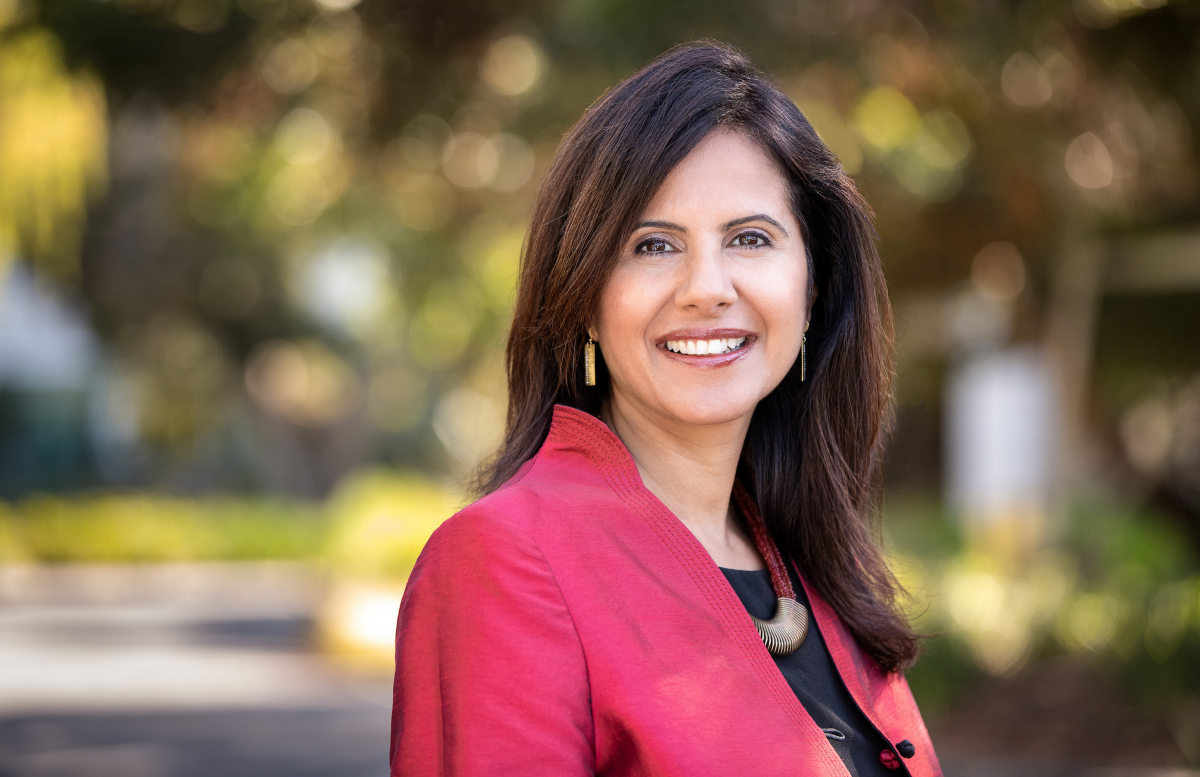
As part of our series about the “Five Things You Need To Be A Highly Effective Leader During Turbulent Times”, we had the pleasure of interviewing Jyoti Mehra.
Jyoti Mehra, Gilead’s Executive Vice President of Human Resources, is responsible for leading people strategy and, together with the Gilead Leadership Team, building an inclusive and collaborative culture. In her role, she has responsibility for elevating team performance and developing a cohesive approach to attracting, developing and retaining employees.
Jyoti brings extensive experience in business partnership and organizational design to her current position. Prior to joining Gilead in 2017, Jyoti held senior leadership positions with Novartis Corp. in the United States, Europe and China, bringing a broad international perspective to her work.
Jyoti received her bachelor’s degree in political science from Delhi University and her master’s degree in politics from Jawaharlal Nehru University.
Thank you so much for your time! I know that you are a very busy person. Our readers would love to “get to know you” a bit better. Can you tell us a bit about your backstory and how you got started?
I was born and raised in India and immigrated to the United States more than 20 years ago. I initially started in hospitality after college, before moving into automation technology and finally into human resources.
I’ve spent my career in the pharmaceutical industry — prior to Gilead I grew my skills at Novartis. While the majority of my time there was spent on the East Coast in New Jersey, I also had a few assignments in Basel, Switzerland and Shanghai, further shaping my global perspective and cultural understanding. I try to bring all of these aspects, in combination with my own experiences as a woman of color and an immigrant, to bear in my own leadership approach.
Can you share with our readers a story from your own experience about how you lead your team during uncertain or difficult times?
I find that leadership in general, but particularly during hard times, is about providing clear, credible and compelling direction. This must be based on both external context and internal company dynamics at play. Especially in uncertain or difficult times, you need a team that can bring deep and diverse expertise to help solve a challenge or leverage an opportunity.
One of the most important things a leader can do is step back, examine the big picture and help the teams connect to the context. In my leadership role I am involved in conversations that impact functions across the enterprise, and by connecting the dots back to our talent, culture and organization it really allows me, and the teams I work with, to do our best.
I remember, when at a prior company, I was leading a significant reorganization shaped by a business transformation. As a leadership team we had been talking about the changes for a few months, but when I was previewing them with my broader human resources team before we announced, I realized I had to step back and provide the context for them. That enabled the team to partner and execute on the organizational changes, and also proactively manage downstream efforts — how to communicate change, what expertise was needed and realign on changes to business priorities. It is about understanding the context and ensuring that you as a leader are synthesizing that and helping your team connect the dots to make the greatest impact.
What would you say is the most critical role of a leader during challenging times?
I fundamentally believe that a leader, particularly during a challenging time, has to play a highly supportive role, where they are really caring for and listening to their teams. As a leader you of course have to stay focused on the what, connecting the dots, and making sure the depth of understanding is there. But how do you engage the best and the brightest minds on the teams you work with? More often than not, the best ideas really come from the diverse expertise and experiences within the team.
When the future seems so uncertain, what is the best way to boost morale? What can a leader do to inspire, motivate and engage their team?
Motivation is something that is very personal and individualized. It is not one size fits all, and what motivates one person may be very different than what motivates another. But there are three things that I think are even more important for leaders to do during uncertain times: to care, to listen and to trust.
To engage teams it is critical to lead with compassion and empathy, create space for others to speak openly and build trust by empowering individuals and teams to make decisions and act effectively.
Is there a “number one principle” that can help guide a company through the ups and downs of turbulent times?
When I think about guiding the company, the number-one thing is to be focused on the long-term ambition, or your north star. In turbulent times, navigating the ups and downs becomes easier if we keep our ultimate goals in mind.
At Gilead, one of our goals is continuing to build an agile and inclusive culture. With that in mind, it was clear that employee wellbeing and safety came first in navigating through the uncertainty of the pandemic.
Here is the primary question of our discussion. Based on your experience and success, what are the five most important things a business leader should do to lead effectively during uncertain and turbulent times? Please share a story or an example for each.
Leadership is multifaceted, and leaders need to understand the context in which they are operating and what they are trying to solve for when thinking about the right leadership style and approach to a situation. Every leader needs to rely on a range of leadership styles they can leverage depending on the situation at hand.
First, I believe it is critical to be adaptive. During turbulent times, you don’t have all the data or perhaps prior experiences to lean on. These can often be unique situations that require you to rely much more on your instincts and judgement.
During the pandemic, nobody could have predicted the sequence of events, especially in March 2020. In thinking about leadership during those times, as more information becomes available a leader must have the ability to adapt and pivot. In my case it was key to understand shifting employee sentiment and adapt our support to those changing needs. You also must be prepared for more than one outcome and scenario plan. We were all hoping that the pandemic would be behind us, but unfortunately that’s not true. So you have to adapt to emerging information as it becomes available, be comfortable with uncertainty and prepared for a number of scenarios because you don’t know where it is going to go.
Second, a leader has to double down on being open and transparent. I think a leader must do that at all times, but what is really important is being real and authentic when you don’t have all the answers. Be transparent about the information that is known and can be shared, and what information you don’t have at that point in time. I think transparency is one of the key leadership traits. At Gilead, our own human resources team has been undergoing an evolution, and being very clear about what we are building, and why, is crucial as we transform the employee and manager experience.
The third is being focused and decisive, which again can be difficult because you don’t always have all the information you may need. But connect it back to the long-term view, and look at what you do know, what are the things that have not changed, where you want to go in the short, medium and long term and therefore stay focused on the ambition. The execution roadmap towards the long-term ambition is important. Equally important is the ability to course-correct when needed.
The fourth is trust, which goes in two directions. Especially during difficult times, you need to lean on and trust your people even more, and I think teams can really shine and bring their collective wisdom and experiences together during times where no one person has all the answers. You also have to trust yourself. You should bring other’s expertise and opinions to the table, but also trust in your own leadership to make the best possible decision.
Lastly, which I have mentioned already, is leading with empathy, caring for the people that we work with and making sure to truly listen. I believe in the concept of servant leadership. Part of my job as a leader is to make sure I remove barriers for the people that I work with, and that requires listening and connecting with my teams, understanding where they are, and empowering them to do their best work. 2020 was a tumultuous year, as the pandemic and the racial justice movement inspired incredibly important conversations. And we needed to make sure that we as leaders were listening to all our employees and understanding the different ways in which we each experienced these events and their impact.
How can our readers further follow your work?
You can follow me on LinkedIn, along with our Gilead LinkedIn and Stories@Gilead features.
Thank you so much for sharing these important insights. We wish you continued success and good health!
CK
Written by
Charlie Katz
Editor & Journalist · Authority MagazineCharlie Katz is a senior columnist at Authority Magazine covering Business and Tech, conducting primary-source Q&A interviews with founders, executives, and industry leaders.

Published inAuthority MagazineTop Lessons, Top Authorities · 42K Followers
Exclusive, curated interviews with the leaders and changemakers shaping tomorrow. Leadership lessons, industry deep dives, and executive profiles.