The world is starving for connection, and our planet is literally dying from our choices and the way we consume.
Tech
Justin Calvino of Emerald Road: How Decentralized Exchange Systems and Web3 Can Empower Communities
Entrepreneur and innovator Justin Calvino explains how Emerald Road is leveraging blockchain infrastructure and decentralized exchange systems to reshape agriculture, community empowerment, and modern commerce.
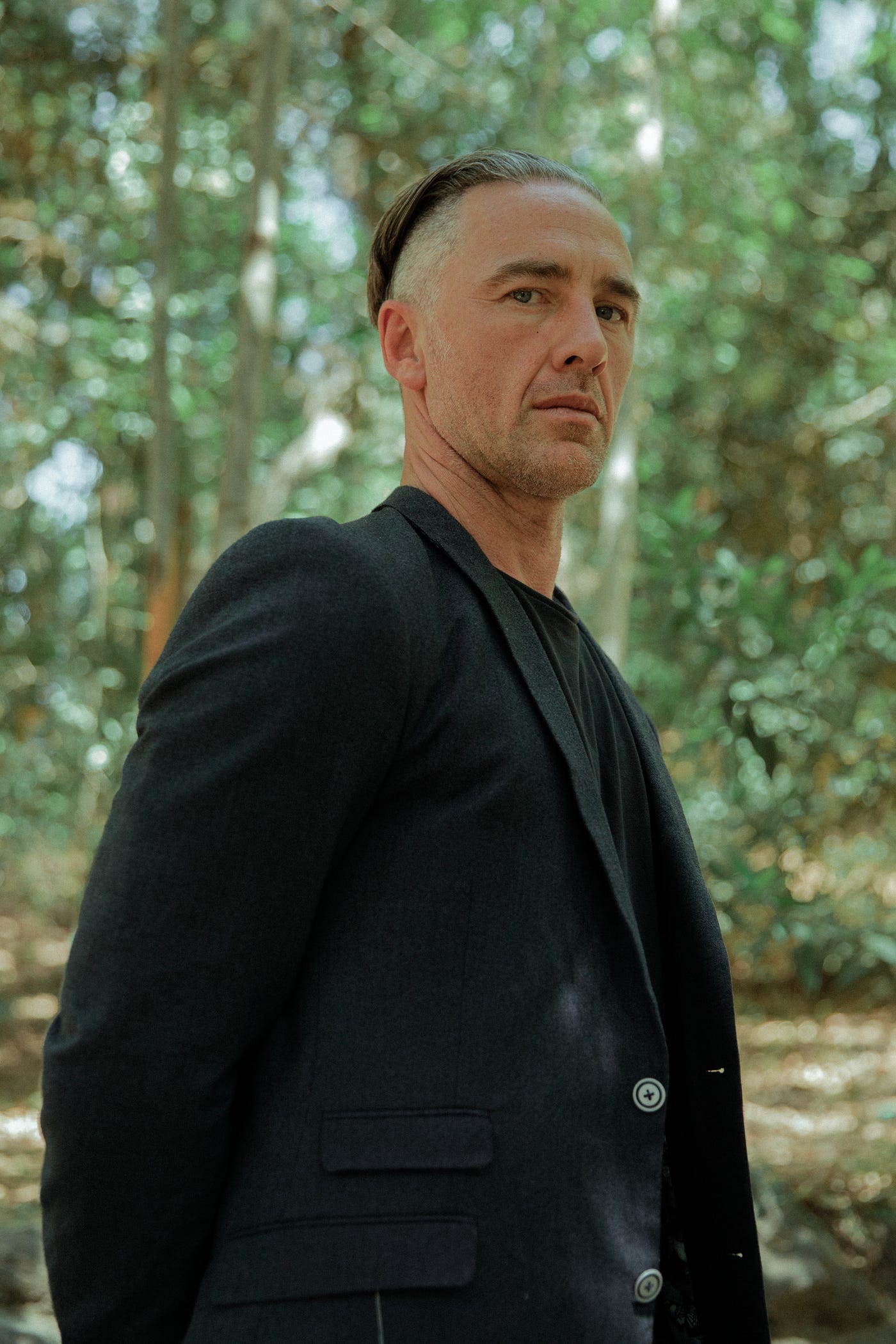
As a part of our series about cutting-edge technological breakthroughs, I had the pleasure of interviewing Justin Calvino.
Justin Calvino is an entrepreneur and innovator in the cannabis space. He founded The Mendocino Appellation Project which created the world’s first cannabis appellation map that mirrors the authentic French wine bottle with D.O.C. designations. Through his consultancy, Medicine Garden West, he helps other cannabis regions and farmers create their own Appellation of Origin designation by guiding them through the process of creating standards of practices, drawing maps, cataloging the traditional knowledge component, and identifying key expressions of each phenotype. He guides brands in creating a go-to-market strategy based on a unique estate-grown approach to cannabis.
Justin is a founding member of The Ganjier Council, the cannabis sommelier certification program, and is an instructor who teaches “Unraveling the Mysteries of Cannabis Genetics,” and explains the secret to reading a cannabis plant and how each plant is a reflection of the person that grew it and an expression of the environment that nurtured it.
Thank you so much for doing this with us! Can you tell us a story about what brought you to this specific career path?
There wasn’t a specific incident that drove me to this line of work, but rather a gradual understanding of a flawed system and the need for change. I became a legacy cultivator because I realized that the system we live in isn’t working and isn’t serving humanity. I knew that somewhere out there, there is a better way to do things. So, I decided to move up into the hills in northern California to find a better way. Although I am not there yet, the journey has led to many revelations.
Can you share the most interesting story that happened to you since you began your career?
In 2016 there was this ballot initiative that we wrote that brought cultivators into compliance with state level regulations. I remember working really hard on this initiative and being proud of my efforts because it was a slam dunk in my eyes. At the time, cannabis was about to be regulated, so we had to act. We spent years telling people our plan, yet no one wanted to listen. Then came time for proposition 64 and everyone wanted to fight us. Growers thought we were trying to regulate them even though we weren’t and the sheriffs didn’t want cannabis being cultivated in the county because they were firm on their belief that it’s the “devil’s lettuce”. Even environmentalists were against it because they wanted to preserve nature. We were surprised at how much backlash we got because the initiative was so cut and dry. We did it with the intention of adding value to the community, but that was not the way it was perceived by the people at large.
Can you tell us about the cutting edge technological breakthroughs that you are working on? How do you think that will help people?
The world is going digital, and this means a powerful shift in the way we market and purchase products. Smaller cannabis companies are looking for a way to normalize and function efficiently in this newly emerging market. We stand at the intersection of the path forward by building a solution for marketing, payments, distribution, and education. This solution entails blockchain and Web3 infrastructure. Both enable us to give the power to brands to own both currency and content.
How do you think this might change the world?
The world is starving for connection, and our planet is literally dying from our choices and the way we consume. Our current supply chain is inefficient and supports only a few large players as a model. Our banking system takes the money deposited and lends it freely to projects that are focused on economic returns over sustainability. In addition, our current media (both social and mainstream), focuses on consumerism, image, and negative drama. This gets to change if we hand a world over to future generations that contains decentralized exchange systems. By creating decentralized exchange systems, for both goods and information, we empower communities. This enables them to make decisions for themselves on entertainment, products, and medicine, leading to a better future for all!
Keeping “Black Mirror” in mind, can you see any potential drawbacks about this technology that people should think more deeply about?
The main drawback of this technology is people within communities manipulating other people based on popularity. Of course we aim to fix this problem and not promote it, but we should acknowledge it. The more our currency is tied to online popularity, be it a brand or person, the more it can marginalize us. I can foresee the further marginalization of community members and brands based on popularity, so a lot of critical thinking should be done in order to prevent this from coming into fruition.
Was there a “tipping point” that led you to this breakthrough? Can you tell us that story?
My tipping point was in 9th grade, specifically when my highschool football coach said I couldn’t play football the following year. After that, I ran away from home and ended up in California. I spent the last few decades learning about farming, culture, and how the microbiology of the soil impacts both my internal biology and that of my larger community. I now look to create systems that honor the micro-macro process of life. Little did coach King know that he would send me on that path and change me forever.
What do you need to lead this technology to widespread adoption?
We need influencer collaboration and participation. Influencers are instrumental in gaining brand exposure and popularity. Once someone really popular starts promoting it, people will adopt it. This is an example of network effects, and how we will use them to grow the community. In addition, a good PR team and marketing strategy will go a long way in showing the value of what we have to offer.
What have you been doing to publicize this idea? Have you been using any innovative marketing strategies?
We have been connecting to other relevant people in the industry through social media and networking events in order to expand our network and build a strong foundation of loyal and compassionate alliances. We have also created a membership page and have been sending teams to events throughout the state with the goal of signing up new members.
None of us are able to achieve success without some help along the way. Is there a particular person who you are grateful towards who helped get you to where you are? Can you share a story about that?
I am grateful for my wife Leïla, because she really understood my vision for Emerald Road and encouraged me to go for it full-time! She has this way of knowing what to say and how to be supportive without getting overly excited about the vision. She calls herself the tether to my hot air balloon. When I come home with a new idea or possible direction, a possible investor or amazing developer, she asks me all of the right questions, and gives me clarity. Afterwards, I either move forward or choose not to.
How have you used your success to bring goodness to the world?
I am constantly promoting regenerative agriculture, community development, and new systems of exchange. I believe I have brought a lot of value to nature by supporting projects that are focusing on bringing back flora and fauna to the planet.
What are your “5 Things I Wish Someone Told Me Before I Started” and why.
1. I wish I would’ve learned how to subtract instead of just add. I keep on adding things and don’t really know how to take them away, and that seems to be the game we play now.
2. Balance your equations: In business for me it’s always been about addition. Addition of team members, addition of resources, addition of property, and so much of the cannabis business is actually about subtraction — meaning that more isn’t always better in creating balance. I’ve learned that it’s important to think out a full strategy accounting for not just the biggest response to a need, but the most strategic.
3. Results are rarely immediate. In the corporate world, if someone says they’ll get you something in a week, it usually means 1–3 months. If they say 1–3 months, it could take a year. On the other hand, when they want something they want it yesterday. Building a brand takes time, return on investment takes time and there’s a big difference between acting in urgency and rushing. Patience is essential in the ebb and flow of deal making and relationship building. Knowing that now allows me to be smarter with my investments and timelines, which could also be described as not counting my chickens before they hatch (Farmers love farm analogies ;)
4. Mediocrity is everywhere. The only barrier to entering the cannabis space at this time is money. If someone has a lot of it, even if they have no experience or understanding of the plant and the community around it, they can jump in. There is a code for people who were in cannabis before the ‘legalization’ of it. That code doesn’t resonate with most of the new entrants into the space, so it’s difficult to create meaningful relationships with people who don’t understand that history, because they are primarily focused on making money as opposed to the deeper value of the plant.
5. Business is business, even in cannabis. People will stop at nothing to create value where there is none, and we see this in the commodity production of our food sources, and now we are seeing it in cannabis. While we have the opportunity to envision and build a more sustainable version of business with the community focused ethos of small batch cannabis, capitalism is already rearing its ugly head in favor of large scale extractive agricultural practices. There’s a a 40 acre grow in Santa Barbara that by itself can displace hundreds of small farmers, many of whom have been left behind by the licensing process. If big money had its way, this would be what the future of cannabis would look like, while we’re fighting to support the survival of our community.
You are a person of great influence. If you could inspire a movement that would bring the most amount of good to the most amount of people, what would that be? You never know what your idea can trigger. :-)
Regenerative economic movement and applying living systems design to our current infrastructure.
By slowing down and mapping, we will build a future that is sure to thrive for many generations to come.
Can you please give us your favorite “Life Lesson Quote”? Can you share how that was relevant to you in your life?
“You can’t change the current system by fighting against it. You get to create a new system that renders the old one absolute.” — Buckminster Fuller.
Everyday I struggle to not fight the man and instead be a part of the solution. It’s ok to be vocal in opposition if you are coming from a place of solutions-oriented creation. Believe in your power to BE the change.
Some very well known VCs read this column. If you had 60 seconds to make a pitch to a VC, what would you say? He or she might just see this if we tag them :-)
We are the intersection of three emerging industries — ecommerce, blockchain, and cannabis. By utilizing the power of both Web3 and blockchain, we are showing what’s possible with ecommerce. We showcase the value of blockchain as a utility and the power of Web3 as a connector to enhance both the social and digital marketplace we already find ourselves participating in everyday. Imagine you got to PayPal, YouTube, and Amazon first. Here we are.
How can our readers follow you on social media?
My social media account is LinkedIn. You can find me by searching my name “Justin Calvino”. My company has an Instagram, and the handle is @emeraldroad.io.
Thank you so much for joining us. This was very inspirational.
FG
Written by
Fotis Georgiadis
Editor & Journalist · Authority MagazineFotis Georgiadis is a senior columnist at Authority Magazine covering Tech and Business, conducting primary-source Q&A interviews with founders, executives, and industry leaders.

Published inAuthority MagazineTop Lessons, Top Authorities · 42K Followers
Exclusive, curated interviews with the leaders and changemakers shaping tomorrow. Leadership lessons, industry deep dives, and executive profiles.