As a society, we need to stop allowing news to impact how we think the other political side thinks. We need to ask more questions and do a better job of listening, not to respond but to hear what causes people’s pain and fears.
As part of my series about “individuals and organizations making an important social impact”, I had the pleasure of interviewing Joseph Ivacic.
Joseph Ivacic is a Chicago artist who is revolutionizing the perception of glass as a sculptural medium. With his initial exploration of the material at the University of Illinois in the late 1990s, he quickly gained international acclaim, exhibiting at renowned art fairs. Ivacic’s primary focus on glass stems from its vast characteristics, and his exceptional accomplishments include prestigious awards, residencies, and inclusion in significant public and private collections. Now, Ivacic harnesses the fragile nature of glass to convey his distinct form of art activism.
Thank you so much for joining us in this interview series! Can you tell us a story about what brought you to this specific career path?
Thank you for including me in this series. I have always been interested in art; my mother said I had a strong understanding of proportion around the age of five, and she encouraged me to become an artist. I was accepted into a fine art school in sixth grade and remained in the program until high school. After that, I attended the University of Illinois and studied fine art and found glass during my junior year. It was unlike anything I had ever worked with before. Glass is like honey that sets quickly. I fell in love with working with it as a material. I graduated from the University of Illinois with a teaching certificate and ended up teaching art in the Chicago Public Schools. I enjoyed teaching in the inner city, and as an art teacher, you end up teaching kids’ various other life lessons too. I found a studio in Chicago to blow glass at and did so during nights and weekends. After a couple of years of teaching, my school had a decrease in enrollment, so I volunteered to leave and decided to become a full-time practicing artist. It is not an easy career, but most of the time it is very fulfilling.
As I became more proficient as a glass technician, I became more interested in working with content rather than just pretty objects. Upon finding out my wife was pregnant with my son, my fear of raising a child in Chicago (which was the murder capital of the United States at that time) kicked in. So, I started making artwork about my fears and creating objects inspired by my urban environment. Civil unrest and division within our country over the next couple of years inspired additional bodies of work as I became interested in civil rights. The country seemed more interested in individuals’ appearances than their actions, and it seemed common for minorities to be murdered by the police. Mass murders and school shootings became increasingly frequent during this time, as well. Protests followed, and politicians at all levels seemed unable to comprehend the frustration. Open racism seemed acceptable, and Covid-19 provided an opportunity for hate and the violation of Asian Americans’ rights. As someone in an interracial marriage with an Asian son, my awareness of racist acts increased, as did my focus on creating important work about these events.
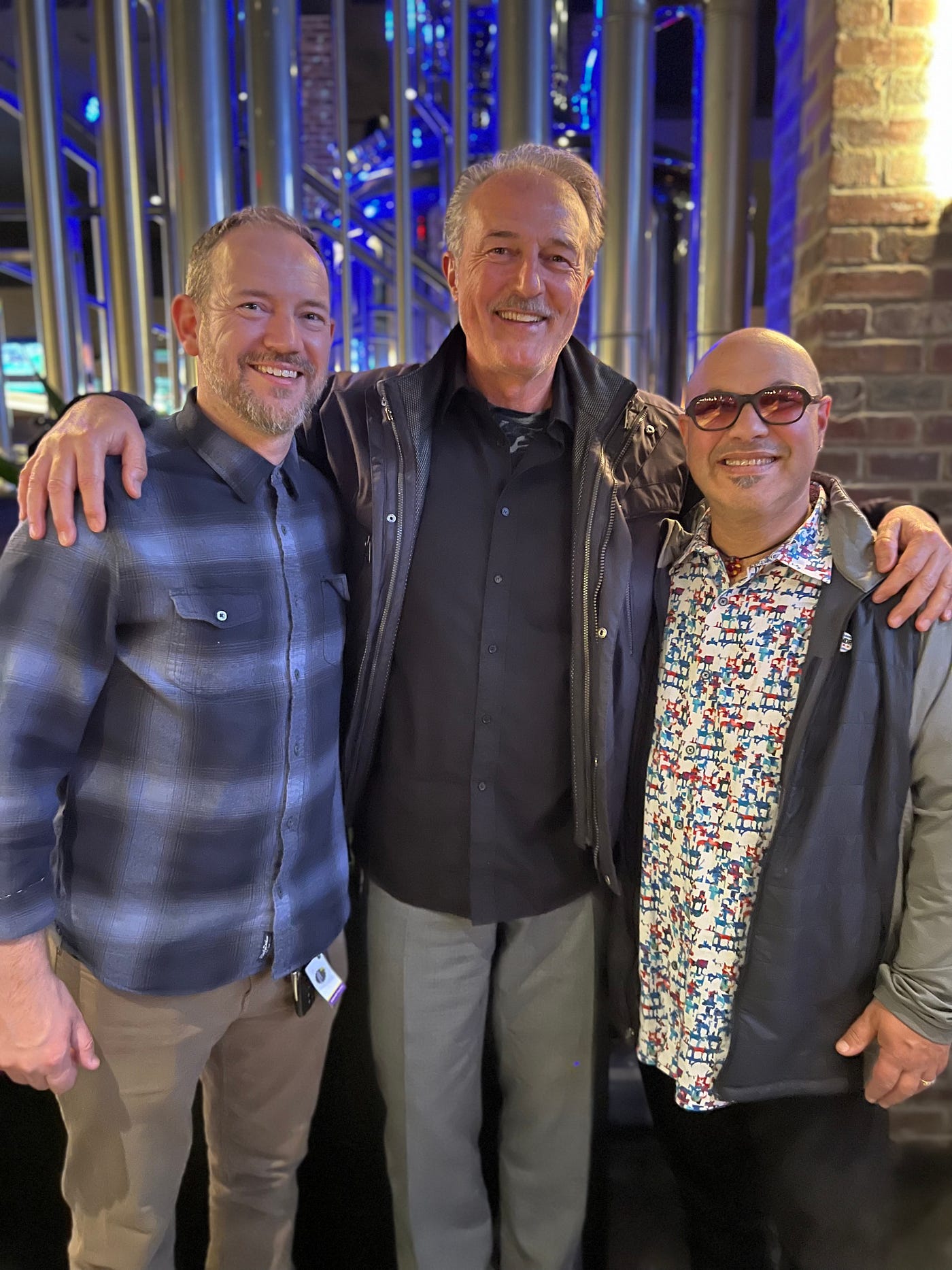
During my time as an artist in Chicago in the early 2000s, I met and became friends with Danny Marder, and we often critiqued each other’s artwork. A little over a year ago, Danny and I discussed collaborating on a body of work concerning the school shooting and the lack of action from decision makers. Uvalde happened shortly thereafter, followed by the mass shooting at the 4th of July parade in Highland Park, IL. Danny came to Chicago, and we made work. Shortly afterward, we were interviewed by Dar Dixon for his “The Art of Being Dar” podcast. It seemed magical — three minds coming together to create something powerful, meaningful, and looking to inspire action! After our third or fourth conversation, we decided to create “The Theriac Project”.
Can you share the most interesting story that happened to you since you began leading your company or organization?
The most interesting part has been the building of The Theriac Project with these two: Danny and I have almost always been aligned with art, but introducing Dar into the mix has added a common voice from a different perspective. It is unbelievable to me that the universe has brought us three together.
It has been said that our mistakes can be our greatest teachers. Can you share a story about the funniest mistake you made when you were first starting? Can you tell us what lesson you learned from that?
Last summer, Danny came into town to start our collaboration, and he was making molds. He runs on four to five hours of sleep on a good day, so he can work late into the night. He poured plaster into a mold box that he had made, but it wasn’t properly sealed. Consequently, the plaster covered the floor of my studio. We learned that we should inspect each step of our process before moving on.
Can you describe how you or your organization is making a significant social impact?
I have been making socially conscious artwork for years. Whether the work is seen at museums, art fairs, or gallery shows, I want my work to spark dialogue and champion the voices of the unheard. Art can provoke internal conversations that can help people to see things from different perspectives without confrontation.
Can you tell us a story about a particular individual who was impacted or helped by your cause?
Most of the time, my art is viewed without me being there. Last year, I was at a museum opening where my work was on display, and I was asked to speak to the public about my glass Riot Shields. Following my presentation, a young African American woman came up to me with anger and frustration and said, “What makes you think you can make work about this?” After our conversation and my description of where I grew up, went to school, my friends/family, and the fact that my work is about bringing equality, she hugged me and thanked me for making the work. We were able to transcend the race barrier and simply see each other as human beings who wanted the same thing.
Are there three things the community/society/politicians can do to help you address the root of the problem you are trying to solve?
Absolutely! As a society, we need to stop allowing news to impact how we think the other political side thinks. We need to ask more questions and do a better job of listening, not to respond but to hear what causes people’s pain and fears. Once we have listened, we can have an honest conversation and decide what action needs to be taken. The problem I am trying to solve is banning assault rifles for Americans. I think you are asking for a checklist, so let me see what I can come up with off the top of my head.
First, I think we need to look at how lobbying by corporations and groups shapes and can harm our country; in this case, I am talking about the National Rifle Association (NRA). Too many politicians are influenced by this organization to the point that we can’t even have conversations about public safety. We need to be able to have real discourse and study the effects of these types of weapons on our communities. Secondly, in our country, the need to possess AR-15-style guns or weapons of war is completely unnecessary. In a civilized society, we should not need to have this style of firearm; it’s not practical for carrying, concealing, or hunting. My father, who is a gun enthusiast, hunter, and sportsman, shares my perspective, which is also shared by many people within his shooting community.
Third, I think that if Americans who support AR-style assault rifles feel they “need” this type of gun, the government should take two steps beyond background checks and eliminating gun shows. We as Americans should demand that our government create a law limiting the size of magazine capacity to hold no more than six to eight rounds and that each gun owner is required to have insurance on each firearm they own.
How do you define “Leadership”? Can you explain what you mean or give an example?
Leadership is an example-driven guidance, provided by an individual or group, that influences others. For example, leaders should do what they expect others to do and coach them along the way.
What are your “5 things I wish someone told me when I first started” and why?
- All professional endeavors will take longer than one thinks, and almost everything is easier with a partner.
- Not everyone will understand and see your vision, and that is okay.
- Some people may not understand your voice because of how you look and where you have come from.
- The ideas are the easy part; the completion of the project will challenge you.
- A career in the arts can be the most difficult job you could have chosen and the most gratifying at the same time.
All of these have been learned over my twenty-plus years as a practicing artist. Some days I jump out of bed ready to go, and other days I don’t want to leave the covers. I make art from glass, and most glass collectors expect my art to always be beautiful. To me, art reflects life, so my art can’t always be beautiful. I see myself as a contemporary artist who uses glass as a medium, and any time you do something other than the status quo it’s going to make things more difficult, but it could also make it easier for you to shine because you stand out.
You are a person of enormous influence. If you could inspire a movement that would bring the most amount of good to the most amount of people, what would that be? You never know what your idea can trigger. :-).
I’m not sure if I am a person of enormous influence, but, as a group (The Theriac Project), we are creating a movement that uses art as a vehicle for change. We are trying to expose adults to the trauma that our young people have experienced due to lockdown drills and actual school shootings. Our art experiences will have a call to action at the end, which will provide an addressed postcard for our elected officials demanding changes in gun laws regarding assault rifles.
Can you please give us your favorite “Life Lesson Quote”? Can you share how that was relevant to you in your life?
“There is no innovation and creativity without failure. Period.” Brené Brown
I have always been taught that success without prior failure is luck. I remember times when I applied for a gallery show and ended up not getting it, feeling completely defeated. Luckily, I was able to talk with my mother about it shortly after, and she said something along the lines of “Failure is only failure if you give up; no isn’t always a no; often, it means ‘not right now.’” Most of the successful people we look up to have many scrapes on their palms and scarred knees, but all of this is hidden by their greatness.
Is there a person in the world, or in the US with whom you would like to have a private breakfast or lunch with, and why? He or she might just see this, especially if we tag them. :-).
I would like to have lunch with Wayne Robert LaPierre Jr., the CEO of the NRA, to better understand the benefits he sees of having AR-style weapons in the hands of civilians in our country.
How can our readers further follow your work online?
I can be found on Instagram as Joseph Ivacic and my website is www.ivacicart.com.
This was very meaningful, thank you so much. We wish you only continued success on your great work!
Thank you for the opportunity!