I did that with my career, first as a health care consultant and then with athenahealth and Virtudent, each of which started with a mission that I believed in and a business model that worked.
Business
John Voith of InStride Health: Inside the Strategy to Scale Pediatric Mental Health Care Without Sacrificing Quality
The CEO of InStride Health shares how his healthcare journey led him to expand access to pediatric mental health while prioritizing meticulous operational care.
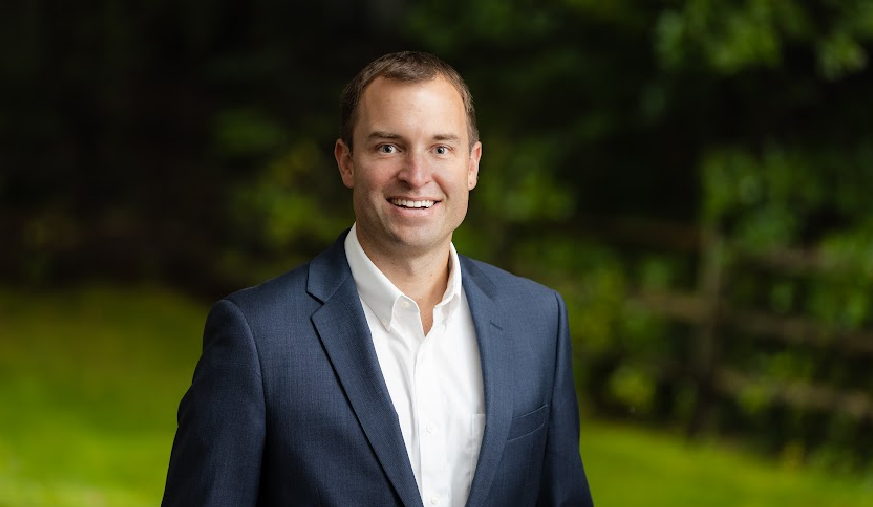
As a part of our series called ‘Five Things I Wish Someone Told Me Before I Became A CEO’ we had the pleasure of interviewing John Voith.
John Voith is the CEO of InStride Health, a technology-enhanced mental health treatment for children and adolescents struggling with moderate to severe anxiety and OCD, co-founded by the clinicians who co-developed the McLean Anxiety Mastery Program at McLean Hospital. Before joining InStride Health, John Voith drew from his extensive hands-on experience in health care to drive the vision and execution needed for a paradigm shift in oral healthcare services as the co-founder and CEO of Virtudent. He also served as operator and general manager of athenahealth, focused on improving how doctors connect electronically with each other, their teams and their patients.
Thank you so much for joining us in this interview series! Before we dig in, our readers would like to get to know you a bit more. Can you tell us a bit about your “backstory”? What led you to this particular career path?
In every step of my career journey, I’ve always tried to follow a combination of my heart and my head. Since I was a teenager, my heart has always been in health care. After witnessing firsthand the impact it can have on the trajectory of a family, I’ve wanted to make a lasting impact on the health care system. I did that with my career, first as a health care consultant and then with athenahealth and Virtudent, each of which started with a mission that I believed in and a business model that worked. During COVID, I was fortunate to meet some of the leading experts in the pediatric mental health space at McLean Hospital. Not only did the idea of making their work more accessible appeal to my heart, it also appealed to my head as I modeled out a business case that could make the company work.
Can you share the most interesting story that happened to you since you began leading your company?
For me, it’s most interesting when work life and personal life meet, because it helps fuel my belief in the importance of our mission. We’re very cautious with patient privacy and protected health information, so internally I usually have no idea who our patients are unless there is a specific reason I need to be involved. I have, however, found myself in amazing situations where someone from my personal life informs me that a family member has gone through InStride and received fantastic, life-changing treatment. That unsolicited feedback and appreciation for what we are building has been incredibly meaningful and motivating.
Can you share a story about the funniest mistake you made when you were first starting? Can you tell us what lesson you learned from that?
When my co-founders Mona, Kat, Jaimie and I were first getting to know each other and considering co-founding InStride, I invited them to go kayaking with me on a local pond in Massachusetts. I hadn’t done it before, but I read it was a great experience for smaller groups of people. I wanted to show them a good time since I planned the event, so I led the way around the pond in kayaks, eventually toward a small deserted island in the middle of the pond that I told the group would be awesome to explore by foot. I really hyped the deserted island up quite a bit! When we got to the island, I parked my kayak, ran confidently up onto the island … and then almost immediately was stung by a wasp and ran back into my kayak as I made some very loud screaming noises. Looking back, this was all very funny. But in the moment, I was in pain and so embarrassed because I had promised some sort of awesome experience on the small island and delivered something totally different!
Ultimately, what I learned from this event is to never be the first one to walk onto a deserted island in the middle of a pond. But in all seriousness, I learned a lot about my co-founders’ values that day, and it was one of the many moments that gave me conviction that this group could make the vision of the company possible. Mona, Kat and Jaimie cared way more that I wasn’t too hurt (or having some sort of reaction to the wasp sting) than about being able to go up on the island. We all laughed a lot about the shared experience of being newbie kayakers and newbie tour guides (for me!). And in the moment, my future co-founders recognized that we could look back at this kayaking trip and tell a funny story about one shared experience that would continue to bring us together. I learned that these were great people who I’d want to build a company with, and that’s only gotten stronger as we continue to build and grow together!
None of us are able to achieve success without some help along the way. Is there a particular person who you are grateful towards who helped get you to where you are? Can you share a story about that?
I learned from so many great managers, peers and advisors along the way, and I’ve always tried to draw lessons from whomever I’ve worked for and with. One of my first managers at athenahealth was a woman named Jody Blakeway, who always emphasized the importance of having patience and doing things the right way. I thought it took a lot of wisdom to have that conviction in the situation we were in at athenahealth, where we had to move quickly and think outside the box. I try to remember her advice in moments where the pressure is high to move quickly.
In addition to professional learning, I’m incredibly grateful to my wife and family for their understanding and support for my interest in founding companies and supporting their potential. When these companies are small, there is often some personal financial risk at play, and without my family’s support and encouragement, I could not and would not do what I do! I’m also grateful for my close friends, who encourage and support me as well and help ground me in a way that helps me keep everything in perspective.
Leadership often entails making difficult decisions or hard choices between two apparently good paths. Can you share a story with us about a hard decision or choice you had to make as a leader?
The hardest decisions I’ve had to make are how to take the right incremental step toward achieving our mission. This is so difficult because everyone at InStride believes so deeply in our mission that we want to be able to realize it more quickly than physics sometimes allows. Our mission is to provide desperately needed, insurance-based access to treatment that works for kids, teens and young adults with moderate to severe anxiety and OCD. Each year, we must prioritize the specific strategies that will move us closer to realizing that mission without sacrificing the quality of our care. The unfortunate part is that this prioritization inherently means we have to be deliberate about our growth, and it will take some time before we can serve every single family that could benefit from our services.
It pains me when I hear stories about families who could benefit from our care that I know we are not set up to treat. Every part of me wants to accelerate our road map to do so, and yet I also know that if we accelerate too quickly, it might put quality at risk, which is something that I never want to do. In the end, the hard decision I make at InStride is to prioritize quality, knowing that each year we are growing and able to make a huge dent in the societal problem. We might not be able to be the solution for every family and patient at once, but we’re tripling in size each year and providing services that were not previously in the market for families. And while it’s a hard decision, the patience to build our company in a way that sustains quality I know is the right choice in the medium and long run.
Ok, thank you for that. Let’s now jump to the primary focus of our interview. Most of our readers — in fact, most people — think they have a pretty good idea of what a CEO or executive does. But in just a few words can you explain what an executive does that is different from the responsibilities of the other leaders?
In a high-growth environment, the CEO is responsible for the talent of the organization (team matters so much!), cash management of the organization (from new sales to finance and fundraising), and the clarity of the mission/vision/culture of the company that creates the framework for those who join our journey and the foundation for solving the hardest decisions we have to make.
What are the “myths” that you would like to dispel about being a CEO or executive? Can you explain what you mean?
A common myth to dispel is the idea that you have to always have the answers or be some sort of larger-than-life persona who can save the day. In innovative environments, there’s a peak of competency where no one on earth would have all the answers, and a larger-than-life persona will often only limit the ability to seek hidden and outside perspectives that are needed to innovate and make the best decisions possible.
What is the most striking difference between your actual job and how you thought the job would be?
The greatest difference between the actual job and what I thought it might be earlier in my career has mostly to do with the type of skills needed to do the job effectively. While there are certainly many technical skills required in any job, one of the hardest and perhaps most important parts of the CEO job is staying balanced and focused under pressure. In high-growth environments, some of the most effective executives I’ve seen are very self-aware and grounded in a way that helps settle the team and empowers everyone to be more mindful and effective.
Do you think everyone is cut out to be an executive? In your opinion, which specific traits increase the likelihood that a person will be a successful executive and what type of person should avoid aspiring to be an executive? Can you explain what you mean?
I think the beauty of our world is that we have different interests and skill sets, and being aware of what drives us can help us figure out what role best fits our style. So being an executive might be harder for some than others, although there’s not one clear set of traits that makes or breaks someone. At the same time, there are many amazing career paths that all have different pros and cons, so I wouldn’t necessarily recommend that everyone strive to be an executive either. I think the analysis has to start with personal values, skills and situation in life and then build up from there.
What advice would you give to other business leaders to help create a fantastic work culture? Can you share a story or an example?
My view of culture is that it needs to be grounded in shared values so that there is an authenticity that can be seen and reinforced. Then it needs to be written down and constantly revisited for a more nuanced understanding. The opposite of this is the classic inspirational poster that says “leadership” — it’s static and never questioned other than being put up on the wall!
When my co-founders of InStride and I met, we spent a significant amount of time trying to get to know each other as people and to get a sense of values. At the end of the day, we needed to confirm that we all had a shared sense of values that would help us create a culture that we wanted. We wrote down these shared values and iterated on the best way to represent them. When we brought on new leadership and team members, we asked the team for their help refining any aspects of our culture that we missed or weren’t seeing. And we continue to add nuance to our cultural statements so there is a shared understanding across the company as we continue to add great new people to the team.
How have you used your success to make the world a better place?
InStride is a service-oriented company. When we succeed, it means kids and families are getting treatment they might not otherwise have had access to. When you turn on the news, you are inundated with all of the stressors of the world — rates of anxiety and depression have never been higher. We want to change that. Every day, I feel good coming to work knowing that our vision is to help solve the pediatric mental health crisis.
Fantastic. Here is the primary question of our interview. What are your “Five Things I Wish Someone Told Me Before I Became A CEO” and why? (Please share a story or example for each.)
1 . Innovating is hard and takes a lot of work…so get behind a mission you believe in and surround yourself with people who do the same.
On the days when things are going well, it’s easy to feel good — even if you’ve worked around the clock to make it happen. On the days where there are lows, it helps to have people who are equally passionate about your mission and vision pick you up by reminding you why you’re there in the first place. I usually check in with my co-founders after a long day or some of my advisors and board members on the weekends for that very reason. The shared energy that comes from those calls and our passion for the same topic helps me recharge (even if I’m feeling a little defeated from the prior week). I’m so thankful I have these people around me, and I try to reciprocate the energy and optimism for our mission when they are having days when there are lows. Ultimately, the shared mission that we all care about keeps us going and gives us all something to hold on to during the hard times when we need inspiration.
2 . Caring a ton about your work is critical, but keeping balance and perspective is equally important to making good decisions at work.
There are high highs and low lows to high-growth companies. As much as working on InStride Health matters to me (it does a great deal), I’ve also found that having things that matter to me outside of work are critical to making good decisions at work. For me, it’s my wife, kids and other family members that give me purpose outside of work. In the same way, it’s important to be a good friend to the many people who have helped me along the way. These outlets don’t take away from work for me — they allow me to not burn out and let me show up at InStride even more energized and balanced than I would be if all I did was focus on InStride Health 24/7. The decisions made in a burned out state of mind usually aren’t as refined and strategic as they would be if there is more balance and perspective.
3 . Don’t forget about the medium/long term, even if you are pulled to plan business goals only for the next 6–12 months!
In high-growth environments, you often feel a pull to plan and set business goals that are only 6–12 months ahead because things change so quickly that it’s hard to predict much further out than that. With that said, I’ve seen that mentality lead to so many “duct tape and bubble gum” fixes that it becomes nearly impossible to start any core infrastructure initiatives (HR performance infrastructure, technical security initiatives that go beyond HIPAA compliance, etc.). In some of my experiences, the best way to handle this was to break this work into chunks and ensure that there was some capacity to start it sooner, even if it won’t concretely affect business goals over the next 6–12 months.
4 . Know the numbers in your business as early and often as possible, and also know there are eventually limits to measurement where qualitative information is better and faster!
I’m a big believer in knowing all the core numbers in your business. Not only related to the plan, but the actual core numbers and as many drivers of those core numbers as possible. With that said, there are limits to this and sometimes faster ways of getting better information. For example, as much as I love employee engagement surveys as a company scales, in the earlier stages you can get much more information from quick conversations with a number of employees to see how they are doing and how things are going at work for them.
5 . Embrace change and new information, and balance this with the right implementation focus and communication rhythm.
It’s important to me that I’m constantly learning, bringing information together from the outside and inside to generate new insights and ideas that can power our business. At the same time, it takes focused effort to drive certain things forward, and if new information is constantly hitting people who are trying to implement it, it can be highly distracting and slow down that implementation. Ultimately, my best recommendation is to be highly aware of when and where generative and conceptual conversations are happening vs. conversations that are about prioritization and implementation. Both are needed in a company, but if you are highly aware of them, it’s more likely you’ll be able to balance bringing really new ideas into the company while also getting things implemented without distraction.
You are a person of great influence. If you could inspire a movement that would bring the most amount of good for the greatest number of people, what would that be? You never know what your idea can trigger.
Currently, I think I’m working on it with my colleagues at InStride Health! The impact we have on the lives of kids, teens and young adults will transform them and their families’ lives for years into the future. After her child graduated from our program, one of the moms told me that the results from InStride Health for her son and her family were so transformative that they will be able to impact others differently and more positively on a daily basis moving forward. That kind of story inspires me.
Can you please give us your favorite “Life Lesson Quote”? Can you share how that was relevant to you in your life?
I love Theodore Roosevelt’s “The Man in the Arena” speech. It reminds me every day that there is no substitute for being principled and working to move forward something you feel is important. It never feels great to be judged or have failure, and no doubt both happen frequently when you’re building a company. Many people judge you, as you’re constantly asking for things and putting a lot of time into something that many people have never heard of before (when I first launched a company in 2016, many of my close friends and neighbors were confused why I’d turn down a brand name job to do so). Often, there are many failures or mistakes along the way. It’s sometimes painful to put in so much time and effort, only to have it not work — not only to yourself, but to others who ask you how it’s going! So I return to this quote quite a bit for self-inspiration:
“It is not the critic who counts; not the man who points out how the strong man stumbles, or where the doer of deeds could have done them better. The credit belongs to the man who is actually in the arena, whose face is marred by dust and sweat and blood; who strives valiantly; who errs, who comes short again and again, because there is no effort without error and shortcoming; but who does actually strive to do the deeds; who knows great enthusiasms, the great devotions; who spends himself in a worthy cause; who at the best knows in the end the triumph of high achievement, and who at the worst, if he fails, at least fails while daring greatly, so that his place shall never be with those cold and timid souls who neither know victory nor defeat.”
We are very blessed that some very prominent names in Business, VC funding, Sports, and Entertainment read this column. Is there a person in the world, or in the US with whom you would love to have a private breakfast or lunch with, and why? He or she might just see this if we tag them
I’d love to meet Bob Igor, CEO of Disney. From the outside, he seems like someone who keeps the quality of the Disney products and brand very high (delighting his customers) while also ensuring sharp business and financial decisions that will allow Disney to sustain another 100 years. I’d love to hear how he thinks through problems and balancing the quality of the Disney products and brand with the appropriate business and financial decisions
Thank you for these fantastic insights. We greatly appreciate the time you spent on this.
About the Interviewer: Douglas E. Noll, JD, MA was born nearly blind, crippled with club feet, partially deaf, and left-handed. He overcame all of these obstacles to become a successful civil trial lawyer. In 2000, he abandoned his law practice to become a peacemaker. His calling is to serve humanity, and he executes his calling at many levels. He is an award-winning author, teacher, and trainer. He is a highly experienced mediator. Doug’s work carries him from international work to helping people resolve deep interpersonal and ideological conflicts. Doug teaches his innovative de-escalation skill that calms any angry person in 90 seconds or less. With Laurel Kaufer, Doug founded Prison of Peace in 2009. The Prison of Peace project trains life and long terms incarcerated people to be powerful peacemakers and mediators. He has been deeply moved by inmates who have learned and applied deep, empathic listening skills, leadership skills, and problem-solving skills to reduce violence in their prison communities. Their dedication to learning, improving, and serving their communities motivates him to expand the principles of Prison of Peace so that every human wanting to learn the skills of peace may do so. Doug’s awards include California Lawyer Magazine Lawyer of the Year, Best Lawyers in America Lawyer of the Year, Purpose Prize Fellow, International Academy of Mediators Syd Leezak Award of Excellence, National Academy of Distinguished Neutrals Neutral of the Year. His four books have won a number of awards and commendations. Doug’s podcast, Listen With Leaders, is now accepting guests. Click on this link to learn more and apply.

Published inAuthority MagazineTop Lessons, Top Authorities · 42K Followers
Exclusive, curated interviews with the leaders and changemakers shaping tomorrow. Leadership lessons, industry deep dives, and executive profiles.