The best opportunities lie several years down the road.
John Becker’s Responses for Authority Magazine
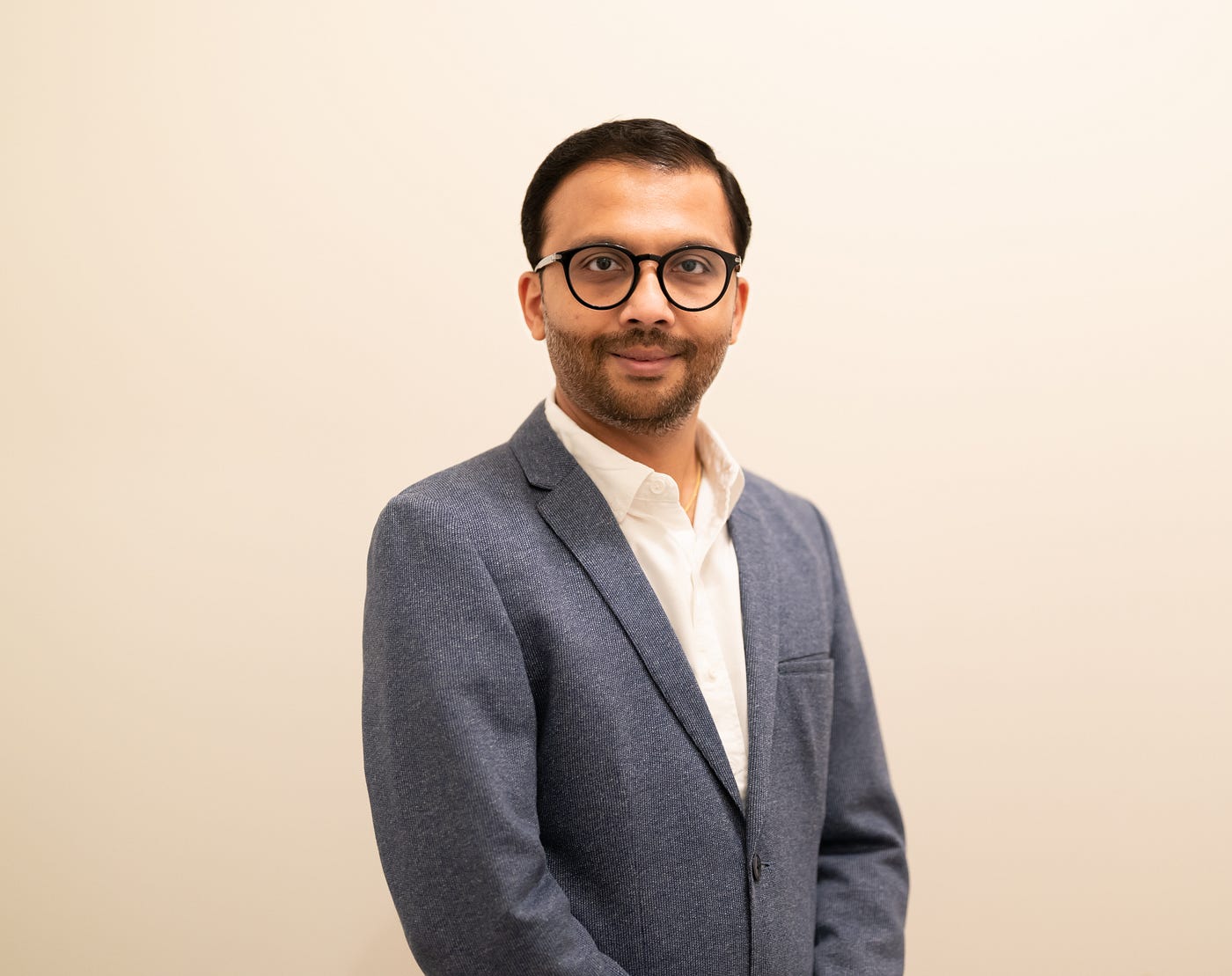
Interview with John Becker, CEO of CrashPlan
About John Becker
With more than thirty years of experience, John Becker is a founder, operating executive, angel investor, and consultant with a lengthy record of identifying and growing highly successful technology companies. John currently serves on the boards of numerous high-tech companies, including Kemp Technologies (Fund I; realized). Before CrashPlan, John was the Chief Executive Officer of Sourcefire (NASDAQ: FIRE), ScienceLogic, Approva, Cybertrust, TruSecure, and AXENT Technologies (NASDAQ: AXNT). John is a CPA and graduated from the Robins School of Business at the University of Richmond.
Thank you so much for doing this with us! Before we dive in, our readers would love to "get to know you" a bit better. Can you share your personal backstory with us?
I finished business school at the University of Richmond in 1979. Pretty much since then, I’ve been fascinated with how technology can change lives, businesses, and communities. My first computer was a Compaq “Luggable” back in the early 80’s when I was an accountant at Marriott. I’ve worn a lot of hats since then — founder, operating executive, angel investor, and consultant. I get a huge thrill from identifying companies with talented teams, great ideas, and large market opportunities — and then helping those companies reach their goals and getting to be part of their story. Individuals need mentors, but so do companies as a whole. They need leaders that can recognize the hard-to-see roadblocks keeping them from skyrocketing upwards. Everywhere I’ve worked, that’s the role I’ve tried to play.
None of us are able to achieve success without some help along the way. Is there a particular person who you are grateful for who helped get you to where you are? Can you share a story about that?
I’ve always considered myself as a sponge for information. When I first transitioned from a career path in Finance and Accounting to an operating role in technology, I had a CEO mentor who guided me. We made an agreement: I would help the company get out of financial trouble, and he would teach me the software business. From that point forward I attended all the development, sales, marketing, support, and executive management meetings. Over time, I went from attending, to contributing, and then leading the meetings. His mentorship worked out: eventually, we took that company public, and I became the CEO.
Can you share with us three strengths, skills, or characteristics that helped you to reach this place in your career? How can others actively build these areas within themselves?
First, look forward. Learn how to identify emerging trends that will create opportunities or solve problems in the future. The world is moving so fast — problems are being solved so quickly, and what was once new is now old. The best opportunities lie several years down the road. Second, hone in on people skills, constantly. Nothing can be accomplished without a strong team that works well together, and I have had the good fortune of working with many talented individuals. Folks that teach, mentor, and develop talent to execute goals and objectives are worth their weight in gold. Finally, you always need a back-up plan — and I’m not just saying this as someone in the backup business. I once had a mentor tell me to look at every problem as an opportunity. Success in business is messy. It’s never perfect or predictable. So much is out of your control. Plan for mishaps and mistakes, and, just as importantly, take advantage of the opportunity to improve the processes in front of you — or even yourself, for that matter.
Which skills are you still trying to grow now?
I have been working for over forty years now. I’ve realized I will never be done processing, learning, and understanding. The world is changing quickly and the opportunities to have an impact abound. I want to get better at sharing this idea with others — that the learning never stops — so they may avoid my mistakes. Maybe this sounds strange, but I want to develop the skill of telling people that they should never stop developing their skills!
Let’s talk about IT management trends. What are the key IT management trends that have emerged or gained prominence in 2024, and why are they significant for businesses and organizations?
What we’re seeing — and what we’ll continue to see — is someone has poured an accelerant called “AI” on our entire computing infrastructure. The groundwork for this change has been years in the making: faster processing chips with the 5G rollout and adoption revolutionizing connectivity, enabling faster data speeds, lower latency, and greater capacity. Or the proliferation of Internet of Things (IoT) devices and the need for real-time data processing at the edge. Finally, to name a few others, the advances in AI and machine learning, cloud computing, data privacy and ethics, augmented and virtual reality, and cyber security concerns.
Organizations will need to get creative with how think through AI — implementing tools that can streamline their operations, boost efficiencies, and protect their ever-expanding network. We’ll also probably see the continued pressure on education of IT talent, leading to a bigger push to outsource certain IT functions to experts, such as help desk support, system maintenance or cyber security.
The stakes are high as cyberattacks cost businesses on average $4.45 million. Risk management will play a key role as organizations will be trying to strike a good balance between keeping their cybersecurity shored up while not overextending their budgets. Doing more with less, faster, will be the mantra in 2024.
How has the ongoing evolution of cloud computing impacted IT management strategies in 2024, and what best practices should IT leaders adopt to harness its potential?
Cloud computing has made developing and rolling out new business applications easier but at the same time makes IT management much more complex. If you have a hybrid environment — on premise and in the cloud — not only do you have to manage your own infrastructure, but now all the resources in the cloud too. Understanding the resources you use, when you are using them, the costs, how to protect your resources and the data is daunting. There are hidden costs. Most of those are attributable to a lack of understanding about what cloud computing is, what it does, and how it protects your data. Users don’t typically know where their data is — they just have a sense that it’s somewhere in the cloud. Honestly, they really shouldn’t need to know more than that — cloud computing opens a world of collaboration possibilities, and that’s all most workers need to know about it.
IT teams are expected to know the status of where things are at all times. So, the trick is having an IT team that does know a little more and can make careful choices at the outset as to which cloud software they’re going to use and trust — these choices should put a premium on easy, ready-to-use platforms that have strong automated backup policies in place. Humans are good at being human — cloud tech should be handling data security and empowering collaboration for teams.
Of course, it’s good to have ongoing education and awareness around data security best practices that gradually get your staff to take more control of their data. But that shouldn’t be your only line of defense. Ideally, your cloud solution is always running in the background, ready to recover your files when need be.
With the increasing importance of cybersecurity, what innovative approaches or technologies are being employed in IT management to enhance data protection and mitigate cyber threats in 2024?
This year I think it will be less about the technology and more about a robust risk management approach. Successful approaches to cybersecurity will hinge on an oft-forgotten principle: practice what you preach. Maybe this isn’t so innovative, but it is foundational. Many CISOs and IT pros have excellent cybersecurity protocols — on paper, at least. The problem is that many have rarely been battle-tested. Teams need to ensure that their cybersecurity plans don’t just sound good on paper: they need to test them regularly.
Companies should be taking their employees through cybersecurity simulation exercises and audits —again, regularly — to ensure that the measures they have in place are truly effective. Every protocol has its frailties, so ensuring there are additional compensating controls is important. Putting them to the test makes sure that teams can remediate them before genuine threats rear their head.
In my opinion, cybersecurity is full of great tech, but is still lacking strong processes to implement that tech. Mitigating cyber threats in 2024 will be about drilling teams on existing protocols and ensuring that your company has a strong foundation for responding to data breaches.
As remote and hybrid work arrangements continue to be prevalent, how are IT management practices adapting to support a distributed workforce in 2024, and what challenges do they face in this context?
To put it simply, more remote and hybrid work means more opportunities for data loss or compromise. Now that employees are taking company IP out of protected networks and into coffee shops, Airbnbs, and home networks, it is going to be more important than ever to have strong cybersecurity guardrails.
These guardrails will come in several forms. But the main point here is that employees can’t uphold what they don’t understand. IT management will need to take cybersecurity education seriously. The occasional email on the no-no’s of using laptops for personal use won’t cut it. We need to shift our focus to the “why” of protocol, so employees truly understand the reasons for the guardrails to begin with.
Staff will have to feel like they have a role in upholding the integrity of company data without feeling like they have sole responsibility for doing so. What’s needed, again, is good baseline data security technologies that catch your employees before they fall. And remote and hybrid only makes those falls more probable.
Sustainability and environmental concerns have been gaining traction across industries. How is IT management addressing sustainability in 2024, and what steps can organizations take to integrate eco-friendly practices into their IT operations?
Data processing is a huge sustainability liability. Companies are generating more and more data than ever, and employees are sending thousands of files back and forth every day. I think the latest estimate was something like, globally, 328 million terabytes of data are generated every day.
This kind of data production and use takes huge amounts of energy. Some people don’t know this, but endpoint backup isn’t just good for data security. It’s also more efficient. Most endpoint backup cloud vendors will send smaller amounts of encrypted data to the cloud than they would if the data were raw, which eats less bandwidth and helps dial down the energy costs associated with data processing. So, aside from the obvious cybersecurity plus, endpoint backup is also a better solution for sustainability.
Fantastic. Here is the primary question of our interview. What are the 5 Most Important IT Management Trends of 2024? Please share a story or example for each.
Highlighting the importance of digital persona ownership and protection: Our digital lives, identities, and personas have been fingerprinted, tagged, categorized, marketed, sold, and compromised. There isn’t a day that goes by that we don’t hear about another breach that exposes our personal or business information. New AI-based technology is making it easier for the bad guys to impersonate individuals’ voice, mannerisms, etc. New tools to identify the slightest anomalies are needed and, once again, more education will be needed as well.
More tools don’t necessarily mean less risk: I see a trend in the industy where network management tools and security tools are converging and there is a greater desire for them to integrate and interoperate. In order to adressed today’s more modern threats, these two tools need to become less siloed and have less specialization between them. Therefore, I think there will be a shift to re-evaluate our toolsets, paring them down to have simpler, more dependable (and less expensive!) solutions that do the job better.
Recognizing the need for a data resiliency plan: When it comes to cyber attacks, we all know that it’s not a matter of if, but when. One trend we will see out of this is an emphasis on how long it takes to recover files in these events. Our IT teams will need to start looking at more questions like, “how long can our company operate without certain types of data?” or, “how long would it be until this incident would shake our investors?” By leaning into these difficult questions of time, we can be better equipped for mitigating IT issues in the future.
Human-centered design: IT infrastructures are built to be very controlled and process-oriented. While this may be good from a security perspective, it doesn’t necessarily fit with the way humans behave or interact with these systems. This has the potential to create compliance gaps, which can be exploited by attackers. By implementing more human-centered design in our IT policies and structures, and having good cyber resiliency plans in place, we can better prevent and prepare for these types of issues.
Increasing automation: A policy that depends on your workaday staff to comply and enforce it is an ineffective policy. Therefore I believe we’re going to continue to see more automation being implemented behind the scenes to ensure these policies are embedded into the network itself. Not only will this better enforce compliance of the policy, but it will also create guardrails to help mitigate human error.
Are there any underrated skills or qualities that you encourage others not to overlook?
Foresight and vision are rare qualities — that’s precisely what makes them so precious. In IT, it’s easy to get hung up on the work right in front of you. There will always be fires to put out, and that somehow makes it harder to see what’s on the horizon. But that’s what the greats see. Wayne Gretzky once said something to the effect that he didn’t skate to where the puck was, but to where it was going to be. When you get that broader vision of the work, that’s when you’re able to see problems in their totality — and often that’s when the best solutions come to you. My most valuable team members are not just cogs in the wheel — they’re the people asking why we do things the way we do, and offering solutions that tweak our processes, and sometimes even throw out the rule book.
You are a person of great influence. If you could inspire a movement that would bring the most amount of good for the greatest number of people, what would that be? You never know what your idea can trigger.
In IT, there are generally two types of technologies — technologies that do something: for example, block an attack or reroute a process, and technologies that view things: e.g., monitor processes or alert the operations center of a potential problem. Both have value." Both have value. Throughout my career, I have tried to encourage everyone to be a “doer”: find a passion and pursue a dream relentlessly. My hope is that the next generation will be a generation of doers. The world is filled with opportunities to create a great life. But it will take people the drive to overcome challenges because the challenges are always there.