When I first started, I remember hearing, “Your biggest issue is your last name is Kinley. You’ll always be the ‘son of the owner,’ and you’ll struggle earning the respect of others.”
As part of our series called “5 Things I Wish Someone Told Me Before I Began Leading My Company” I had the pleasure of interviewing Jimmy Kinley.
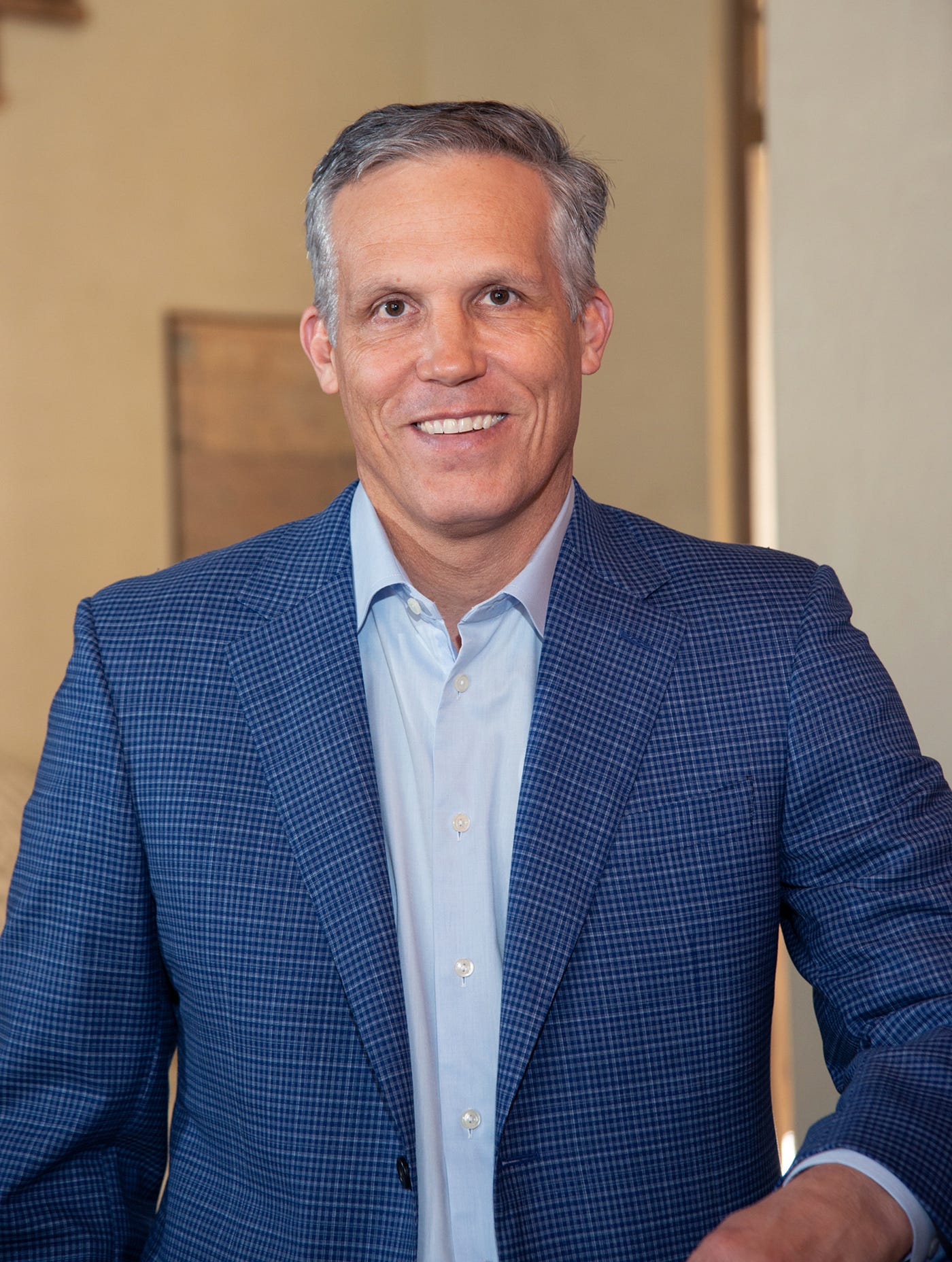
As the sixth-generation CEO of Kinley Construction, Jimmy Kinley grew up in the family construction business. Over his career and his father’s tenure as CEO, Jimmy has had leadership roles in more than 23 companies, including startups and acquisitions. This experience has resulted in his ever- growing and expanding vast network of industry and leadership connections, in addition to his personally deep skills and experience.
Thank you so much for joining us in this interview series! Before we dive in, our readers would love to “get to know you” a bit better. Can you tell us a bit about your ‘backstory’ and how you got started?
When I was young, I visited job sites often with my grandfather and my father, both former CEOs of the family business. Going back as far as I can remember, I'd spend my summers getting my hands dirty working labor roles in the ditches, assisting welders or doing whatever needed to be done with the onsite teams. What was unique for me is I also spent a lot of time being within earshot of my dad in the office. I think this unique blend of traveling the country, shaking hands and working with the men and women in the field while also being exposed to top C-suite leadership is what has given me the ability to see the company in a dynamic way. Since then, I’ve continued to be exposed to and worked with all levels of the organization, learning the perspectives and styles of colleagues and supervisors from the field to executive ranks.
Can you tell us a story about the hard times that you faced when you first started your journey? Did you ever consider giving up? Where did you get the drive to continue even though things were so hard?
When I first started, I remember hearing, “Your biggest issue is your last name is Kinley. You’ll always be the ‘son of the owner,’ and you’ll struggle earning the respect of others.” These were hard words to process for someone trying to make a name for themselves. I didn’t really understand them, but nevertheless, I nodded my head in agreement when I heard it.
Over time, I frequently asked myself, will I ever earn that respect we all hope to achieve? Or am I stuck in the “handout” crowd forever, always being the kid that works here because my Dad gave it to me?
At a young age, I learned that words are powerful. They can work wonders for someone’s success or limit their belief in themselves. I’ll never forget when I was in elementary school, and someone told me I was going to be the starting QB for my high school someday. What did he know? Flash forward, I graduated high school as the all-time leader in passing yards and touchdowns and was MVP my senior year.
Words matter.
Hearing my career was stuck because of the last name I was born with, I found myself starting to believe I had an insurmountable mountain to climb just because I had the same last name as my Dad. How was that fair? It wasn’t.
Fortunately, multiple voices invested in me while I was navigating my early career, so I discovered those limiting words were far from true.
In fact, my last name Kinley was the best thing I had going for me!
A name that goes back generations. A name that has provided the means for thousands of employees to make a living put food on the table, and have a roof over their heads. A name that at its root means “Family.”
The truth was I was far from being limited by my name. Instead, I was aligned and positioned to lead and grow our next generation(s) of the business.
My Kinley last name represented trust. It meant if Kinley was involved in whatever was going on personally or professionally, we’d find a way to be positive and persevere. I had to discover this on my own. I’ll be forever grateful for that realization so I can continue the legacy of our companies and impact families for generations.
So, how are things going today? How did your grit and resilience lead to your eventual success?
Rather than settling into a victim role because of my last name, I decided to press in and find ways to blaze my own trail. It’s why I went to college 2,000 miles away from home to Penn State University. Not knowing a soul, four years later, I found myself engaged to my now wife, Brittany, employed with a Fortune 500 company, fulfilled by a group of friends I still talk to every day, and full of pride as the first ever Kinley to graduate from college.
Eventually, I made my way back to working at Kinley; despite my best efforts to blaze my own trail, this ever-present “Owner’s son” persona stared me in the face again. I persevered beyond this issue by working my way up through the ranks of Kinley, from laborer to management, and eventually being positioned to become a partner.
But strangely, my progress came to a halt at that point. Instead of finding opportunities, I found roadblocks in what I felt were obvious paths to growing the company. My plan didn’t align with the senior leadership, and at the time, I couldn’t figure out why.
So, I did what any hungry 25-year-old would do--I went back to school and got a master’s degree. In fact, after graduate school, I left the family business (shocking to most people) to pursue my own entrepreneurial desires.
In hindsight, this provided me with deep experience in how to start, run, and eventually acquire companies. It also helped me build a massive network across the local community as well as nationally. It's a network that can now be tapped to do everything from a consult with at a high level to raising capital, which I was able to do to acquire the ownership needed to become CEO of all Kinley companies.
You are a successful business leader. Which three character traits do you think were most instrumental to your success? Can you please share a story or example for each?
HUMILITY
First and foremost, to be a sustainable and effective leader, you must have humility. It’s foundational. It enables you to know you can’t lead by yourself. Humility is the true game changer. It separates the good leaders from the great.
I’m often asked, “How do you do it all? How do you handle all these people and companies?” I feel guilty when I tell them, “it’s easy.” But the truth is it’s easy when you have humility. It allows you to lead as, what I call, a “backseat leader.”
This means I don’t have to be the one making all the calls all the time. It’s OK, even preferred, to support, guide and keep a birdseye view and let others have a chance to make decisions. I don’t need to be in seat 1A. I can course correct or encourage by just being in the car. If I need to, I can jump in the driver's seat, but it’s way more fun to watch others develop their own leadership skills and build confidence in themselves - which is absolutely the most rewarding part of leadership.
PASSION/PURPOSE
Secondly, leaders must have passion/drive. It's a simple four-word question: What is your why? Or if three words are easier: What moves you? It’s, of course, a LOADED question, but it’s the most important one to answer.
One thing I learned when starting companies is the importance of this “why.” If money is your answer, fair warning, you will fail. Or at least you’re likely to fail. What motivates us to obliterate walls or obstacles in our path must be more motivating than the currency in our bank account.
Don’t get me wrong, making money is the goal; otherwise, you have no business. But making money as the sole means of being in business usually doesn’t have a positive ending.
When I left Kinley in 2018, I wanted to explore how a company like Kinley could maximize its impact on employees, customers and the community by leveraging years of business experience. I’m so glad I did because, in the process, I discovered something very powerful. The power of passion. The power of willpower. The power of why.
This is how Grounds and Gold started. Grounds and Gold is a 4,000-square-foot community coffee shop and bakery in Arlington, TX. But it’s so much more than that. Grounds and Gold was started to continue the legacy of Micah Ahern, a 7-year superhero who battled neuroblastoma for six of those years, eventually earning his wings in 2016.
Maurice Ahern, Micah's dad and my now brother-in-law, just wanted a place to bring a smile to people’s faces, just like Micah did. He wanted a place where Micah’s dynamic personality and natural ability to make people smile could live on. What obstacles could possibly come in the way of that? It’s real, it’s powerful, it’s emotional, and it’s the type of “why” that sets you up to deliver massive success.
EMOTIONAL INTELLIGENCE
Thirdly, leaders need Emotional Intelligence. How can you make sure you keep your cool when the rest of the world is on fire? How can you see the room in a different dimension where you're not just making sure problems are solved, but you're watching how the team is interacting? You're looking for the emotions of the room and how well conflict and trust are engrained into the team. If you don’t, then who will? This is why I put emotional intelligence as a key factor in understanding the dynamics of people and our ability to connect.
If you have the technical ability to drive change and lead a team, that’s valuable, but it’s also limiting. People are complicated creatures. If, and it’s a big IF, you aren’t aware of the emotions of others and how you are impacting those emotions, your potential as a leader will be limited.
Emotional Intelligence will give you a greater insight into the intangibles of your culture. There is no more important aspect of a business for a leader to own than the company’s culture. If you don’t have a culture where people understand people, and you lack the knowledge of how to motivate people, then you’ll have problems. Big problems. With so many problems, you’ll strongly question your ability to drive success.
In the end, culture is driven by understanding the needs, wants, and emotions of people. This is the “secret sauce” Kinley has understood for over 110 years as a business. We care for people. We go to great efforts to understand them. All of them. From the laborer to the executive suite.
During my hiatus from Kinley, I tried to find one word to describe Kinley. “Family” was, of course, at the top of the list, but not everyone’s family experiences are positive, so that word felt oddly limiting. I needed a dynamic word, something that brought human nature to the forefront of our business, whether the business was a coffee shop or construction company.
My one-word conclusion? CARE.
Care is the bedrock of what we do. It’s an endless pursuit. There’s never a finish line. You can’t care the right way about people if you don’t have the emotional intelligence to see the dimensions of feelings and “emotions” that are happening beyond the conversation or task at hand.
Which tips would you recommend to your colleagues in your industry to help them to thrive and not “burn out”?
The team with the best players wins. You can't afford to settle with your talent at the top. If you do find that it's "lonely at the top," then there's a good chance you're missing key players to take you and your company where you want to go.
There's a saying: "If you want to go fast, go alone. If you want to go far, go together." Go find your tribe of badasses that have the drive and the ability to take you further than you ever imagined. Find people that will challenge you, hold you accountable and push for the company's success as if it was their own. Most importantly, find a team that you actually enjoy being around. If it's all work, no play, it's just not a sustainable model for long-term success, and the burn-out is inevitable.
In your experience, which aspect of running a company tends to be most underestimated? Can you explain or give an example?
Jack Welch said it best, "talk until your tongue hurts," and he wasn't wrong. The massive amounts of focus and attention, and resources needed for communication are far greater than I ever imagined. Even with the heads up from Jack, I did feel like all I was doing was talking, but I quickly found out it wasn't enough.
The thing about Communication is it truly is one of the most loaded concepts in business. What is communication? How does it work? When is “enough” enough? Who should know what and when? How should they know? Should it be delivered face-to-face or through a smoke signal? What happens when it fails? How do you know if you are actually communicating successfully?
I can tell you how I found out I was failing in communication. It was over a happy hour with some of our senior-level up-and-coming talents – a happy hour that I thought was going to be our usual sit down with laughs and casual conversation, like all happy hours, should be. I was wrong. It didn't take long before they all looked at me and simply said: "You and the whole executive team suck at communication." They knew NOTHING. How was that possible? It was so discouraging because we had so many exciting plans in the works, and they all had big-time roles in those plans.
This blindside was possible because although there were massive amounts of effort put towards communication, it was all communication without purpose or a plan. I wasn't seeing the complexity of the web of discussions that were happening, which just led to a whole lot of confusion on who was really responsible for what and what the plan was to cascade the right information to the right people. Assumptions were made, and people felt like they were left out of the plan and were in the dark (bad place to be); all that does is create a world of chaos and doubt that could have been prevented with some simple, purposeful communication.
We may never fully figure out the beast that seeks to destroy all good intentions (aka, "communication"). However, as we continue to grow and add more layers to our organization, more than ever, we have to master the art of communication and never take for granted what a simple 15-minute phone call can do.
Ok super. Here is the main question of our interview. What are your “5 Things I Wish Someone Told Me Before I Began Leading My Company”? Please share a story or an example for each.
1) The value of your story – Your "Why" doesn't have to be equivalent to Tony Robbins' energy, but you do have to know what it is. And it does need to be big enough to drive your team through the limitless obstacles ahead. I remember when we first shook hands with one of the foremen of the company we acquired in Reno. It was literally and figuratively the toughest handshake I've ever had because not only was he one of the biggest guys on their team with the grip of a gorilla, but what he asked of me was going to put my "why" to the test.
His experience with acquisitions wasn't pleasant, as most could relate, his wife's previous employer was acquired, and it led to a bunch of layoffs - including his wife. He told me straight up he didn't trust me, he didn't know me, and if I got in the way of him coaching his son and daughter's sports teams on Thursdays at 2 pm, he was out. He's telling me all of this with a death grip getting tighter as he talked. It's when I looked him in the eyes and said, "sir, you are the reason we did this. We are not your typical private equity groups, we are here because of the people. We want you to be the dad and husband you want to be. We speak family business. All I ask is if you could just give me a chance to prove that."
One year later, we had another handshake moment, but this time it was followed by a hug and tears in his eyes. He reminded me how much he was skeptical when we met (trust me, I didn't forget). Then, he thanked me for delivering on my promise. He's now our lead superintendent in the field and has recruited some of the best talents on the team. Our story was bigger than just acquiring a company in Reno. It was about protecting and continuing a legacy business that has amazing people. Know your story and how it relates to those that matter most – the people!
2) The importance of culture – what influences the millions of decisions being made every day. The 'Heart' of the company is a reflection of you. Don't take that for granted because the right culture can bring massive growth and success by bringing on the right people who believe in something bigger than a paycheck. The wrong culture can create massive distractions and completely stifle the success of the company. I thought I understood the value of this because it's in every leadership book you've ever read. However, I still underestimated how much it's foundational to literally every hire, every situation, every plan and every conversation.
We have a belief that every employee has the ability to stop work if they see something, or someone, unsafe on a job site. One of our newest hires is a health and safety executive, and he came to me and asked me, as he pointed to some of our field employees, "How are you going to protect the greatest thing this company has going for it? How are we going to grow and make sure we never lose this culture that's so hard to get?"
I'm so glad he asked. I pushed it right back to him and said, "How are you going to make sure everyone in the company is safe?" He laughed because he knew that we ALL own safety, just like we ALL own culture. I've given the full company the green light to "stop work" for a bad apple. We want to know that this is everyone's company, and everyone has to help us make sure we protect the greatest thing we have – our people!
3) The infinite value of an "A-Player" – Give them a chance to show off, and they will. One thing we're not short on is talent. I'm not sure I fully knew what to do with all of this talent and instead had to do some mind-reading out of the gates. Hindsight, giving the A-players a big voice is really important. Having their buy-in takes you from a lone wolf to a wolf pack because once you get the A-players bought in, they'll take it from there, and the people will follow. What I learned the hard way could've been solved by being more transparent up front with how we saw failure. Being the new guy, everyone is doing a temperature check on what gets me going, and if you don't address this upfront, you run the risk of your A-Team operating with a sense of caution. Once you let them know they have a voice and you value that opinion, the next step was letting them know that failure is okay. Loosen the reigns and watch what happens. You're allowed to treat them differently and get creative on how to motivate them.
4) The importance of a personal and/or executive coach – If no one is pouring into you, how can you expect to pour into others? Get your cup overflowing! You need the coach on your shoulder talking you off the ledge or nudging you to take another step into the unknown because they’ve been there and can help guide you through it. In some sense, the cost of a coach can be priceless. What I found is by having a third-party expert in the room for yourself personally AND for the team, two major things happen. One, you have someone that can drive your confidence up with decisions you want to make, or vice versa, they can challenge you to think differently. I found this to be extremely valuable as it prevented some potentially costly decisions from happening. Secondly, they bring that other outside voice to the team. It's like when you're a kid, and you hear something from your mom or dad 100 times, but you hear it from someone else, and it all of a sudden makes sense (key the eye roll from your dad). Your voice may be getting drowned out, so to have that other voice to drive a key message can lead to some breakthroughs (and get used to rolling your eyes).
5) The importance of balance – The most successful have a life outside of work. Of all the greatest things we've accomplished as a team, it would all have an asterisk if I missed baseball games and date nights. People want to see that there's more to life than work, and if you can't showcase a balanced life at the top, then how could you expect them to enjoy such joy themselves? There is a world where our personal lives can thrive along with our careers, but it doesn't happen by accident. You have to be super intentional to pick and choose where the business trumps your life – easier said than done.
One thing we've done is put balance into our conversations and performance management plans for our executive team. Some people really struggle with taking time off, but no one complains after they finally take that trip to the beach (unless they run into a school of jellyfish). I've one of our executives brag about never taking a two-week vacation. Challenge accepted. Do you want your team to be happy at work and at home? Do you think their spouses are proud of their work only? Or proud of their ability to take family time as a priority? Of course, it’s the latter...so if that's the case, then how do you expect them to take that time off when you don't? Our leadership team sets the tone, and I'm glad we eventually figured out how to bring balance to our team's personal and professional lives.
You are a person of great influence. If you could start a movement that would bring the most amount of good to the most amount of people, what would that be? You never know what your idea can trigger. :-)
Construction is one of the largest industries in the world. I've spent a lot of time on the road, and although it can be a blast, it can lead to a lonely life for those that deserve happiness the most. The life of a blue-collar worker typically comes with many struggles. The work is hard, it usually leads to traveling to sometimes not the greatest locations in definitely not the greatest living conditions. Home life sometimes takes a back seat, which means missed anniversaries, key life milestones and birthdays. All to say, they rarely ever complain about it. The pride they have when they put in a hard day's work is what motivates them to do it again the next day. They're providing a living that's hard-earned and well-deserved.
I believe there is a massive opportunity to open the door for personal growth in the blue-collar sector. Most don't have access to financial planning. Most probably don't know how to run a company but could benefit greatly if they understood what it takes. Most importantly, especially with all the travel, it's hard for them to get established in a church family. I hope we can provide a way of life that connects them to something bigger than their paycheck, no matter where they are working. A way they are proud of what they are accomplishing beyond what they do on the job site. Most, if not all, of our employees, have found such success, but I would love it if we can find a way to be more purposeful in giving these employees full access to the resources and knowledge to live a life well lived.
I've found giving back to the community through our playhouse non-profit, Building Wishes, to be one of the greatest life-changing experiences I've ever been a part of. We are designed to be in relationships and designed to provide something of value to others. If we can somehow get our people consistently tied to helping others in the community, maybe by building playhouses, it will always remind them to count their blessings and stay grounded in the good this world still needs us to bring.
How can our readers further follow you online?
You can follow me on LinkedIn at https://www.linkedin.com/in/jimmy-kinley-20371512/.
This was very inspiring. Thank you so much for the time you spent with this!