Successful leaders don’t become successful from talent, they achieve greatness through perseverance, pushing themselves beyond their comfort levels, and getting support to keep moving forward.
Jas Rawlinson On The Book That Changed Her Life
INTERVIEW QUESTIONS:
Books have the power to shape, influence, and change our lives. Why is that so? What goes into a book that can shape lives? To address this we are interviewing people who can share a story about a book that changed their life, and why. As a part of our series, I had the pleasure of interviewing Jas Rawlinson.
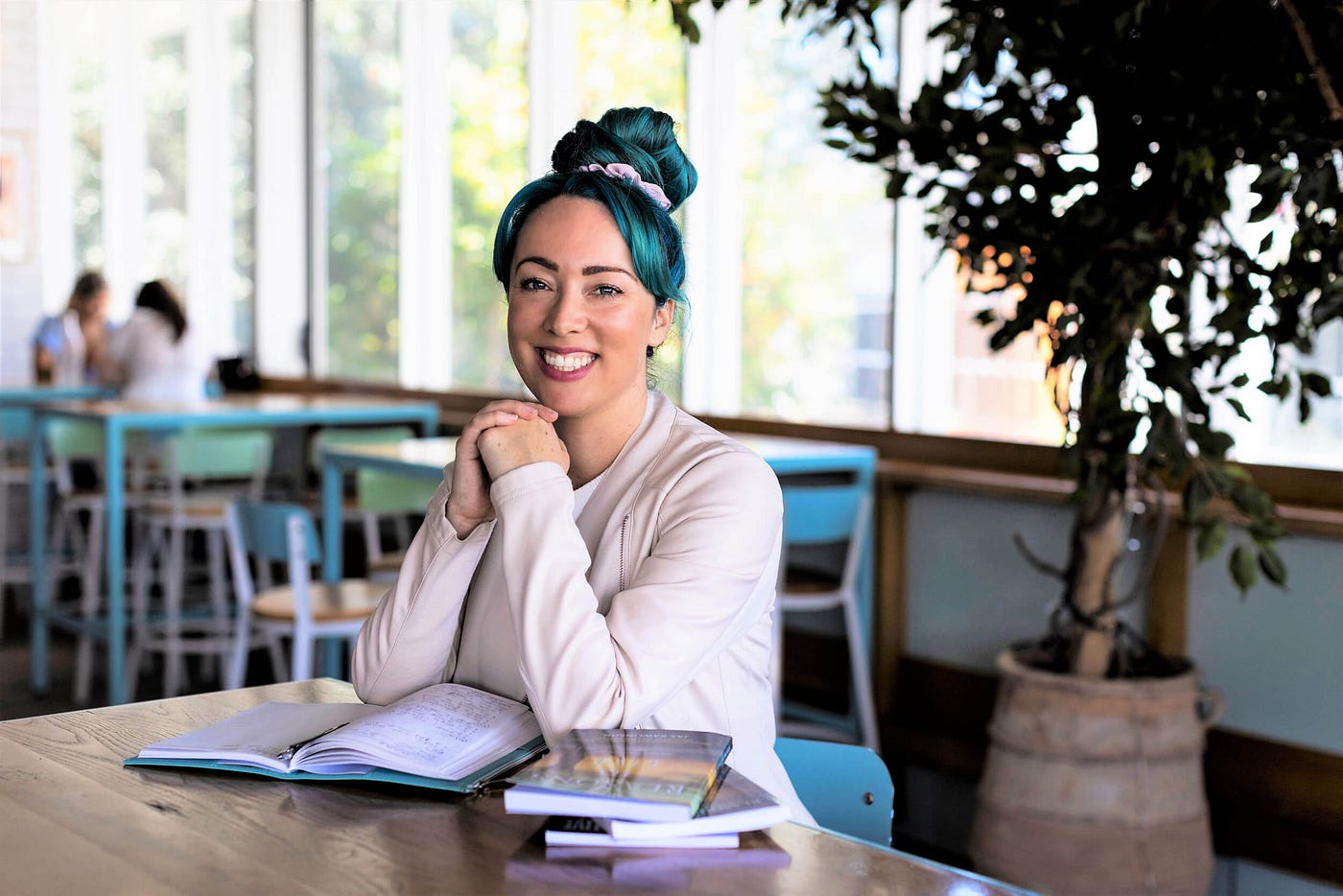
Jas Rawlinson is an award-nominated book coach, resilience speaker, and best-selling author who specializes in helping mission-driven women to transform their stories into books that create global impact. Throughout her career she has impacted hundreds of thousands of lives through global media outlets, including Business Insider, Yahoo Finance, news.com.au, and Authority Magazine. Above all, Jas believes that everyone has a story with the power to inspire, impact, and change lives.
Thank you so much for doing this with us! Before we dig in, our readers would like to get to know you a bit more. Can you tell us a bit about your “backstory” and how you grew up?
The life I live today is incredibly different to the one I experienced as a child. Like many kids, I grew up in a home with a father who was emotionally and verbally abusive, something which shaped my identity and mental health from a very young age. To get through this time, I escaped into the world of writing, often lying on my bed journaling or creating short stories. It was my safe place; a home for unspoken thoughts and a world where brighter opportunities awaited. In hindsight, it’s no surprise that I became an author and book coach. For as long as I can remember, storytelling and writing have always consumed me.
Let's talk about what you are doing now, and how you achieved the success that you currently enjoy. Can you tell our readers a bit about the work you are doing?
My work is all about healing trauma through the power of storytelling. Whether I’m speaking on stage, writing books, or helping others to write theirs, my legacy is about removing the stigma around mental health and abuse, and helping my clients and audience to find the power in their personal story. I gain so much energy from helping visionary women to embrace their story, raise their voices, and create future change.
You are a successful leader. Which three character traits do you think were most instrumental to your success? Can you please share a story or example for each?
#1: Boundaries.
As I’ve become more successful, I’ve realized that it’s hard to achieve the goals I have in place if I’m prioritizing everybody else above myself. As a highly sensitive and empathetic person, I’ve often struggled with creating balance between helping others and caring for myself, and this has led to a lot of emotional and physical burnout in the past.
Last year I was speaking to a fellow business woman about boundary issues I was having with certain people on social media, and she replied: “Jas, do you want to be successful at what you do, or do you just want to be liked at all costs?” Oof, that one really hit hard.
By creating boundaries, I’m honouring myself, my wellbeing, and the future success of my business.
#2: Taking risks.
It’s fair to say that I’ve been through a lot in my lifetime, and I know what it’s like to feel that my dreams are out of reach. That I should wait until a ‘better’ time, when I’m more accomplished, more successful, or more confident.
But here’s the thing: I didn’t get to where I am by sitting in a place of comfort. I got here from pushing myself beyond my comfort zone, and choosing to stretch just that little bit further towards my goals.
For example, when I first began toying with the idea of starting my own business back in 2018, a lot of fear and resistance came up. Was it worth the investment to get support? Was I really capable of achieving something successful? There was no one out there to give me any kind of guarantee. I had to look at my why, and take the leap. Successful leaders don’t become successful from talent, they achieve greatness through perseverance, pushing themselves beyond their comfort levels, and getting support to keep moving forward.
#3: EFT therapy.
Surprised to see this on the list? Well, until recently, I would have felt the same way! But for me, it just works.
In the last 12 months my business has grown 4x in revenue, and a lot of this has to do with utilizing Emotional Freedom Techniques (also known as ‘tapping’) in my personal life as well as my business. Though I wouldn’t call myself a super “woo woo” person, this technique has helped me so much more than any positive affirmation or any amount of hustling. And that’s because it gets to the core issue of the limiting belief holding me back.
What’s the WHY behind the work that you do? Please share a story about this if you can.
For so much of my life I felt voiceless. Before the age of 21, I had experienced sexual assault, lost my dad to suicide, and survived a decade of family violence at the hands of my father. I felt like a boat, lost at sea with no lighthouse to guide me in the right direction. When I came out the other side and finally began to thrive, I realized how important it was to use my life experience to reach back to those still lost in their own oceans of sadness. This was also a huge catalyst that drove me to create one of the first permanent domestic violence memorials in my country, along with a suicide-prevention book series that has helped to change and save lives globally.
My work is about helping others to transform pain into purpose, and create meaning from adversity.
None of us are able to achieve success without some help along the way. Is there a particular person who you are grateful towards who helped get you to where you are? Can you share a story about that?
My mother. She sacrificed so much to get me through school and university — particularly after the death of my dad. Being able to transform the knowledge I learned from university into a career as a book coach and author has been a great testament to the belief and support she gave me.
Awesome! Let’s now jump to the primary focus of our interview. I’m an author and I believe that books have the power to change lives. Can you please tell our readers about “The Book That Changed Your Life”? Can you share a story about how it impacted you?
In 2021, I picked up my phone and shot off a frustrated message to a friend. As a business owner, I felt like I was putting in so much effort but not making much progress. Money just wasn’t flowing and I felt stuck. At this point, my friend — very sensitively — recommended that I read Denise Duffield Thomas’ book: Get Rich, Lucky B**ch.
“Seriously Jas,” she wrote. “This book was the best $20 I ever spent. If you do nothing else, just read this book and do the exercises. See where it takes you.”
Though I was somewhat skeptical about the title and book, I took her advice. By the time I’d finished, my life — and business — had changed dramatically.
As someone who grew up with a mentally ill father, family dysfunction, and difficulties with putting food on the table, I had never stopped to think about all the blocks I had around making or spending money. I was so terrified of never having money, that I would stand in the supermarket staring at cartons of milk for five minutes, anxiously trying to decide if it was okay to spend $3.00 instead of $1.50. Sometimes, I would drive 10 minutes down the road just to save $2 on a certain grocery item.
For me, earning or spending money involved a lot of fear, and it was only once I realized that it was safe for me to be well paid for my services, and to spend money on things that enriched or brought joy to my life, that I started to see rapid results in my business.
In 12 months I went from barely earning enough to keep my business going, to 6 figures — and all without major hustle or fancy tech systems. A lot of my growth came purely from fixing my mindset around what I was ‘allowed’ to achieve or have.
What was the moment or series of events that made you decide that you wanted to take a specific course of action based on the inspiration from the book? Can you share a story about that?
I’ll never forget the moment I opened a page in Denise’s book and read the words: “It’s okay for good things to happen all the time.”
It was as though a light switch went off in my head; a moment of clarity. Strange as it may sound, I’d never considered that it was okay for life to not be a constant struggle or series of upsetting events. After reading this sentence, I ran to my vision board and added a note that said, ‘It’s safe for good things to happen to me all the time.’
An hour later I had an email in my inbox from one of the biggest magazines in our country asking to do a double page feature on me and my story. I couldn’t believe it!
This was not an isolated event, either. As I’ve continued to prioritize myself and my success, more random ‘coincidences’ (or manifestations) have appeared along the way.
Can you articulate why you think books in particular have the power to create movements, revolutions, and true change?
Nothing establishes trust and credibility — or conveys knowledge and understanding — quite like a good book. It really comes back to storytelling, and the power of connection that is created through words and stories on their own.
For example, when you listen to a speaker or watch a documentary, it’s easy to get distracted by visuals — whether it’s the person’s voice or appearance. When we read books, however, we disappear into a world that is (mostly) free from distraction. We find ourselves empathizing with the author’s words and experiences. We feel their passion, uncertainty, anger, and heartache. And we are often moved to take action; whether that’s in our own lives, or on a massive social scale.
A book has many aspects, of course. For example, you have the writing style, the narrative tense, the topic, the genre, the design, the cover, the size, etc. In your opinion, what are the main, essential ingredients needed to create a book that can change lives?
Ooh I love this question, particularly as a book coach! Here are a few of my top tips:
Visuals are everything. It goes without saying, but your book cover and title are everything. You could have the most inspiring or empowering story in the world, but if your cover art is ugly, illegible, or badly designed, it’s unlikely to even get picked up (or, to stop a reader from scrolling past online).
Focus Outward. If you truly want to write a book that changes lives, you need to remember that this book is not about you — it’s about your reader. Focus on who you’re writing this book for, how it will change their life, and why this matters to you. If you’re not clear on your ideal reader/target audience, you run the risk of writing a book that serves only you.
Hire an Editor. This is non negotiable if you want to create a book that changes lives — whether that’s internationally, or just within your community. Just like the visual aspect of your book, it’s incredibly important that your words shine bright. Poorly written sentences, or chapters full of dry, bland stories that don’t engage the reader or help them improve their lives, are unlikely to inspire anyone to create change.
As a bonus tip, if you’re struggling to work out what stories you should/shouldn’t tell, I’d also highly recommend investing in a book coach to give you some objective feedback, and help you stay on track.
What are your “5 Things I Wish Someone Told Me Before I Started My Career” and why? (Please share a story or example for each.)
Set boundaries and accept that you can’t help everyone.
If you’re reading this, you’re probably the type of person who wants to help everyone. But at the end of the day, you are just one person and you need to also care for yourself. That means learning to say ‘No’ and being comfortable doing so. The larger your public presence grows, the more people you’ll reach — meaning, you’ll also have more people sliding into your DMs, emailing, or tweeting you for help.
My best piece of advice? Learn to set and enforce boundaries early. Get good at saying ‘No’. Because if you don’t look after yourself first, you can’t help anyone else.
2. Build your email list early.
Over the past few years we’ve seen several very well known individuals lose their social media platforms either through hacking or censorship, and it’s shown the importance of having a mailing list. Because if you don’t, and you’re removed from Twitter, Facebook, Tik Tok, Instagram or any other mainstream platform, you’ll suddenly realize that you have little way to engage with your audience.
Speaking personally, I wish I’d known this when I launched my first book! It was the major difference between having boxes of books under my staircase for a year, versus selling out my second and third books before they’d even launched.
3. Stay in your own lane.
Creating a successful business, or building a social change movement, takes time. But in the world we live in it’s hard not to get struck down by ‘comparison envy’ — particularly when social media makes it look as though everyone around us is achieving their goals faster. To create long term success, we need to stay in our own lane, and take small, consistent steps to move closer towards our goals.
One thing that has helped me is creating a ‘brag sheet’; a document where I track my achievements — no matter how small or large. This is a technique I learned from a business friend, and I highly recommend it!
4. Find a mentor or coach.
Staying motivated when you’re journeying alone can be really hard. So get yourself a good coach early on. If it’s not financially viable for you right now, I highly encourage you to surround yourself with others who are on a similar journey — that way you can cheer each other on when you need some encouragement. Not many people know this, but I almost gave up on my business completely in 2018! I was so overwhelmed, and I felt like it was all too hard. Looking back, I’m so glad that I stepped beyond comfort and chose to invest in the support of a coach. If I hadn’t, I wouldn’t be here doing this interview right now!
5. Self-care is not a ‘luxury’ — it’s an everyday necessity.
I’ve said it before, I’ll say it again: Self-care is not selfish — it’s essential. I’ve had to learn this lesson the hard way after multiple rounds of burnout, and I wish I’d known earlier in my career how important it was to prioritize my own wellbeing. My top tip? Schedule self care into your diary just as you would a business meeting or doctor appointment.
The world, of course, needs progress in many areas. What movement do you hope someone (or you!) starts next? Can you explain why that is so important?
Right now we need a huge focus on the future mental wellbeing of our children. The last few years have been enormously disruptive and traumatic for kids and young people, and mental health services are just beginning to see the tip of the iceberg in terms of how much they have been negatively impacted.
I can’t stress enough how important it is that our governments continue to provide ongoing financial support to mental health experts, organizations, and researchers, so that our kids can receive the tools and support needed to thrive mentally, physically, and socially.
Beyond crisis support, I can also see that a lot of children (particularly those in hard lockdown areas) are going to need a lot of support to rebuild social development skills (such as communication, confidence, and willingness to connect outside of technology) in the future.
How can our readers further follow your work online?
I’d love to connect with you! Send me a DM on Instagram at @jas_rawlinson or head to www.jasrawlinson.com. If you’re an aspiring author, you can download my ‘aspiring to published’ author checklist here: ’14 steps to becoming a published author’.
Thank you so much for taking the time to share with us and our readers. We know that it will make a tremendous difference and impact thousands of lives. We are excited to connect further and we wish you so much joy in your next success.
About the interviewer: Sara Connell is a bestselling author and the founder of Thought Leader Academy where she helps coaches, writers and entrepreneurs become best selling authors, TEDx and paid speakers. She has been featured on The Oprah Winfrey Show, Good Morning America, The View, FOX Chicago, NPR, Katie Couric and TEDx. Her writing has appeared in: The New York Times, Forbes, and many publications. Access her free masterclass: How to Write A Bestselling Book That Changes Lives (in less than 3 months) HERE