Any intelligent fool can make things more complex. It takes a touch of genius and a lot of courage to simplify and move in the other direction.
Business
Janice Gott of Muu on Career Pivots, Radical Simplification, and Authentic Startup Leadership
The CEO and founder discusses her journey from Hollywood publicist to postpartum tech innovator, sharing insights on decisiveness, conviction, and building simple solutions for modern parents.
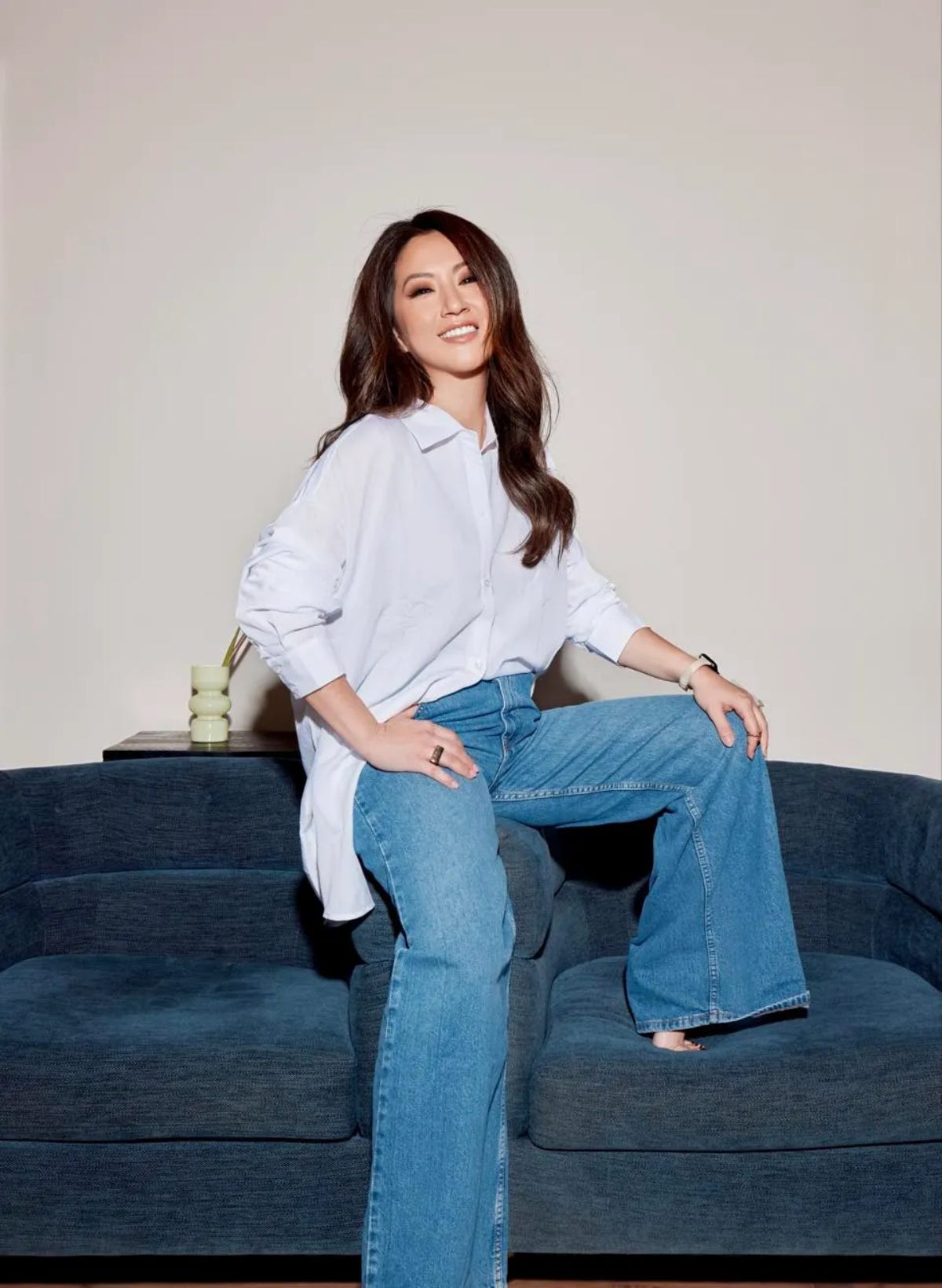
In today’s dynamic world, the concept of leadership is continuously evolving. While traditional leadership models have often been male-dominated, there is a growing recognition of the unique strengths and perspectives that women bring to these roles. This series aims to explore how women can become more effective leaders by authentically embracing their femininity and innate strengths, rather than conforming to traditional male leadership styles. In this series, we are talking to successful women leaders, coaches, authors, and experts who can provide insights and personal stories on how embracing their inherent feminine qualities has enhanced their leadership abilities. As part of this series, we had the pleasure of interviewing Janice Gott.
Janice Gott is the CEO and Founder of Muu, an innovative startup on a mission to help moms harness the power of their breastmilk while living life unhindered. An executive-turned-entrepreneur, Janice spent 15 years building a successful career at one of Hollywood’s top PR firms before completing a complete career pivot to found Muu. Janice is proudly a first-generation Korean-American female founder committed to simplifying parenthood. She currently resides in Los Angeles with her husband, Dave, and son, Teddy.
Thank you so much for joining us in this interview series. Before we dive into our discussion about authentic, feminine leadership, our readers would love to “get to know you” a bit better. Can you share with us the backstory about what brought you to your specific career path?
For the last 15 years, I have worked in PR and have loved it. Most recently, I was Senior Vice President at a leading Hollywood firm, and I had a team I loved, a dream roster, and a career I would’ve been proud to pursue for the rest of my life. Then I got pregnant and spent all four months of maternity leave in my house during Covid. As my return to work date approached, I got increasingly anxious about having to pump every 2–3 hours while at work, and I didn’t love any of the portable options out there. They were either too cumbersome, too expensive, not discreet enough, or simply didn’t work well for me. So I started creating it. From a notepad sketch to what’s in-market today, I worked full-time as a publicist while building Muu on nights and weekends. Two years into that grind, I reached the inevitable crossroads of staying the course or going all-in. I went all in. I quit my job a year and a half ago, effectively supercharging our progress towards the Muu pump and finally brought it to customers earlier this year.
Can you share the most interesting story that happened to you since you started your career?
I spent over a decade pitching my clients for press placements and media opportunities, so it feels really weird for me to be on the other side doing interviews myself. I recently had the incredible opportunity to talk about Muu on Ryan Seacrest’s morning show, and it felt so surreal and full circle because I used to pitch my clients for that exact show all the time.
What do you think makes your company stand out? Can you share a story?
We’re resonating with parents of the now times. At the end of the day, parents want the simplest and most functional solutions. Our Muu pump is notably low-tech: A one-piece silicone pump meant to be used when you can’t sit down to solely pump. Our Muu pump is so easy (one piece to wash, no wires or batteries), discreet, portable and affordable.
Our company ethos is anchored on the belief that consistent, affordable innovation in postpartum care is urgent and necessary and that the answer to some of our biggest parenting challenges is to simplify, not complicate. There’s an unspoken tendency for this industry to keep going higher tech, and on some occasions, just for the sake of having more tech.
I keep going back to something Einstein once said: “Any intelligent fool can make things more complex. It takes a touch of genius and a lot of courage to simplify and move in the other direction.”
At Muu, we hope to continue innovating in ways that make parenting feel simpler and more natural. There’s so much we must learn when becoming parents for the first time, and our goal is to offer simple solutions, not another burden to bear.
Which three character traits do you think were most instrumental to your success? Can you please share a story or example for each?
- Decisiveness: I’m learning that so much of start-up progress is just doing. From the big decision to quit my career to the smaller decisions along the way, I believe that my ability to make definitive decisions quickly, rather than wading in the gray and waiting for the “right time,” has helped maintain momentum.
- Flexibility: “Entrepreneurship is an iterative process” has been some of the best advice I’d received on this journey. There is no straight path when it comes to starting a business, and learning to stay nimble and pivot quickly when something doesn’t go as planned is a superpower.
- Conviction: From the early days, the idea for Muu emerged, and my outward movements were ultimately driven by personal conviction. Of the multitude of things I questioned along the way, the decision to pursue it was never one of them. I knew I had a great product, and it was never a matter of “if,” but “when.”
Leadership often entails making difficult decisions or hard choices between two apparently good paths. Can you share a story with us about a hard decision or choice you had to make as a leader? I’m curious to understand how these challenges have shaped your leadership.
The best and the hardest parts of leadership will always be the people. I’ve had to part ways with or modify roles held by people that I love and care about as humans because they’re better equipped for something else. Parting ways is tough no matter the circumstance, as it signals the end of something that may have mostly felt good.
Having gone through this a few times now, I realized how much I really don’t enjoy that piece of it, but also how detrimental it can be to drag my feet. I am taking more time in the initial interview process now: more conversations, more opportunities to hear stories, and getting to the crux of who each person is, versus pure resume plus interview. I think it’s important to uncover motivating factors, what drives them, what they’re passionate about and uniquely graced for. And when I’ve made a mistake, adjusting gently, but clearly and quickly.
Can you share a personal experience where embracing your unique leadership style, which might not align with traditional expectations, led to a significant positive impact in your organization or team?
I strongly believe that sustainable team cohesion is best realized when everyone adopts the vision. This means that the company mission has to be lived, not just stated, which always starts with leadership. From authentic leadership (which is a career-long process and commitment) comes increased productivity. And when the whole team buys into the overall vision, work is not just fulfilling but fun.
As a young company, I am limited in the kinds of resources and benefits I can offer team members, and it is unrealistic to expect everyone to take on an owner’s mentality. Things like equity opportunities in key full-time roles and growth opportunities for entry level hires have meaningfully impacted the way in which the long game can be considered across the board. It’s important to assess and vet, but getting on at the ground level means a lot to me.
In your journey as a leader, how have you balanced demonstrating resilience, often seen as a masculine trait, with showing vulnerability, which is equally powerful but typically feminine? Can you give an example where this balance created a meaningful difference?
I think the resilience is just staying in it. It’s been a tough few years for founders as a whole, and I’ve gotten better at staying the course when it’s quiet and failing fast (taking a loss– whatever that means to you– and moving on quickly). Vulnerability for me is in knowing what I don’t know. A career switch in my late 30s meant I had to be honest about what I know, what I can learn, and what I shouldn’t waste my time learning because there are smarter, more capable people out there who are uniquely graced in areas I am not.
I think both are simply about time management and priorities.
What strategies have you employed to remain authentic to your style?
I’ve found that the only thing that works for me is to stay in my lane and look straight ahead. When I look at the lanes next to me, I’m unfocused and put weird pressure on myself based on assumptions. So the best strategy I have is to keep my head down, grind, and run my race.
What role has mentorship played in developing your authentic leadership style, and how do you communicate authentically to inspire and empower your mentors and mentees?
Mentorship at a base level keeps you in a forever student frame of mine; that’s the real power in being mentored. As founders, it’s so easy to fall into an ego trap where you start to really believe you did it all yourself. Having mentors (professional or personal) is a daily reminder that you have so much left to learn. Similarly, you keep the gift of mentorship flowing by mentoring others. There’s always someone to mentor, no matter your age or role. This side of mentorship is retrospective in that those you are mentoring usually look like you did 5/10/20 years ago. You become more compassionate, more patient; few things are as humbling as being reminded of your earliest mistakes.
Based on your experience and research, can you please share “5 Ways Leading Authentically As A Woman Will Affect Your Leadership”?
- You will stay self-aware
- You will build a relational culture that boosts productivity
- You will get truthful feedback
- You will build morale
- In demonstrating your values, you will encourage those values
Are there potential pitfalls or challenges associated with being an empathetic leader? How can these be addressed?
Certainly, excessive empathy or misprocessed empathy can affect good decision-making. In most everyday situations, I like the approach of compassion versus empathy as a way to balance difficult emotions in the workplace. Empathy on a large scale is exhausting by nature, while compassion allows leaders to feel with their team members and then intentionally support them in a way that is not hindering.
Finally, if you could start a movement that would bring the most good to the most people, what would that be?
I’d like a global movement from “me” to “we.” It’s the starkest difference between the Eastern and Western mindset. We are so focused on individual achievements, wealth, and safety, whereas Eastern cultures focus on taking care of each other as a whole, and the individual duty to do so is upheld with pride. Japanese fans picking up trash after the World Cup, major airports and public bathrooms, and streets in Seoul, Hong Kong, and Tokyo stay impeccably clean and safe– these are the outputs of cultures who understand we are on one shared planet. And as we continue to progress as a civilization, there could be value in unlearning some habits we’ve picked up along the way.
Thank you for the time you spent sharing these fantastic insights. We wish you only continued success in your great work!
About The Interviewer: Pirie is a TedX speaker, author and a Life Empowerment Coach. She is a co-host of Own your Throne podcast, inspiring women in the 2nd chapter of their lives. With over 20 years in front of the camera, Pirie Grossman understands the power of storytelling. After success in commercials and acting. She spent 10 years reporting for E! Entertainment Television, Entertainment Tonight, also hosted ABC’s “Every Woman”. Her work off-camera capitalizes on her strength, producing, bringing people together for unique experiences. She produced a Children’s Day of Compassion during the Dalai Lama’s visit here in 2005. 10,000 children attended, sharing ideas about compassion with His Holiness. From 2006–2009, Pirie Co-chaired the Special Olympics World Winter Games, in Idaho, welcoming 3,000 athletes from over 150 countries. She founded Destiny Productions to create Wellness Festivals and is an Advisory Board member of the Sun Valley Wellness Board.In February 2017, Pirie produced, “Love is Louder”, a Brain Health Summit, bringing in Kevin Hines, noted suicide survivor to Sun Valley who spoke to school kids about suicide. Sun Valley is in the top 5% highest suicide rate per capita in the Northwest, prompting a community initiative with St. Luke’s and other stake holders, to begin healing. She lives in Sun Valley with her two children, serves on the Board of Community School. She has her Master’s degree in Spiritual Psychology from the University of Santa Monica and is an Executive Life Empowerment Coach, where she helps people meet their dreams and goals! The difference between a dream and a goal is that a goal is a dream with a date on it!
PJ
Written by
Pirie Jones Grossman
Editor & Journalist · Authority MagazinePirie Jones Grossman is a senior columnist at Authority Magazine covering Tech and Business, conducting primary-source Q&A interviews with founders, executives, and industry leaders.

Published inAuthority MagazineTop Lessons, Top Authorities · 42K Followers
Exclusive, curated interviews with the leaders and changemakers shaping tomorrow. Leadership lessons, industry deep dives, and executive profiles.