First, you have to have grit. It is a brutal, ego-shaking industry that will make you question what you are even doing. It is difficult to break through, whether you are trying to traditionally publish or self-publish.
Science Fiction and Fantasy are hugely popular genres. What does it take for a writer today, to write compelling and successful Science Fiction and Fantasy stories? Authority Magazine started a new series called “How To Write Compelling Science Fiction and Fantasy Stories”. In this series, we are talking to anyone who is a Science Fiction or Fantasy author, or an authority or expert on how to write compelling Science Fiction and Fantasy.
As a part of this series, I had the pleasure of interviewing J. Von Tobel.
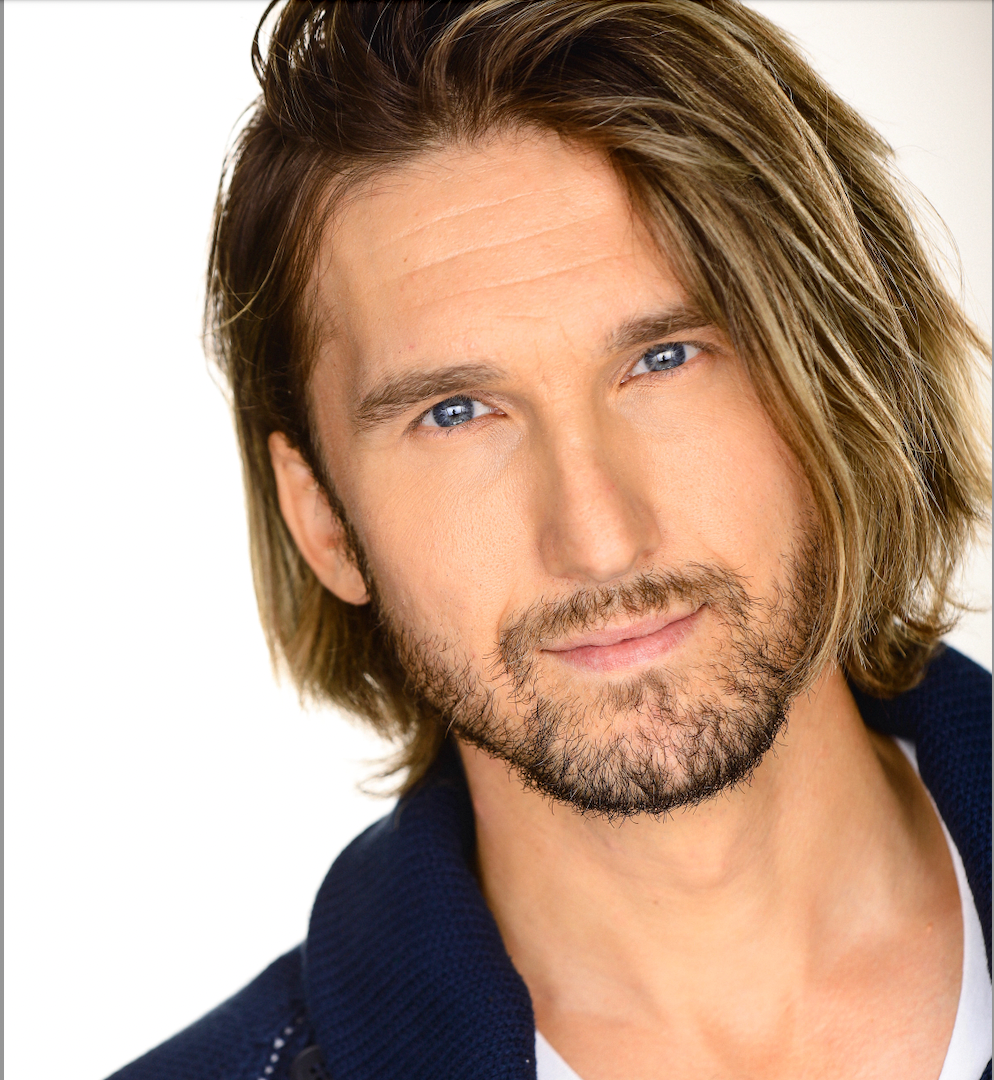
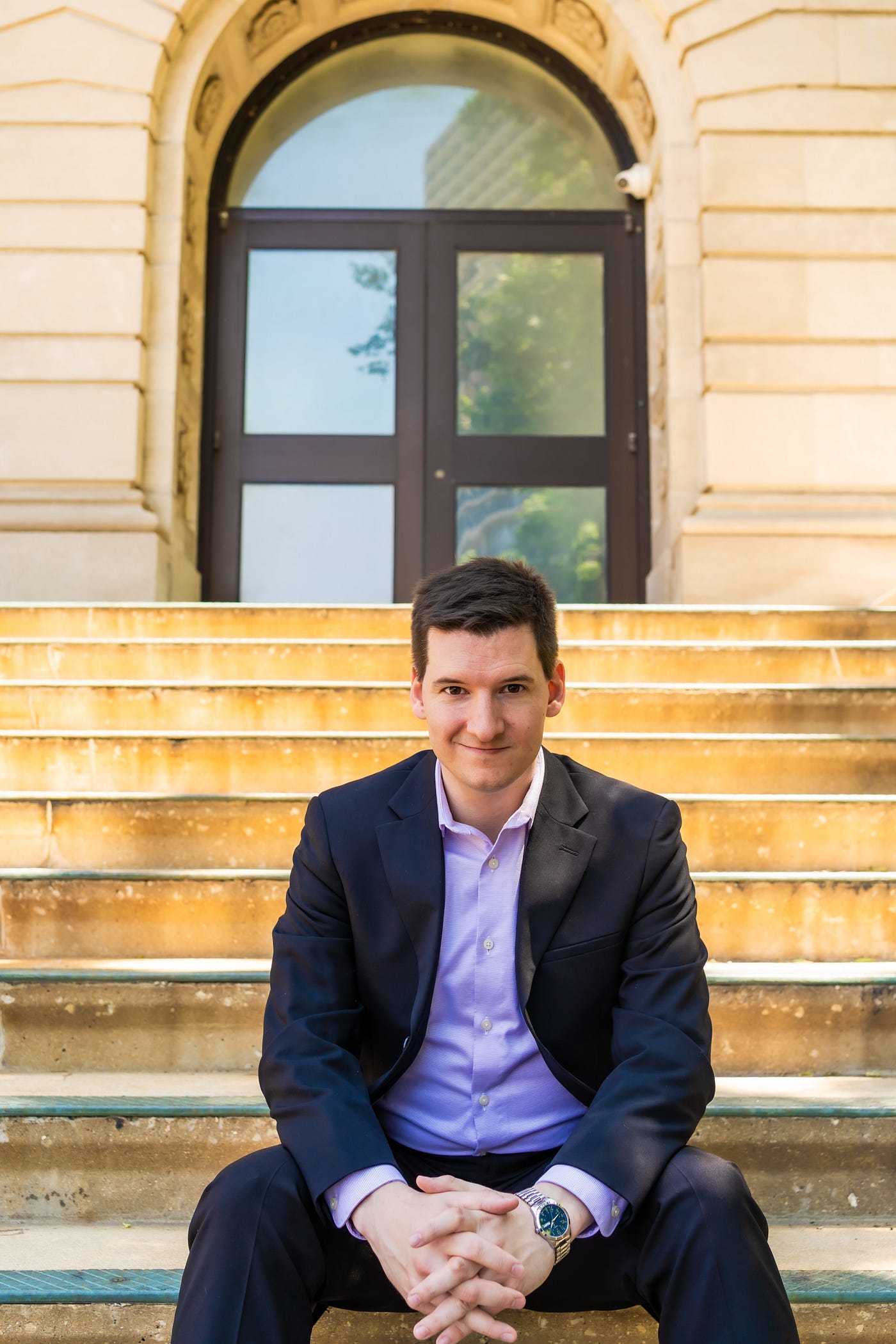
J. Von Tobel has been writing stories and creating worlds since he was a teenager. Author of “Curse of Flame” and “Fated to be Monsters”, he’s given talks on world building after eleven years as an author and tabletop Dungeon Master. Von Tobel’s stories might be full of magic and monsters, but they revolve around human conflicts that we have all faced. Jacob lives in Chicago with his wife and two over-excitable dogs.
Thank you so much for joining us in this interview series! Before we dive into the main focus of our interview, our readers would love to “get to know you” a bit better. Can you share a story about what first drew you to writing over other forms of storytelling?
I’m so excited to speak with you as well! I’ve dabbled across mediums over the years, but I clung to writing. I was an avid reader in grade school. I’m not sure which story in particular it was, but I have this memory of realizing that I could also write stories like the ones I read. What cemented it for me was getting feedback on one of my first short stories. It was this cheesy, Lovecraft rip-off that will never see the light of day. My senior year English teacher, Mrs. Thornburg, was very thoughtful with her feedback. The thrill of creating something, from top to bottom with just my own mind and pages of notes, has only become stronger over time.
You are a successful author. Which three character traits do you think were most instrumental to your success? Can you please share a story or example for each?
First, you have to have grit. It is a brutal, ego-shaking industry that will make you question what you are even doing. It is difficult to break through, whether you are trying to traditionally publish or self-publish. Despite that, you have to pick yourself up. You can’t give up, no matter how loud the doubting voices get. This has been the hardest thing I’ve ever done, but it’s worth every drop of sweat.
Second, you have to be creative, but not afraid to embrace what’s come before. I believe you should give people what they want, but not in the way they expect. It’s no secret that there is nothing new under the sun. Every story is a derivation of a story that came before it. Recognize that and look for where there is still room to innovate.
Lastly, you have to read what’s being published right now. This is not just to understand what is popular in the industry. You will become a stronger writer by figuring out what works, what doesn’t, and why that is. I’m going to emphasize the “right now” part of this. You won’t understand the fantasy genre of 2024 by reading Tolkien, even if everyone draws inspiration from the classics.
Can you tell us a bit about the interesting or exciting projects you are working on or wish to create? What are your goals for these projects?
I’m working on the sequel to “Curse of Flame” right now, but there are a few projects I have under the hood. The first is set in the same world as “Curse”, but is like How to Train Your Dragon with insidious sea monsters and steampunk pirates. I’d love to get that story published alongside my current novels, but it’s just a first draft right now. It needs a lot of work.
My super-secret project, which I’m sharing here for the first time, is that I’m working on a new series of books. It’s way too early to give specifics, but I’m imagining it as an exultantly goth ACOTAR with two worlds connected by chasms in the ground. I haven’t decided what I aspire to do with these stories yet, but I have very high hopes for them.
Wonderful. Let’s now shift to the main focus of our interview. Let’s begin with a basic definition so that all of us are on the same page. How do you define sci-fi or fantasy? How is it different from speculative fiction?
Science Fiction & Fantasy (SFF) seeks to compelling themes using worlds and stories that are far removed from our own. They might be about magic or space travel, but the core conflicts relate to the human condition. Practically speaking, SFF tends to dwell on its setting more than other stories because it is introducing us to worlds that are not our own. However, it is the relatable conflicts within that draw people back to this genre.
Speculative Fiction and SFF sometimes lie on opposite sides of a very thin line. Both can have other-worldly elements affect their characters, but Speculative Fiction never really crosses into worlds that are truly beyond our own. As an example, a story might feature a small town haunted by spectral creatures, but it is still our version of Earth. It would cross into SFF if these spectral creatures were shaping our world into something different. What would life look like if ghosts were common and problematic? That is trending into SFF.
It seems that despite countless changes in media and communication technologies, novels and written fiction always survive, and as the rate of change increases with technology, written sci-fi becomes more popular. Why do you think that is?
Written works have the incredible advantage that they can be enjoyed anywhere. You don’t need a screen and a few hours set aside. You don’t need a controller or a certain gaming system. Written works can be picked up and put aside between errands. You don’t even need to disturb other people the way that watching a movie on a train car would.
I’m getting a little side tracked about the medium, but SFF is certainly having a great degree of success. There are probably a dozen reasons why it continues to grow. Escaping stressful realities seems relevant. The last five years have offered plenty of reason for people to look away from our own world. Even if the worlds we escape to are terrifying, there is still a distance there and entertainment to see how the story is resolved.
More than that, I think people can find themselves more easily in SFF than in other stories. Literary Fiction is certainly the more realistic genre, but because of that it might be hard to place yourself exactly in the character’s shoes. SFF offers experiences and stories that no one has ever been in. There is no standard for what you can or cannot understand, so we find our own ways to relate to these characters. It’s a through line of my thoughts on the genre. There is still a very human, relatable center in the middle of even the most fanciful of SFF novel.
In your opinion, what are the benefits to reading sci-fi, and how do they compare to watching sci-fi on film and television?
Many of the criticisms leveled at filmed SFF stories fall partially on the medium. With a film or a show, you only have so much time to tell a build a world while also communicating the story. Every second has to be rationed. Visual storytelling can get over this problem to a degree, but it’s tricky. It’s very easy to overstuff a scene with detail that will get missed or distract from the characters.
The granular details possible in a written story lends itself to SFF. The slower pace of reading gives you more time to digest details. You are not forced to understand everything in two to three hours. SFF is about being immersed into new, exciting worlds. It isn’t a large wonder that mediums that have the time to convey the details tend to thrive.
What authors and artists, dead or alive, inspired you to write?
I’m actually getting a tattoo dedicated to them later this year. I thought long and hard about this because there are so many creative voices that have influenced me. Rebecca Yarros and L.R. Lam both inspired me give writing Romantic Fantasy (Romantasy) a shot. I was absolutely floored by their works, “Fourth Wing” and “Dragonfall” respectively. I resisted admitting to myself that I love romance stories for years. Their books broke down that barrier and now I can’t get enough.
I also write Dark Fantasy. Those roots go back to H.P. Lovecraft. Complicated as his legacy is, the Cthulhu Mythos had a large influence on my teenage self. That initial spark to write was lit by Lovecraft’s epistolary style. I really clicked to the idea of evil that isn’t so single-mindedly malevolent. They have their own plans. You are merely an inconvenience.
If you could ask your favorite Science Fiction and Fantasy author a question, what would it be?
I would ask them how they plan out large story arcs across books. When I first started, I made these elaborate outlines that covered every chapter. Almost like a draft zero. Since then, my outlining has become quite a bit more freeform. I started my most recent project without any idea how it would end.
Everyone has a different process. I’d like to hear how these authors, some who have stories that span five novels, make these enormous arcs and plans so far in advance. How long do they give themselves to make it, does anyone else give input before they get started, or is there even a master plan?
We’d like to learn more about your writing. How would you describe yourself as an author? Can you please share a specific passage that you think exemplifies your style?
Faulkner once said, “The only story worth telling is the human heart in conflict with itself.” I would not go so far to say that is the only story worth telling, but those are the stories I’m the most interested in. My works always reach for the fantastical or the terrifying. The anchor is always a conflict about belonging, love, passion, understanding, or any number of struggles that all of us face. It feels natural for my style.
This passage comes just before the halfway point of my debut novel, “Curse of Flame”. Our main character, Olivia, is speaking to Alkis, a character who channels the same kind of Flame magic that is killing her. (Note to the editor: if this runs too long, feel free to trim it.)
“I’ve been trained to use the barest amount of Flame, not enough to risk affliction. But when I wield it, I can feel it trying to creep in. The Flame is a part of us. It just excites our essence. It can spill over into,” Alkis searched for the right words, “stronger emotions.”
“You’re a Fire Keeper?” Olivia said.
She heard stories about people with his talents. Fire Keepers wore a suit of smoldering, stone armor and only answered to the far-off nation of Katoia. Their touch could set you aflame and they did not know mercy. At least, as the stories said. He paused as he squeezed water out of the towel again and winced.
“Was. I left the order three years ago.”
Looking him over, she expected to find a battle scar or a tattoo tallying his kills. His arms were not especially muscled, his eyes were deep and warm, and he did not fidget with an uncontrollable urge to murder and burn. This was not what she imagined a Fire Keeper to be.
“But you’re just a monk.”
“Monk-ish. It’s not that specific around here.”
“The stories I’ve heard say something else.”
His calm demeanor cracked with a twist of his lip.
“Did you think of some big, armored soldier that puts entire villages to the pyre? Invulnerable, implacable, and coated in fire?” he asked.
Olivia nodded, frightened that he might confirm it.
“They’re not invincible bloodhounds like they’re made out to be,” Alkis said.
They’re human, just like anyone else, she thought. Maybe just as afraid as she would be, but with the tools to face down any challenge.
Based on your own experience and success, what are the “Five Things You Need To Write Compelling Science Fiction and Fantasy Stories?” If you can, please share a story or example for each.
Know your worldbuilding root… or have a few ideas. Every SFF story worth its salt has a worldbuilding root and obeys it. This root is what every other detail will sprout out of. Usually, this is the thing about your setting that sets it apart from other stories and worlds. It is sometimes not obvious. Take some time to figure yours out. Identifying it correctly is key to writing an intriguing SFF setting.
For example: Star Wars has aliens and space ships, but the stories are really about The Force. This is the thing that sets it apart from other SFF franchises. You will notice that the majority of Star Wars stories fixate on characters who wield this mystical power.
Organize the details. SFF carries a burden of details unlike many other genres. As the writer, you cannot mess these up. It is important that you organize the world in a way that can be easily referenced and added to. Whether it is the name of a currency, when a certain holiday happens, or who is in charge of a country, these are all crucial details. Readers appreciate consistency. It preserves their suspension of disbelief and gives you leverage to push the story in interesting directions.
Understand your sub-genre and age category. Who are you writing for? That is a crucial question for all writers, but especially for people who write genre fiction. Both YA and Adult are large demographics for SFF and understanding which bin your story falls into is key to getting the interest of agents and publishers. Beyond that, there are many different kinds of SFF. Dark Fantasy, Romantasy, Cyberpunk, Military Fiction, the list goes on. Understanding your sub-genre will help you manage narrative expectations and market it correctly. My stories are Adult Romantasy. So, the main characters should be 19+ years old, the romance plot needs to matter just as much as the fantasy plot, and there has to be a “happily ever after” ending (or happily for now).
Find depth in the thrill ride. SFF is a thrilling genre. On the tin, people come for wonderous worlds and dangerous twists. The best SFF stories have a beating heart beneath that exciting back blurb that people signed on for. You have to find the relatable themes and human conflict within the pulse-pounding stories you write. For instance, my novel “Fated to be Monsters” is a romantasy about rival monster hunting clans navigating court politics and a dangerous hunt. Behind that intriguing hook, I was able to uncover themes about belonging, second chances, and redemption.
Obliterate exposition drops. The dreaded exposition drop: When an author brings the story to a grinding halt with paragraphs to pages of explanation. You unintentionally stop telling a story and start lecturing the reader. Exposition is required in all SFF stories. Weave it into your stories in dialogue or peppered into description. It is a hard line to walk, but packing it all into a few paragraphs is the wrong way to do it.
For example, take the following line of dialogue from my novel, “Curse of Flame.” Olivia, the main character, suggests they go to a country called Naelan. Alkis, a Flame mage, has this unprompted, outsized response.
“It’s a den of water mages and traitors. They sided with Shadow during the Great War,” Alkis said with a snarl on his lip.
That she did not ask for his opinion, and the mood of his reaction, indicates a few things: 1) Flame Mages do not like Water Mages. 2) He believes they are not trustworthy. 3) It establishes his opinion as we gauge how valid the plan is.
We are very blessed that some of the biggest names in Entertainment, Business, VC funding, and Sports read this column. Is there a person in the world, or in the US, with whom you would love to have a private breakfast or lunch, and why? He or she might just see this, especially if we both tag them :-)
On the topic of SFF persisting through the ages, Romantasy has blown up across the industry in the last few years. I’d love to talk to Stacy Boyd (Senior Editor at Harlequin Press/HarperCollins) about how far this trend can go. I don’t think anyone truly knows what the next big thing is going to be, but I’d like to know what the industry’s top professionals think.
How can our readers further follow your work online?
I am @jvontobelwrites on almost all social media platforms and you can learn more about me at www.jacobvontobel.com. I’m a big nerd, so I am always happy to talk fantasy, romance, and worldbuilding. My debut novel, “Curse of Flame”, is available on Barnes & Noble, Amazon, The Wild Rose Press store and many other online retailers. My next novel titled “Fated to be Monsters”, a romantasy about rival monster hunters, comes out in early 2025.
Thank you for these excellent insights, and we greatly appreciate the time you spent. We wish you continued success.
Thank you so much for having me!