Imagine a tool where you could discover the person with whom you are sharing the exact same thought at this very moment. A tool that could detect telepathic connections between individuals or groups, creating a profound sense of connection.
Tech
Ifedayo-Emmanuel Adeyefa-Olasupo on Human Consciousness, Neural Force Fields, and Building the First Universal Search Engine for Thoughts
The neuro-physicist and founder of figbox shares how bridging human conversation and artificial intelligence can create a universal consciousness centered on empathy and shared human experience.
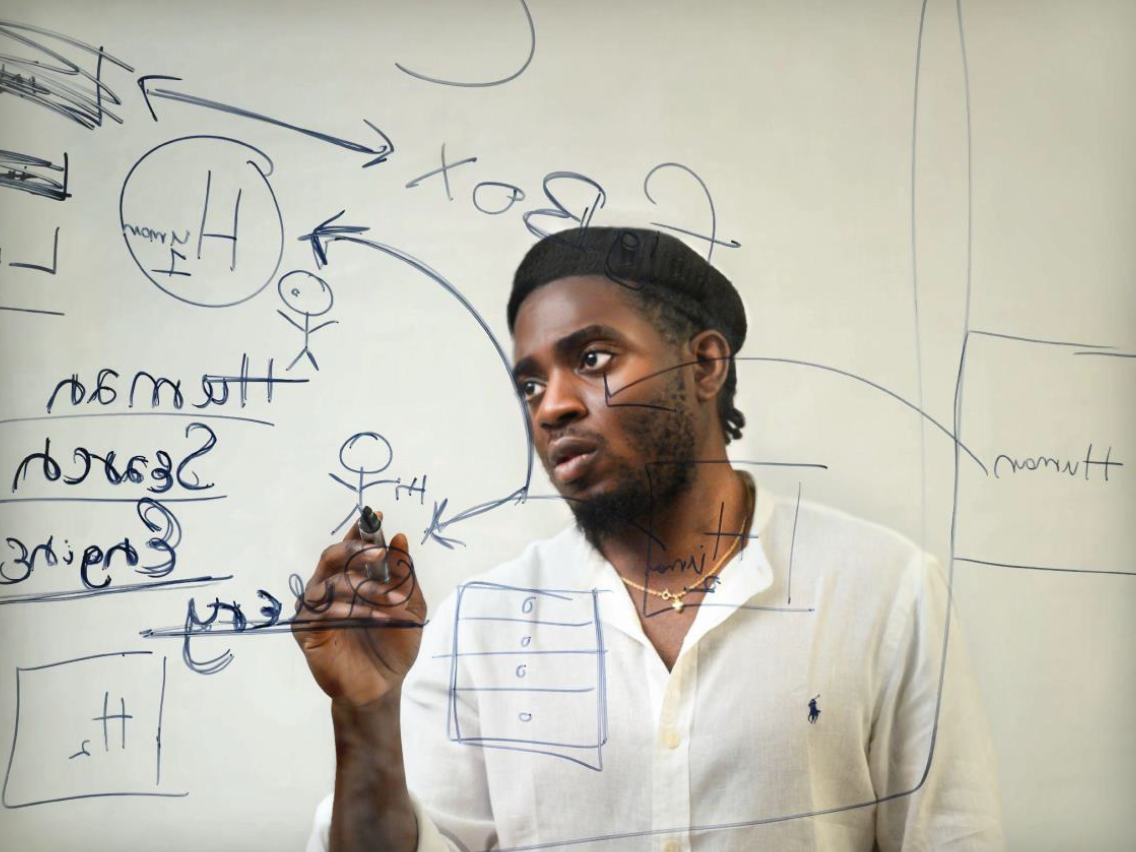
As a part of our series about the future of Artificial Intelligence, I had the pleasure of interviewing Ifedayo-Emmanuel Adeyefa-Olasupo.
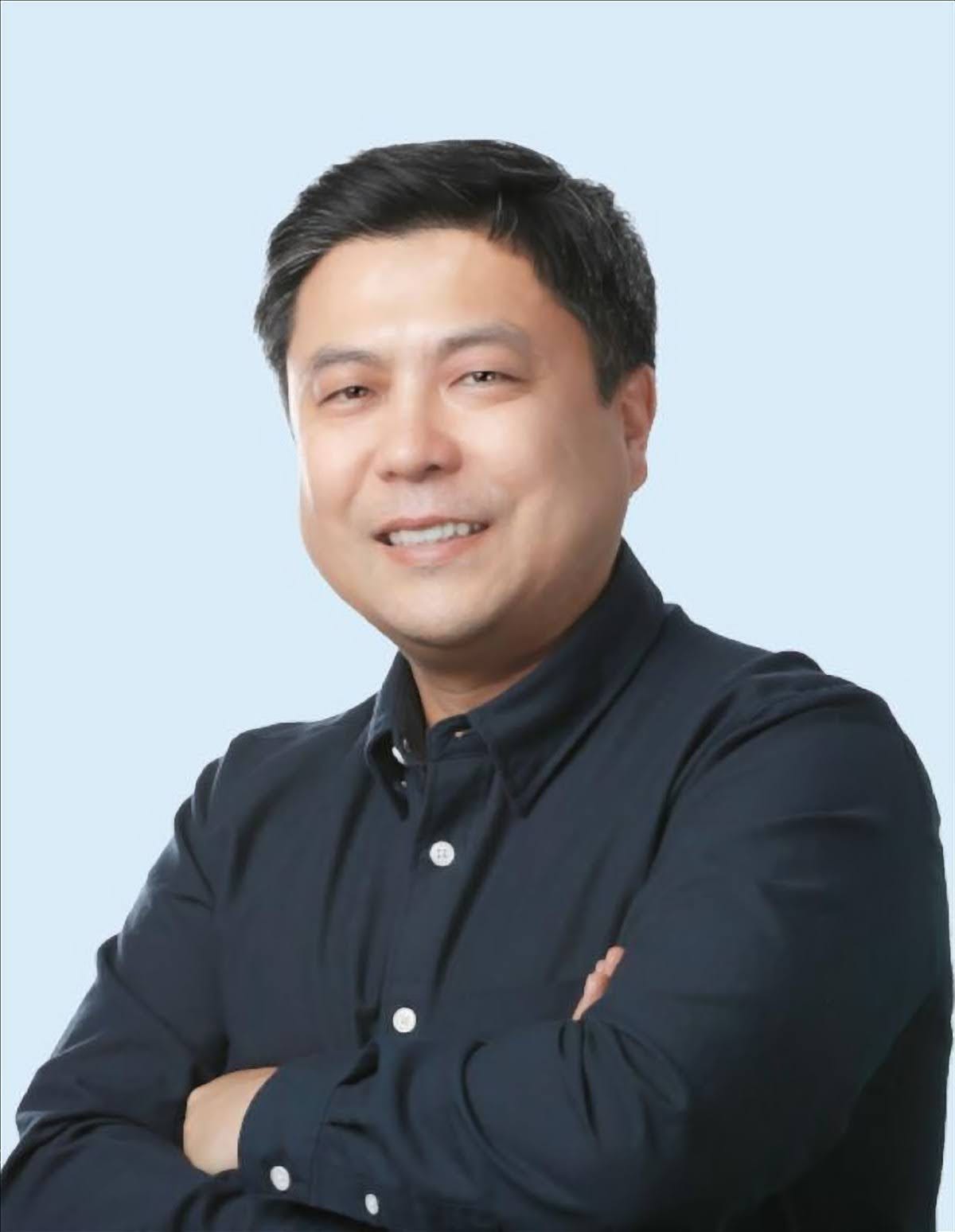
Ifedayo-Emmanuel Adeyefa-Olasupo is a visionary neuro-physicist at the University of Oregon and the inventor of “retinotopic mechanics,” a novel mathematical framework proposing that interconnected neurons function as spring-loaded sensors within a neural force field and obeys an inverse-distance law akin to Newton’s law of universal gravitation. His research into the brain’s interconnected nature inspired figbox, a human-AI-powered networking platform recently featured in Forbes. figbox’s human-AI technology introduces users to matches and suggests live 20-minute video calls (sessions) that lead to meaningful connections, real opportunities, and collaborations. He and his team are further developing this technology so that users’ thoughts uploaded during these sessions — analogous to neurons — will form a universal brain or consciousness that all users will be able to search, offering humans an unprecedented ability to connect, learn from each other’s experiences and apply the insights that emerge.
Thank you so much for joining us in this interview series! Can you share with us the ‘backstory” of how you decided to start an AI company?
The path that has led us to where we are in our lives and what we are currently doing is never linear. So, I can’t fabricate a single backstory. However, I can say that ever since I was six years old, I have been intensely fixated on the history of humanity, its future, and what my role could be. As I grew older, I became increasingly aware that the victors of history — those who write it — are often focused on maintaining and building systems of thought, instruments, or institutions that emphasize incidental differences (e.g., religion, race, nationality, sex, socioeconomic class) to stifle expression and creativity, and to control the majority at all costs. With this awareness, I started to think whether I could build something parallel to these existing systems of thought, instruments, or institutions — something that could help the average human being, whether Oromo or Tigray, Israeli or Palestinian, directly feel and see that their nationality, religion, or skin colour are merely incidental features, insignificant upon deeper reflection. Imagine a tool where you could discover the person with whom you are sharing the exact same thought at this very moment. A tool that could detect telepathic connections between individuals or groups, creating a profound sense of connection.
What I am saying might sound like something from a sci-fi novel, but it is not. At figbox, my team and I are developing this type of tool, which we think will serve as the building block for a new kind of human history. A history not defined by the subversion of a few, ego, conflicts, wars, or our differences, but by the things we have in common, compassion and empathy.
What lessons can others learn from your story?
Become aware of the parts of you that are simulations of your childhood and the parts of you that you have yet to discover. The former, silent but active, destroy who you have the potential to become.
Can you tell our readers about the most interesting features you are working on now?
The thousands of sessions initiated on figbox are currently supported by Zoom and Google Meet, so we do not have real time access to users’ conversations (i.e., their thoughts) or micro-expressions. Therefore, we have started building our own video interface, which will be hosted by the figbox AI. This interface will enable our AI to upload and archive users’ thoughts and micro-expressions, facilitate conversations between users, and actively participate in sessions when appropriate. Thoughts uploaded during these sessions — analogous to neurons — will collectively form a universal brain or consciousness. With this technology, real-time conversations will be the basis for how we match users to each other, in addition to important key points.
The mobile version of figbox is also in development and will not simply replicate our web app; instead, it will function as a search engine. Users will be able to search either the universal consciousness or the thoughts of an individual user, while the user is currently in a session, or in more extreme cases when the user is asleep or has passed away. Think of it as the first “human search engine”, where the output of your search is based on human conversations.
Additionally, my team and I are particularly excited about the technology’s ability to detect when a user is having the exact same thought at the exact same time as another. In such cases, users will be notified of this profound connection and given the option to join a future session together. In quantum physics, this phenomenon is referred to as quantum entanglement, where two or more particles become connected in such a way that the state of one particle instantly influences the state of the other, regardless of the distance between them.
None of us are able to achieve success without some help along the way. Is there a particular person whom you are grateful towards who helped get you to where you are? Can you share a story about that?
I have six brothers and sisters, a brother-in-law, and a sister-in-law, as well as a number of cousins, uncles, and aunts. I am incredibly grateful to each of them. I wouldn’t be the person I am today without their support and their constant reminder to stay humble. But no one compares to my mother, Rashida Adeola. I named the figbox AI after her. I am deeply grateful for her presence. Not only did she give me life, but she is also my greatest teacher and fiercest critic. Her words serve as both armour and shield as I navigate the world. Lately, many of our conversations have centred around patience and love. Every time I touch the gold necklace she gifted me — one I never take off — I am reminded that the only thing worth fighting for is love, not power.
What are the 3 things that most excite you about the AI industry? Why?
It is often said that to unify humanity, there needs to be a common enemy. Perhaps that enemy could be the emergence of an AI species whose intelligence surpasses that of humanity. Under such conditions, there is a high probability that humans would unite to ensure their survival.
Another exciting aspect of AI is its potential to search the minds of people who have passed away, allowing us to ask questions and engage in conversations we never got to have. For instance, I recently lost my father, and I would give anything at this moment to speak with him again. A search tool like the one we plan to develop in future versions of figbox could help others who lose their loved ones engage in deeply meaningful conversations that I can no longer have with my dad.
As a neuro-physicist, the ability to cross-check the mathematics I often apply to the brain is crucial. To this end, AI tools can help increase efficiency in ways that would otherwise be impossible.
What are the 3 things that concern you about the AI industry? Why?
Einstein is famously quoted as saying, “I know not with what weapons World War III will be fought, but World War IV will be fought with sticks and stones.” It is possible that the weapons of World War III will involve AI in some way, shape, or form. While I cannot predict how, this possibility is concerning, especially considering Einstein’s grim prediction of how it will end.
Another concerning aspect of AI is the way companies like OpenAI operate. For example, the name “OpenAI” suggests that the algorithms supporting their products are available to the public (open source), yet this is not the case. This carefully crafted illusion of openness should cause for deep concern among all of us.
Finally, it is likely that the next stage in human evolution could involve the rise of cyborgs — humans with mechanical or artificial intelligent enhancements that others do not have access to. Considering the secretive operations of companies like OpenAI, this scenario is just as troubling as the potential dangers of AI in warfare.
As you know, there is an ongoing debate between prominent scientists, (personified as a debate between Elon Musk and Mark Zuckerberg,) about whether advanced AI poses an existential danger to humanity. What is your position about this?
I spend very little time thinking about what Elon Musk or Mark Zuckerberg thinks about. In my humble view, they don’t represent the height of human thought or intelligence at all! While I’ve expressed some concerns about AI, I don’t believe we’re in any immediate danger. AI, at this stage, is far from being as intelligent as the average human, and we have a long way to go before these agents pose any real external threat. I also believe that scientists, including myself, shouldn’t waste taxpayers’ money by fixating on the opinions of these individuals (Musk and Zuckerberg); for me, it’s unproductive, bizarre, and reflects the cult around these individuals.
What can be done to prevent such concerns from materializing? And what can be done to assure the public that there is nothing to be concerned about?
As I just mentioned, we are not there yet!
As you know, there are not that many women in your industry. Can you advise what is needed to engage more women into the AI industry?
While I don’t discount your observation, I believe a more concerning issue is the lack of diverse minds within the AI industry overall. Just do a simple Google search for “top AI experts” and click on the image tab. Look at the top images — does that list seem diverse to you? Why aren’t there more individuals of Arab, Native American, Hispanic, or African descent in the AI industry? The gatekeepers of these industries are biased in who they allow in and who they give opportunities to. In short, across any industry, we need interdisciplinary, diverse minds from different parts of the globe to tackle the global problems that influence us all. As a society, we’re not doing a great job of this, not just in AI but across many industries.
What is your favorite “Life Lesson Quote”? Can you share a story of how that had relevance to your own life?
My great-grandfather, Ademiluyi Ajagun, was the 48th king of the Yoruba kingdom of Ile-Ife, which today is part of what people refer to as Nigeria, the most populous country in Africa. I often draw inspiration from his writings and the stories about him shared by scholars and family members. One of his proverbs that resonates deeply with me is: “Eru ni ori ti o gbe ade,” which translates to “Heavy is the head that wears the crown.”
When you possess significant spiritual, intellectual, or physical resources, it is crucial to be extremely thoughtful and careful about the decisions you make, as they often impact not just you but hundreds, thousands, or even millions of people. You must also learn to accept your true companions — loneliness and pain. In many aspects of my life, whether related to my family, science, or my company, I am always very careful in the decisions I make. I have also come to terms with the more painful things that were once hard to bear.
How have you used your success to bring goodness to the world? Can you share a story?
Discussing these acts of kindness diminishes their virtue. I’d rather not talk about this.
You are a person of great influence. If you could start a movement that would bring the most good to the most people, what would that be? You never know what your idea can trigger.
figbox is my movement. It embodies the idea that we humans draw from a collective consciousness (a universal brain) and that we are fundamentally one family — the human race. Life, in theory, should be a celebration. Every day, we should wake up celebrating this wonderful gift. I will work tirelessly in the hope that figbox can bring humanity closer to this unified vision, and when the time comes to exit, I hope to pass the baton.
How can our readers further follow your work online?
Any of your readers can join one of my upcoming figbox sessions here.
This was very inspiring. Thank you so much for joining us!
I am humbled by the opportunity. Thank you.
About The Interviewer: David Leichner is a veteran of the Israeli high-tech industry with significant experience in the areas of cyber and security, enterprise software and communications. At Cybellum, a leading provider of Product Security Lifecycle Management, David is responsible for creating and executing the marketing strategy and managing the global marketing team that forms the foundation for Cybellum’s product and market penetration. Prior to Cybellum, David was CMO at SQream and VP Sales and Marketing at endpoint protection vendor, Cynet. David is the Chairman of the Friends of Israel and Member of the Board of Trustees of the Jerusalem Technology College. He holds a BA in Information Systems Management and an MBA in International Business from the City University of New York.
DL
Written by
David Leichner
Editor & Journalist · Authority MagazineDavid Leichner is a senior columnist at Authority Magazine covering Tech and Business, conducting primary-source Q&A interviews with founders, executives, and industry leaders.

Published inAuthority MagazineTop Lessons, Top Authorities · 42K Followers
Exclusive, curated interviews with the leaders and changemakers shaping tomorrow. Leadership lessons, industry deep dives, and executive profiles.