I’ve always been a big fan of Boston sports teams, even though I’ve lived in Michigan for almost 20 years.
Wellness
Howard Katz: Attitude Determines Survival When Facing Terminal Illness
The nine-year cancer survivor shares how embracing an aggressive mindset and refusing to accept the odds transformed his battle against Stage IV pancreatic cancer.
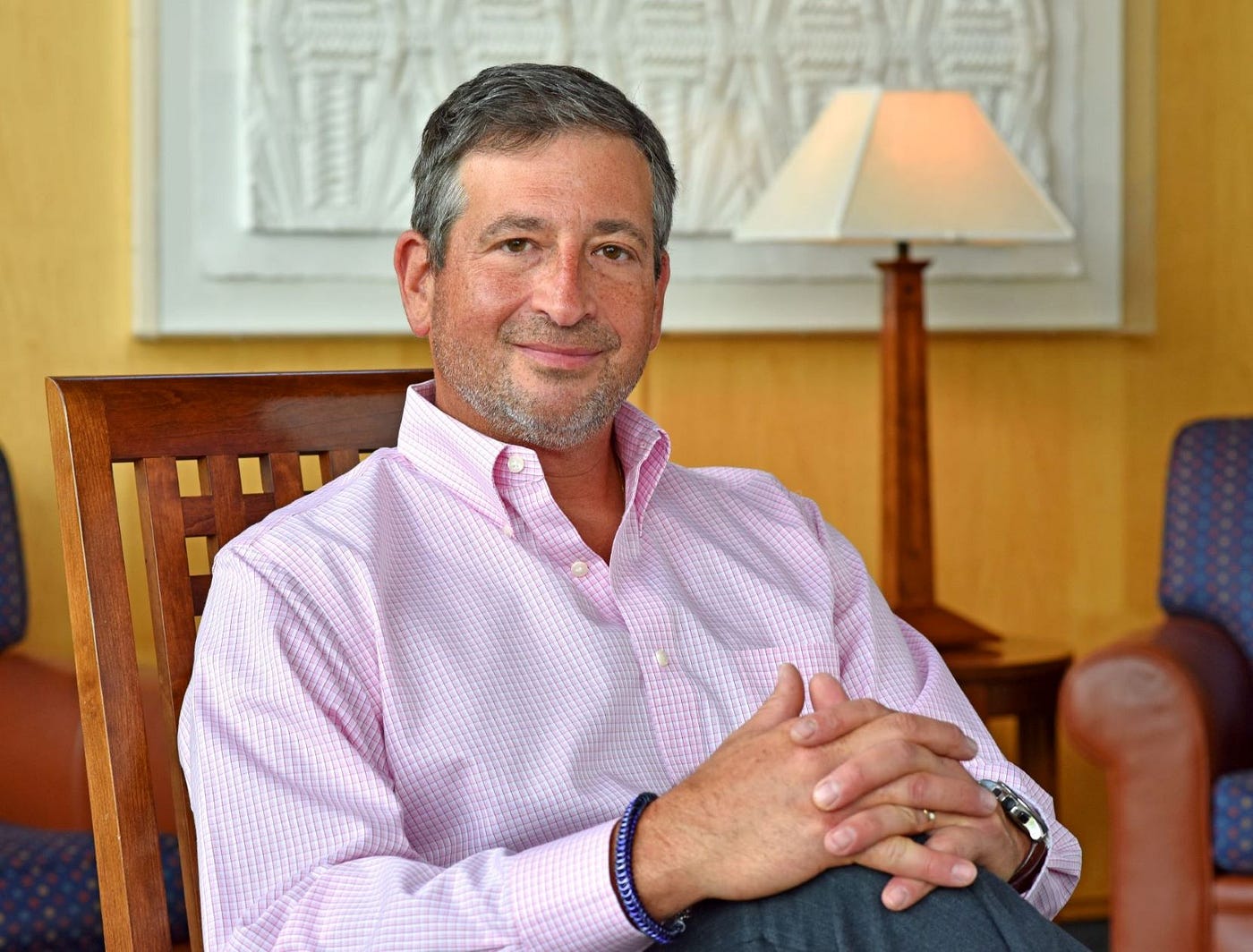
Cancer is a horrible and terrifying disease. Yet millions of people have beaten the odds and beat cancer. Authority Magazine started a new series called “I Survived Cancer and Here Is How I Did It”. In this interview series, we are talking to cancer survivors to share their stories, in order to offer hope and provide strength to people who are being impacted by cancer today. As a part of this interview series, I had the pleasure of interviewing Howard Katz.
Howard Katz is a nine-year survivor of Stage IV pancreatic cancer. Diagnosed at his community hospital, Katz received a poor prognosis, given the three percent five-year survival rate for those with his condition. Unwilling to accept his fate, he sought treatment at Karmanos Cancer Institute in Detroit, where he credits the life-saving clinical expertise and innovative treatments pioneered at NCI centers like Karmanos and the continuous emotional support provided by the Karmanos family as the reasons he’s alive today.
Thank you so much for joining us in this interview series! We really appreciate the courage it takes to publicly share your story. Before we start, our readers would love to “get to know you” a bit better. Can you tell us a bit about your background and your childhood backstory?
I grew up in a nice suburb of Boston, and had a typical, happy childhood. I played sports all through childhood and even continued playing hockey and lacrosse through college at Bates College in Lewiston, Maine.
I’ve always been a big fan of Boston sports teams, even though I’ve lived in Michigan for almost 20 years.
I came to Michigan because I was relocated for work. I’d spent 17 years in New England working in regional sales for Chrysler, but as the industry joke says, “if you rise high enough in the auto industry, your reward is a transfer to Detroit.” So, after more than two decades my family is still here and we love it.
I’ve been married to my best friend and love of my life for 36 years and we have two great daughters, ages 31 and 29. We moved here when they were 10 and 12 years old. It stings me a little bit that my kids consider themselves Michiganders, but we visit back home every summer. Travel is one of our passions and my career has provided the opportunity to travel extensively in the US and internationally.
I turned 60 in June.
Can you please give us your favorite “Life Lesson Quote”? Can you share how that was relevant to you in your life?
I have several, all attributed to my mother. We always joked in my family about “Nanna’s words of wisdom.” She had lots of little sayings, but one that I kept coming back to in my cancer fight was, “if you think you can’t, you’re right.” In other words, your attitude about any challenge is everything.
I’ve tried to share that lesson with my kids and to live by it. Mom also used to say, “I’ll tell you what you can’t do. Otherwise you give it your best.” Of course, I don’t remember her ever telling me there was something I couldn’t do.
In my life, as I’ve approached daunting or challenging situations, I always remember my mother’s mantra, that you can do anything you put your mind to and if you do your best, no one can ask for more. Whether it’s a career or personal challenge, attack it aggressively and do your best to succeed, keeping in mind that you define your own success. It’s not defined by other people.
Let’s now shift to the main part of our discussion about surviving cancer. Do you feel comfortable sharing with us the story surrounding how you found out that you had cancer?
My diagnosis was in July 2012. I was 51 years old. It was a pretty stressful time in my life. I had been recruited away from Chrysler to an executive position in Indiana, running sales and business development for a commercial truck manufacturer. My wife Cynthia and I were supposed to relocate there eventually. The girls were out of the house by then, so until we knew this job was a good long-term fit, and we could find a place we both wanted to live, I leased an apartment and drove the three hours down on Monday morning and back on Friday night.
I recall one Friday on my drive home from Indiana that I had a bad stomachache. I remember thinking I should go to the doctor. I thought I probably had an ulcer, which I didn’t consider too serious. With all the stress of the weekly commutes, the new job, living on my own, not eating very well, entertaining customers and clients until late at night — a lifestyle I had lived most of my working life — I assumed an ulcer was likely, but very treatable. I went to my primary care physician about a week later and he said, “you’re over 50 and you’ve never had a colonoscopy, Let’s start there.”
So, the colonoscopy was ordered, and an endoscopy quickly followed.
When the endoscopy results came back, they said they had found some “cancerous tendencies,” and referred me to a surgeon. This is where my denial began. Most people would have heard, “you have cancer,” but I never heard that. What I heard was, “we found something and now we need to go in and address it.”
I went to the surgeon, still not fully comprehending what was going on. My presurgical consult was with his physician assistant. She brought out a diagram of the digestive system and pointed out the pancreas and said, “the tumor is blocking the head of the pancreas and the bile ducts from your gallbladder.”
My wife had already understood it was pancreatic cancer, but not me. They said the goal of the surgery was to remove the tumor at the head of my pancreas. Up to this point nobody had used the term “pancreatic cancer.” What I heard was, “if we remove that tumor, you’re home free.” Today I’m sure that’s not what they said, but it’s what I heard.
The next step was the operation, called a Whipple procedure — a six to seven-hour surgery to remove the head of the pancreas, the first part of the small intestine, the gallbladder and bile duct. I had never had major surgery, only relatively minor surgeries on my ankle and rotator cuff, but nothing invasive like this. When they put me in the full body warming suit, I realized the seriousness of this procedure and my condition. Less than an hour into the surgery, the surgeon came out and told my wife he couldn’t continue the surgery because they found metastasis throughout my liver and spleen and there was no way surgically to remove all the tumors. He closed me up and referred me to an oncologist.
When I woke up, my wife was at my bedside by herself. I remember asking something like, “are we all set?”
That’s when she told me they couldn’t finish the surgery. She told me, “you have cancer, it’s in your pancreas, liver and spleen and they have to attack this medically.”
That was shocking, but I was still somewhat in denial. I thought, well, I’ll have more treatment and then I’ll be fine. It never occurred to me that I might die. I didn’t look at the internet, and I didn’t do a lot of research on pancreatic cancer because I knew it was very serious and I didn’t want to know the odds. Lots of famous people, like Steve Jobs and more recently, Alex Trebek, had this disease, both of whom passed away. It’s definitely not the cancer one would choose if they got to pick from a list.
What was the scariest part of that event? What did you think was the worst thing that could happen to you?
My recovery from surgery took a month, during which I started doing some research. The scariest part was finding out my cancer had a five percent survival rate. Dying was a very realistic possibility for people with my diagnosis.
We immediately started interviewing oncologists. I was unpleasantly shocked by my first experience. The oncologist came in with a resident and the resident did most of the talking while the oncologist sat back. He said “you’ve got a very serious cancer. We can treat it with chemotherapy, but you’re not a candidate for radiation because your tumors aren’t isolated. They’re spread out into multiple organs. But the outcome for this treatment is often uncertain.”
We didn’t like that answer. I had four weeks to recover from the surgery, and in that time, we decided to continue interviewing oncologists.
Although we’d lived in Michigan for 10 years, we have no family here, so we had no history of dealing with serious illness locally, and where to go for the best cancer treatment isn’t something you think about until you have to.
Through a friend of a friend we learned about Karmanos Cancer Institute in Detroit. I didn’t know at the time it was an NCI-Designated Cancer Center or even what that meant. We were able to get an appointment that week with an oncologist at the Institute. His comment to me was much more positive than my first experience. He said, “no question that with Stage IV disease your case is very serious, but you’re younger and stronger than most who get this diagnosis at a much later age. Therefore, we think you can handle a much more aggressive treatment regimen, which will give you the best possible chance for a successful outcome.”
And, right away, he started me on a very aggressive chemotherapy regimen of Folfurinox, a combination treatment of several chemotherapy drugs used for pancreatic and bowel cancers. The side effects are significant: nausea, weight loss, lack of appetite and the development of peripheral neuropathy. It’s supposed to be a 12-course regimen over multiple months, but I had treatment every two to three weeks. Each chemo treatment was an eight-hour infusion session. After about eight treatments I had lost almost 70 pounds and, I’ll be honest, I thought I was going to die of malnutrition before the cancer got me. I couldn’t eat, and anything I tried to force down passed through me. I was also freezing cold the whole time. I was in my bed 24–7 bundled up in fleeces, socks, hats and gloves, shivering, sweating and crawling to the bathroom. It was a miserable time, but I kept telling myself this (whatever I was dealing with at the moment) is the worst part of a terrible journey. If I can get through this minute, this hour, this day, there’s light at the end of the tunnel, and it isn’t necessarily a train.
After about half of the scheduled treatments I had an MRI, but it didn’t show that anything was really changing with my cancer. But my Karmanos team was never negative. I remember asking my oncologist, “if this doesn’t work, how long do I have?” He refused to answer that question because he said “there are no absolutes during treatment. Every patient is an individual and every case is different so quoting averages and statistics is neither accurate nor helpful.”
After eight treatments and months of hell, my oncologist was concerned about my declining health. He said it was time to consider my “quality of life”, and he recommended I stop the treatments. I responded, “quality of life and chemotherapy shouldn’t go in the same sentence, they cannot coexist.” I said I’d worry about “quality of life” after I finished the chemotherapy.
My impression at the time was that talk about quality of life was a euphemism for dying comfortably, and I wasn’t there yet. I considered discontinuing the treatment equivalent to giving up, and I wasn’t there yet either. However, after 10 chemo treatments, I was physically and emotionally beaten up to the point where I came to agree with him and said, “no mas.” I was exhausted and couldn’t afford any more weight loss. Dr. Philip explained that even if we discontinued active treatment, the Folfurinox was by now entrenched in my system and would continue to have an impact on my disease. He prescribed Xeloda, an oral chemotherapy that could continue to address the disease, but with less dramatic side effects.
However, about this time we started to see signs of hope. The latest scans showed some shrinkage in the tumors; it appeared that the chemo had started to work. In the scan after that, the tumors had shrunk dramatically. Most of the liver tumors had cleared completely and the tumor on my pancreas had shrunk considerably. After one more check, probably six months after Folfurinox treatment had stopped, I was tumor-free. I had gained 30 pounds back and was slowly starting to feel stronger. I remained on Xeloda for 18 months.
My biggest fear during all this was I was going to die from the treatment, not the cancer. I was losing weight and strength so quickly and had neuropathy. I couldn’t walk well, and I couldn’t pick things up, and even after treatment I was miserable. It was clear to me I was never going to be the same physically and mentally as I was before cancer, and that was daunting. Even today, after nine years, my recall isn’t what it used to be, and the neuropathy keeps my hands and feet numb, making walking and things requiring manual dexterity difficult, but I often say this condition is far better than the alternative. Any day you see the green side of the grass has the potential to be a good day so rather than dwelling on the residual effects of cancer treatments I’ve chosen to be grateful.
How did you react in the short term?
I was always thinking positively but was worried about what life would be like after this experience, even if my cancer was cured. Would I be permanently disabled? Would I be able to do the things I always loved to do? Would I be able to care for my family, financially, emotionally and physically?
These thoughts were scary. I had disability and life insurance policies that would take care of my family financially whether I survived or not, which was reassuring, but the harsh reality that this is what I had to think about was upsetting. I decided to try the best I could to push those thoughts aside and focus on the moment, not looking too far into the future.
After the dust settled, what coping mechanisms did you use? What did you do to cope physically, mentally, emotionally and spiritually?
During my treatment my goal was to maintain a positive attitude. I would not allow myself to believe I would be among the 95% who don’t survive pancreatic cancer. Admittedly, my rationale was convoluted, but there were several thoughts I tried to keep in my head in order to hold onto a positive outlook. They included:
- I’m not going to die. Dying is for other people. If 5% of patients with my disease do survive, why shouldn’t I be in the 5% rather than the 95%?”
- Statistics are not really numbers, they’re people. Statistics include the whole universe of those affected, and while they call attention to the majority — those who lost their battle — they also include the survivors. I’ll simply be a statistic who survived and not one who didn’t.
- I did the math in my head. Though it’s probably not very accurate, from statistics I had come across, I calculated that about 50,000 people are diagnosed with pancreatic cancer annually and 40,000 die from it annually. That leaves 10,000 survivors. How hard could it be to be one in 10,000? I’d spent my life competing to be number one, being number 9,999 didn’t sound too hard to achieve.
This was mentally, emotionally and, I think, physically therapeutic.
Also, counseling helped considerably. Not only for me but for my wife and my entire family. I do have faith, and I don’t discount its importance. Being Jewish, I talked to many people at my synagogue, and they provided much-needed emotional support for me. More importantly, they supported my family. I didn’t have to worry about anything. Through “Caring Community,” an active group at our temple, Temple Kol Ami in West Bloomfield, Michigan, individuals volunteered to prepare meals for the family, and brought them to our home daily for several months. They kept my wife engaged, relieving the constant weight of my situation.
I also want to credit Kathleen Hardy, an oncology social worker at Karmanos who worked with my family and me throughout my treatment and the months that followed. She shared perspectives that really helped put me on a path toward survival and recovery that would have been difficult without her help. She shared other survivor stories and constantly focused on the strength of my family and my amazing support system, and how I should draw inspiration from the sincere effort and caring of others. For so long I had been self-absorbed in my treatment and condition. Kathleen opened my eyes to all the wonderful things that were still around me, especially my family and all the people who were doing kind things to make our life easier.
Is there a particular person you are grateful towards who helped you learn to cope and heal? Can you share a story about that?
I’m lucky there were many people who helped me through this difficult experience. My wife Cynthia was my rock. She shows quiet strength and that’s motivating to me. She doesn’t dwell on any of the negatives. She just approaches everything on a day-to-day basis. Her attitude in dealing with adversity has always been, “this is what we have to face and we’re going to take it on and deal with it. It doesn’t help to get too dramatic or histrionic, just do what you have to do to deal with your problems and get through them.” As a software engineer, Cynthia is very calculating and direct. She looks at every challenge, big or small, and determines the best approach to address it successfully. In this way we complement each other very well. My wife is logical, organized and systematic, whereas I am emotional, dramatic, and creative.
Another key person was Kathleen, the social worker who helped me understand you get to choose how you approach challenges. You can make the choice to be positive versus negative, and you can choose to be around people who provide strength and empathy, versus the well-intentioned people who express sympathy. Sympathy from others is genuine, and you must appreciate the sincerity that accompanies it, but too much sympathy alone can validate feeling sorry for yourself. While everyone will have times they struggle with the “Why Me?” syndrome, ultimately it only leads you toward dwelling on your problems, and away from the positivity and inner strength you need to take them on.
I’m also incredibly grateful for my two daughters who gave me the inspiration to keep fighting. When I was diagnosed, my oldest daughter Sarah had just graduated college and started a new job in North Carolina. She made the incredibly unselfish choice to come home to support Cynthia and help focus on my care.
My younger daughter Emily was starting her junior year in college and was about to leave for six months in Thailand on a once-in-a lifetime study abroad program, living with native peoples, in the city, in the rainforest and on the coast, studying environmental sustainability and how the lifestyles of these diverse cultures impact it. Initially, Emily wanted to cancel her travel and stay home to support me and help Cynthia. It took some time, but ultimately, we convinced her it was more therapeutic for me to know she was having such an enriching experience and allowing my disease to rob her of this opportunity would be more distressing to me. We pointed out that we could be in touch through Skype daily and that she could be home in a day if the need arose. Her decision to go halfway around the world at a time when the family was facing cancer was so courageous, it actually inspired me. Through her experience abroad, she was able to look at the world differently and she taught me there are lots of different ways to cope with personal struggles and that the easiest choices are not always the best ones. That resonated with me and became a source of needed encouragement.
In my own cancer struggle, I sometimes used the idea of embodiment to help me cope. Let’s take a minute to look at cancer from an embodiment perspective. If your cancer had a message for you, what do you think it would want or say?
This is a tough one to answer, but I envision my cancer saying to me, “Hey you beat me. There aren’t many who do. I’m successful at what I do. I kill 95% of the people I engage with, but you beat me.”
It’s a strange way to think about it, but it’s one of my favorite takeaways. I won this battle.
What did you learn about yourself from this very difficult experience? How has cancer shaped your worldview? What has it taught you that you might never have considered before? Can you please explain with a story or example?
My journey has completely changed the way I look at the world. I’m a better person as a result of surviving cancer than I was before.
I think it’s because when you’re facing something you know will kill you if it “wins,” you’re able to see the things that are truly important. Those important things become obvious, as if they are in a spotlight, and the other things we all deal with — jobs, careers, finances — are relegated to the dark. While those “other things” can change your life, they don’t change what’s really important: family, friends and helping others the way others have helped you. My cancer caused me to turn the telescope around. Instead of looking through the end that magnifies your view, you look through the other end, which makes your field of vision much wider and objects you’re traditionally focused on much smaller, further away and less significant. I became aware of all the support I had, which I was oblivious to when I was focused on my old daily routine. When my battle was ongoing. I was singularly focused, but now I can look back and see how much I depended on others to survive.
How have you used your experience to bring goodness to the world?
I don’t take anything for granted. Today I appreciate the sun rising and the birds chirping. I always thought that kind of thing was too touchy-feely, but now I appreciate people with a mindset that values “the little things.” Over time, careers and daily problems take over and it’s easy to lose focus on what’s truly important; not you, but others, and helping people who face struggles. I don’t know if you could say I’ve brought goodness to the world but personally, this journey has led me to truly living in the present and being attentive to the important things around us.
When I had cancer, I didn’t like it when people told me, “Live in the now and focus on getting to tomorrow.” I didn’t want to live for tomorrow. I wanted to live for the future. That way I could look forward to my long, happy life without the struggles of cancer. I was only half right. In battling to survive, the strategy of short-term focus, going back to the idea of getting through this minute, this hour, this day, is very powerful, because each day you can survive gets you closer to the “light at the end of the tunnel,” which represented for me emerging from the darkness of cancer back into the light where you can enjoy “quality of life.”
Today I sit on the Karmanos Cancer Institute’s Patient and Family Advisory Council (PFAC), to help current cancer patients and their caregivers by providing the best possible environment for them to manage their personal battles. I also volunteered in the Karmanos Infusion Center. I’m not a formal counselor, but I have gotten strength from talking to people who are facing similar struggles to what I faced. Because I’ve been there and I understand what they’re going through I think I can appreciate their fears, concerns and challenges, and I can provide a different type of empathy by recounting some of the strategies that helped me when I was facing what these people are dealing with right now. It is very gratifying.
What are a few of the biggest misconceptions and myths out there about fighting cancer that you would like to dispel?
Survivability for pancreatic cancer is improving. I’m living proof that the perception of pancreatic cancer as a definite death sentence needs to be dispelled. When I talk to current patients, I want to tell them to hold on to hope and never give up. Another misconception about fighting cancer is that good medicine is the exclusive path to survival. It’s a necessary component of the “Survival Plan”, but it’s not the only component. Positive attitude, the sincere feeling that you can and will defeat cancer, is as necessary a component to survival as the medicine.
Another misconception is that you’re in the battle with cancer by yourself, even though there may be many people caring and wanting to help. This is not true. If you can figure out how to take the genuine caring and help that other people want to give, you can turn that into a powerful tool to bolster your own strength and your ability to continue a long and exhausting fight. When I talk to patients and caregivers, I want to provide hope, but I’m straight with people. There’s no guarantee that believing you will survive means you will, but I am convinced if you believe you’re not going to make it, you’re right, and if you believe you will make it, you give yourself a much better chance.
Fantastic. Here is the main question of our interview. Based on your experiences and knowledge, what advice would you give to others who have recently been diagnosed with cancer? What are your “5 Things You Need To Beat Cancer? Please share a story or example for each.
- Attitude: If you think you can’t, you’ll always be right. It goes for battling cancer, too. Adopting as positive an attitude as possible will increase your chances for a better outcome.
- Accept help, and appreciate it, wherever it may come from: As badly as you’re feeling, make the effort to see, appreciate and acknowledge the kindness and good intentions of all those who send good wishes or express the desire to help. Just being aware of all the support you have can bolster your strength.
- Specialized treatment: Find the best treatment you can from the best medical resources available. Go to a provider that specializes in cancer exclusively, ideally an NCI designated cancer hospital. Also, find an oncologist that specializes in your type of cancer. At NCI-designated cancer centers you will find the most specialists, the best research, the most clinical trials, and the greatest variety of alternative therapies as well as emotional support.
- Take a holistic approach: Not just to cancer but to life: emotional, spiritual and physical. Try anything and everything to address your cancer and the side effects of your treatment. You have nothing to lose and everything to gain. I opened myself up to trying anything — acupuncture, massage and reiki treatments, music therapy, art therapy, mindfulness training, counseling, support groups — I was there. I’ve even become close friends with several of the men in my support group who are either survivors or still actively in treatment. My wife also goes to a Karmanos support group specifically for spouses and caregivers. At Karmanos, once you’re a patient, you’re always a patient. Nine years from my initial diagnosis and I’m still going to art therapy classes and support groups there.
- Find strength in winning small battles: When you’re at a low point, focus not on your survival but on winning the little battles in your treatment and recovery. Finding the strength to get yourself through the next hour or day or week can be uplifting when you accomplish it. For a longer-term approach focus on how you’re going to give back once you get through your battle. I motivated myself by looking forward to helping others. I remember thinking, “once I beat this, I’m going to help other people figure out how to beat cancer.” I’ll never give back as much as I’ve received, but I can try.
You are a person of great influence. If you could inspire a movement that would bring the most amount of good to the greatest amount of people, what would that be?
To give back. I had to stop working at 51, long before I was ready.
Once I recovered from cancer I was left with a huge hole in time and my self-worth suffered. I looked for things I could do to give back. I volunteer with Karmanos on the PFAC, and I talk with cancer patients and their families. I volunteer at my Temple because of all the support members of the congregation provided my family and me. I work on food insecurity by driving a truck to pick up food from retail locations like supermarkets and wholesale clubs where it’s not going to be used, and redistributing it to food pantries, homeless shelters and neighborhood food banks where it’s desperately needed and guaranteed to be used and not thrown away.
I’m not so concerned with starting a movement, but if I can help just a few people to believe they can overcome things that are overwhelming, be it cancer, hunger or anything needing people’s time and attention, I am helping change the world.
We are very blessed that some very prominent names in Business, VC funding, Sports and Entertainment read this column. Is there a person in the world, or in the US with whom you would love to have a private breakfast or lunch, and why? He or she might just see this if we tag them. :-)
There is no one person. I’m interested in meeting anyone who can help make things better because I want to support and learn from them. I just want to be a part of positive change. I would love to meet and learn from anyone who espouses those things.
How can our readers further follow your work online?
I’m just a very lucky guy who survived cancer. I don’t have a website and I’m not on Twitter, though I do have a Facebook page and an Instagram account, which I almost never check. And besides, with my chemo-brain, I can never remember my usernames or passwords anyway.
Thank you so much for sharing these important insights. We wish you continued success and good health!
SP
Written by
Savio P. Clemente
Editor & Journalist · Authority MagazineSavio P. Clemente is a senior columnist at Authority Magazine covering Tech and Wellness, conducting primary-source Q&A interviews with founders, executives, and industry leaders.

Published inAuthority MagazineTop Lessons, Top Authorities · 42K Followers
Exclusive, curated interviews with the leaders and changemakers shaping tomorrow. Leadership lessons, industry deep dives, and executive profiles.