I certainly didn’t have a master plan. I had a keyboard, songs, an enormous amount of determination and probably a somewhat unreasonable belief that I could build a career one listener at a time.
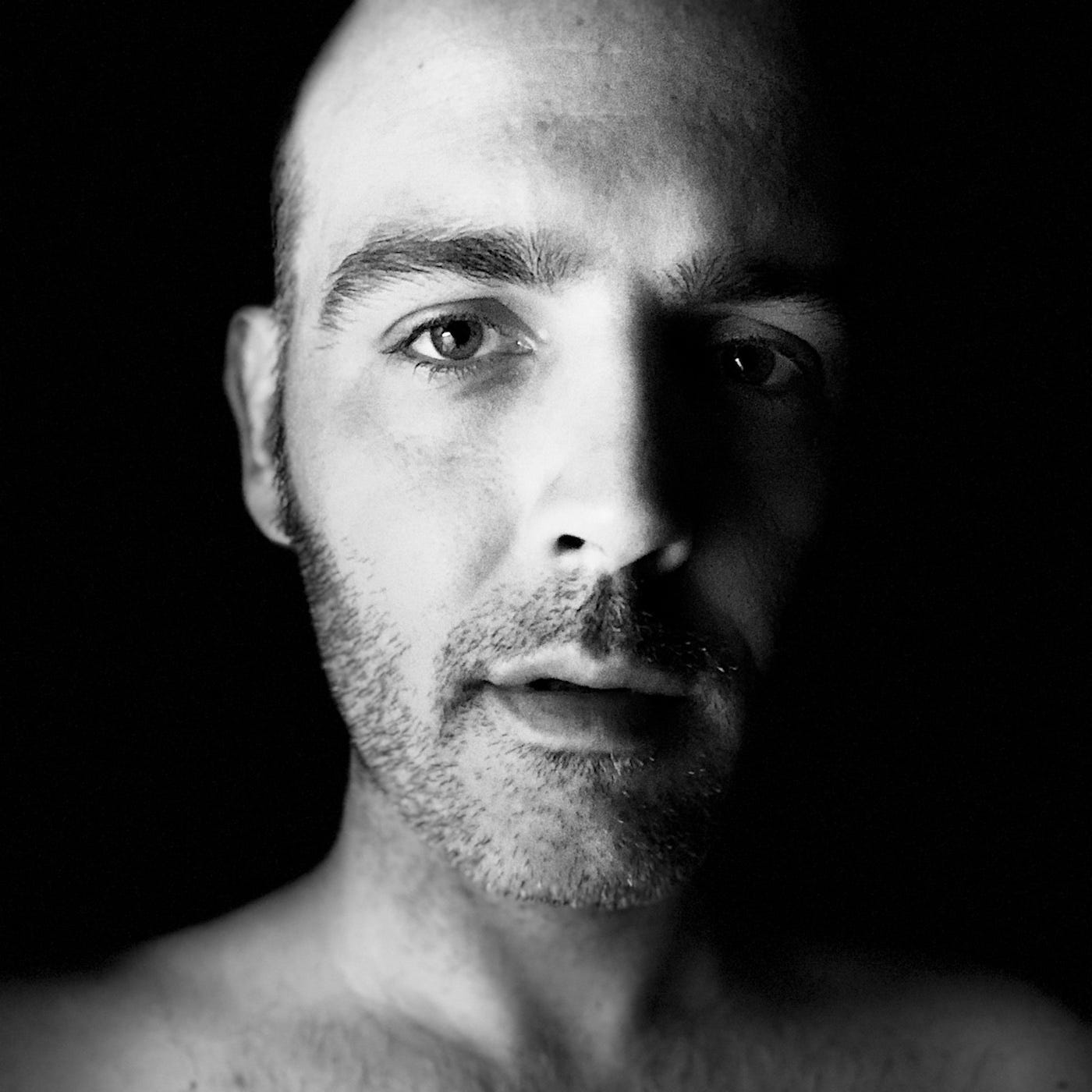
As a part of this series, we had the pleasure to interview Gregory Douglass.
Over the course of a 25-year career, Douglass has independently released ten studio albums, collaborated with international producers, and shared stages with artists including Grace Potter, Jason Mraz, Regina Spektor, Patty Griffin, They Might Be Giants, and fellow Vermont collaborator Anaïs Mitchell (Hadestown). In 2019, his song “Alibis” appeared in the Netflix series The Rain, quietly introducing his music to a growing international audience. And yet the deeper story of Gregory Douglass isn’t about success or obscurity. It’s about endurance. His forthcoming eleventh album marks Douglass’ first major body of original work in nearly a decade, and it arrives not as a comeback record but as something far more vulnerable: a sort of reckoning. Built around piano, voice, strings, and bass, AMATEUR strips away the gloss of modern production to focus on the emotional core of the songwriting. The result is a deeply intimate chamber-pop album that explores queer identity, open relationships, childhood memory, artistic survival, and the complicated process of learning to love oneself again. Much of the album was shaped by Douglass’ life over the past several years living in Palm Springs, California — a place where queer culture, sexuality, and community coexist in ways that forced him to confront long-held ideas about love, shame, and authenticity.
Thank you so much for joining us in this interview series! Before we dive in, our readers would love to learn a bit about your “origin story”. Can you tell us the story of how you grew up?
I grew up in Vermont, which in retrospect was a pretty wonderful place to become a songwriter. There was enough quiet and isolation for imagination to become important, and later there was this incredibly fertile music community around Burlington where being an independent artist didn’t seem like such an impossible idea.
I was a very emotional and imaginative kid, and music became one of the first places where all of that intensity could go. I developed this private relationship with the piano where feelings I couldn’t necessarily explain in conversation suddenly made sense when I turned them into melodies.
I wrote and released my first album, If I Were A Man, when I was seventeen. By the time I finished high school, I already had this idea that I wanted to make records and get on the road rather than wait for somebody in the music industry to give me permission.
That stubborn independence became the foundation of everything that followed. I certainly didn’t have a master plan. I had a keyboard, songs, an enormous amount of determination and probably a somewhat unreasonable belief that I could build a career one listener at a time.
Somehow, that became eleven albums and more than 25 years of making music.
What inspired you to pursue a career in music, and how did your journey begin?
The songs really came before the career.
I didn’t initially sit down and decide I wanted to enter the music business. I discovered that songwriting gave me a language for things I didn’t know how to say otherwise. Once I experienced that, I wanted to keep following it.
I’m largely self-taught, and melody has always been my entry point. I would sit at the piano and something would emerge that seemed to know more than I did. Even now, I often feel like the melody is telling me what the song wants to become.
After high school, I essentially started building a career the old-fashioned independent way. I released my own records, loaded a keyboard and whatever else I needed into my car, drove from state to state, played coffeehouses, listening rooms, colleges, house concerts — anywhere somebody would let me play — and sold CDs afterward.
There was no algorithm helping anybody discover me. It was remarkably literal: play for thirty people, connect with five of them, hope two bring friends next time.
It was exhausting, incredibly formative, and probably the best education in being an artist I could have received.
Can you tell us the most interesting story that happened to you since you began your career?
One of the strangest lessons of my career is that you have almost no control over when a song’s story is finished.
My song “Alibis” was already 14 years old when it was placed in the first season of the Netflix series The Rain in 2019. Suddenly this song I had written in an entirely different chapter of my life was reaching people around the world and introducing my music to this growing international audience.
That fascinated me because artists spend so much energy trying to engineer the moment when something is supposed to happen. You release the record, promote it, tour it, and eventually assume that its opportunity window has closed. Then something completely unexpected can give a song another life.
I was reminded of that again recently when someone recognized me in an airport and told me how meaningful one of my records had been during a particular period of their life. That interaction probably meant more to me than a streaming statistic ever could. You really don’t know where a song is going once you release it into the world.
It has been said that sometimes our mistakes can be our greatest teachers. Can you share a story about the funniest mistake you made when you were first starting? Can you tell us what lesson you learned from that?
So many crazy stories come to mind, but the recurring lesson was when I first started touring, I would drive ridiculous distances because somebody had offered me a gig and therefore, in my mind, something important might happen there.
Sometimes that “important opportunity” turned out to be a college cafeteria at noon, under fluorescent lighting, while students walked past me carrying trays of food. I would have driven six hours with a keyboard in the car thinking, “This could be the one!”
My name was frequently misspelled on the promotional material too, which added another layer of glamour. To be fair, sometimes even those strange little gigs resulted in meaningful connections or enough CD sales to make the day worthwhile. But eventually I learned that being ambitious doesn’t require saying yes to everything.
Your time, energy and attention are resources. That lesson took me a very long time to learn — and I’m still occasionally learning it.
None of us are able to achieve success without some help along the way. Is there a particular person who you are grateful towards who helped get you to where you are? Can you share a story about that?
There have been hundreds of people who made this career possible — fans who hosted house concerts, bought records, backed Kickstarter campaigns, became Patreon patrons and offered me a place to sleep when I was touring through their city.
But if I’m thinking about the person who has most profoundly shaped the life I have now, it’s my husband, Glen. He met me during a period when music still occupied almost everything. I was touring constantly and carrying this underlying fear that if I stopped pushing, the entire career might disappear.
Building a life with him gradually helped me understand that my career and my identity didn’t have to be the same thing. That sounds simple, but it changed me enormously.
Eventually I stepped away from relentless touring and built a much bigger life around the music — a marriage, a home in Palm Springs, friendships, community, other creative work. The irony is that having music occupy less of my life professionally eventually allowed it to enter a deeper place emotionally.
That is a huge part of why AMATEUR exists. Glen was a fan first — and he’s still a fan today :)
What are some of the most interesting or exciting projects you are working on now?
The biggest one is my eleventh studio album, AMATEUR, which arrives November 13. It’s my first major body of original work in more than a decade, and it feels very different from anything I’ve made before. The production is intentionally restrained — primarily piano, voice, strings and bass — while the songs explore queer adulthood, marriage, desire, sexual freedom, fantasy, shame, childhood, friendship, grief and self-forgiveness.
Three songs from this chapter are already out: “Bespoke,” my interpretation of Tori Amos’ “Tear In Your Hand,” and “This Dream.”
I’m also currently performing a small series of intimate album-release shows here in Palm Springs rather than immediately launching a traditional national tour. At this point in my life, I’m more interested in creating special live experiences than automatically climbing back into the touring machinery simply because that’s what an album release is supposed to require.
There’s also a limited double-vinyl edition of AMATEUR, which is very exciting for someone who came of age believing albums were complete worlds you could actually hold in your hands.
And I’m looking forward to connecting with the world in all sorts of ways throughout 2027 with this new material.
We are very interested in diversity in the entertainment industry. Can you share three reasons with our readers about why you think it’s important to have diversity represented in music, film, and television? How can that potentially affect our culture?
Representation matters to me for at least three reasons…
First, people need to recognize themselves in culture. Growing up queer, so much of what I absorbed about relationships, adulthood and sexuality came from stories that weren’t actually written with people like me in mind. Seeing your own life reflected with complexity can be incredibly validating.
Second, representation expands everybody’s imagination — not only the people being represented. The more kinds of lives we encounter through music, television, film and literature, the harder it becomes to believe that our own experience is the only legitimate way to be human. Art can create empathy before politics ever enters the conversation.
And third, diversity simply produces better art. If the same kinds of people are repeatedly given the microphone, we keep recycling the same assumptions and stories. Different backgrounds, identities and experiences give us different questions to ask.
I’m particularly interested now in representations of queer adulthood that move beyond coming-out narratives. What happens afterward? Marriage, aging, sex, chosen family, parenting, grief, friendship, open relationships, career, community — queer people deserve the same messy, complicated adulthood everybody else gets to have on screen.
As a successful music star, you’ve likely faced challenges along the way. How do you stay motivated? How do you overcome obstacles in your career?
My relationship to motivation has changed dramatically. For years, ambition was my fuel. I was always thinking about the next record, tour, audience milestone or breakthrough. Ambition can be a wonderful engine, but it can also quietly become an editor sitting in the room with you. Eventually I realized I couldn’t build an entire life around waiting for my career to arrive somewhere and tell me that I mattered.
What motivates me now is curiosity and possibility. Can I make something that surprises me? Is there a feeling I still don’t understand? Can I write something honest enough that somebody else recognizes themselves inside it?
I also try not to interpret every obstacle as a verdict. The music business is filled with rejection, timing, algorithms, economics and circumstances that have absolutely nothing to do with whether the work itself has value. That distinction has probably preserved my sanity more than anything.
The younger version of me was constantly asking, “Where is this going?” Now I’m much more interested in asking, “Is this true?”
What are your “5 things I wish someone told me when I first started” and why? Please share a story or example for each.
1. You do not need to prove that you belong here.
I spent an enormous amount of my younger career looking for some external moment that would confirm I was officially a legitimate artist — the right review, the right tour, the right industry person, the right sales number. There is no certificate. The work counts while you’re making it. The thirty-person show counts. The person who tells you fifteen years later that your album helped them survive something counts. I wish I had understood that much sooner.
2. Not every opportunity deserves a yes.
Early in my career, somebody could say “exposure” and I would practically have the keyboard loaded into the car before they finished the sentence. Some of those experiences were wonderful. Some were as humiliating as it gets. Being hardworking and being indiscriminate are not the same thing. The longer you do this, the more important it becomes to understand where your energy actually belongs.
3. Build relationships with listeners, not platforms.
When I started, there was no Spotify, Instagram or TikTok. I built an audience by touring, playing house concerts, collecting email addresses, selling records directly and actually knowing many of the people supporting the music. Platforms will always change. That direct relationship is still the most valuable thing an independent artist can have. I don’t want to make songs because the internet needs content on Tuesday. I want the internet to help the right person find a song they might need on Tuesday.
4. Your career cannot be responsible for telling you who you are.
This may have been the hardest lesson. When music was my entire identity, every disappointment felt existential. If the career wasn’t working, what did that say about me? Building a marriage, friendships, community and other creative work eventually gave music a healthier place in my life. Ironically, having a life bigger than my career made me a more honest artist.
5. You are allowed to change your definition of success.
At twenty-five, success looked like relentless growth: bigger audiences, more touring, more recognition. Now success feels much more purpose-driven. Can I make meaningful work? Can I remain curious? Can the music reach someone who needs it? Can I still have a marriage, friendships, community and an actual life around the work? I’m much more interested in longevity than arrival now.
Can you share some insights into your creative process? How do you approach songwriting? How do you approach musical collaborations?
Melody almost always comes first for me. I’m an intuitive songwriter. I usually sit at the piano without knowing exactly what I’m looking for, and eventually a melodic idea appears that feels emotionally charged. Then I follow it.
I often feel that the melody understands the song before I do. Certain words, images or vowel sounds begin attaching themselves to it, and eventually I discover what the song has been trying to say. I am a vessel (as many have said before me), and I just let the song be what it wants to be.
I rarely write because I’ve already resolved something. I write because something is unresolved and I need somewhere to put it. That’s why songwriting can become a kind of excavation, and why it is pure therapy for so many artists.
Collaboration is different because it requires surrendering some control, which I’ve learned to appreciate. I’ve sung and written with electronic artists, worked closely with string players and musicians, and collaborated across genres. The best collaborations happen when everybody brings something the other person couldn’t have created alone.
Your music has resonated with so many fans worldwide. What do you believe sets your music apart?
I think emotional specificity has always been at the center of what I do. I love melody, musical drama and beautiful arrangements, but I’m primarily interested in complicated feelings — the ones that don’t reduce neatly into heroes, villains or tidy conclusions.
My voice is also a big part of the storytelling. I’ve never been particularly interested in auto-tuning something perfectly just because perfection is available. Phrasing, breath, tension, restraint — sometimes the fracture in a voice communicates more than the technically flawless note.
With AMATEUR, that philosophy became even more deliberate. At a moment when technology can generate and manipulate almost anything, I became increasingly interested in protecting the evidence of humanity inside the music. If somebody leaves one of my songs feeling a little more understood, comforted, challenged or less stuck inside whatever they’re going through, that matters enormously to me.
How do you connect with your audience?
Connection has always been the foundation of my career. For years it happened very literally through touring and house concerts. I might perform in somebody’s living room, meet everyone afterward, sleep in the guest room and then see half of those people again the next time I came through town.
There was something wonderfully human about that model. Today the tools are obviously different. I stay connected through social media, email, Patreon, live shows and sharing more of the creative process around the music. But I try to remember that there is a human being on the other side of all those numbers.
Streaming has made music incredibly accessible, which is wonderful, but an artist can look at a dashboard containing thousands of listeners and somehow feel more disconnected than when thirty people were sitting in front of them at a house concert. I’m always trying to preserve the human relationship underneath the technology.
With your busy schedule, how do you prioritize self-care and maintain a balance between your personal life and career in the music industry?
By finally accepting that balance isn’t something you earn after the career becomes successful enough. For a long time I assumed I could rest later. I could have a fuller personal life later. I could stop touring so relentlessly later.
“Later” is a dangerous concept. These days, my marriage and personal life are not the things I fit around my career. They are the life the career exists inside. Living in Palm Springs has helped enormously with that. I have community here. I love cooking, wine, spending time with friends, creating things that have nothing to do with my music career and simply being home.
I also tour much more selectively. There was a time when saying no to a six-week tour would have terrified me because I would have wondered what opportunity I was losing. Now I also ask what I’m protecting. That question is just as important.
You are a person of enormous influence. If you could inspire a movement that would bring the most amount of good to the most amount of people, what would that be? You never know what your idea can trigger. :-)
We are living through a moment where everybody is rewarded for having an immediate opinion about everything. Certainty performs extremely well online. Outrage performs even better. I would love to make curiosity fashionable again. Before deciding that another person is wrong, dangerous, immoral or incomprehensible, ask one more question. That doesn’t mean abandoning boundaries or pretending every idea deserves equal legitimacy. It means resisting the urge to flatten complicated human beings into categories.
As a queer person, I know how powerful it can be when somebody becomes curious enough to actually listen to a life they don’t understand. And as a songwriter, curiosity is everything.
Is there a person in the world, or in the US whom you would love to have a private breakfast or lunch with, and why? He or she might just see this, especially if we tag them. :-)
Tori Amos. Her music entered my life at exactly the right time and fundamentally expanded my understanding of what songwriting could be. She demonstrated that the piano could be visceral, sensual, strange and confrontational — that a song could operate through mythology, imagery and emotional instinct without explaining itself to death.
I’ve just released my own interpretation of “Tear In Your Hand,” which is the first Tori song I’ve ever officially recorded despite her being one of my most important influences.
I’d love to have lunch with her and talk less about “the music business” and more about the mysterious parts of life. And if Tori Amos ever invites me to breakfast, I feel like I should probably clear the entire day!
How can our readers continue to follow your work online?
The easiest place to find everything is my Linktree: https://linktr.ee/gregorydouglass
That connects to my music, videos, social platforms, upcoming shows and everything surrounding AMATEUR.
The full album arrives November 13, and “Bespoke,” “Tear In Your Hand” and “This Dream” are available now wherever you listen to music.
This was very meaningful, thank you so much! We wish you continued success!
Thank you so much for giving me the space to tell this much of the story. After more than 25 years of making music, I’m still amazed that there are new chapters to write — and new questions to ask. That’s really what AMATEUR has come to mean to me. I’m not starting over. I’m returning to the reason I started in the first place, with a lot more life behind me and much less to prove. The beauty and heartbreak is that we’re always still becoming.
About The Interviewer: Tavares Beverly ( www.tavaresbeverly.com ) is the Founder and CEO of Beverly Boy Productions, a national video production company that has helped organizations tell their stories through video for more than two decades. Over the course of his career, he has worked with everyone from Fortune 500 executives and healthcare professionals to politicians, nonprofit leaders, educators, and artists, gaining a unique perspective on the role communication plays in leadership, business, and human connection. A frequent contributor on topics including communication, entrepreneurship, leadership, and personal development, Tavares believes that the ability to communicate effectively is one of the most valuable skills a person can develop. His work is driven by a passion for helping organizations connect with their audiences and helping individuals unlock their potential through mentorship, perseverance, and meaningful relationships. To learn more, connect with Tavares on LinkedIn or visit www.BeverlyBoy.com . If you’re interested in using the power of storytelling and communication to grow your organization, strengthen your brand, or inspire your audience, he welcomes the opportunity to connect.