We are both facing a very complex system. I met Professor O’Reilly, an expert in organizational behavior, during a summer I spent at Stanford.
Business
Erik Janssen of UCB: How Digital Transformation Can Relieve the Daily Burden of Chronic Diseases
Erik Janssen of UCB shares how digital transformation and patient-centric technologies are revolutionizing healthcare and improving lives for people living with chronic conditions.

As part of our series about “How To Use Digital Transformation To Take Your Company To The Next Level”, I had the pleasure of interviewing Erik Janssen.
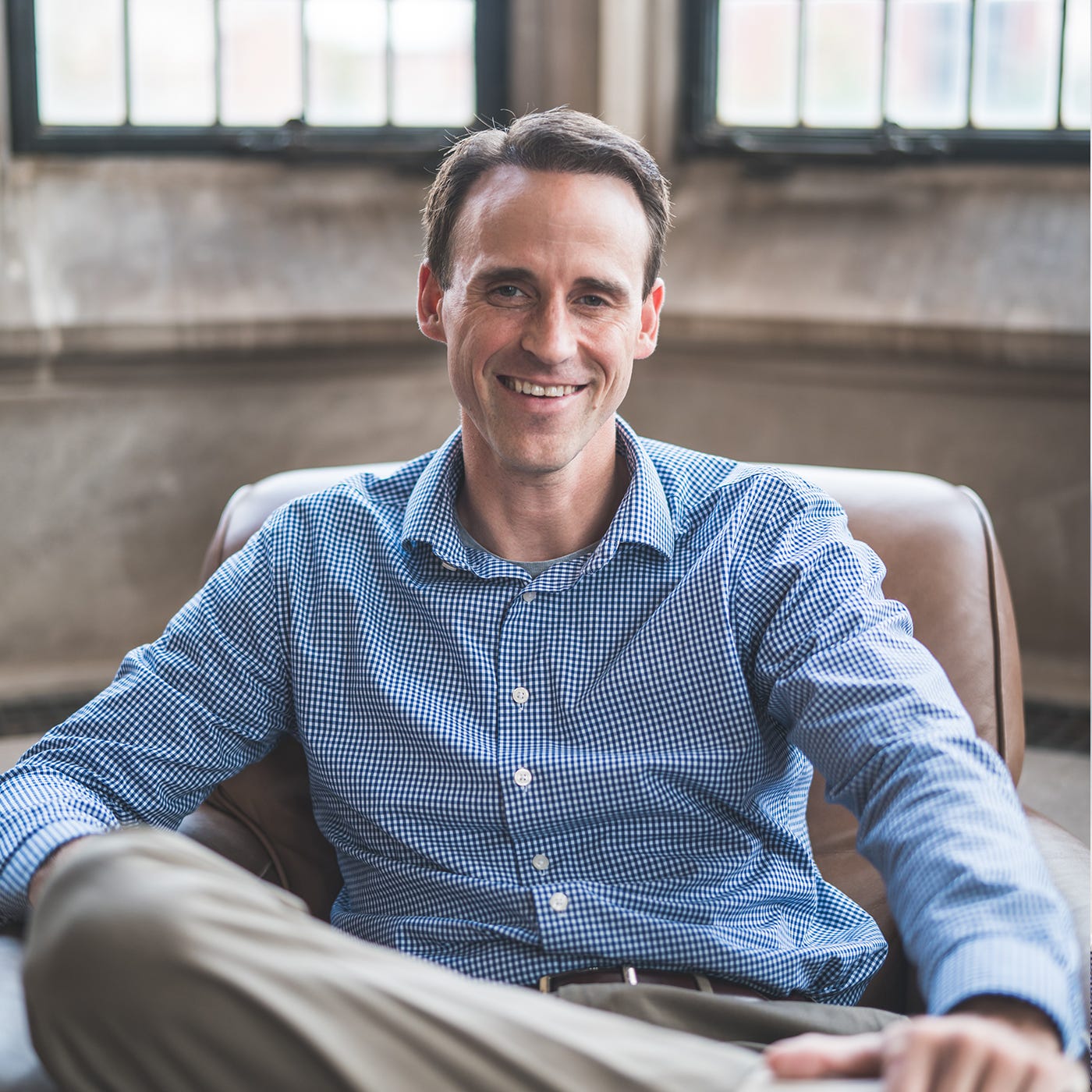
Erik Janssen leads an international team whose focus is on investigating technology solutions with potential to make a meaningful difference to the lives of people living with severe diseases including UCB’s efforts to find partners who can make technology and data a more common part of health care for patients with chronic neurodegenerative diseases, such as epilepsy, Parkinson’s, and Alzheimer’s. In his 25-year-long career, Erik has worked in the commercial, life cycle and value chain spaces at companies including Searle-Monsanto, Pharmacia, Aventis and Sanofi-Aventis. Erik earned his PhD in chemistry at the Catholic University of Leuven.
Thank you so much for joining us in this interview series. Before we dive in, our readers would love to “get to know you” a bit better. Can you tell us a bit about your ‘backstory’ and how you got started?
I’m a scientist by training and received my PhD in chemistry. I started my work in the pharmaceutical industry — dare I say — 25 years ago! But every day feels like the first day.
I’ve worked in a number of different spaces including commercial, life cycle teams and throughout the whole value chain.
Currently, I lead UCB’s Digital Business Transformation team for Immunology. The origin of this work stems from applying digital technologies to serve patients better and to relieve them from the daily burden of living with chronic diseases. Through that lens, I am passionate in exploring how we can use data and technology to bring patients solutions that can transform how care is delivered.
For example, UCB is a leader in epilepsy, and although we provide treatments for patients, we have seen so many areas where we could improve the care a patient receives through deeper understanding. In epilepsy, the unpredictability of seizures is a huge burden for people living with the condition, and through our digital care transformation, we want to find additional solutions to help them live their lives to the fullest.
Can you share a story about the funniest mistake you made when you were first starting? Can you tell us what lessons or takeaways you learned from that?
In the past few years, we’ve seen a shift from the outbound approach of digital transformation to a more inbound model where the organization is moving towards having centers of excellence and digital capabilities. Having said this, I remember this one point in time when we were out there pitching about innovation models and patient-centricity and we talked about our design thinking team and how it helped us take a human-centered approach to the innovation process.
At a certain point, we’ve had a raised hand in the audience who made a remark along these lines: “We are not a creative agency. Do we have headcounts for building a team of graphic designers? Aren’t we better off outsourcing these capabilities?”
Looking in retrospect this might be an anecdote, but trust me, we did not feel like laughing at it back then. And to your second question, I must say this mishap has served as a great reminder of the importance of bringing the people onto the ship before sailing off. And this was evidence that aligning on basic principles and a common vocabulary is an essential element of our transformation journey. It moves the people along with us.
None of us are able to achieve success without some help along the way. Is there a particular person who you are grateful towards who helped get you to where you are? Can you share a story?
There are so many people that have inspired me and whose mentorship and work have been motivational. Two people who come to mind who have influenced the way I approach my work are Sean Duffy, the CEO of Omada Health, and Professor Charles O’Reilly from Stanford University.
I was able to connect with Sean and spend time hearing about his experience building and growing his company during a recent JP Morgan annual meeting. In speaking with Sean, I was able to see digital transformation through a startup lens and noticed that his company’s challenges are similar to those we’re seeing at UCB. We are both facing a very complex system.
I met Professor O’Reilly, an expert in organizational behavior, during a summer I spent at Stanford. His research focuses on strategy, leadership and organizational innovation, and change. Learning from him on how to create organizational change in culture, and how you need to set up innovation, has for me contributed to the success of UCB and our ambition to infuse a digital mindset within our organization.
Is there a particular book, podcast, or film that made a significant impact on you? Can you share a story or explain why it resonated with you so much?
I’m an avid reader and have been able to learn so much from a number of different mediums by pulling inspiration from books and podcasts to drive my interest in healthcare innovation. There are many good books on innovation, but the one that is critical in my opinion is The Innovator’s Dilemma by Clayton M. Christensen. In this book, he describes why leading companies fail at innovation due to focusing on efficiency over imagination and examines the dynamics at companies that have dealt with these challenges.
I think there is merit in both efficiency and imagination, and this book resonates with me because I have experienced this dilemma myself. Sometimes we should develop new platforms or initiatives instead of trying to improve existing programs.
Extensive research suggests that “purpose driven businesses” are more successful in many areas. When your company started, what was its vision, what was its purpose?
At UCB, our guiding principle is delivering value to the patients, who are at the core of all we do. For us, this means that we must amplify the power of scientific innovation through digital transformation to create sustainable value, ensuring that patients can live the lives they choose.
Are you working on any new, exciting projects now? How do you think that might help people?
Our digital portfolio includes 10 transformational projects within neurology and immunology. Within the portfolio, we are using digital technologies to create new — or modify existing — business processes, culture and customer experiences to meet changing business and market requirements.
The most recent project UCB invested in is the launch of a new, independent digital health company created to improve care for people living with epilepsy. The company, called Nile AI, Inc., was founded with a clear mission in mind: to make the journey of every epilepsy patient predictable. Nile aims to improve the interaction between physicians and patients to optimize care delivery and is the first company of its kind in this space.
For our immunology projects, we’re focused on people living with rheumatological and dermatological conditions, as well as osteoporosis. What we’ve seen in our work within these disease areas is that early identification and diagnosis of patients is a huge hurdle. For example, axial spondyloarthritis is a chronic, inflammatory rheumatic disease that affects the axial skeleton, and causes severe pain, stiffness and fatigue. In our experience, we’ve seen it can take up to nine years until people are properly diagnosed and treated for the condition. We are working on a project that helps to solve challenges in the early identification and fast diagnosis of axial spondyloarthritis. We believe that working to develop digital solutions alone or with partners in this particular area is where we can make a great impact for patients.
Another project in our portfolio is a care coach called My Jasmine, which includes a screening algorithm where patients log in to the program and see a questionnaire about their disease, social context, and personality. Through this screening process, we’re able to identify the true unmet needs that a patient with a rheumatological condition faces and tie them to another solution. We see My Jasmine as a broker of unmet needs and care solutions.
Digital solutions are all anchored in an ability to address an unmet need. Everything that we do as a company is built on a high unmet need either from the patient, physician, or within the healthcare system. We take on problems that we believe we can help solve as a company and with our trusted partners.
For the benefit of our readers, can you help explain what exactly Digital Transformation means? On a practical level what does it look like to engage in a Digital Transformation?
UCB is going through a full-scale digital business transformation. It includes digitalization of our core business to establish news ways of working that are simpler and more efficient. It also includes digital transformation, which is what my team is focused on. Across all of these projects, we’re going through a digital care transformation. Applying technologies to transform care.
We define digital transformation as embracing digital to augment the way we deliver value to patients. My team, in particular, is looking to the future of healthcare including how consumer needs are changing, how care is being provided and how digital and technologies can play a role to improve patient care.
As a company, we have embarked on transformative initiatives to seamlessly integrate technologies that can keep us more connected to peers, partners and the patients we serve — and which open our eyes to new possibilities and approaches to living our mission. When coupled with the passion, knowledge and drive that have always defined UCB, digital tools have the potential to transform the way we deliver care to patients.
Which companies can most benefit from a Digital Transformation?
Speaking specifically about healthcare, I think that most companies and providers can benefit from digital transformation, because the whole challenge with healthcare is that it’s currently very fragmented. So, if the ultimate goal is to have an integrated system, where data is being used to optimize treatment of patients, then you have to connect all of the parts of the system. The challenge is that we have data in silos, sitting with healthcare providers, with hospitals, with specialists, with insurance companies and payers.
The moment that you can start breaking down those silos, and start using this data to benefit patients, that’s when we start seeing the true impact of this digital approach. Take for instance, the problem of time to diagnosis. Why should it take nine years for a patient to be properly diagnosed? It’s happening because the systems are not connected. If you can develop and implement solutions to reduce that time by 50%, the patient benefits and everyone else in the ecosystem also benefits from this innovation driving patient value.
We’d love to hear about your experiences helping others with Digital Transformation. In your experience, how has Digital Transformation helped improve operations, processes and customer experiences? We’d love to hear some stories if possible.
Reflecting on the current world we live in as we go through this pandemic, I think it’s fair to say a great deal of the achievements we’ve seen across the globe have only been possible thanks to digital and to the transformation we’ve been going through in the last couple of years.
From the pharma industry’s perspective, this means companies had to shift operations and continue to deliver scientific information to healthcare professionals thanks to digital. It also means that supply chains had to undergo severe stress tests, with the impact minimized also thanks to digital. And of course, on the R&D side of things, when we look at how far we’ve come in such a short span of time, and where we are now with vaccines developed and already being administered, there is no question that digital is a crucial enabler of the underlying processes and operations that led to such an immediate response.
Having worked in pharma and seen so much stigma associated with the industry throughout the years, I feel proud to see how the last year has led to an unprecedented spike in global collaborations — both in research and guaranteeing the delivery of healthcare to patients. And this experienced acceleration towards solutions has all been made possible thanks to digital.
Has integrating Digital Transformation been a challenging process for some companies? What are the challenges? How do you help resolve them?
I don’t think it comes as a shock to anyone that healthcare is complex — multiple players involved, information that is uniquely sensitive and personal, and each patient with their own unique set of needs and priorities. And in the middle of this complex system, we have to deliver value to patients and optimize their health outcomes.
Too often the current system leans towards serving the most patients versus serving each patient as well as possible. But digital tools do offer a way to make sense of the complexity and continue to make healthcare financially viable while providing more personalized care to each patient. Our hope is that these tools can provide a path to a more outcomes-based system, which would be an entirely new paradigm for the health system and one that requires a mix of smart technology and smart policy.
One example that comes to mind where we can see this change in action is the way Finland has approached this challenge. They worked to ensure that all information about patients and people is centralized, and hosted by the government, which has strict regulations about how the data can be used. And with this centralization they are able to control costs by reducing redundancies but also provide a more holistic view of each patient, no matter where they go within the health system, meaning that doctors can make more insightful decisions around patient care.
For UCB, technology is not an end unto itself, but a critical reminder that we can always adopt new, bold ways of thinking about the challenges our patients face each day and the role we play in lowering that burden. We also understand the power of partnerships and with our strategic partners, we leverage our collective knowledge and tools to cultivate deeper connections across the healthcare ecosystem that shorten the distance to new breakthroughs and yield greater and more sustainable advancements for patients.
Based on your experience and success, what are five ways a company can use Digital Transformation to take it to the next level? Please share a story or an example for each.
Empower a digital mindset. As a company, we believe that we will only be successful in a full-scale digital transformation through our organizational enablers. Evolving our ways of working to become more cross-functional, more agile, and more experimental and adaptable, which are part of our strategic priorities. While infrastructure, technology and skills are very important, digital transformation is as much about the people and changing the way we work.
Use data and technology with purpose. UCB’s mission is to focus on what patients value at every step and to meet unmet patient needs. We’re using data and technology to improve patient lives. For instance, we are developing an AI radiology algorithm that runs on scans of vertebrae to detect fractures and identify potential patients who may develop osteoporosis. In a real-world setting, most osteoporosis patients come to the hospital or go to see their healthcare provider for another complaint. Often, the radiologist or the physician who refers the screening is not looking for these types of lesions, so we’ve created this algorithm to help physicians augment their ability to diagnose patients much earlier.
Partner for a greater impact. Digital transformation makes it simpler to work together and forge partnerships that might not otherwise happen. For instance, with epilepsy, one critical issue we see come up time and time again is solving for the unpredictability of seizures. Being able to predict when a seizure may happen really impacts the lives of patients. So, it’s not the seizure itself, but the time in between, and how you manage it that can make the difference. We partnered with a company who had data, that combined with our ongoing work in predicting or forecasting seizures, and together we have been able to start better understanding how to predict and reduce the burden of seizures for people living with epilepsy.
Accelerate better outcomes through deeper understanding. Digital transformation also lets us be better advocates for the patient communities we serve. We know how important it is to create interest in these conditions so that we can engage the people and groups who can better help us serve their unmet needs. We know that every stakeholder has an innovation team, and we understand the value of building that network of innovators and bringing them together to address the needs of specific patient populations and that taking on system needs is a current critical success factor. Digital tools connect us and the outreach they enable means that more eyes can be on a single problem than ever before.
Transform the way care is delivered by transforming our work. Digital tools also let us diversify our work — we know that there is no one solution fits all answer, so we must think about how we build a portfolio of projects and partnerships that address a specific pain point for a patient. Putting multiple bets on projects in the market, trying to help patients with their needs, creates a higher probability for success.
In your opinion, how can companies best create a “culture of innovation” in order to create new competitive advantages?
That’s the million dollar question! Many pharma companies are experimenting with digital health and platforms. And I would say everybody has their own approach, and their own recipe.
I like to use the analogy of how we approach R&D. In pharma, people feel very comfortable with the R&D model, but the digital model is not so different. In R&D, in the early stage of discovery, we put multiple bets into the funnel as we try to find new molecules. With hundreds of new molecules, you end up with two or three products that you may want to advance. We expect and have gotten accustomed to failure in this model, because ultimately, you want to have the best drug in the market that will help patients, but why aren’t we comfortable with failure in other areas?
If you’re looking at digital transformation through the lens of the steps of drug development, in digital health, we’re still in phase one, maybe phase two. You still need to experiment.
At UCB, we’re aware that fostering an innovation mindset and agile operational model creates an environment where our people feel empowered to experiment through trial and error, adapt quickly to overcome barriers, and successfully innovate to meet patient needs. Because we’re still at the stage with digital health where we don’t have all the answers, we should feel very comfortable with that uncertainty and begin building proof points to demonstrate how we improved the outcome using a technology.
This mindset inspires employees to stay curious and explore digital solutions that can drive patient and business value in smarter, more impactful and more sustainable ways.
Can you please give us your favorite life lesson quote? Can you share how that was relevant to you in your life?
Well, here’s something I often share whenever I’m speaking in public. It’s got to do with a Chinese word. The Chinese language often combines different symbols to create words, and the Chinese word for listening is a combination of six other symbols meaning: You, Ear, Eyes, Heart, King, and Undivided Attention.
When combined, in English, these words can translate to mean active listening. This means a lot to me as I believe that most of the greatest achievements in life are the result of great listening. And this goes across every aspect of life. For me, it’s the kind of wisdom I use as a leader, but also as a husband, father, and friend.
I personally find this Chinese wisdom particularly relevant for us all living through times of social distancing and virtual-only interactions. So, this is my piece of inspiration: listen with your ears, but also with your eyes, and with your heart. And treat your speaker like a king by giving him or her your undivided attention.
How can our readers further follow your work?
I’m active on LinkedIn and often present our work at industry conferences, so that’s the best way to follow my team’s work. I would also encourage you to follow UCB on LinkedIn and Twitter to hear about our digital care transformation initiatives and other exciting updates.
JH
Written by
Jason Hartman
Editor & Journalist · Authority MagazineJason Hartman is a senior columnist at Authority Magazine covering Business and Tech, conducting primary-source Q&A interviews with founders, executives, and industry leaders.

Published inAuthority MagazineTop Lessons, Top Authorities · 42K Followers
Exclusive, curated interviews with the leaders and changemakers shaping tomorrow. Leadership lessons, industry deep dives, and executive profiles.