If you want to be a journalist, you can! I talk with a lot of people who work at corporate jobs but always dreamed of writing, like myself, and they say my choice to go into journalism inspires them.
Authority Magazine interview - Emily Dreibelbis
Emily Dreibelbis of PCMag On The Future Of Artificial Intelligence
Intro:
Using technology to bring goodness to the world is really about making sure that two things happen. One is to make sure that technology such as AI is democratized and fully accessible. The other is making sure that the process of democratization is ethical and takes into account everything that might go wrong. As part of our series about the future of Artificial Intelligence, I had the pleasure of interviewing Emily Dreibelbis.
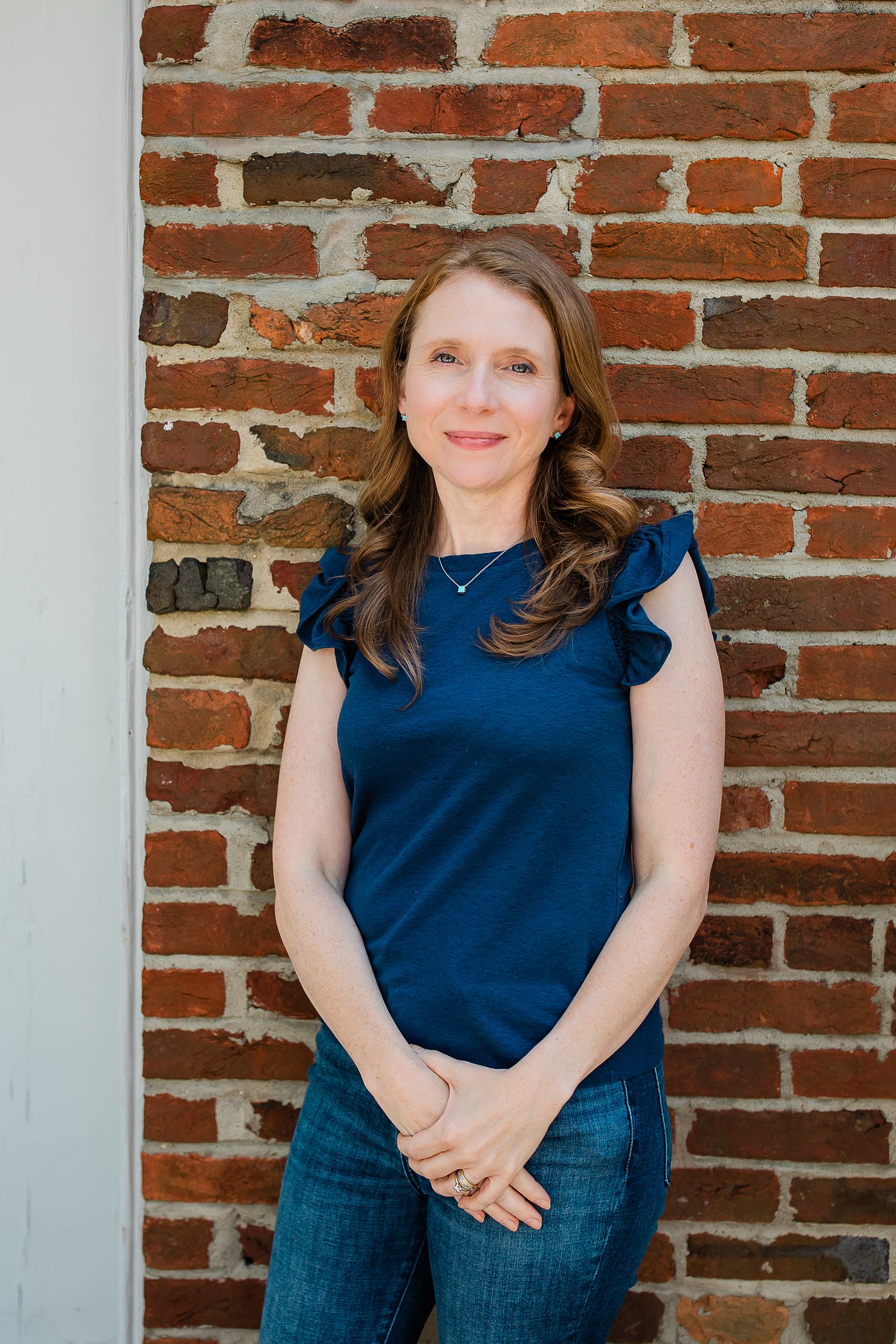
Emily Dreibelbis is a Reporter for PCMag, specializing in AI, EVs, and new technologies. Her work is informed by her past experience working at Amazon for nearly six years, where she gained first-hand experience building and launching dozens of software products to meet the ever-changing needs of a global, digital business. Now that she's shifted into journalism, Emily seeks to use her knowledge and experience to comment on how emerging technologies will influence our lives, work, and society at large.
Thank you so much for joining us in this interview series! Can you share with us the ‘backstory” of how you decided to pursue this career path in AI?
Reporting on AI works well for me given my background. I used to work at Amazon as a Product Manager, where I guided the development of dozens of software products. We used various machine learning techniques to help the software make smart decisions on its own, learning from each previous choice to do better next time. This is extremely helpful, even required, to scale a piece of technology that is used all around the world in many different scenarios, which is common at Amazon.
As a reporter, I can use this experience to relate to people who work at large tech companies like OpenAI when I interview them. It helps me ask the right questions and distill the most important parts of their answers that the public should know.
What lessons can others learn from your story?
If you want to be a journalist, you can! I talk with a lot of people who work at corporate jobs but always dreamed of writing, like myself, and they say my choice to go into journalism inspires them. Even for people who want to do something other than journalism, it’s been helpful for them to see an example of someone who completely changed their career path. It means a lot to have people share that with me, and I find myself having these types of conversations multiple times a month. There are a lot of people who are interested in shaking up their professional life.
Can you tell our readers about the most interesting projects you are working on now?
I just finished a multi-month project to review the biggest AI chatbots (ChatGPT, Google Bard, Bing). It was challenging to come up with a scoring system, as they can do so many things at once that I could never properly test for, but I was able to develop an opinion after using them over a long period of time. I uncovered some big differences in their capabilities, which affect how people use them, and had some unexpected findings, including rating ChatGPT the worst of the three.
None of us are able to achieve success without some help along the way. Is there a particular person who you are grateful towards who helped get you to where you are? Can you share a story about that?
My parents are the first people that come to mind. Both of them are incredibly smart and have had long careers, so they can advise me professionally as well as personally. When I decided to make the bold decision to quit my cushy, lucrative job at Amazon and pursue a master’s in journalism, they strongly encouraged it. Not all parents would value risk taking and self-exploration as much as they do, especially over guaranteed stability. Even before that, they’ve always encouraged me to move across the country to get the right job for me—from NYC to California, then to Seattle, and now Chicago. It was probably hard for them to have me be so far away, but they have encouraged me to take that freedom to come into my own, and that has made a big difference in my career path.
What are the 5 things that most excite you about the AI industry? Why?
I have more concerns than excitement currently, so I’ll say one big thing that could be exciting. Over time, there will be a shift from using large, general purpose AI models, like ChatGPT, to smaller, more personalized models. The difference is that you can upload your own training data and customize the output. That could be safer and more ethical, as the model only pulls from sources you deem trustworthy and useful (as opposed to everything on the web). For example, a doctor’s office might only want a version of ChatGPT that has peer-reviewed studies to help their doctors better understand what’s going on with patients. They don’t want bogus articles from ChatGPT to inform medical care, and neither does the patient. More customized models are more likely to be helpful and responsible, and that’s what the AI industry needs to focus on.
Five things video URL: https://youtu.be/kN_hLtmoP4Y
What are the 5 things that concern you about the AI industry? Why?
I’ll speak mostly about generative AI, or tools like ChatGPT and Midjourney that can create their own images and text.
Copyright issues. As it’s currently written, copyright law does not apply to AI-generated text and images. What happens if someone asks ChatGPT to write another Harry Potter book using the same characters, plotlines, and the world of Hogwarts? Right now, there’s no consequence for that. With no way to protect original works like Harry Potter, there will be little incentive for people to create them, and the quality of our public information and entertainment could go down.
Less need to learn how to write. Writing helps organize and clarify our thoughts. That’s why at Amazon, the expectation is that someone with a big idea will present it through a written paper, not a PowerPoint or verbally. I know that ChatGPT and other AI tools can write for us now, only requiring small edits, but I fear people will lose the ability to slow down and think deeply.
The spread of misinformation. Right now, ChatGPT can pull from untrustworthy sources and surface them confidently as fact. For example, one person on a Reddit thread received a response that said creating a baby is “illegal and unethical.” Where did it get that? We won’t know if it doesn’t cite sources, which luckily is something competitors from Google and Microsoft do, but source attribution should be required legally.
Lack of legal frameworks. See #1 and #3 for examples of legal gaps.
Big tech companies becoming the public’s main source of information. It takes a huge amount of money and power to create an AI tool, which only large corporations have at this point. If the public begins to rely on AI-generated responses to a Google search, which Google plans to do, that means Google decides what information is relevant. Leaving public knowledge up to an algorithm could create blind spots.
As you know, there is an ongoing debate between prominent scientists, (personified as a debate between Elon Musk and Mark Zuckerberg,) about whether advanced AI has the future potential to pose a danger to humanity. What is your position about this?
Most of the people working in AI right now and in the past have agreed that it could pose a danger to humanity. Even OpenAI, creator of ChatGPT, recently started a new team aimed at controlling “superintelligence,” which it says could “lead to the disempowerment of humanity or even human extinction.” Stephen Hawking, Bill Gates, Elon Musk, and many other prominent technologists have said the same thing. So, I think we should listen when the people who built the technology tell us about it.
What can be done to prevent such concerns from materializing? And what can be done to assure the public that there is nothing to be concerned about?
We need more regulation and education. If people are educated about what AI is and how it works, they will be more empowered to keep the technology under control. A more educated populace can also advocate for more regulation, and ensure those laws are built in a way that protects us from obvious harm (e.g. AI tools cannot hack into your bank account) while leaving room for innovation. But this type of education will likely take generations, and what can be done now is for the government to partner with experts to put some basic rules in place, similar to what the EU has already done with the AI Act.
As you know, there are not that many women in your industry. Can you advise what is needed to engage more women into the AI industry?
Women are historically less likely to be technology early adopters, but that needs to change with AI given it could disproportionately affect them through job automation. Women need to start experimenting with AI now. They need to get familiar with the tools and start figuring out how to use them at home and at work.
How do you do this? Before starting a task that could take at least 30 minutes to an hour of your time, think to yourself, “How could an AI help me with this?” My favorite AI chatbot is Google Bard. Pull it up, and ask it a question, and see what happens. Keep doing it until you find a way that it works for you and you’re excited to tell people how you’re using it.
I had one parent tell me that ChatGPT was a great help when advising her child on their homework. It can help you get up to speed on the material quickly, and you can ask it for some ideas on how to encourage your child to approach the subject rather than giving them the answers directly.
Finding a small way to explore AI that you’re comfortable with is a great way for women to be a part of this technological revolution, shaping how tools are used responsibly and how they will affect us in the future.
What is your favorite “Life Lesson Quote”? Can you share a story of how that had relevance to your own life?
I’ve played soccer my whole life, including in college, and one quote that always kept me focused in training was: “Champions are made when nobody is watching,” by Michael Jordan. I’d spend hours juggling in the driveway, sprinting up and down the street, and practicing in the park. No one saw any of this, and it wasn’t a part of a formal training program my coaches could pat me on the back for. But not everything you do needs to be seen or validated by other people, and what sets you apart is the genuine interest and hard work that you put in on your own.
How have you used your success to bring goodness to the world? Can you share a story?
By foregoing my career at Amazon, I am now in a position to publish more critical information about the tech industry that I hope will guide it in a more healthy, productive direction. In everything I write, I try to balance two perspectives: What do we get from this technology, and what are we giving up?
You are a person of great influence. If you could start a movement that would bring the most amount of good to the most amount of people, what would that be?
You never know what your idea can trigger. :-)
I think having meaningful work is really important, and far too many people are doing jobs they could care less about. If we could find a way to match up peoples’ passions with a career that benefits society, I think it would lead to more happiness, stronger relationships, and more innovation. Ideas like universal based income (UBI), which Andrew Yang has championed, could create a safety net for people to pursue what is meaningful to them. But whether or not UBI is the answer, we desperately need a way for people to spend more time working on something that brings them purpose, whatever that means for them.
How can our readers further follow your work online?
I post most of my work, and other work that I’m interested in, on Twitter (or X, as we now call it!)
This was very inspiring. Thank you so much for joining us!