Between stimulus and response there is space. In that space is our power to choose our response. In our response lies our growth and our freedom.
Wellness
Dr. Lorenzo Cohen and Alison Jefferies of The University of Texas MD Anderson Cancer Center: How Integrated Lifestyle Strategies and Stress Management Transform Cancer Recovery
Dr. Lorenzo Cohen and Alison Jefferies share their personal journey through a stage 3 melanoma diagnosis and explain how the pillars of anticancer living and stress reduction change health outcomes.
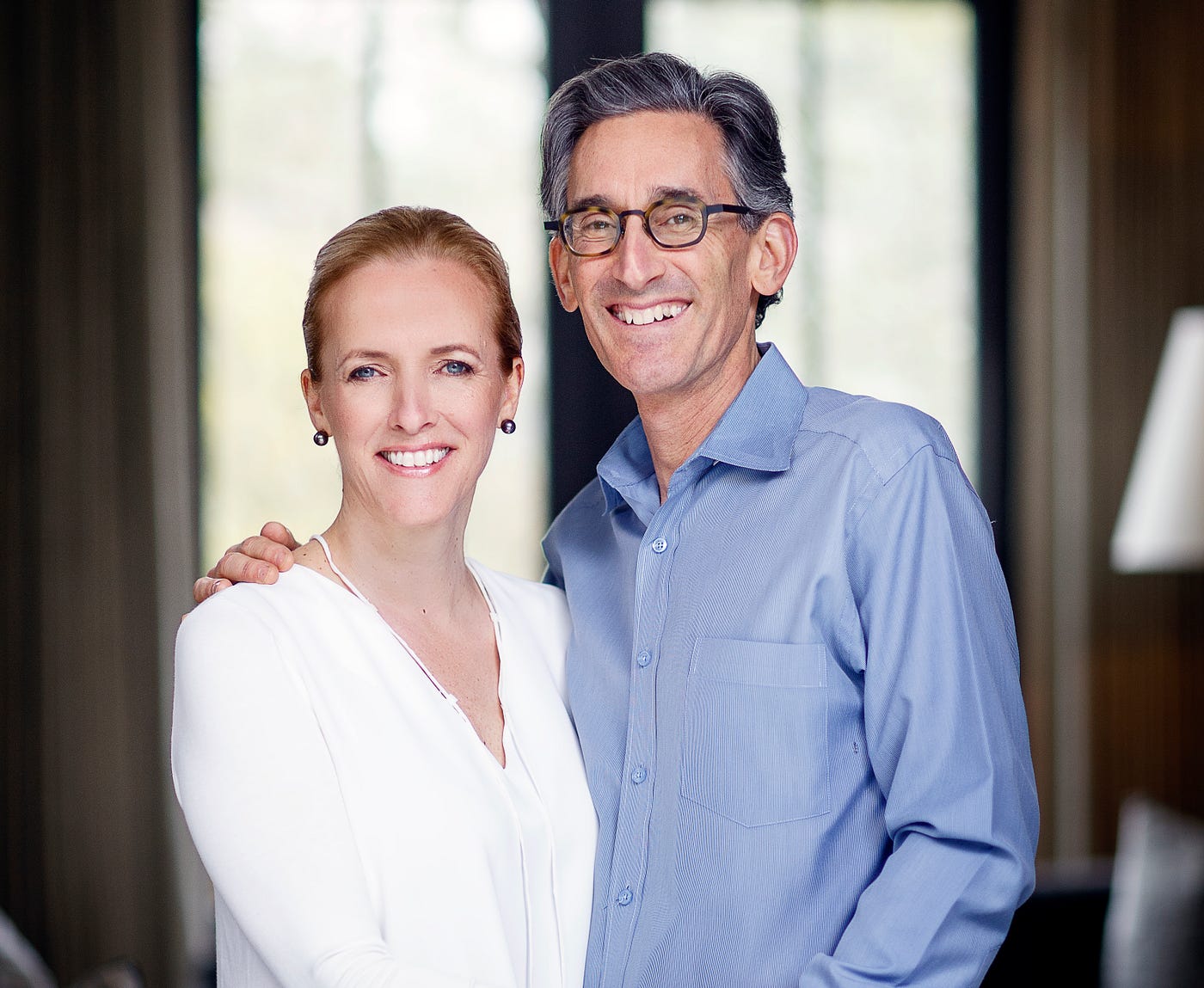
Cancer is a horrible and terrifying disease. Yet millions of people have beaten the odds and beat cancer. Authority Magazine started a new series called “I Survived Cancer and Here Is How I Did It”. In this interview series, we are talking to cancer survivors to share their stories, in order to offer hope and provide strength to people who are being impacted by cancer today. As a part of this interview series, I had the pleasure of interviewing cancer survivor Dr. Lorenzo Cohen and his wife and co-author Alison Jefferies, who brings the caregiver perspective.
Lorenzo Cohen, PhD, is the Richard E. Haynes Distinguished Professor in Clinical Cancer Prevention and is the founding director of the integrative medicine program at The University of Texas MD Anderson Cancer Center in Houston. Dr. Cohen leads a team conducting NIH-funded research and delivering clinical care of integrative medicine practices such as meditation, yoga, tai chi, massage, diet, exercise, acupuncture and other strategies such as stress management, music therapy, emotional writing and more aimed at reducing the negative aspects of cancer treatment and improving quality of life and clinical outcomes. He is a co-author with his wife Alison Jefferies on their book, “Anticancer Living: Transform Your Life and Health with the Mix of Six.”
Alison Jefferies, MEd, has degrees in both Art History and Education with a Master’s degree in Educational Psychology. As an educator, she has worked in museums and as a classroom teacher in England, Canada and the United States. Alison is passionate about helping her family and community engage in anticancer living, and how the power of community can lead to healthful change. She and Lorenzo give lectures and workshops around the country helping individuals harness the power of anticancer living.
Thank you so much for joining us in this interview series! We really appreciate the courage it takes to publicly share your story. Before we start, our readers would love to “get to know you” a bit better. Can you tell us a bit about your background and your childhood backstory?
Lorenzo: Alison and I share a personal and professional partnership rooted in our entwined family histories, dedicated to living and creating for others healthy, disease-free lives. We were born in Europe and grew up in Toronto, each with a European and American parent. Both families included authors and our parents were university researchers and educators. My grandmother, Vanda Scaravelli, lived on a farm in Italy and was a yoga master, a vegetarian, and an author of a book on yoga. My parents wrote a couple of the early gourmet vegetarian cookbooks. So, I grew up in a house dedicated to healthful living.
Alison: In retrospect, Lorenzo and I meeting seemed somewhat destined with circles closing and circles opening. Lorenzo’s mother (a fellow educator, among many things) set us up on a blind date. She told Lorenzo she was having a friend from work over to go to a movie and have dinner and I showed up. The rest is history! We started a long-distance relationship that lasted 2 years until we got married.
Unbeknownst to us, our families have been connected in some fashion going back two generations. We discovered our parents had attended a dinner together years before we met and that three of the four of them had attended the same college. At our wedding we found out that a great family friend of Lorenzo’s was originally introduced to his family back in the ‘60’s through my family. And finally, our respective great uncles had met many years before we were born.
Living an anticancer life was a natural evolution of strong beliefs, passion for change and scientific validity. Lorenzo and I were raised in health-conscious environments with our food coming from farmer’s markets for example.
My father was a professor of botany and as a research scientist helped gather Arctic research that contributed to the climate change work with Vice President Al Gore and many others, which won a Nobel Peace Prize. My mom is a teacher and curator of ceramic art. We each spent our childhood summers in Europe, me in England and Lorenzo in Greece, where overexposure to sunlight may have contributed to his eventual melanoma.
Lorenzo and I have been devoted to living the anticancer life in our own home for more than 20 years, starting with the birth of our first child and expanding through his work at MD Anderson Cancer Center.
Can you please give us your favorite “Life Lesson Quote”? Can you share how that was relevant to you in your life?
Lorenzo: Author Stephen R. Covey popularized the sentiment of this quote attributed to Dr. Viktor Frankl, the famous Viennese psychiatrist and Holocaust survivor.
“Between stimulus and response there is space.
In that space is our power to choose our response.
In our response lies our growth and our freedom.”
Although we cannot live a life that is devoid of sometimes inescapable, challenging and stressful events, the good news is that we can take actions to change or diminish their harm.
Alison: Yes, it is important to note that stressful events themselves, which seem unavoidable, are not what cause the harm. It is our reaction to the challenges in our lives that does the real damage. So, to prevent disease and live as healthfully as possible, we must learn to manage our stress, which means managing our reactions to the stressors in our daily lives. Only when we have stress under control can we make the kind of positive lifestyle changes that embody anticancer living.
Let’s now shift to the main part of our discussion about surviving cancer. Do you feel comfortable sharing with us the story surrounding how you found out that you had cancer?
Lorenzo: Sure. In March 2018, on the same day that we approved the final draft of our book Anticancer Living: Transform Your Life and Health with the Mix of Six, I was told that I had malignant cells in my body that were determined to be melanoma. In that moment, I joined the one in four men and women in the United States who will be diagnosed with cancer in their lifetime; and was among the legions of people diagnosed with melanoma.
Alison: In another coincidence, that March day was also when Lorenzo got an email notifying him that he was awarded a grant to study melanoma. The focus of the grant was on the role of lifestyle factors, those that are part of the Mix of Six, and response to treatment and survival.
Lorenzo: The irony of getting cancer after studying and writing a book on anticancer living is not lost on me. My diagnosis resulted from testing done after I felt a weird tingling sensation under one of my arms and noticed swelling that persisted for a few weeks. An ultrasound and a biopsy showed malignant cells. Deeper analysis determined that I had stage 3 melanoma.
The primary risk factor for melanoma is excess childhood sun exposure, and while there wasn’t anything I could do about that, as melanoma is controlled by the immune system and other biological processes we will discuss, I did reflect on lifestyle choices I have made as an adult that could have made me more vulnerable to the disease.
What was the scariest part of that event? What did you think was the worst thing that could happen to you?
Lorenzo: The first four or five days, when we didn’t know what kind of cancer it was, were scary not knowing if there was an effective treatment for it. Seeing my children’s response brought home the reality on how this disease could affect many lives.
Alison: It felt like a wave crashing over me when I heard the news. It was a feeling of knowing he could die and trying to reconcile that was so painful and scary.
How did you react in the short term?
Lorenzo: After diagnosis, I actually felt a little relieved because I knew that I had to take better care of myself and the onset of cancer gave me permission to actually commit to doing what we had just written a book about. I knew that I could embrace the Mix of Six and fully live up to our plan for a healthier life.
Alison: I took on the role of caregiver. I wanted to be sure we could put systems in place as a family that would support Lorenzo’s recovery. I look at problems and always think there is an opportunity to do something so I tried to understand more about melanoma specifically and what could be done in Lorenzo’s situation.
After the dust settled, what coping mechanisms did you use? What did you do to cope physically, mentally, emotionally, and spiritually?
Lorenzo: I embraced the Mix of Six in my life going forward and focused on a healthy diet, invested time to exercise and emphasized stress reduction — an area where I always fell short from working insane hours and not sleeping enough.
To help increase my accountability in the area of a mind-body practice, I started a 200-hour yoga teacher certification practice five months after my diagnosis. As I mentioned, my grandmother dedicated much of her life to the yogic lifestyle and I had learned yoga from her. But at the time I did not have a regular practice and knew I needed to up my dose of stress management. The program made me accountable to a group of 12 other people, and it forced me to live what we preach in our book, and thus be more accountable to my own health and well-being.
Alison: For me it was knowing what would be required as a wife and a caregiver. They are different things and I had to get organized. So, I thought through our next steps, a job made more manageable because we had written the book about what was needed at this moment.
It’s a big job and I knew that as a caregiver I would need support, would have to accept help, and not feel that I was going it alone. Caregivers need to carve out time for themselves so the one thing I did for myself was continue my exercise routine. After Lorenzo’s active treatment ended, I realized I needed to manage my own stress more effectively. I asked Lorenzo to join me in taking a MBSR course — Mindfulness-Based Stress Reduction — an eight-week mind-body program that I needed to launch my own serious stress management practice.
Is there a particular person you are grateful towards who helped you learn to cope and heal? Can you share a story about that?
Lorenzo: It is without a doubt Alison. When you go through cancer, you see first-hand that it is something that affects everyone around you, sometimes profoundly. Alison’s strength, compassion, and organization really helped us as a family stay on track, and stay true to anticancer living, even when things got tough, or I didn’t have the energy to stay the course. She was there to keep us going, with her unconditional support.
Alison: Lorenzo was my model for how to cope with our situation. But I also had a group of close friends who were there to offer support throughout what was an up and down process. Surviving cancer is not a straight-line affair. It really helps if you expect the unexpected and can then take it in stride.
People always asked me, as the caregiver, “How is Lorenzo doing?” But few asked how I was doing. It’s important to remember that cancer is a “we disease,” and it affects the whole family. The experience made me more sensitive to this fact, and how, as caregivers, we need just as much concern and support. I knew I’d be a better caregiver if I maintained my health and well-being and my friend group was key to this.
Here are a few things to prioritize when thinking about caregiver health:
- Don’t go it alone
- Recognize your limits
- Set goals for yourself
- Accept help
- See a doctor
- Engage in healthy behaviors daily
In my own cancer struggle, I sometimes used the idea of embodiment to help me cope. Let’s take a minute to look at cancer from an embodiment perspective. If your cancer had a message for you, what do you think it would want or say?
Lorenzo: I think my cancer was telling me that you shouldn’t wait to have a life-threatening illness to stop and take care of yourself. This is something I always used to say at the end of public talks with patients, but was not following myself. Before the diagnosis, I was pushing myself too much, taking on too much in my work and other areas. Stress thrives when one doesn’t have a balanced life. Melanoma is exquisitely sensitive to the immune system, and we know that chronic stress decreases aspects of the immune system that help to control melanoma and other cancers.
In addition to my usual overextended work style, we were scrambling to finish our new book, something that created a lot of stress in our lives. Then along comes the news that I had cancer. It added up to a huge burden of stressors that I now can clearly see.
What did you learn about yourself from this very difficult experience? How has cancer shaped your worldview? What has it taught you that you might never have considered before? Can you please explain with a story or example?
Alison: It grounded me. Working through things that are challenging empowers you to know that you can do it and come out the other side. It also propelled me to establish my own mind-body practices, such as yoga, to help deal with stress. I also recently completed my 200-hour yoga teacher certification program.
Lorenzo: I have spent the past 25 years thinking about cancer, how to prevent it and how to improve patients’ quality and quantity of life. When have I not thought about this question? When it became personal, I had to embrace this in all its facets. I began to look at everyone as someone who might have cancer, as we all have mutating cells in our body at a given time. Cancer has a bumpy, circuitous route that leads to teaching everyone, including healthy people, to make our bodies as strong and inhospitable to cancer as possible.
My personal cancer experience reinforced that I needed to slow down, manage stress, and spend more time with my loved ones during the journey. That time together is so important and very healing.
How have you used your experience to bring goodness to the world?
Lorenzo: Alison and I believe that publishing Anticancer Living exactly when cancer became a personal part of our lives is a contribution to helping people know the disease and offer a tool to help them avoid or overcome cancer. Even with our backgrounds, families, and upbringing that focused on healthful, mindful practices, living with cancer changes your perspective profoundly.
Since my diagnosis, I’ve become more interested and invested in providing comprehensive care that reflects the lessons from our Mix of Six best practices. I also take a more comprehensive approach to my research and consider a broader range of research studies looking for answers. And we are also really focused on educating people about health and wellness.
A fundamental message is that cancer is not a fatalistic disease. It can be managed and there is so much within our control.
What are a few of the biggest misconceptions and myths out there about fighting cancer that you would like to dispel?
Lorenzo: First of all, cancer is not a “fight.” Using a war metaphor is not a healthy approach to dealing with cancer. Researchers at the University of Michigan and the University of Southern California looked at the impact of framing cancer as a hostile enemy in an ongoing war. Their findings suggest that war metaphors make people less likely to actively engage in behaviors to help reduce their cancer risk.
We all have cancer cells in our bodies, but not all of us will develop cancer. The premise is not that our bodies are “harboring the enemy” or that we should live in fear of an internal uprising, or even that our unhealthy habits are stoking the fires of war. On the contrary, our approach is about discovering and maximizing the healing powers in each of us that can keep our bodies in balance and allow them to work effectively to prevent cancer cells from growing and spreading in the first place.
Alison: Once treatment is done, you don’t get to wash your hands of it. Cancer is never completely in the rearview mirror as it often becomes something that continues to need attention. It’s about cancer prevention and control — not just the quest for a cure.
Another truth is that cancer affects everyone with its reach. More than the person with cancer suffers and they deserve consideration for the toll it has on them as caregivers and family members. Very little is done in our society in this regard.
Lorenzo: Another myth is that there is nothing to be done about the significant collateral damage left by conventional cancer treatments such as mouth sores, fatigue, nausea, etc. These are often taken as the inevitable consequences of cancer treatment. We encourage using the fully integrative approach that enables one to actually deal with some of these issues and offset a lot of the problems that come from conventional medicine.
Fantastic. Here is the main question of our interview. Based on your experiences and knowledge, what advice would you give to others who have recently been diagnosed with cancer? What are your “5 Things” You Need To Beat Cancer? Please share a story or example for each.
Lorenzo and Alison: First, the best way to prevent cancer is to control exposure to what causes cancer. It’s what can be done as an individual, a family and a community to encourage behaviors and avoid risks that gives everyone a role in cancer prevention.
For those diagnosed with the disease, our 5 Things actually consist of 6 things, or what we like to call the “Mix of Six,” which we focus on in our book, Anticancer Living.
#1: Love and Support
We list support as our first pillar because while diet, exercise and the others are critical, support is the backbone on which all other lifestyle changes will either succeed or fail. Whether it is someone babysitting while you attend yoga class, getting help to overcome entrenched eating habits, or using psychology to uncover emotional issues that keep you from being the person you want to be, it’s the people you enlist as supporters who are key to your success.
One of the inspirational stories from our book reinforcing the importance of social support comes from Dorothy. While dealing with her own cancer, her husband was also diagnosed with the disease. It was a difficult time and she needed support. Her friends stepped in to help her attend meditation classes and gave her a few therapy sessions when it became clear that she was on the verge of complete burnout. Dorothy was forever grateful to her friends for seeing her need and stepping up. She credits these interventions with changing her life and keeping her remission going. Dorothy confided that this was not something she might have been receptive to had it come from a family member or someone in another area of her life. Getting therapy was just what she needed to learn to slow down, regain her balance and fortify her anticancer way of life.
#2: Stress
When stressful events become an overwhelming, chronic issue, the change can trigger not just negative psychological and emotional reactions but it can also cause physiological damage. A growing body of scientific research shows how stress impacts all aspects of our lifestyle and all aspects of our physical health.
In our book, we share another poignant example of this. For Brucett, a Stage 2 breast cancer survivor, finding a way to manage her stress was key to her long-term survival and to enjoying her life. She had a tendency to let things get to her — encounters she had during the day, exchanges with her kids that seemed rude, times when she wished she had said something but hadn’t. Meditation made her more aware of herself and more conscious of her reaction to stressors. Here is how she described the change: “I don’t know if anyone has ever felt like this. To have so many questions, but the answers are trapped in you. That’s how I’ve felt for so long. Well, I’ve come to realize that through meditation and deep relaxation that my answers are flowing. I can honestly say that I’ve never been in such deep thought about my life.” Meditation is one of many ways we can expand that space between stimulus and response and take more control over our lives.
#3: Sleep
Just as there is a natural rhythm to life, there is a natural rhythm to health and healing. The human body is designed to run like clockwork. In fact, the body contains several internal regulatory systems that ensure our systems function smoothly and rhythmically by balancing periods of biological activity with rest. Governing this is a structure that we call the “body clock.”
Learning to identify and respect our unique circadian rhythm is essential to wellness and disease prevention. All it takes is a willingness to listen to cues from our body clocks and adjust our lifestyle choices to support these natural signals.
A while back, in order to get more exercise in, I (Lorenzo) traded an hour of sleep time to use an elliptical machine as part of my physical routine to increase my dose of exercise. After a few months of 1-hour less of sleep, one evening Alison looked at me and said, “You look gray. You look unwell. I think you need to get more sleep.” Of course, she was right. Instead of adjusting my schedule to accommodate the full seven plus hours of sleep I need to function optimally, I traded an hour of sleep time for another hour of my waking life. That was a big mistake that I needed to fix by giving my body back the rest time it requires to function at its best.
#4: Exercise
Along with being linked to obesity, being sedentary causes a host of serious yet preventable health problems. These include:
• insulin resistance, a precursor to Type 2 diabetes.
• Higher rates of heart attacks and other cardiovascular diseases
• Immune-deficiency issues and difficulty fending off airborne illnesses, such as Covid-19, colds and the flu.
• Greater risk for depression and other mental health issues.
• Bone and muscle health decline without regular exercise.
• Cognitive decline and the onset of diseases such as dementia and Alzheimer’s.
• General physiological aging at cellular and vascular levels to increased organ deterioration.
Exercise impacts all the cancer hallmarks and especially sustains proliferative signaling, metabolism, immune function, and inflammation. Physical activity down-regulates, or turns off, genes that promote tumor growth and up-regulates, or turns on, genes that help prevent tumor growth. While more research is needed, early indications suggest that exercise could help cancer survivors live longer, enjoy life more, and avoid a recurrence. Notably, no studies have found adverse reactions in cancer survivors who exercised. So, while the extent of benefits is still being debated, there is little or no downside to engaging in daily exercise.
Before the pandemic, I (Lorenzo) kept a recumbent bike under my desk, did lots of walking meetings, always took the stairs, and parked as far away from the office as possible to increase the walk. With so many of us dispersed and working from home, it is easy to let these practices fall to the wayside. But it is imperative that you find what works for you and keeps you strong, and that you maintain this daily.
#5: Diet
Whether you are a gourmet, a gardener, or a fast-food grabber, a growing body of research about food and healing points to the need to change how we feed our bodies. We are spreading an unhealthy Western diet to each other and exporting it to the world. Cancer and other chronic diseases are taking hold in places where the Western diet is most readily adopted. The solution is to adopt a primarily plant-centered balanced diet of whole foods with low glycemic load and reduced sugar. It’s a diet that looks like the Mediterranean diet.
Studies show that this dietary approach is consistently linked with good health by improving immune function, decreasing inflammation and may play a role in preventing the early stages of cancer. The same can be said of most healthy diets across the globe that all are largely plant-based. They include vegetables, fruits, nuts, seeds, whole grains, and other fiber-rich foods, and minimal servings of animal protein, processed foods, and added sugars.
Aim for five to eight servings of fruits and vegetables a day, with more vegetables than fruit. In our house this started at breakfast where we slowly added more vegetables to our eggs until there were more veggies than eggs. Our kids eventually said, “Mom, we’re fine eating lots of veggies for breakfast, but we also want to taste the eggs. We’ll eat the veggies on the side.”
#6: Environment
Many substances we are exposed to everyday such as Styrofoam, formaldehyde, and endocrine-disrupting compounds (EDCs) have been linked to cancer and obesity — a cancer risk factor. Since the 1970s, more than 87,000 chemicals have been approved for commercial use, yet only about 8% have been formally examined and graded for their carcinogenic potential. Cancer clusters, areas with a higher-than-normal rate of cancer, are almost always environmentally related.
We simply cannot escape our exposure to man-made chemicals, but there is a lot we can do to moderate the risks. It’s important to understand what we can and cannot change when it comes to environmental toxins and anticancer living. Here are our five pillars for establishing an anticancer environment:
1. Reduce your household chemical exposures.
2. Filter your water.
3. Reduce the toxins you put on your body
4. Reduce the toxins you put in your body
5. Interact carefully with your larger environment.
You are a person of great influence. If you could inspire a movement that would bring the most amount of good to the greatest amount of people, what would that be?
Lorenzo: I would like to see every human being living a healthy-living lifestyle as if their life depends on it… because it does!
I would also like to transform our health care system to follow a wellness and prevention model vs an illness model. Only then can we put priority — and funding — on research and therapies that support anticancer living.
On that latter point, not enough credit goes to the relatively quiet Little Green Book Foundation (https://www.littlegreenbookfoundation.org), the private charitable organization created by Bob Duncan and his wife, Patty, that provides major funding for our research programs at MD Anderson Cancer Center. With the support of foundations like theirs, we can do transformative work like piloting a new comprehensive lifestyle program to prevent breast cancer and improve outcomes for patients with breast cancer.
Alison: I think Lorenzo said it perfectly!
I would only add that healthful living needs to be modelled and taught in the school setting. I envision filling each student’s toolbox with information and strategies so they can become healthy adults and pass this knowledge along to their kids and grandkids.
We are very blessed that some very prominent names in Business, VC funding, Sports, and Entertainment read this column. Is there a person in the world, or in the US with whom you would love to have a private breakfast or lunch, and why? He or she might just see this if we tag them. :-)
At the moment, we have been thinking a lot about the relaunch of the Cancer Moonshot program that President Biden originally started back when he was Vice-President. The announcement on February 2, 2022 laid out the ambitious new goal of reducing cancer deaths by 50% within the next 25 years.
Like in the original Cancer Moonshot, so far little attention is given to cancer prevention and removing the risk factors that we know cause cancer. We do not know the cause for all cancers, and this is especially challenging at the individual level. However, we do know what causes the majority of cancer and cancer-related deaths in our society. So, we can reduce death from cancer by at least 50% starting today if we simply implemented the lifestyle strategies that we know work. This would, of course, take a concerted effort from all sectors of society.
At the moment, in the area of prevention, the Cancer Moonshot has a focus on detecting cancer earlier, developing mRNA technology like a vaccine, and reducing environmental carcinogens (a critical step and part of the Mix of Six). But there is SO MUCH more that we can do to prevent cancer. And as we have discussed above, these same factors found in the Mix of Six will allow people to live longer and better with cancer. Perhaps President Biden is not aware of the depth and breadth of research in the area of lifestyle factors and cancer prevention. Who is in the “room” prioritizing systemic lifestyle changes for our nation? It is not a popular topic, as it goes against certain sectors of society and of big business and it is not as monetizable as drug development. However, the only way to reduce cancer deaths by 50% within the next 25 years is to prevent it in the first place. The good news is we know how to do this already.
We’d love to sit down with President Biden and his Cancer Moonshot team to discuss how to incorporate transformative programs across our nation.
How can our readers further follow your work online?
Visit our website, https://anticancer-living.com, to access tremendous resources. Anticancer living is built on a belief that self-care is health care and that greater wellness is available to us all.
Thank you so much for sharing these important insights. We wish you continued success and good health!
SP
Written by
Savio P. Clemente
Editor & Journalist · Authority MagazineSavio P. Clemente is a senior columnist at Authority Magazine covering Tech and Wellness, conducting primary-source Q&A interviews with founders, executives, and industry leaders.

Published inAuthority MagazineTop Lessons, Top Authorities · 42K Followers
Exclusive, curated interviews with the leaders and changemakers shaping tomorrow. Leadership lessons, industry deep dives, and executive profiles.