Mistakes are inevitable, and I have had my fair share. There have been small setbacks and there have been significant setbacks. In the end, what I have learned is that you must continue to push forward and have a positive attitude.
Wellness
Dr. Charles Parks Richardson: Why Bureaucracy And Excessive Administration Are Destroying The US Healthcare System
Renowned physician, inventor, and entrepreneur Dr. Charles Parks Richardson shares critical insights on systemic flaws in American healthcare and how innovation can drive meaningful change.
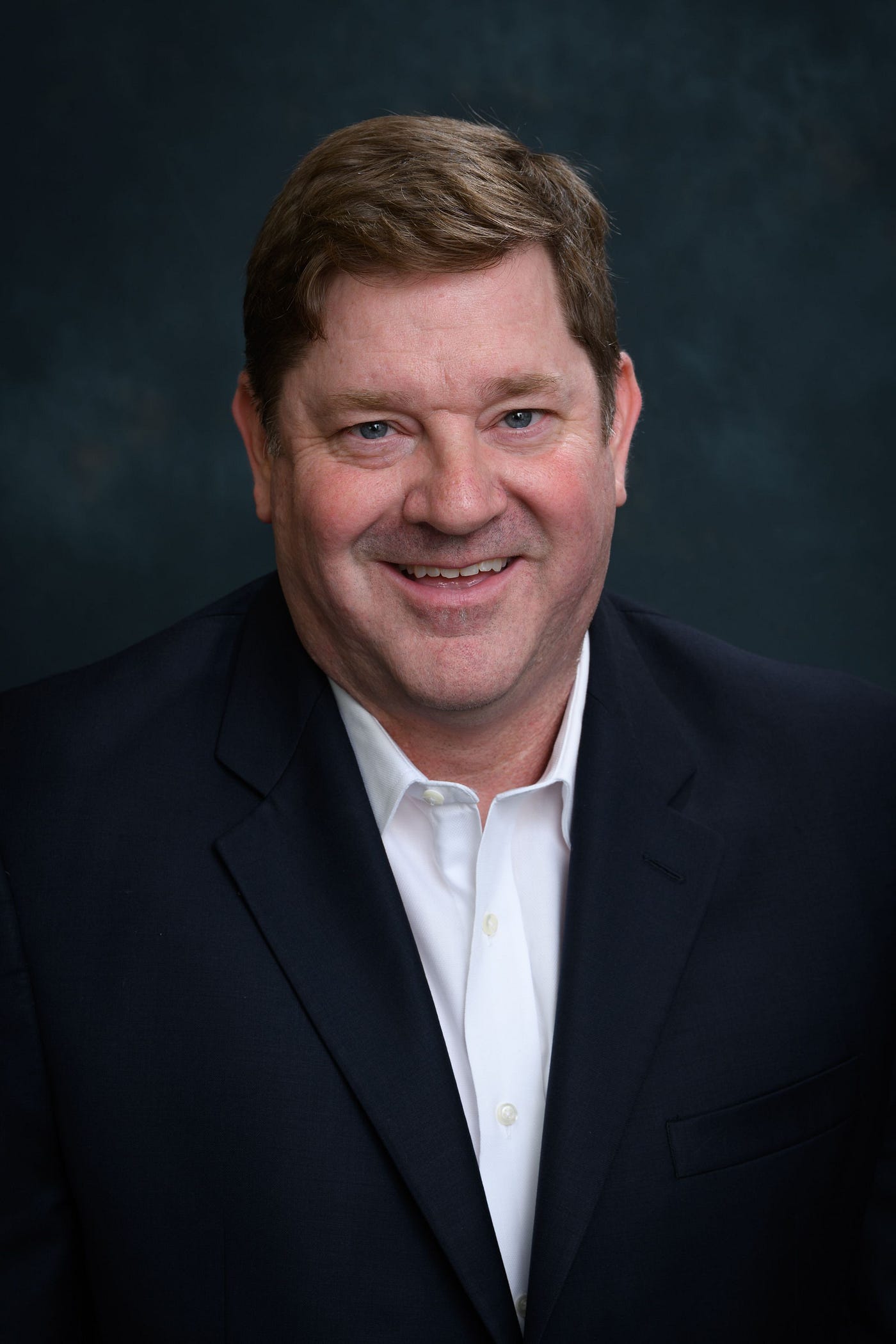
As a part of my interview series with leaders in healthcare, I had the pleasure to interview Dr. Charles Parks Richardson, an American physician, business magnate, investor, medical designer, biotechnology entrepreneur, and philanthropist. He is the founder, CEO and chief architect of Cleveland Diabetes Care; founder of CEO of TransWorld Med; CEO of KRS Global Biotechnology, and co-founder and Chairman of the Richardson Medical Foundation. He is also best known for the development of the left-ventricular assist device (LVAD), the right-ventricular assist device (RVAD) and the total implantable, electric Total Artificial Heart (TAH).
Thank you so much speaking with us! Can you tell us a story about why you became a Doctor?
My biggest influence that pushed me to become a physician was seeing the toll heart failure had on my grandmother. She was the bedrock of our family and sacrificed so much. It was difficult seeing her suffer. It motivated me to seek a medical career where I could help those who suffered from heart disease.
Can you share the most interesting story that happened to you since you began your career?
I had just started my second company Transworld Med in Charlotte, NC, where we were developing a pacemaker that could detect transplant rejection. I come from a small town in North Carolina, where everyone knew I was a physician. I was focused as CEO of the company and had given up practicing medicine. One day my personal assistant said I had a person who was insisting on seeing me. He was a family friend and didn’t know I was practicing medicine. I was happy to see a familiar face and he was sent to my office. When I went to see him, he had a bandage over his eye. I asked him what was wrong, and he told me there was an accident and asked if I could take care of him. He proceeded to remove the bandage and his eye popped out. Needless to say, I rushed him to the emergency department. It was an interesting day.
Can you share a story about an important mistake you made when you were first starting? Can you tell us what lesson you learned from that?
Mistakes are inevitable, and I have had my fair share. There have been small setbacks and there have been significant setbacks. In the end, what I have learned is that you must continue to push forward and have a positive attitude. Don’t give up, and don’t let anyone tell you that you have failed. Failure is when you succumb to your mistakes. They are actually teaching moments that will make you stronger. With perseverance and faith, anything is possible
You have started various companies and have invented so many life-saving items. What do you think makes your companies stand out? Can you share a story?
I have been fortunate to have been involved in a wide range of cardiovascular products from patch monitors to artificial hearts. My companies have been at the forefront of innovation and research, partnering with UNC, Duke University and Cleveland Clinic Foundation. I have witnessed firsthand how my monitors have detected abnormal rhythms that could have been fatal if gone unnoticed. While the interaction with a patient is between a patient and his/her doctor, I feel comforted knowing that I am providing care to thousands, and fulfilling the ultimate role of a healthcare provider.
What advice would you give to other healthcare leaders to help their team to thrive?
I would simply say don’t forget the ultimate role of what you are accomplishing: to take care of patients. Making the people around you understand that they are making a difference in people’s lives, will inspire any team to accomplish whatever goals you set forward.
Ok, thank you for that. Let’s jump to the main focus of our interview. According to this study cited by Newsweek, the US healthcare system is ranked as the worst among high income nations. This seems shocking. Can you share with us 3–5 reasons why you think the US is ranked so poorly?
1. Too many administrators. Cost for administration far exceeds any other cost in health care
2. Drug costs. High prices for necessary drugs like Insulin are bleeding the American consumer.
3. Hospital pricing. The price of an inpatient stress test versus an outpatient stress test (ex. stress echocardiogram) is on the order of up to ten times the amount. It is the same test, same level of expertise, but 10 times the cost if done in the hospital.
4. Defensive medicine. Too often healthcare providers practice CYA (Cover your A@#) because of fear of litigation. This leads to excessive testing and procedures.
5. Varying prices. Unfortunately, the same test or medication can vastly differ based on the type of healthcare plan the American consumer has, as pricing is negotiated differently among different healthcare platforms.
You are a “healthcare insider”. If you had the power to make a change, can you share 5 changes that need to be made to improve the overall US healthcare system? Please share a story or example for each.
1). The US must provide medical insurance for its citizens. It must not necessarily be linked to an employer.
2). US medicine must move away from fee-for-service as the primary mode of reimbursement for care.
3). Healthcare systems must not drive the cost of care in the US by becoming monopolies which expand administrative bureaucracies and heap the cost on consumers seeking care.
4.) COVID has laid bare the healthcare disparities in the black community. US Medical Schools must produce more black doctors if we are going to change the healthcare disparities in the black community. Only 8% of Med school grads are African American (13% of the population) and 41% of them are primary care doctors. They cannot fill the need alone.
5). The cost of prescription drugs must come down in the US.
Also, general healthcare and mental healthcare have similar problems; not enough access for those most in need and too much bureaucracy to get the needed treatment.
What concrete steps would have to be done to actually manifest these changes? What can a) individuals, b) corporations, c) communities and d) leaders do to help?
The concrete measures that must be taken in creating health care policies would involve making sure all parties involved have equal say — healthcare providers, hospital administrators/representatives, pharmaceutical companies, biotech companies, public health officials, government officials (Medicare),insurance companies AND THE CONSUMER. Unfortunately, the ones that win out usually are the ones with the best lobbyists.
a. Individuals can petition their local government officials to advocate for better costs
b. Corporations can practice responsible business ensuring adequate healthcare coverage
c. Communities can focus on education, so that individuals know their options. Way too often individuals seek healthcare options when it is too late
d. Leaders can listen to the healthcare consumer, and pass responsible legislation
I’m interested in the interplay between the general healthcare system and the mental health system. Right now, we have two parallel tracks, mental/behavioral health and general health. What are your thoughts about this status quo? What would you suggest to improve this?
Unfortunately, mental health care is plagued by the notion that it is not perceived as a medical condition. “It is just in your head”. All too often individuals’ despair over how to get adequate mental healthcare because such services vary city to city, state to state, etc. The rise in narcotic addiction has further taxed mental healthcare. The only way to solve this is to take a holistic approach to treating patients. A person’s torn ACL is just as important as their clinical depression. An “excellent healthcare provider” is one who takes a holistic approach to treating patients.
Can you please give us your favorite “Life Lesson Quote”? Can you share how that was relevant to you in your life?
When I was a medical student, my mentor Dr. I. Ravi Rao saw that I was struggling with deciding to go to medical residency or pursue an entrepreneurial career in the medical device industry. I was torn. He explained to me that in his lifetime he may be able to affect a couple of thousand lives. He stated with what I was trying to accomplish, I could affect millions of lives. He wanted me to understand we all have our roles in the healthcare field. All are equally important, from the nurse assistant who takes a blood pressure, to a major device company that develops artificial hearts.
Are you working on any exciting new projects now? You recently became CEO of KRS Global Biotechnology, can you tell us more about that?
I have been fortunate to have acquired a 503B mixing pharmacy, KRS Global Biotechnology. We are currently fulfilling the extremely large demand for critical care medications. We are also currently in the process of developing a new form of Metformin. Metformin is the work horse drug for Diabetes. It is first line treatment, and one of the most effective drugs to control blood sugars. Unfortunately, there are many gastrointestinal side effects that prevent people from taking it. Furthermore, those that are unable to swallow pills, who have feeding tubes are unable to take the medication. We have created an effervescent form of the drug, which does not cause the GI illnesses and can be placed into feeding tubes without difficulty.
What are your favorite books, podcasts, or resources that inspire you to be a better healthcare leader? Can you explain why you like them?
I normally read the NEJM , JACC or JAMA, to keep up with medicine. Recently, I have been reading all manuals related to pharmaceutical production, it is absolutely necessary that I understand fully all aspects of the industry if I am to carry the company forward.
You are a person of great influence. If you could inspire a movement that would bring the most amount of good to the most amount of people, what would that be?
To me the greatest way to “bring the greatest amount of good to the most amount of people” is through innovation. Ultimately, I would like to be involved in an academic innovation center sponsoring starter companies and incubating them to financially sustainable companies whose focus is to deliver improved care.
How can our readers follow you online?
https://charlesrichardsonmd.com/
Thank you so much for these insights! This was so inspiring!

Published inAuthority MagazineTop Lessons, Top Authorities · 42K Followers
Exclusive, curated interviews with the leaders and changemakers shaping tomorrow. Leadership lessons, industry deep dives, and executive profiles.