I have a very nontraditional beauty industry career path; in that, I don’t really have one! I dabbled in another business earlier in my life when my kids were young — a kickboxing studio.
Business
Donna Pohlad of dpHUE: How Spotting a Salon Gap During a Recession Led to an 875-Store Retail Deal
The founder of dpHUE shares how transitioning from raising a family and exploring non-traditional ventures to solving a personal beauty problem unlocked a major national retail partnership.
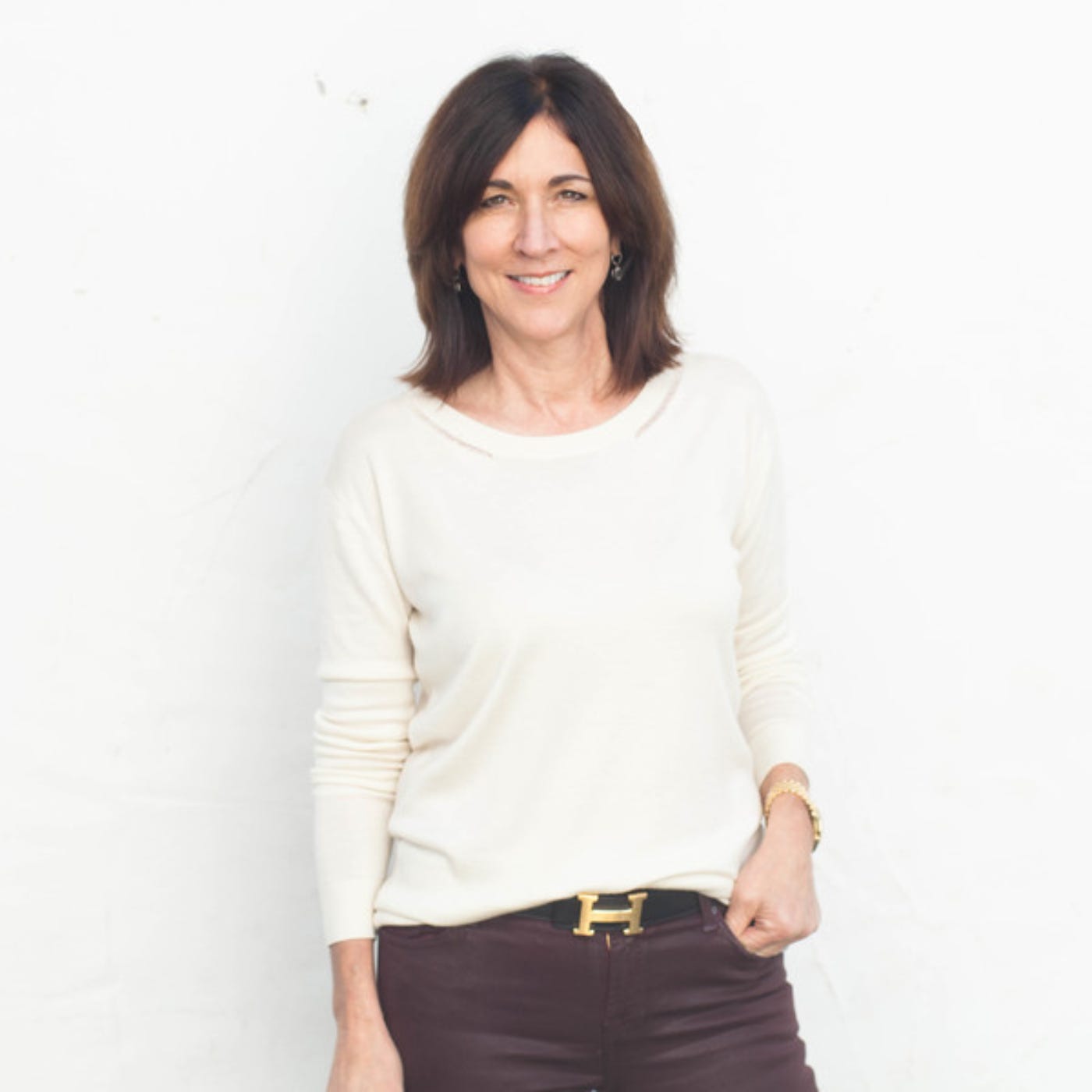
As a part of our series about “Why We Need More Women Founders”, I had the pleasure of interviewing Donna Pohlad.
Entrepreneur Donna Pohlad founded dpHUE in 2011. Pohlad founded the hair care company with a vision — to empower women by providing high quality products designed to manage hair color in-between professional salon visits. Her idea was born out of frustration with having to spend so much time and effort trying to hide her increasingly grey hair. The dpHUE brand took flight in 2016 when it launched in all Ulta stores, on Ulta.com, Sephora.com, began building out its direct to consumer platforms, and engaging salon professionals with Celebrity Colorist Justin Anderson.
Thank you so much for doing this with us! Before we dig in, our readers would like to get to know you a bit more. Can you tell us a bit about your “backstory”? What led you to this particular career path?
I have a very nontraditional beauty industry career path; in that, I don’t really have one! I dabbled in another business earlier in my life when my kids were young — a kickboxing studio. Beyond that, my life had really been about raising my kids with other projects and volunteer work. That said, I had been around family businesses for a good part of my life, which in hindsight, taught me by osmosis; it influenced me and made me naturally interested in business.
The idea for dpHUE was generated during the last recession. I had a problem: I had an event on a Friday, but my hair color appointment wasn’t until the following Tuesday. I was seeking a beautiful, salon-quality solution to covering my graying hair (“the runway” as we call it) — something that wouldn’t damage my hair, or upset my colorist when I went back to the salon. At the time, there wasn’t anything out there except for drugstore hair color.
I remember sitting at this big event and found myself staring at the backs of hundreds of heads in the audience, and I thought, ‘Wow, if I’m experiencing this problem, I bet all of these women feel the same way.’
From there, I just became obsessed with this idea. I knew I had to solve this problem.
So I started reaching out, networking and researching and trying to figure out what to do. And because I didn’t have prior beauty experience, I actually think that ended up helping me stay very curious and humble during the entire process. Slowly all my conversations started informing this idea of something different; not just different in terms of products, but a different experience for hair color. I found a consultant in Minneapolis, and one person led to the next person and to the next. It truly takes a village!
Can you share the most interesting story that happened to you since you began leading your company?
Our first step into a major retailer, Ulta, is a favorite story of mine. At this point we had an amazing hair color product, a small base of obsessed customers and we started dabbling in other product development — we had created only one Apple Cider Vinegar SKU, which would eventually become a leading product family and a category game changer. All our networking always led to the comment “this should be at Ulta,” and soon we were presenting at their Chicago headquarters. We went with no expectations, but with the enthusiasm of an indie brand and the passion of customers. An hour and a half later, we had an 875 store commitment. “We love this! We need four shelves! Can you do that?” Of course I said, sure we can do that, not having any idea what I was talking about or what it would take. When we left and started telling our network and team the new plan everyone assumed it was a hypothetical, or that it was just the first of many conversations. But that was it, in the room it was a done deal and we had 6 months to pull it off and turn what seemed like just our little can-do attitude into a national business. That was a really exciting turning point for dpHUE.
Can you share a story about the funniest mistake you made when you were first starting? Can you tell us what lesson you learned from that?
I will always be transparent about not having any prior experience in the hair business, it is an asset that has helped me to build my circle. I’m not a hair colorist by trade, I am the customer — which helps me hear what other customers want. dpHUE was founded through a lot of trial and error. I’ve always felt that if it isn’t good enough or easy enough for me to use, then it isn’t for dpHUE. Every product is tested on us first. This has led to many funny mistakes, from bleaching my own dark hair and turning it orange, letting my grandkids add streaks of pink and purple, or salon sink hoses spraying out of control like a scene from a movie, we’ve had a lot of laughs along the way. But no matter how great a product or idea may seem, if it doesn’t authentically work for me, our dpHUE team, family, friends, or even my grandkids, it’s a no-go.
None of us are able to achieve success without some help along the way. Is there a particular person who you are grateful towards who helped get you to where you are? Can you share a story about that?
I’m so grateful for my daughter, Maddy. She has worked with me from the start, and has been instrumental in making sure I’m considering the multi-generational customer needs and most importantly that I’m following the right people on social media! It’s been really special to work with her and to have one of my kids sharing with me the good, the bad and the ugly! Having a sounding board, where no topic is off limits, has helped me to flesh out concepts, ideas and products that a more traditional business might shut down. Since the beginning of dpHUE, she’s been there supporting me and wearing many hats to execute the day to day.
Ok, thank you for that. Let’s now jump to the primary focus of our interview. According to this EY report, only about 20 percent of funded companies have women founders. This reflects great historical progress, but it also shows that more work still has to be done to empower women to create companies. In your opinion and experience what is currently holding back women from founding companies?
It’s probably true that women who founded companies often do it out of necessity and most often are not handed the opportunity. Women create companies often because they need to provide for their families, the products in the market don’t address their needs, or the glass ceiling is holding them back. From mentoring to financing, we as a society have a long way to go in supporting women in business. According to WWD, women hold only 15% of CEO titles at the top 20 Beauty companies. Change starts with corporate leadership and even more women representation in VC firms and as such, it was very important to me to collaborate with women investors for dpHUE.
Can you help articulate a few things that can be done as individuals, as a society, or by the government, to help overcome those obstacles?
I think a positive change has been in the recognition of BIPOC and female founded companies. The big retailers have a desire to create seats at the table, and on the shelves, for a variety of races and ethnicities and create more opportunities for women to be part of this industry. I think creating access — access to mentors, access to money — helps people to get there. But the individual also has the power to vote with their dollars, buying products from female founded and BIPOC brands will help raise them up and create more future business leaders.
This might be intuitive to you as a woman founder but I think it will be helpful to spell this out. Can you share a few reasons why more women should become founders?
I think women make great leaders and run businesses differently than men do. In my experience, the women (and men!) at dpHUE work very collaboratively and we don’t compete with each other for power, or to shine the light brighter on ourselves. If you work hard, do your job, cooperate as a team, then everything is going to rise and everyone is going to rise along with it.
I also think mothers also have an edge. Day in day out, when you’re leading a family, you’re utilizing those skills — negotiation skills with your kids, teaching them cooperation and respect — that do have application in the bigger world for sure.
What are the “myths” that you would like to dispel about being a founder? Can you explain what you mean?
A myth that I’ve disproven over my lifetime is that you have to have experience. If you don’t have experience, you make up for it in other ways. You have to have a vision first and if you can connect with people to compliment your lack of skill set, that’s more important than years of training. No matter how much experience you have under your belt, going into business is scary; it’s a risk.
Is everyone cut out to be a founder? In your opinion, which specific traits increase the likelihood that a person will be a successful founder and what type of person should perhaps seek a “regular job” as an employee? Can you explain what you mean?
The number one thing a founder has to have is vision. Some people are better at executing than they are at vision. I think it takes a lot of perseverance to be a founder. You live, breathe, eat, sleep your business. It’s often a reflection on you, so you take it a bit personally and you don’t just clock out and go live life. It isn’t for the person who wants to clock out at the end of the day. That person isn’t going to enjoy being a founder. You have to really believe in what you’re doing. We’ve had our fair share of bumps in the road. However, the big picture I know for sure is that this company and what we do is relevant. It’s being confident in the relevance.
Ok super. Here is the main question of our interview. Based on your opinion and experience, what are the “Five Things You Need To Thrive and Succeed as a Woman Founder?” (Please share a story or example for each.)
- Vision: Without it, there’s no business!
- Tenacity: You don’t just wake up one morning and you’re a success, right? You work at it, work at it, work at it every single day. That’s just what it takes. Sometimes it’s not about natural ability, it’s about the discipline to make it happen.
- People matter: Surrounding yourself with talent is very important to me. Bringing smart, talented, entrepreneurial people into dpHUE has been transformative. Not just in the day-to-day business, but culturally for our company as well. Our whole executive team, Justin (Anderson, celebrity colorist and co-founder of dpHUE), Beth (Spruance Bennett, CEO of dpHUE); everyone is a great addition and lends a unique skill set to our company. How this company does business is key. Cultural fit for us is right up there with ability — it’s a big consideration for the team. Working in the world today, being remote, has challenges as we all know. We work at it every day to make our people feel like they’re a part of something that is growing and building.
- Listen to your intuition
- Details matter
How have you used your success to make the world a better place?
It feels great to be able to give back, whether through product donations to shelters or contributing to Food Banks when they needed it most throughout the pandemic. And for us, it’s important to support the hairdresser community as well. But rather than one sweeping gesture of philanthropy, I love the way dpHUE helps the world on a micro, person-to-person level. We’re about empowering people to do it for themselves. Whether it’s our own employees or giving each customer the tools to take control of their life through their hair, we offer a solution. Women reach out to us to share how we’ve impacted their day, or even helped to get them through the pandemic with our products, and that means the world to us. We also support hairdressers with our PRO programs; we encourage moms to put their families first with work-life balance through the culture of our company. This includes supporting the organizations our employees find important through matching gifts.
You are a person of great influence. If you could inspire a movement that would bring the most amount of good for the greatest number of people, what would that be? You never know what your idea can trigger.
I would hope to bring about a movement to encourage children’s curiosity and respect for our fellow human beings. It all begins in the home and we need to model the behavior that will encourage them to ask questions, learn to keep an open mind and truly feel empathy for all people.
We are very blessed that some very prominent names in Business, VC funding, Sports, and Entertainment read this column. Is there a person in the world, or in the US with whom you would love to have a private breakfast or lunch with, and why? He or she might just see this if we tag them.
I’m torn between Gloria Steinam and RBG. They both have exemplified vision, compassion and the importance of fighting for women. In the end, the world has moved positively forward by the impact they have had and how critical it is that following generations continue to fight the fight.
Thank you for these fantastic insights. We greatly appreciate the time you spent on this.
CG
Written by
Candice Georgiadis
Editor & Journalist · Authority MagazineCandice Georgiadis is a senior columnist at Authority Magazine covering Business and Tech, conducting primary-source Q&A interviews with founders, executives, and industry leaders.

Published inAuthority MagazineTop Lessons, Top Authorities · 42K Followers
Exclusive, curated interviews with the leaders and changemakers shaping tomorrow. Leadership lessons, industry deep dives, and executive profiles.