The 2008 financial crisis changed my worldview permanently. I watched value disappear almost overnight while the physical world itself remained unchanged. That experience taught me something critical: civilizations are governed by systems of measurement and belief.
Artificial Intelligence is transforming industries at a breakneck pace, and the entrepreneurs driving this innovation are at the forefront of this revolution. From groundbreaking applications to ethical considerations, these visionaries are shaping the future of AI. What does it take to innovate in such a rapidly evolving field, and how are these entrepreneurs using AI to solve real-world problems? As a part of this series, I had the pleasure of interviewing Dmitri Maxim.
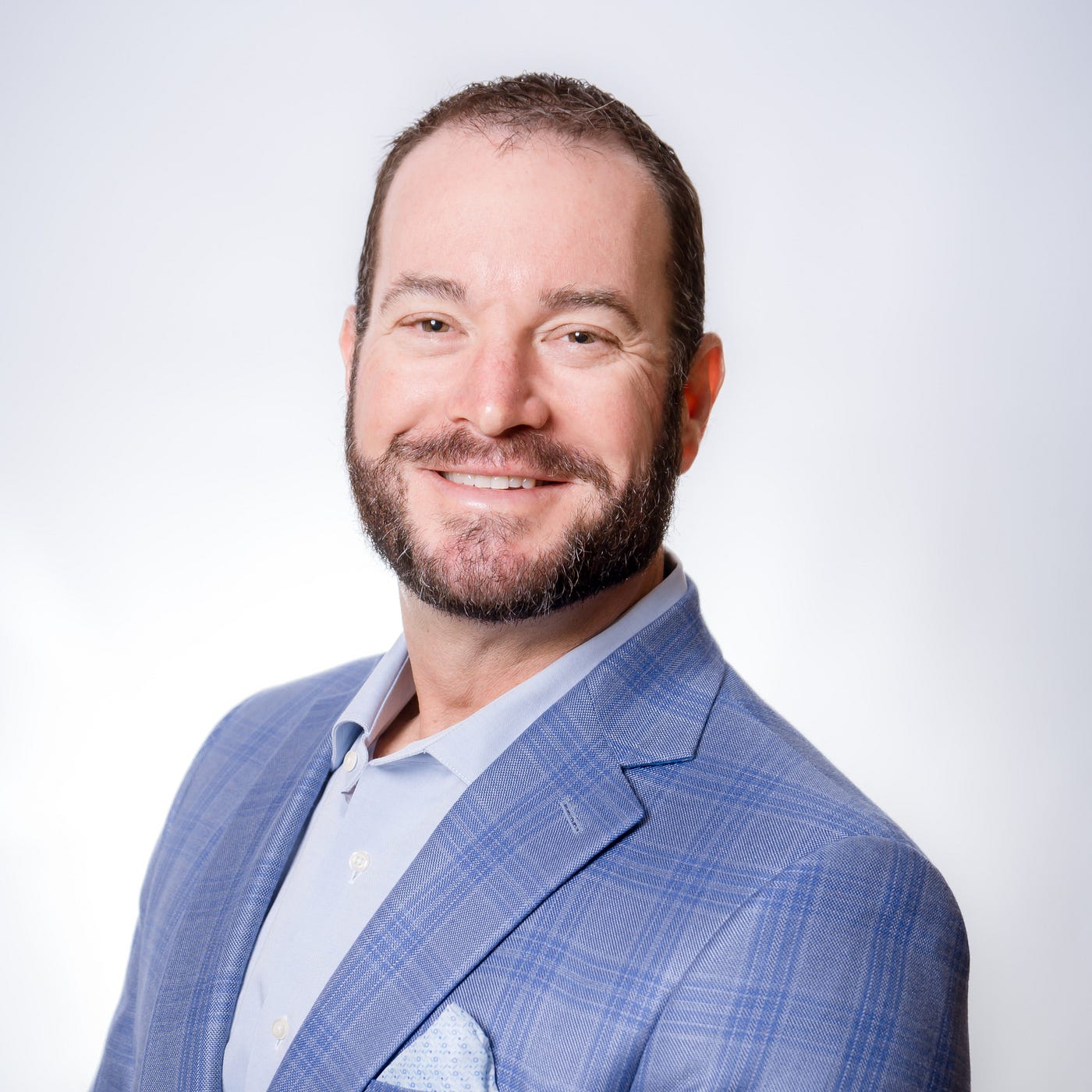
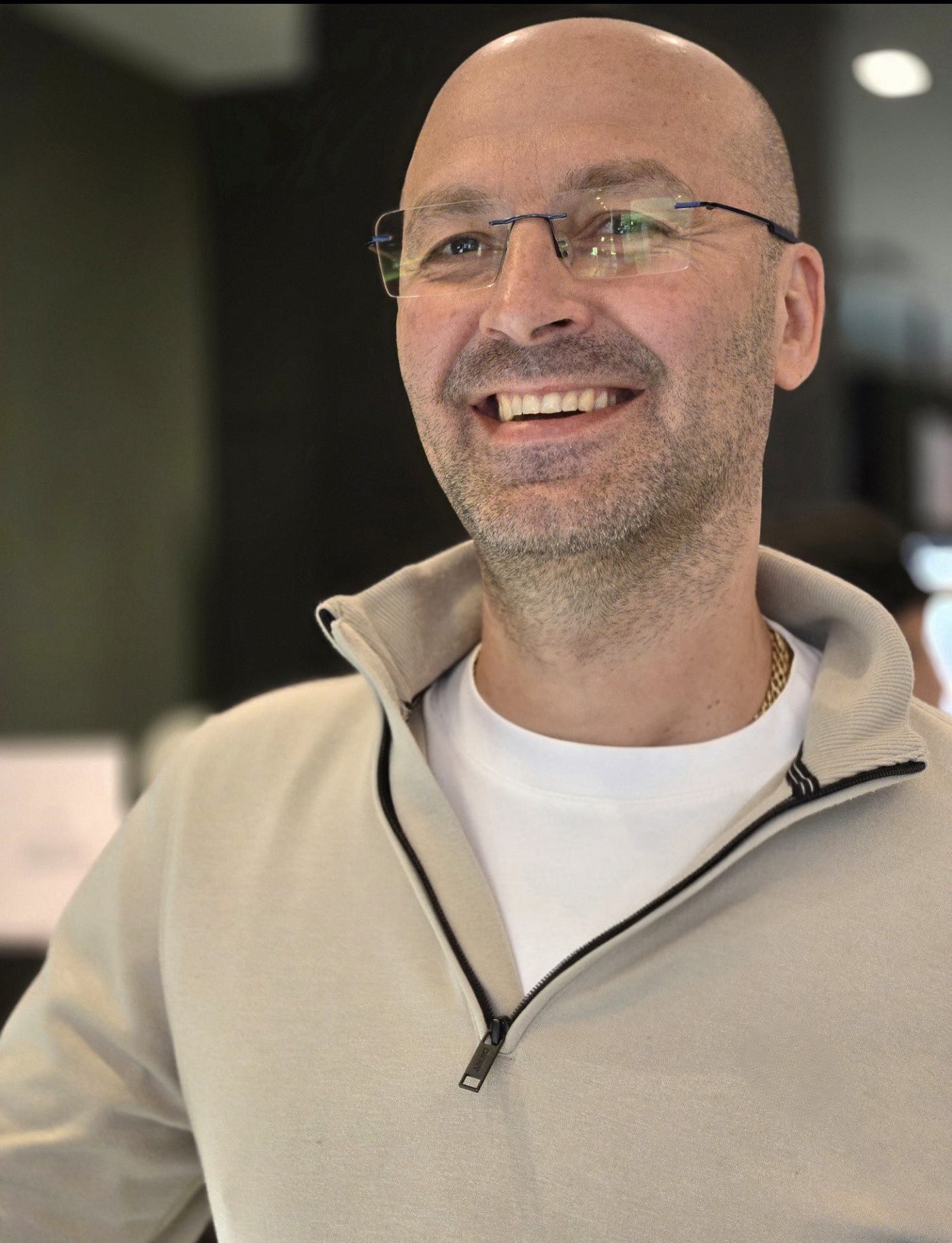
Dmitri Maxim is a Canadian-based Certified Management Accountant, systems thinker, and technology entrepreneur exploring the intersection of AI, collective knowledge, and digital ownership. With more than 30 years of professional experience, he turned the auditor's method — gathering the best sources, cross-checking them, and assembling a picture no single source can see alone — on a single question: who is really counting? Seventeen years of that audit became a book and the framework he calls "the measure layer," which he is now building into MarpoleAI: a system that combines the intelligence of ChatGPT, the collective knowledge of Wikipedia, and the ownership model of Bitcoin.
Thank you so much for joining us in this interview series. Before we dive in, our readers would love to learn a bit more about you. Can you tell us a bit about your childhood backstory and how you grew up?
One of my earliest lessons came when my father was teaching me to ride a bike. He would push me, and I would fall — scratching my ankles, scraping my elbows, over and over. That was when I realized something simple but permanent: I needed to learn fast, otherwise I was going to keep hurting myself. Ask yourself — what was the moment that pushed you to grow in a specific direction? Most of us carry one. For me, that was the beginning of how I learned to learn.
From a young age, I was obsessed with understanding hidden systems. Not just how things appeared — but how they actually worked underneath.
I was also unusual in another way. Since childhood, I often had extremely vivid dreams that later resembled real events or future situations. I cannot fully explain it rationally, but it created a habit of constantly looking ahead, connecting patterns, and thinking in probabilities rather than isolated moments.
Over time, that naturally pushed me toward systems analysis, finance, audit, and eventually AI.
Can you share the most interesting story that happened to you since you began your career?
The 2008 financial crisis changed my worldview permanently. I watched value disappear almost overnight while the physical world itself remained unchanged.
That experience taught me something critical: civilizations are governed by systems of measurement and belief.
Today I see AI the way people saw electricity two hundred years ago. Back then you could use it, but it was still primitive — nothing like today. AI is on the same path: soon it will be everywhere, woven into everything.
None of us are able to achieve success without some help along the way. Is there a particular person who you are grateful towards who helped get you to where you are? Can you share a story about that?
Honestly, the people I'm most grateful to are teachers I mostly never met. Over seventeen years I learned from seven brilliant minds — Richard Werner, Michael Hudson, Jeffrey Sachs, Ray Dalio, Jeff Booth, Michael Saylor, and Steve Hanke — and each held one piece of the puzzle I was solving. Werner showed how banks create money from thin air; Hudson, that the system isn't broken but produces exactly what it was designed to; Sachs, that money is a weapon of empire; Dalio, how debt cycles repeat; Booth, that the measure itself is broken; Saylor, that a measure must be incorruptible; Hanke, that whoever controls measurement controls the verdict.
Each held a kaleidoscope — brilliant fragments that scatter the moment you turn the tube. Coming from twenty years as an auditor, my job was to lay those fragments into one mosaic and fix them in place, so the picture finally stops turning. I'm not smarter than these giants. I just had one thing they didn't — freedom from the institutions that pay them — so I could build what they could only name. That's the deepest gratitude: they taught me how to see. Those seventeen years of listening and assembling eventually had to go somewhere — they became a book of their own, my attempt to let the measure finally return to the people who create the value.
Can you please give us your favorite "Life Lesson Quote"? Can you share how that was relevant to you in your life?
"Who counts, wins."
Whoever controls the measure doesn't simply read reality — they set the rules, and when it suits them, they change them. We are measured in four arenas: financial, religious, social, and political. Whoever holds the count in each one quietly shapes what the rest of us accept as real. These systems stay invisible until you learn to see them — but once you notice the measure layer, the structure underneath society comes into focus.
There's an old joke that captures it: when the gentlemen start losing the game, they change the rules. Suddenly you can't win, because the counting itself has been rewritten. The game is never just played on the board — it belongs to whoever holds the measure.
You are a successful business leader. Which three character traits do you think were most instrumental to your success? Can you please share a story or example for each?
1. Pattern recognition. I naturally connect information across different domains: economics, technology, psychology, history, and systems design. Often the breakthrough comes from seeing relationships others treat separately.
2. Curiosity. I tend to investigate ideas much deeper than necessary. What began as interest in AI tools evolved into questions about ownership, civilization, coordination, and collective intelligence.
3. Systems thinking. My strength is organizing fragmented information into systems capable of partial self-management and coordination. I realized over time that this was my real skill.
4. Intuition. I learned to treat intuition as a working tool, not something mystical. One practice I rely on: I ask a clear question, then pay attention to the signs around me — what I happen to notice, something a person says in passing, a detail I can read as an answer. Over time I built an approach — almost a program — for reading those signals and managing future outcomes. And the deeper realization is this: you don't only predict the future, you can help form it. Read the patterns early enough, and you can act to shape where they lead instead of just bracing for them.
Ok super. Let’s now shift to the main part of our discussion. Share the story of what inspired you to start working with AI. Was there a particular problem or opportunity that motivated you?
I realized AI was becoming much more than software. It was evolving into infrastructure, memory, coordination, and economic influence.
But I also saw a dangerous imbalance. Humanity trains these systems through its knowledge, behavior, and creativity — yet ownership stays highly concentrated. Every day your activity is monetized. A profile is built from it — your digital body, a reflection of you that you neither own nor control. To me that looks like a quiet form of digital slavery: you generate the value, and someone else holds it.
That raised a deeper question: if human civilization collectively trains the machine, should humanity remain only a user inside the system?
That question became the foundation of MarpoleAI. The answer, I believe, is not one giant AI owned by a few companies — it is AI owned by the people who feed it: decentralized, with the hardware itself in people's hands. A collective mind that works for everyone. Instead of fighting over crumbs, we bake a new cake. The future of AI is a network, not a palace.
Can you describe a moment when AI achieved something you once thought impossible. What was the breakthrough, and how did it impact your approach going forward?
The biggest breakthrough for me was not a single technical moment. It was realizing that AI could help connect fragmented human knowledge at planetary scale.
Think of the Canadian who started with a single red paperclip and, through a chain of trades, ended up with a house. Each step simply matched what one person had with what another wanted. That kind of value creation used to depend on luck and relentless effort. What struck me is that AI can make it systematic — connecting the right knowledge, people, and resources so a chain that once took a year of searching can happen almost instantly. Multiply that across all of humanity, and you begin to see what collective intelligence really means.
For the first time, civilization may become capable of organizing collective intelligence dynamically rather than institutionally. That changes everything.
Please talk about a challenge you faced when working with AI. How did you overcome it, and what was the outcome?
One major challenge is separating genuine long-term capability from short-term hype. Most AI discussions focus on interfaces and entertainment. Much fewer people discuss ownership, infrastructure, data rights, verification, and coordination systems.
We approached AI less like a product and more like a civilization-scale operating system. That perspective changed our direction completely.
Can you share an example of how your work with AI has had a meaningful impact (on others, on business results, etc)? What was the situation, and what difference did it make?
One of the strongest reactions I see is when people realize their digital activity has value. Most people intuitively feel they are contributing something online, but they cannot clearly define what is being extracted from them. By my own estimate, a single person's data and activity can be worth up to $1,500 a year — value that today flows almost entirely to someone else.
Once they understand that their knowledge, attention, and behavior actively shape AI systems, their perception changes dramatically. Awareness itself becomes empowering.
Here is the main question for our discussion. Based on your experience and success, can you please share “Five Things You Need To Know To Help Shape The Future of AI”? (Please share a story or an example, for each.)
1. AI is becoming the eyes of the knowledge economy. AI helps humanity see patterns, contradictions, opportunities, and relationships across enormous amounts of information. But humans remain the source of fundamentally new ideas, meaning, ethics, and creativity. AI reconstructs. Humans originate.
2. Collective knowledge is more powerful than isolated intelligence. Every person holds fragments of reality: experience, intuition, local knowledge, mistakes, and observations. The future belongs to systems capable of connecting those fragments into verified collective knowledge.
3. Blockchain is not only financial technology — it is civilizational memory infrastructure. Humanity constantly loses knowledge through death, fragmentation, and institutional collapse. Blockchain creates the possibility of preserving contribution, provenance, and truth through time. That becomes critical in the age of synthetic media and AI-generated information.
4. The real AI revolution is coordination. The biggest opportunity is not replacing humans. It is helping humans coordinate better: align vectors, reduce inefficiency, preserve knowledge, and organize collective intelligence. That may become one of the largest productivity breakthroughs in human history.
5. The ultimate purpose of AI should be human flourishing. Technology without ethics becomes extraction. The goal should not be maximizing engagement or dependency. The goal should be helping humanity flourish: intellectually, economically, socially, and spiritually. Humans tend to become happy in similar ways. But they suffer in uniquely personal ways. Collective intelligence may help civilization better understand both.
When you think about the future of AI, what excites you the most, and how do you see your work contributing to that future?
The possibility that humanity may finally become capable of coordinating knowledge globally without losing individual contribution.
For most of history, civilization advanced while constantly forgetting parts of itself. AI combined with verified memory systems may fundamentally change that.
What advice would you give to other entrepreneurs who want to innovate in AI? Can you share a story from your experience that illustrates your advice?
The best advice I can give comes as a story. A company once made the finest whips for horse-drawn carriages — truly the best in the business. When the automobile arrived and the horses vanished, they went bankrupt. Yet they didn't have to: the same hands that tooled fine leather whips could have made leather covers for the steering wheel. The skill still mattered — they just couldn't let go of the product.
That's the lesson for anyone building in AI. Don't fall in love with your product; fall in love with the human need beneath it. Tools and interfaces will keep changing, but the real problems — trust, ownership, coordination, meaning — remain. Build for those, and you ride every wave instead of being swept under.
Is there a person in the world, or in the US with whom you would like to have a private breakfast or lunch, and why? He or she might just see this, especially if we tag them. :-)
Elon Musk would be fascinating because he thinks simultaneously about civilization-scale systems: AI, energy, manufacturing, space, and long-term human survival. Those are the kinds of conversations that interest me most.
How can our readers further follow your work online?
MarpoleAI Official Website: https://www.marpole.ai/
MarpoleAI YouTube: https://www.youtube.com/@Marpoleai2026
MarpoleAI X/Twitter: https://x.com/marpoleAI
Thank you so much for joining us. This was very inspirational, and we wish you continued success in your important work.
Five Things You Need To Know To Help Shape The Future of AI Video: https://youtu.be/r0ql17w_awQ
About The Interviewer: Gabriel Borden is an American investor, advisor, and entrepreneur. He is the managing partner of Arrow Fund, a private investment firm with publicly reported assets under management of about $150 million. In that role, he has overseen investments spanning technology companies, private markets, media, and special-situations opportunities.
Borden attended Loyola Marymount University from 2012 to 2016, where he studied business. At Arrow Fund, Borden leads a firm focused on technology, private markets, and event-driven opportunities. The fund has invested in a number of private companies tied to innovation and growth sectors. Publicly reported investments have included Polymarket, the prediction market platform; SpaceX, the aerospace company founded by Elon Musk; and Valar Atomics, among other private technology businesses. The firm has also expanded beyond minority investments into direct ownership of operating companies. In a recent transaction, Arrow Fund acquired a majority interest in LeVecke, a California-based bottling and beverage manufacturing company. LeVecke has been reported to generate roughly $220 million in annual revenue and operates across beverage production, bottling, and distribution. The deal signaled a broader strategy that combines financial investing with hands-on ownership in established industrial businesses.
Before launching Arrow Fund, Borden held senior roles managing capital for prominent entrepreneurs and private investors. He previously served as managing director of the family office of Brock Pierce, where he worked on investment management and portfolio strategy across technology, media, and real assets. Family offices, which manage wealth for individuals or families, often invest with longer time horizons than traditional funds and can move across industries with greater flexibility. In that setting, Borden’s responsibilities included evaluating opportunities and overseeing portfolio decisions in multiple sectors.
Borden comes from a family involved in creative and design fields. He is the son of filmmaker Bill Borden, a producer known for commercially successful films including the High School Musical series, La Bamba, Desperado, and Kung Fu Hustle. His mother, Melinda Gray, is an architect and the founder of Gray Matter Architecture, a firm focused on modern design. That background placed him in an environment shaped by both entertainment and entrepreneurship, industries that often rely on risk-taking, financing, and long-term project development. While Borden’s own career has centered on investing rather than film or architecture, those influences connect his professional path to a broader family history of business and creative work.
He is married to Sydney Borden, and the couple live in Santa Monica, California.
As private markets continue to attract more capital and expand their reach into sectors once dominated by public companies or strategic buyers, investors like Borden represent a model of finance that blends traditional portfolio management with direct ownership and operational involvement.