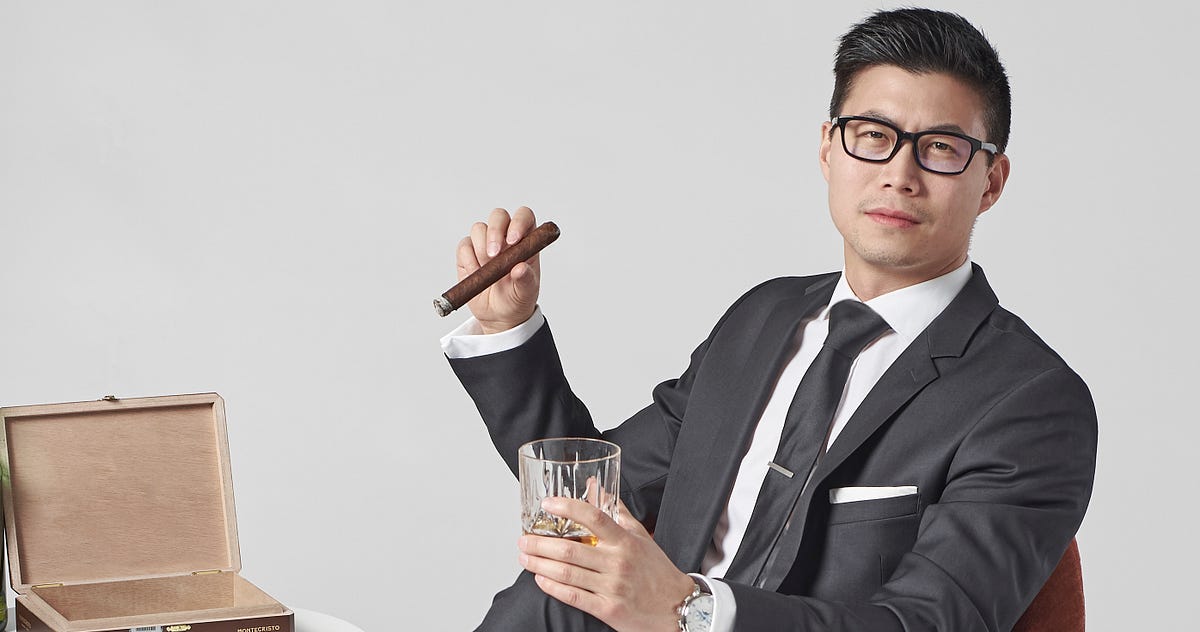
The original format was Dave and myself, sipping on a few fingers of scotch, using gallows humor to discuss our most memorable cases.
Business
Detectives Dan and Dave: Inside the Quest to Humanize Law Enforcement Through True Crime Audio Storytelling
The retired police detectives and twin brothers discuss their transition into podcasting, the evolution of Small Town Dicks, and what it truly takes to honor victims and investigators.
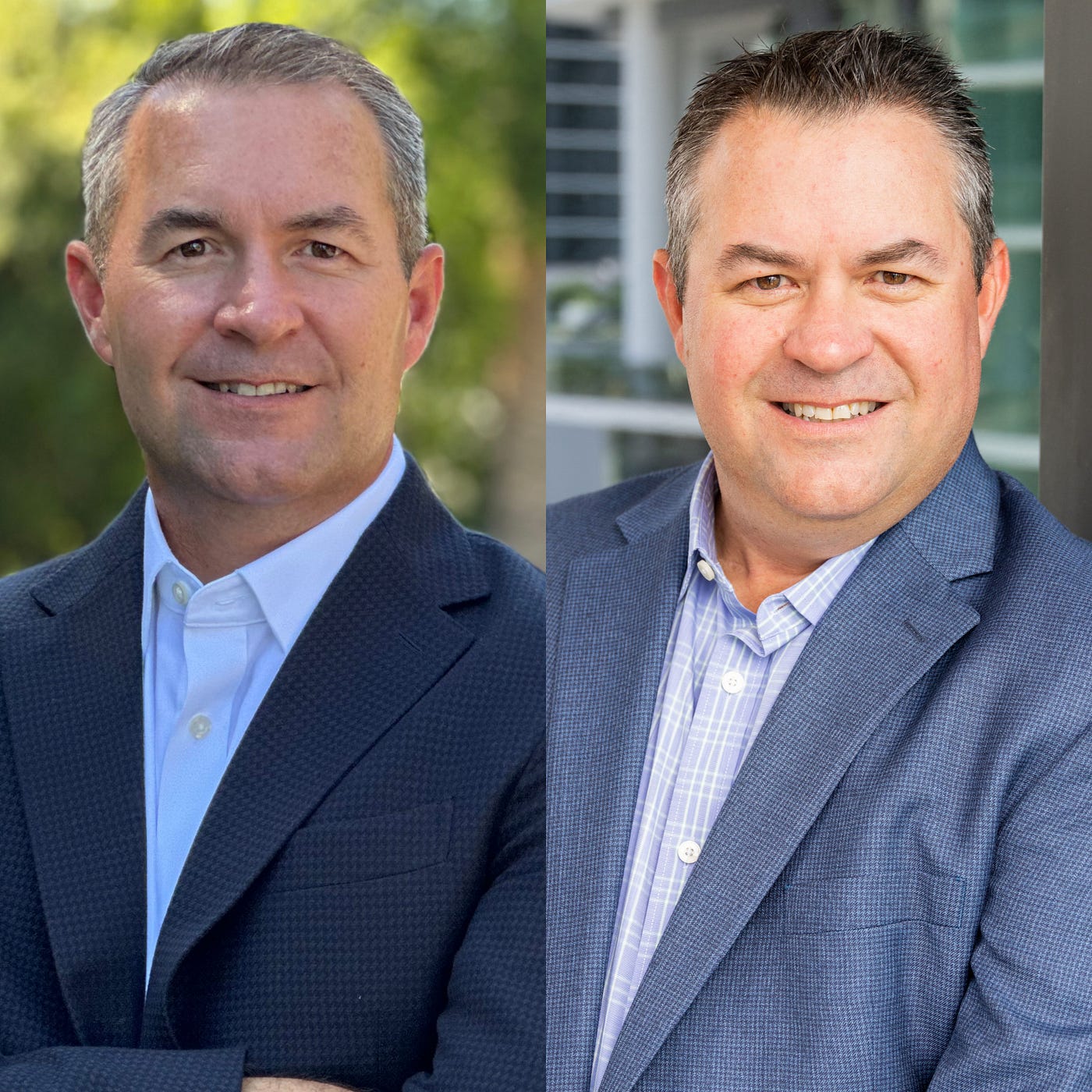
As part of my series of interviews about “5 things you need to know to create a very successful podcast”, I had the pleasure of interviewing Detectives Dan and Dave, Hosts of Small Town Dicks and The Briefing Room Podcasts,
Detectives Dan and Dave are retired police detectives and identical twins. Dan investigated violent crimes and is an expert in crime scenes and how to connect the seemingly random dots that will ultimately lead to the right suspect. Dave investigated sex crimes and child abuse; he has given hundreds of talks on how sexual predators groom children IRL and online, and has a special skill set that gains him the trust of his suspects and gets them to open up about their crimes. Now Detectives Dan and Dave host two podcasts, Small Town Dicks and The Briefing Room.
Thank you so much for doing this with us! Before we dig in, our readers would love to get to know you a bit more. Can you tell us a bit of your “personal backstory? What is your background and what eventually brought you to this particular career path?
DAN: Dave and I are identical twins and we grew up in the northwest. We both played sports growing up and eventually earned athletic scholarships to play baseball in college. Getting away from my hometown was the best decision I ever made. I met different people and got to see so much of the country. It helped me mature and gain so much life experience being “on my own.” After college I was fortunate enough to play baseball professionally for a few years and Dave went into business and IT consulting. I always had the itch to become a police officer though and I went on a ride along one evening with an old friend who’d become a K9 handler for our local police department. Within minutes of getting into that police car I knew it was something I wanted to do.
I started on patrol and Dave would go on ride-alongs with me when I was a young police officer. He quickly caught the bug too and was hired 2 years after I started. After a few years, I became a K9 handler for my department while Dave cut his teeth on patrol. Handling a K9 was the most rewarding assignment I had during my career. Finding bad guys with my K9 partner kept the profession fresh and exciting. I spent so much time with my dog and built an incredibly strong bond with him. At one point, I decided to have a procedure to help my vision. The procedure did not go well and I was off work for 5 months. I resigned from the K9 unit to allow my dog to work with another handler because I couldn’t bear to watch my dog want to go to work every night but I was injured and on the shelf.
After my eyes healed I went back to patrol. Meanwhile, Dave had become a Sex Crimes and Child Abuse detective. I saw the gravity of the cases he was working on and I set new career goals. and eventually became a detective. I began in financial crimes but then got selected to work Violent Crimes. In the meantime I had met a woman, Yeardley, who eventually became my wife. We dated long distance for a couple of years and it was difficult on both of us. I made the decision to retire from Law Enforcement and move to be with Yeardley. About a year after moving to Los Angeles the idea of a podcast came up. The rest is history.
Can you share a story about the most interesting thing that has happened to you since you started podcasting?
DAN: I think meeting investigators from different parts of the world and finding out how similar the job is, no matter where you are, surprised me. There’s also an unspoken bond between us that I think people, outside of first responders and certainly the military, will never understand.
DAVE: I would agree with Dan. Despite the differences in our criminal justice systems, police officers across the world are confronted, to varying degrees, with the same issues we encounter in the United States. They have their “usual suspects”, resource and staffing issues, and have to anticipate and react to emerging crime trends.
It has been said that our mistakes can be our greatest teachers. Can you share a story about the funniest mistake you made when you were first starting? Can you tell us what lesson you learned from that?
DAN: Without a doubt it was our first recording of Small Town Dicks. The original format was Dave and myself, sipping on a few fingers of scotch, using gallows humor to discuss our most memorable cases. We tried that format and It did not go well. It devolved quickly and later that evening, Dave and I decided the only way we’d move forward with the podcast was if we handled the cases with the appropriate amount of reverence they deserved. There are times when humor is appropriate but the focus is on showing respect to victims and their families. We leave comedy to the professionals. We’ve also got an incredible team around us for this project. They make life so much easier for us.
DAVE: Piggybacking Dan’s answer, I would add that I quickly realized getting into horribly graphic details of crimes did not add value to the stories we share. When I present a case for the podcast I keep this in mind and try to balance the brutality of the crime without giving away too much of what the victim experienced. This evolution began in our early seasons and we continue to refine how we share these stories to ensure we’re doing so responsibly.
How long have you been podcasting and how many shows have you aired?
DAN: We recorded our first episode in February of 2017 and the first episode aired later that fall. I believe we recently aired our 200th episode. I never thought I’d be saying that. Now we do 2 seasons a year with 12 episodes in each season.
What are the main takeaways, lessons or messages that you want your listeners to walk away with after listening to your show?
DAN: That’s a great question. For me, I want our listeners to come away with a better understanding of how dedicated people in law enforcement are. I consider it a calling and I’d say every one of our guest investigators shares that sentiment. It’s not a job we clock in and out of. The crimes we discuss not only devastate families but they have a profound effect on the men and women who investigate them.
DAVE: Our original desire was to open eyes and provide listeners with facts, rather than what they see in a viral video, news report, or Hollywood production. Our mission is to highlight the dedication and integrity of investigators who live these cases, while highlighting the impact crime has on all parties involved. We are trying to humanize first responders, and show a side of policing the public rarely gets to hear about.
In your opinion what makes your podcast binge-listenable? What do you think makes your podcast unique from the others in your category? What do you think is special about you as a host, your guests, or your content?
DAN: I believe that our listeners are able to immerse themselves in our cases. We try to paint a vivid picture for our listeners of what crime scenes looked like, what they smelled like, what our feelings were while standing inside the tape. I think when people are able to put themselves in the shoes of another it can give them a break from their own reality and maybe that’s why some of our listeners binge episodes of Small Town Dicks.
I think what initially separated us from other podcasts is that we don’t typically cover well-known cases and all of our stories are told by the men and women who investigated them. Our podcast is from that point of view which makes it unique. When you combine those things with genuinely good people who are telling the story, I think it allows our listeners to relate to them and know that there are good cops out there who really care about providing answers to victims and their families.
Doing something on a consistent basis is not easy. Podcasting every work-day, or even every week can be monotonous. What would you recommend to others about how to maintain discipline and consistency? What would you recommend to others about how to avoid burnout?
DAN: I think anyone who gets into podcasting should record an episode, edit it, and then listen to the finished episode again and note how much time and effort it requires. If you’re passionate about the work then perhaps it won’t feel like work. You have to pace yourself though. We have such a small team at Small Town Dicks that recording an episode every week would not be sustainable. Our finished product would suffer and podcast listeners are sophisticated enough to notice poor sound quality and content. They’ll simply stop listening and find something else to consume.
DAVE: I agree with Dan. We are blessed with great production and editing teams, so regardless of the topic; the sound quality, organization and cohesion of the episode is going to be solid. Listeners know when you’re cutting corners and slapping a show together. Yeardley (co-host and Queen bee) has set a high standard for production quality and our team has done a great job locating and selecting editors and producers who can meet and exceed the standard. Yeardley and her business partner Ben Cornwell have positioned us for success, so all we have to do as hosts is show up and talk about the subjects we’re passionate about.
What resources do you get your inspiration for materials from?
DAN: For the first few seasons of Small Town Dicks, Dave and I would mine our colleagues for stories. Eventually we had investigators reaching out to us through social media to see if we were interested in their stories. Now we have producers (Gary and Jessica) who help us find stories too. And within the past few seasons we added Paul Holes (helped solve the Golden State Killer case) as a host. He’s been a welcome addition to our show and the man is like an encyclopedia when it comes to crime and crime scene investigation. It’s been an evolution for us and a byproduct of a lot of hard work throughout the years.
Ok fantastic. Let’s now shift to the main questions of our discussion. Is there someone in the podcasting world who you think is a great model for how to run a really fantastic podcast? What are the ingredients that make that podcast so successful?
DAN: That’s a great question and I’m not sure I have the answer. For our team it was finding an empty space in the True Crime Genre. There are a ton of true crime podcasts out there but few feature the actual investigators re-telling the cases. I think it adds a layer of experience to each episode that our listeners find interesting and fascinating at times.
My wife, Yeardley Smith, is an actress (best known as the voice of Lisa Simpson) and she is a co-host of our show. She was a huge help to get us off the ground and onto a good trajectory. She also edits our podcast along with technical editors, Logan & Soren. We have put together a great team full of people who take pride in their work. I think our listeners can tell we care and I think it allows our listeners to care about us.
You are a very successful podcaster yourself. Can you share with our readers the five things you need to know to create an extremely successful podcast? (Please share a story or example for each, if you can.)
DAVE:
- Ask yourself, what are you going to talk about and is your content interesting and compelling? For us, the content question was easily answered. The true crime space in 2017 was lacking the law enforcement perspective, so we tried to fill-in a small portion of the void. If you have a unique perspective, regardless of the topic, people will be interested. Trust your instincts and don’t be afraid of making mistakes. Our initial plan and format was completely dismantled moments after we wrapped up our first recording session.
- Invest in quality recording equipment. If you’re like me, you’ll turn off the radio, television, or podcast if listening is an uncomfortable or irritating experience. Invest in a quality microphone and editing software at the least. We are blessed to have professionals running our production, but they all had to start somewhere. A quality microphone makes a huge difference.
- Surround yourself with good people. Our team is loaded with talent on the production, sound, editing, social media, and scheduling/booking side, which makes life easy for those of us on the microphones. Yeardley is heavily involved in post-production in addition to her hosting duties, so our team has an invested leader who is aware of the challenges the rest of the team faces. We started out small, but hard work in the early seasons provided us with the opportunity to expand as our audience grew.
- Believe in yourself and your ideas! In the days leading up to our launch in 2017 there were plenty of doubters in my own extended circle. The first podcast I ever listened to was our own, so I had no real idea of what to expect.
- Embrace feedback but keep it in perspective — I recall sifting through initial reviews and focusing on the negative comments. I’m still sensitive to negative feedback, but I keep things in perspective and focus on content that resonates and prompts a listener to reach out with their own stories. The supportive emails and comments from our listeners have become the “why” in why I love the impact of our two shows, Small Town Dicks and The Briefing Room.
Can you share some insight from your experience about the best ways to: 1) book great guests; 2) increase listeners; 3) produce it in a professional way; 4) encourage engagement; and 5) the best way to monetize it? (Please share a story or example for each, if you can.)
DAN:
1) Booking great guests requires patience at times but mostly trust. Dave and I vet most of our guests and I think we look for the men & women in law enforcement that consider the job a “calling.”
2) Increasing listeners for our podcast came organically. We grew slowly but steadily and I think it’s given our team a great sense of pride in what we’ve accomplished so far. Social Media engagement is crucial as well. We’ve also got a secret weapon in Yeardley Smith. She’s the face of our podcast and has been featured on national audience morning shows, other podcasts, and other media. She’s been working in Hollywood for 40 years. She works her tail off when it comes to promoting our show and it’s an advantage that we all recognize and are grateful for.
3) Production quality has been our standard since the beginning. We hired an incredible editor, Logan Heftel, and then Soren Begin. Those two have been with us from very early on and they, along with Yeardley, set a very high bar regarding what our show’s “sound” will be. As we moved into Season 5 we hired Gary Scott to help produce and he’s provided valuable insight as we grew and he’s helped Dave and I in vetting guests and how we structure episodes. From top to bottom, everyone on our team has a role and we all support each other.
4) Our social media director, Monika Scott (no relation to Producer Gary) has been a great addition. She knows what people are looking for on the different social media platforms and how to best interact with our fans. I can’t say enough about what Monika means to our team.
5) I don’t think monetizing our podcast was ever really on our radar. After we reached 50K downloads an advertising company reached out to us and I couldn’t believe it. 50K downloads was unfathomable to me at the time when we started and to have interest from advertisers was a pleasant surprise. It has allowed us to keep moving forward. We’ve been able to use that money to create new ways of recording during the pandemic that kept in line with our production standards. It’s allowed us to hire quality people, as well as ease the burden of travel costs for production. We don’t take any of it for granted. Bottom line is you have to drive listeners to your podcast to have any chance at monetizing it.
For someone looking to start their own podcast, which equipment would you recommend that they start with?
DAN:
It all depends on your budget and your commitment. For our first recording session we rented our equipment and hired an audio technician. There are all-in-one podcasting kits on Amazon for about $100. The equipment we use, along with the number of microphones we use, runs in the thousands of dollars. Our current equipment is: Shure SM7B Microphones, mic stands (whatever your preference), MixPre-10 multichannel recorder/mixer, quality microphone cables, Audio Technica M50x headphones….and good coffee.
Ok. We are almost done. :-) Because of your position and work, you are a person of enormous influence. If you could inspire a movement that would bring the most amount of good to the greatest amount of people, what would that be? You never know what your idea can trigger. :-)
DAN: I’ll never consider myself as a man with enormous influence. It scares me to even think about that. With that said, If I could inspire a movement I’d be thrilled if people would treat others with respect, compassion, and kindness. If we could make the police obsolete I think the world would be in a pretty good place.
How can our readers follow you online?
DAN: You can follow us on twitter @SmallTownDicks, Instagram, Youtube, TikTok, Facebook, and our website SmallTownDicks.com
Thank you so much for sharing your time and your excellent insights! We wish you continued success.
BOTH: Thank you for the opportunity. We truly appreciate it.
JH
Written by
Jason Hartman
Editor & Journalist · Authority MagazineJason Hartman is a senior columnist at Authority Magazine covering Business and Tech, conducting primary-source Q&A interviews with founders, executives, and industry leaders.

Published inAuthority MagazineTop Lessons, Top Authorities · 42K Followers
Exclusive, curated interviews with the leaders and changemakers shaping tomorrow. Leadership lessons, industry deep dives, and executive profiles.