A lifestyle brand is something that is not focused on one service necessarily or one product. It is something that encompasses different aspects of your life, it has different attributes, interests, values. It is really about making culture.
Business
Delphine Gardere of Rhum Barbancourt on Brand DNA, Consumer Connection, and the Journey from Finance to Heritage Distilling
The CEO of Haiti's historic Rhum Barbancourt shares her transition from luxury fragrance marketing to family leadership, and the foundational pillars required to build a lasting lifestyle brand.
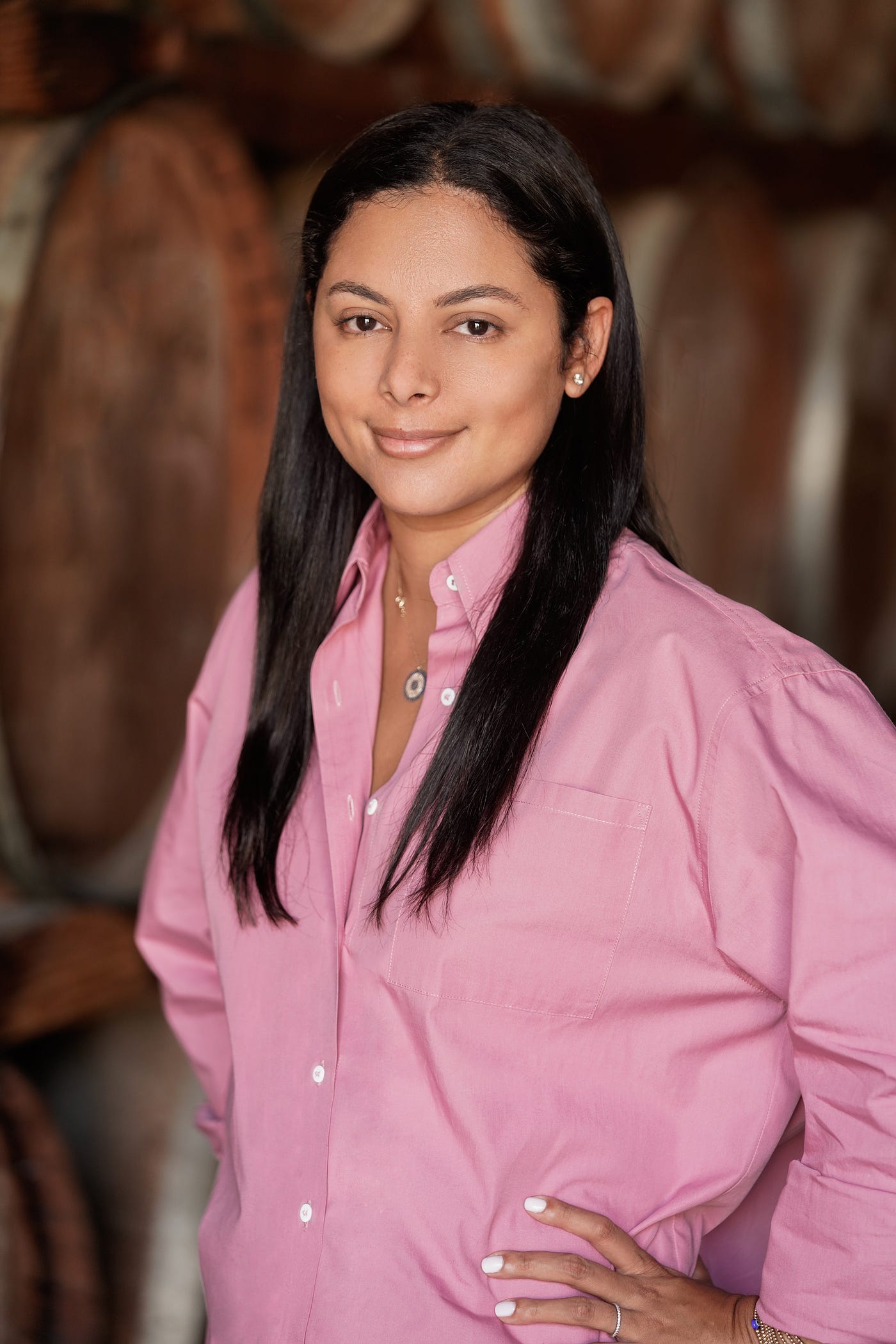
As a part of our series called “5 Things You Need To Know To Create A Very Successful Lifestyle Brand”, I had the pleasure of interviewing Delphine Gardere.
Delphine Gardere, 37 years old, recently became CEO of Rhum Barbancourt, the biggest company in the spirits industry in Haiti. Delphine studied and worked abroad for several years before deciding to rejoin Haiti and the distillery, and channeling her hi-end experience in luxury goods marketing into her family business, which had been run by his father Thierry Gardere for almost three decades until 2017.
As a young woman, Delphine left her country to attend college in France, where she pursued a Business degree at Inseec School and then moved to the US to attend Emory University. Her first job was in London as a Stock Analyst on the Pharmaceuticals Industry for Societe Generale Corporate and Investment Banking. In the early 2000s, however, she realized that her heart and passion were in the consumer goods industry, so she decided to quit her job and take a master in marketing.
In 2010, Delphine successfully graduated from Cranfield School of Management in the UK, a top-tier Business School where she discussed a thesis on the premiumization of rum.
While working on her thesis, she was offered an assistant product manager job at Dior Parfums, to perform operational marketing for both the UK and Ireland.
This was a crucial experience for Delphine, a valuable source of learning, and a starting point that led her to a new position as Brand Manager for a fragrance distributor, where she worked for more niche brands for the UK and Ireland, like ByTerry, Serge Lutens, Annick Goutal, Etro…Moving on into her career, Delphine went to work as a Senior Brand Manager for Hermes Fragrances in the French market, which is their biggest one.
In less than ten years, Delphine managed to gather an incredible skill set roster, which she could apply to the financial, marketing, and operational sides of running a distillery. After her first pregnancy, four years ago, together with her father, Delphine decided it was time to put a foot back into the family distillery and started working in the marketing department of the company, pursuing a plan for expanding the distribution and export markets. Delphine became CEO of the company last year, after her father passed away.
Delphine Gardere lives in Port-au-Prince and is the mother of two.
Thank you so much for joining us in this interview series! Can you tell us the story of what led you to this particular career path?
I was born and raised in the Rhum Barbancourt distillery, a business that my family has run for over 150 years. It was somehow natural to play, one day, a relevant role in that company. However, before entering my family’s business, I studied abroad, I had different work experiences and developed a pretty long career in the fragrance business’ marketing for LVMH in Paris. In less than ten years, I managed to gather an incredible skill set roster that had been a grounding foundation for me to run the distillery. Working for a luxury brand also gave an entirely new perspective on the direction that my family-owned company could follow.
After my first pregnancy, together with my father, we decided that it was time for me to go back to Haiti and strengthen my expertise in distillery management. I became CEO of the company last year, taking over my father’s role and his legacy.
Can you share a story about the funniest mistake you made when you were first starting? Can you tell us what lesson you learned from that?
It was not really a mistake but more of an unfortunate, tragic and at the same time absurd, event.
During my first job as a stock analyst in London, a toaster went on fire into my apartment the day of a very important merger acquisition! The company I was following was about to be bought by another company and we were supposed to discuss the operation.
It was the era of the Blackberries so there were no social media or Whatsapp that made communication as easy as it is nowadays. I arrived 15 min later and my boss literally could not count on me .
So, always be on time. Or earlier. That is what I learned from there.
Can you please give us your favorite “Life Lesson Quote”? Can you share how that was relevant to you in your life?
During the last two years, it has been “If you’re going through hell, keep going,” from Winston Churchill. It is about the attitude you have to face problems, about learning from your mistakes and keep going through them, learning from the process.
Ok, thank you for that. Let’s now jump to the primary focus of our interview. For the benefit of our readers, let’s define our terms. How do you define a Lifestyle Brand? How is a Lifestyle Brand different from a normal, typical brand?
A lifestyle brand is something that is not focused on one service necessarily or one product. It is something that encompasses different aspects of your life, it has different attributes, interests, values. It is really about making culture.
What are the benefits of creating a lifestyle brand?
Because it becomes a way of life and it touches the consumer on different levels, a lifestyle brand is less transaction-focused. It is deeply rooted with the customer, in the way he lives, in the way it embodies its values. It really stands out for something other than an ordinary purchase.
In your opinion, what is an example of a company that has done a fantastic job building a believable and beloved Lifestyle Brand? What specifically impresses you? What can one do to replicate that?
Apple did a great job in becoming a lifestyle brand. They don’t only sell computers, they went into the watch business, into the music business, so they went into streaming, and also did the Cloud. So they really got the customers’ lifestyle pulled off from commodity trading to really being at the center of their life.
What can one do to replicate that?
I think it is about thinking about how you can touch the consumers at a bigger level than just a transaction business. On our end, for example, it means to ask ourselves and to visualize what we stand for.
Do we stand for culture, do we stand for rum and beach, do we stand for rum and traveling? Or since there is a deep link between Rhum Barbancourt and spirituality because of voodoo, do we embody more of that world? You really need to figure out what is the DNA of your brand and where it is deeply rooted. Or, even, when you want it to be rooted. And the more you are able to touch the consumer at different levels, the more interesting it becomes too. But it needs to be a coherent structure and development, of course.
Can you share your ideas about how to create a lifestyle brand that people really love and are ‘crazy about’?
I think it is about knowing what is the DNA of your brand, as a first thing; knowing what you stand for; who is your consumer and what do they want; see how you can improve or impact your target audience, and looking whether there is a gap to fill with what they are getting from your brand, how you can branch out to different aspects of their life.
What are the common mistakes you have seen people make when they start a lifestyle brand? What can be done to avoid those errors?
I think sometimes people spread themselves too thinly, they do too many things at the same time without having a focus on building each pillar progressively.
Here is the main question of our discussion. What are your “5 Things You Need To Know To Create A Very Successful Lifestyle Brand” and why?
Well, the five things are which are your consumer needs, what is happening on the market, what is the price positioning, and the budget for your business.
An example I have in mind comes from the fragrance business, where I had worked a lot in the past.
A lot of fragrance brands extended out the world of candles and homeware, as a direct answer to consumer needs, thinking that maybe they want to experience a fragrance in another setting, in a different way. So, in this case, it is important to see what a consumer would like to see as a fragrance, and, for sure, to have clear what is happening in the fragrance market. For instance, now the diffusers’ market is working really well because people are concerned about air pollution and, also, with confinement, people need to feel cozy at home.
Then, you have to think about the price point; if you want to mass market the brand and sell 2 million candles or sell 2000 at a higher price. You really need to know how much you are willing to invest. And you also need to cut your budget if that item does not work.
Thank you for these fantastic insights. We greatly appreciate the time you spent on this.
CV
Written by
Chef Vicky Colas
Editor & Journalist · Authority MagazineChef Vicky Colas is a contributing interviewer at Authority Magazine covering Business and Tech, conducting primary-source Q&A interviews with founders, executives, and industry leaders.

Published inAuthority MagazineTop Lessons, Top Authorities · 42K Followers
Exclusive, curated interviews with the leaders and changemakers shaping tomorrow. Leadership lessons, industry deep dives, and executive profiles.