Launching a pharmaceutical company focused on reformulating over-the-counter healthcare products is not an easy task. We went to 50 different manufacturers before we found one that would work with us.
Business
David Johnson and Max Spielberg of Genexa: Clean Medicines Require Challenging Legacy Industry Standards
The co-founders of Genexa discuss their journey to revolutionize the medicine aisle by eliminating artificial additives and synthetic inactive ingredients from over-the-counter drugs.
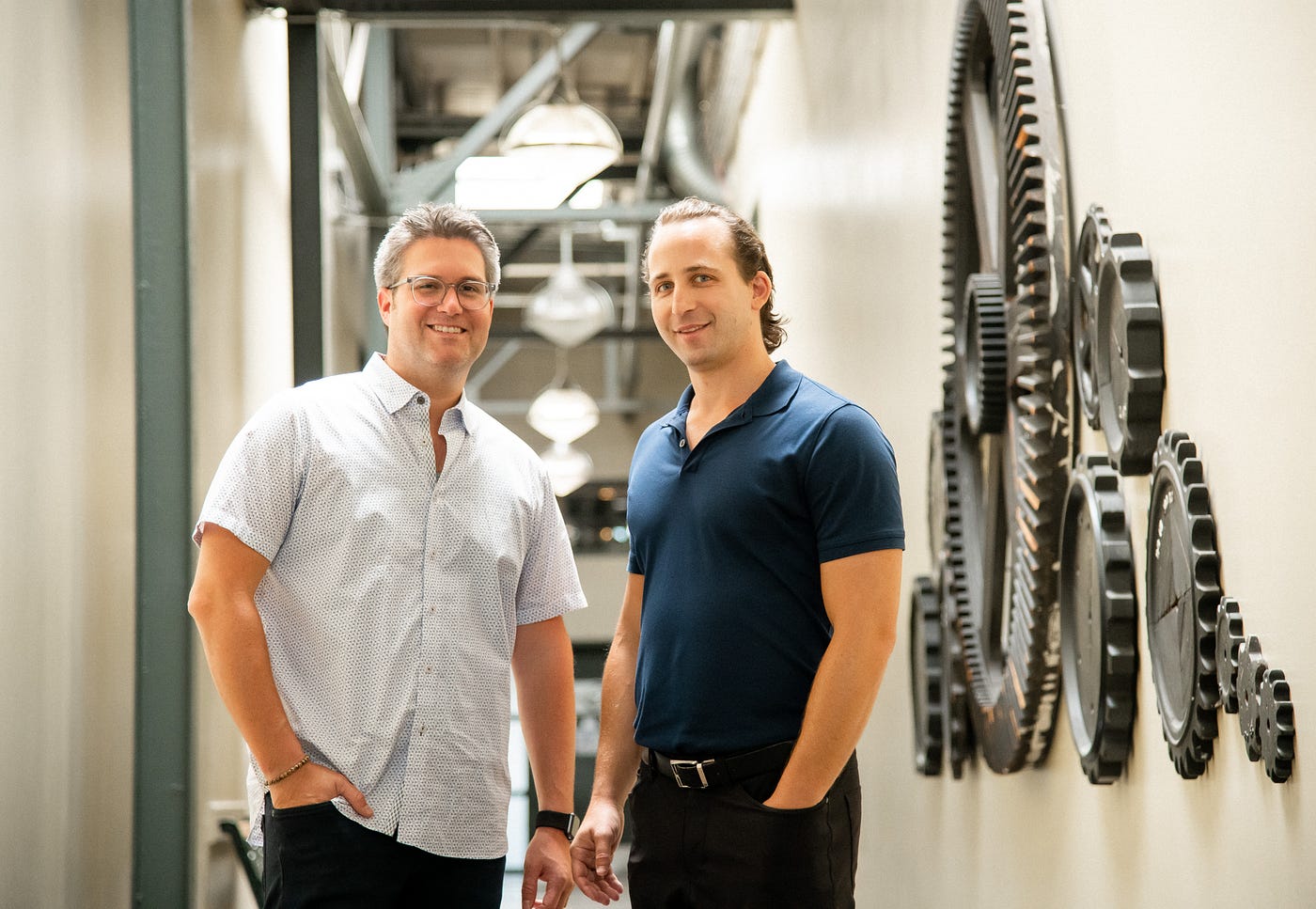
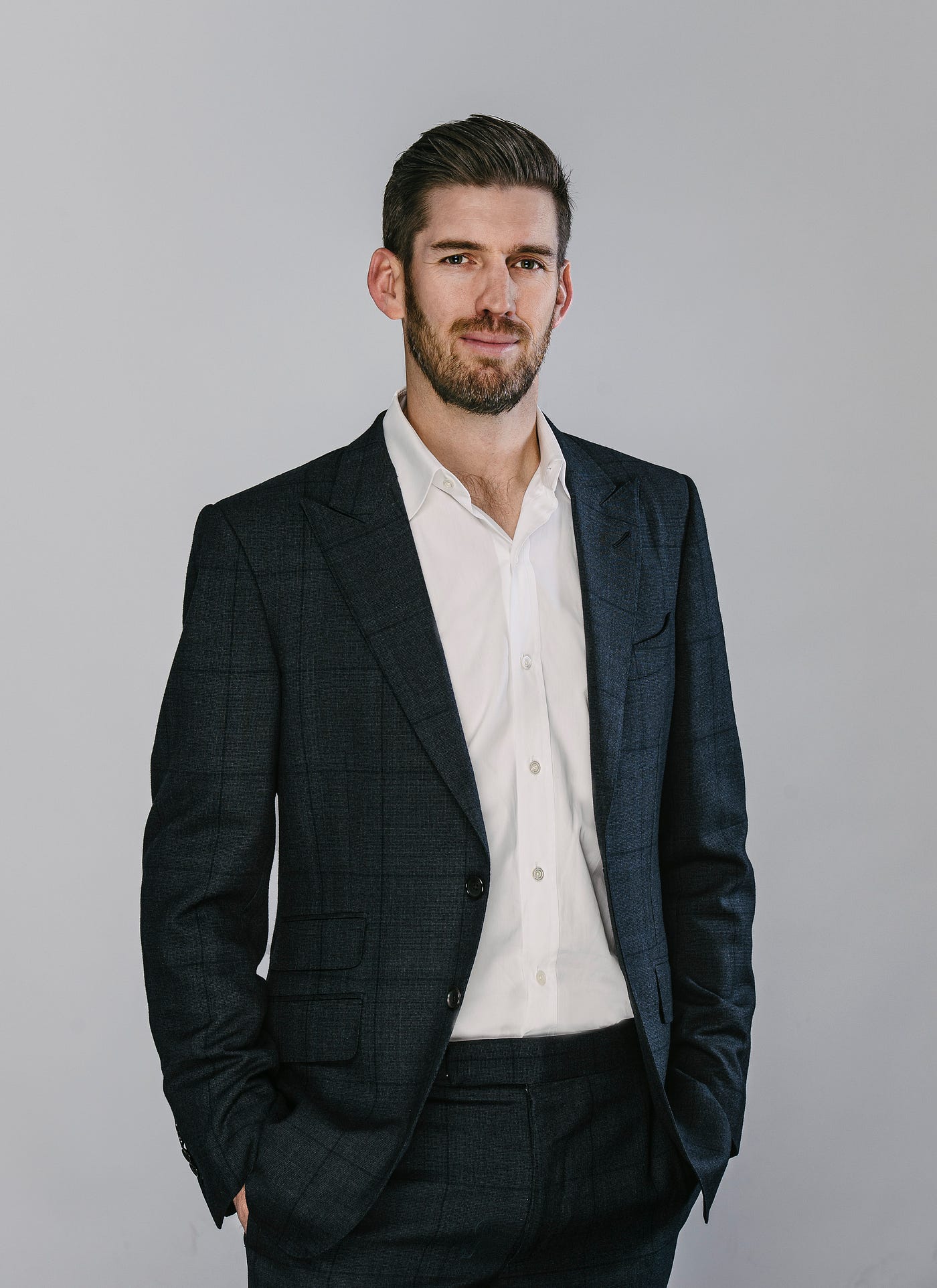
As a part of our series about business leaders who are shaking things up in their industry, I had the pleasure of interviewing David Johnson and Max Spielberg.
David and Max, co-founders of Genexa, are on a mission to revolutionize the medicine aisle by making medicine with the same active ingredients people need, but without the artificial ones, they don’t. All of Genexa’s products are made to the highest standards of medicine with no artificial dyes, common allergens, or unnecessary inactive ingredients. It’s real medicine, made clean.
Thank you so much for doing this with us! Before we dig in, our readers would like to get to know you a bit more. Can you tell us a bit about your “backstory”? What led you to this particular career path? Can you tell our readers what it is about the work you’re doing that’s disruptive?
Genexa is the first over-the-counter medicine company dedicated to making cleaner medicines. So, we make medicines with the active ingredients you need, without the artificial additives and synthetic inactive ingredients that you don’t. Most medicines contain inactive ingredients that are not clean — like talc, red dye #40, common allergens and parabens. Genexa is the first company to make medicines with the same active ingredients but without any artificial or potentially harmful inactive ingredients. We call it real medicine, made clean.
Can you share a story about the funniest mistake you made when you were first starting? Can you tell us what lesson you learned from that?
Launching a pharmaceutical company focused on reformulating over-the-counter healthcare products is not an easy task. We went to 50 different manufacturers before we found one that would work with us. Finding the right partners to help us through the research and development process was crucial and also expensive. We completely flopped a few of those first 49 pitches. And looking back, that was a blessing in disguise because it ultimately led us to the partners we have today. These partners agree that it’s not acceptable that the medicines we give our kids and take ourselves are full of ingredients that research has shown could have adverse effects on our health. In the first few years, we self-funded the majority of our costs and also leaned heavily on a successful “friends and family” round in order to carry us through to the launch of our first product. Our greatest takeaway from this experience was how important it is to surround yourself with the right partners and team.
We all need a little help along the journey. Who have been some of your mentors? Can you share a story about how they made an impact?
My parents were very influential in shaping who I am today. My dad was always my biggest fan and Genexa’s number one supporter. He passed away suddenly in 2017 right when our company started to take off. One thing I learned that I try to hold onto is that my dad was always listening, frequently the quietest person in the room. It is often said that the person listening is the person winning. So, I try to embody that each day in a small way.
I am also so grateful for our incredible partners, mentors and advocates. Brian Perkins, former Worldwide Chairman, Consumer Pharmaceuticals & Nutritionals at Johnson and Johnson, is one of our advisors and investors. He brings three decades of experience in this space that is invaluable. We also have a medical advisory board with reputable MDs and healthcare practitioners such as Dr. Joel Kahn, MD, Dr. Taz Bhatia, MD, Dr. Amy Shah, MD, and Dr. Alejandro Junger, MD. And Evan Cole, the founder of ABC Furniture NY and H.D. Buttercup, has been a strong mentor for me over the last few years. Having launched and grown his own successful businesses, Evan has been an inspiring entrepreneur to learn from. They all continually challenge me to think differently, try new approaches and grow each day.
In today’s parlance, being disruptive is usually a positive adjective. But is disrupting always good? When do we say the converse, that a system or structure has ‘withstood the test of time’? Can you articulate to our readers when disrupting an industry is positive, and when disrupting an industry is ‘not so positive’? Can you share some examples of what you mean?
In the pharmaceutical industry, we have to be extremely careful about any changes we are making because we are affecting people’s lives. Medicines should not be innovated irresponsibly. But, when you think about the shifts in food, beverage, skincare, or energy to use cleaner, better-for-you ingredients, it seems crazy to us that medicine lags behind. What we are doing at Genexa is disruptive — we are cleaning up over-the-counter medicine. We are using the same active ingredients (like acetaminophen) that have been approved by the FDA to be safe and effective for decades and cleaning up the delivery system by removing common allergens, artificial dyes and other synthetic inactive ingredients. We believe innovation in any industry comes with responsibility, particularly in our space, knowing that we are creating medicines that people will ingest. Safety, efficacy and the consumer’s health is always our top priority.
Can you share 3 of the best words of advice you’ve gotten along your journey? Please give a story or example for each.
1. Prioritize building a team — finding people with great talent, drive and passion can be tricky. Shiny resumes and sparkling recommendations are only a small piece of the puzzle. What I’ve learned throughout this process is to trust my intuitions when I start working with someone, and look for soft skills like candor, social and emotional intelligence, and get input from other team members.
2. Even when it seems impossible, you must lead — when you start a company, everyone is looking to you for direction and the next move. It can be isolating at times. To not only counter the sense of isolation but also to keep learning, I’ve surrounded myself with a group of external mentors. I reach out to them routinely and maintain an attitude of openness. I am then able to utilize what I’ve learned in going back to my team with new ideas, helping us to move forward.
3. Doors slamming in your face is a blessing in disguise because it means they were not the right partner. When we started looking for manufacturers to work with us on developing our idea for Genexa, we faced a lot of rejection. We were told we were “crazy” and that making a drug with “clean” excipients was impossible. They said it would never work which was disheartening at times. It took a lot of effort for us to find manufacturers that would take a chance on our idea and work with us to see if creating cleaner drugs was really possible. Some of the manufacturers who took an early chance are now some of our strongest partners!
4. You need to have control on the volume of external opinions — feedback from trusted partners, friends and family is so important, especially at the early stages of a company. But sometimes that feedback can get a little loud and you start to make decisions and moves you wouldn’t normally make. I’ve learned to take feedback as just that — an idea to consider but not necessarily something prescriptive. I have learned to trust my own instincts through the lens of what would be best for our business.
5. You have to be prepared to shift — the greatest thing about working in a startup is our ability to shift and pivot quickly. Things change, ideas fail and unexpected opportunities and roadblocks happen. I try to encourage my team to be prepared with a plan in the event we need to adjust our strategy or change course.
We are sure you aren’t done. How are you going to shake things up next?
We have a robust pipeline of products coming out over the next 3 years, starting with new SKUs in 2021. We are always reinvesting in R&D because our goal is to clean up the entire medicine aisle. One of our business mantras is “never settle” — and you’ll see that play out over the next few years because we’ve got a few big things up our sleeves.
Do you have a book, podcast, or talk that’s had a deep impact on your thinking? Can you share a story with us? Can you explain why it was so resonant with you?
n/a
Can you please give us your favorite “Life Lesson Quote”? Can you share how that was relevant to you in your life?
n/a
You are a person of great influence. If you could inspire a movement that would bring the most amount of good to the most amount of people, what would that be? You never know what your idea can trigger. :-)
We are inspiring a movement. We have a philosophy at Genexa that drives everything we do — people over everything. We wake up every day because we believe medicine should be clean, and the way that medicine is made should not adversely impact people or the world. The response we’ve gotten so far from our community is overwhelmingly positive and people agree that what we’re doing is revolutionary. It’s counterintuitive to think that the medicines we take to feel better would have ingredients in them that can make us feel worse. Our ambition is to make clean medicine available to everyone around the world. I hope people start reading labels and become more educated on what they are putting in their bodies. Do any of us really want to ingest talc or propylene glycol (an ingredient in antifreeze) when we are taking our medicine? Do we want our kids to ingest those ingredients?
And honestly, we hope that some of our competitors join in our ambition because it’s due time to clean up the medicine aisle.
How can our readers follow you online?
Part of who we are, and part of what makes the Genexa brand so unique, is that we are human. We are not a faceless pharmaceutical company. And because of that, we prioritize being available for our communities. You can always reach us and follow along through our social channels or going to Genexa.com to chat with us. And if you want, you can always text Max — his number is on every one of our products!
This was very inspiring. Thank you so much for joining us!
JH
Written by
Jason Hartman
Editor & Journalist · Authority MagazineJason Hartman is a senior columnist at Authority Magazine covering Business and Tech, conducting primary-source Q&A interviews with founders, executives, and industry leaders.

Published inAuthority MagazineTop Lessons, Top Authorities · 42K Followers
Exclusive, curated interviews with the leaders and changemakers shaping tomorrow. Leadership lessons, industry deep dives, and executive profiles.