I’ve since learned that no-one can effectively multitask. It’s a fiction. At best you can accomplish multiple tasks at a subpar standard or speed, at worst you make critical errors that can have a significant impact.
As a part of my series about “How to Slow Down To Do More” I had the pleasure to interview Claire Darr.
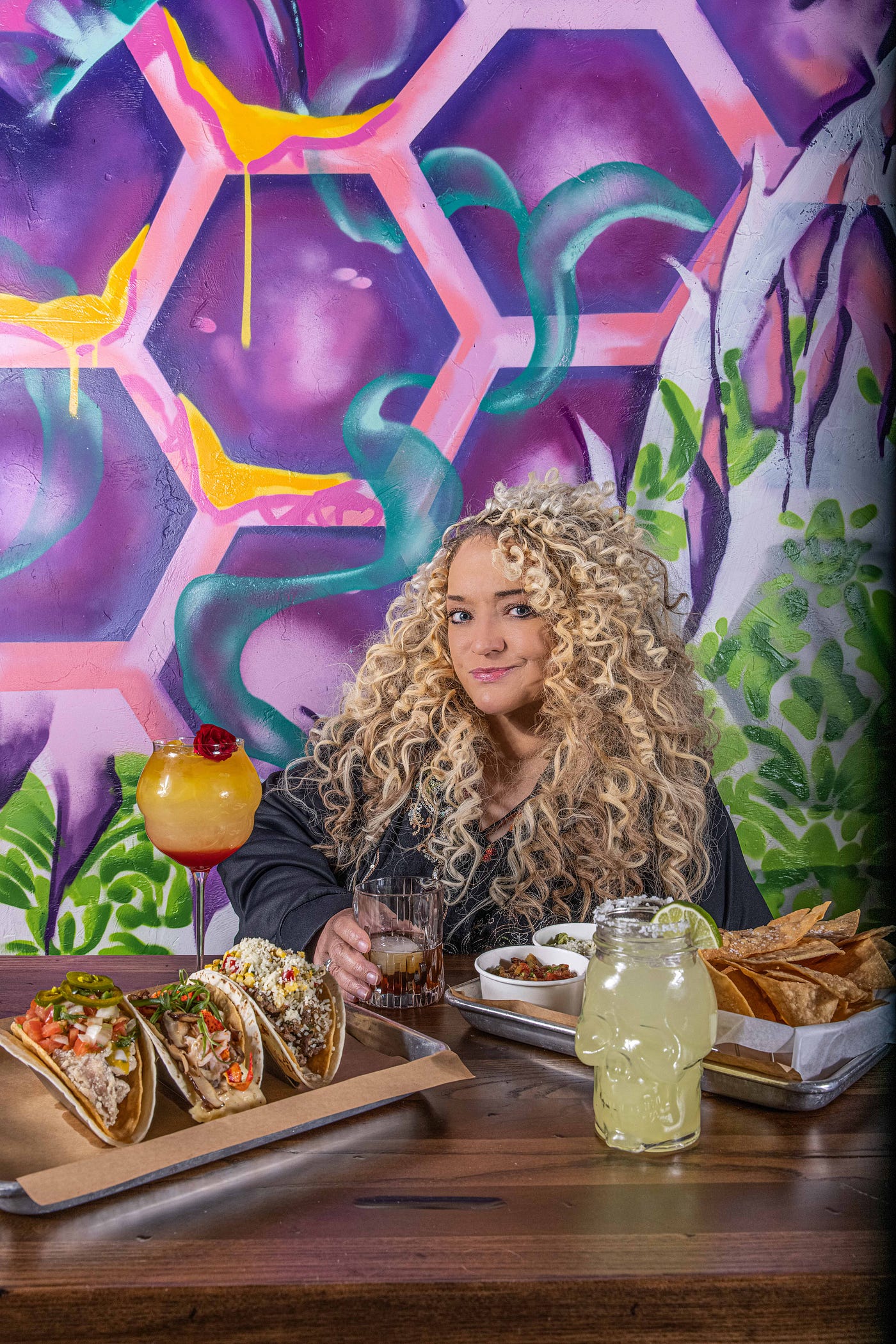
Claire is the Founder of Claire Darr Transformational Living. She is a transformational coach dedicated to helping others discover their purpose in life and experience how it feels to live your one dream life to the fullest. Through practical, real life solutions, Claire passionately teaches others how to create massive transformation and impact in life and to create a life you want to leap out of bed for every day.
Thank you so much for doing this interview with us! Can you tell us the “backstory” about what brought you to this specific career path?
Ioften like to say that “I don’t know what I want to be when I grow up”. It often has my children looking at me in a perplexed way but the adults in the room get it. I am originally from a working class town in the Northeast of England and moved to Dallas, Texas over 25 years ago, ambitious, driven and in pursuit of a thriving career. After attaining 2 law degrees (one on both sides of the Atlantic), I settled into the tried and tested career path of a corporate attorney. I worked hard, received all the usual accolades, had the important titles, worked in the glass buildings with billionaires and visionaries and yet something was missing. I always knew there was something more for me, another purpose buried somewhere but I could never quite reach it and quite frankly, at times I forgot about it in the midst of the busy, the hustle and the expectations of life.
Covid changed all of that and gave me the opportunity to pivot in a big way. I saw a need in others to prioritize their lives. I saw a desire in others to achieve mental and physical health and wellbeing, a need to feel connected and a need to uncover what else was out there for them. I quickly saw that often this led to a fear-based response in others…what if I’m not good enough? What if it doesn’t work out? How dare I make a change at this point in my life? Particularly for those with families, responsibilities, commitments.
I made it my mission to reach these people. Help them get out of the stuck, get out of the overwhelm and the fear and dare to dream again. Uncover the talents they had, remember what sparked joy, vibrancy, peace and pursue that again in a meaningful way.
Through the various practices and methodologies I have used over the years to transform my life to one that is purpose driven, filled with heartfelt joy and peace and just plain fun. I help others do the same. Some make entire career shifts, some fall back in love with their lives and careers, some find new additions to their lives that drive the passion and purpose.
According to a 2006 Pew Research Report report, 26% of women and 21% of men feel that they are “always rushed”. Has it always been this way? Can you give a few reasons regarding what you think causes this prevalent feeling of being rushed?
I think each generation has their own perception of being rushed and so I think in some ways, yes, it probably has always been that way. The difference is we can look back over times in our own lifetime and careers and see when things didn’t seem to be “quite this bad” or “as rushed”
I’m not the first person to say this, advances in technology, while welcome and necessary, I believe are the reason for the steady increase in this sentiment. I note that the report was from 2006. I suspect if you were to survey people now those numbers might be even higher.
Now in 2023, we are constantly connected in some way to many other people. We have everything we need to run busy lives, businesses, households at our fingertips. Access to information, commerce, television, media is all 24 hours a day and constant. We no longer live in a time when things just “turned off”. I remember when television channels stopped broadcasting at a certain time of night and you had no choice but to turn off the tv or sit and watch static. I also remember a time when to talk to someone who wasn’t in your household required you to sit still in one spot and methodically dial a phone number. Comparatively, yes things seemed slower and less rushed then. We were forced to be patient and wait versus having everything at our fingertips and readily accessible. When something is readily available then we are constantly battling the feeling that there’s something else we should be doing, or somewhere else we need to be, something else that needs our attention. That’s often the “rushed” feeling that people experience.
Based on your experience or research can you explain why being rushed can harm our productivity, health, and happiness?
In my experience when we go through life rushing in the constant state of doing, being, needing, going then our nervous systems are permanently activated and heightened. It’s the constant state of fight or flight that we often hear of. Our bodies were not designed to live in this constant state with adrenals firing.
When we operate with a dis-regulated nervous system for too long significant damage can be done. In my coaching business I’ve seen clients who experience everything from weight gain and sleeplessness to disease, depression and substance abuse. Our physical and emotional well being is most definitely impacted negatively when we live in this state for too long.
From a productivity standpoint I’ve also seen a negative impact. People often wear a badge of honor that reads “I’m a multitasker”, I’ve got to “rush” to get lots of things done. I myself am I former self proclaimed multitasker. I thought it was a great thing to say I could do it. I’ve since learned that no-one can effectively multitask. It’s a fiction. At best you can accomplish multiple tasks at a subpar standard or speed, at worst you make critical errors that can have a significant impact. I’ve conducted some fun experiments with my clients where we walk through an exercise performing one task and then minutes later we perform the same task while mimicking what it feels like to multi-task. The results are uniform. After the multitask exercise people reported feeling “stressed” “rushed” “frustrated” they made more mistakes and their performance time was slower.
And yes, absolutely, when we go through life rushing from one thing to the next, constantly worrying, stressed, wondering what needs to be done next our happiness is impacted. We don’t allow ourselves to experience the present, the now. We don’t enjoy the experience because we are rushing on to the next thing and we’re not fully engaged in our own experience of our life.
On the flip side, can you give examples of how we can do more, and how our lives would improve if we could slow down?
I really believe that slowing down so that we can speed up is a vital shift we need to make today. We cannot all keep going at the pace we’ve been going at and expect to be able to sustain it for long. Something ultimately will give and we will be forced to slow down. I’ve lived this life of go, rush, push through and hustle and I kept it up for a long time until I didn’t and my body and my brain brain forced me to take a break and that type of break is not healthy. I believe we have to adjust our standards of what is acceptable. Burnout has become expected, depression is commonplace, illness and breakdowns because of stress happen to people around us every day. And we have accepted this as part of our go go go life.
I made a conscious decision 3 years ago to break that cycle and I’ve never been happier, more successful, or more fulfilled. We can all experience this if we take the leap of faith to intentionally slow down.
We all live in a world with many deadlines and incessant demands for our time and attention. That inevitably makes us feel rushed. Can you share with our readers five strategies that you use to “slow down to do more”? Can you please give a story or example for each?
1. A solid morning routine gratitude and reflection that starts before everyone else is awake. I get to choose how I start my day and taking a few minutes to be grateful for what I have and reflect on what’s to come, it is the pause needed to center me for the day. I’ve found on the days I don’t prioritize this, if I wake up as everyone else is, or snooze the alarm I feel like I’m a step behind all day, things go wrong, I bounce from one thing to the next and never quite feel in control. A good morning routine is the antidote to bouncing around without control.
2. If needed throughout the day spend 10–15 mins breathing, meditating or reflecting away from the computer, the phone and other people, this acts as a reset for my nervous system and it helps regulate me, puts things into perspective and typically sparks creative ideas. It doesn’t have to be anything formal or complex just something you enjoy and that you will do AND, you will look forward to doing.
3. I touched on this above as part of a daily reset but this is something that is vital all day long in stressful situations….Breathe. Breathing is such a basic thing, and yet most of us really don’t do it. We walk around taking short sips of breath and then we wonder why we feel anxious or nervous or worried. Taking the time for a breathing practice is simple and quick and anyone can do it. There are many techniques, apps, websites. Just choose one that works for you and that you will do and do it frequently throughout the day.
4. Don’t try to do it all. Identify what is important for you and your career/business or family/life and then decide on 3 things, just 3 that you will focus on that must be done that day to advance the ball. Give yourself permission to put everything else on a “to don’t” list to save for another day. Deciding on the 3 things will give you more time and space in your day for the unexpected and when you have more time and space you naturally wont feel as rushed.
5. Experience the now when you can. Not the things you think you need or want to do in the future. Not the thoughts of what has happened in the past. Really sit and be present in the NOW, look up, see what’s in front of you, spend a minute and really look around you. If you’re with your family, look at them, listen to them, take a minute to see them and truly interact with them. Have reminders on your phone to be grateful, to appreciate, to get excited about your life NOW
How do you define “mindfulness”? Can you give an example or story?
I’m sure there is a formal, accepted definition of mindfulness but my definition is just what I said, experiencing the now. Being present, grateful, excited, noticing the experience you are having right at this moment. This is all you have. I learned about experiencing the now from a great teacher Kyle Cease. He talks about “taking up all the space of the now” and what he means by that is simply being fully present at certain points throughout your day. I decided to give this a try with my children. I’m a pretty hands-on mom and we spend most nights together doing homework, eating dinner, reading. And yet often I’m doing all of this while checking my phone, replying to an email, thinking about what needs to be done tomorrow. I picked one evening and put the phone away, shut the office door and gave myself permission to not worry about what needed to be done tomorrow and just sit with my daughter. I watched her draw, and sing, I even watched her staring at her favorite tv show, I was fully present. I felt a shift that evening. I shift in my energy, in her energy and in our household generally. Things seemed calmer, it felt like the evening was longer and we had more time. I felt a true connection that went beyond me just being there in the same room.
I’ll be honest I don’t do this every night, but every night I do find pockets of time to fully take up the space of the now and I can say our overall happiness at home has definitely increased. It feels good.
Can you give examples of how people can integrate mindfulness into their everyday lives?
I am someone who needs reminders and I need to make it a habit. I need reminders on my phone to ding at me and it must be simple, quick and doable for me to do it every day. Embracing daily habits that encourage you to stop and take a few moments is one of the best things someone can do to integrate mindfulness into their everyday lives.
Do you have any mindfulness tools that you find most helpful at work?
What works for me is to spend a few minutes each morning running through my day as I want and hope it to go. Seeing it be a successful day. Then throughout the day I have reminders on my phone. Try this and see if it works for you. Or adapt it to be something you will do.
In the morning — One thing I can get excited about today is……
Mid-afternoon — What went great so far today?….
Evening — A moment a really appreciated today was…..
The point of this is to work into your day little moment where you stop and reflect and see the good and look for things to be grateful for. It often takes about a minute and happens in my head but it happens and shifts happen for me and those around me.
What are your favorite books, podcasts, or resources that inspire you to use mindfulness tools or practices?
I listen to “Motivation” with Brendon Burchard daily. His inspiration, heart and simple advice comes just at the right time. He gave me the inspiration and idea for my little reminders throughout the day. So helpful and practice.
I just finished the book, “Deep Kindness” by Houston Kraft, his principles changed the way I approach relationships and situations. I also have various free resources available, An Affirmation Guide, and a Manifestation/Goal setting journal. I will share a link for anyone to grab them.
Can you please give us your favorite “Life Lesson Quote”? Can you share how that was relevant to you in your life?
I recently heard this and it resonated with me because it has such simple yet profound message.
“For things to change you’ve got to change. For things to get better you’ve got to get better”
I love this quote because it puts the responsibility on us which is amazing. We have the power to create our own lives and make our lives better. It takes away any opportunity for us to be passive or victims in our story.
You are a person of great influence. If you could inspire a movement that would bring the most amount of good to the most amount of people, what would that be? You never know what your idea can trigger. :-)
My mission and passion is to help women and girls live out their dreams and really thrive fulfilling their purpose and passion in life. A movement of women and girls who support and lift each other up would have an impact far greater than just those involved. When a woman’s life is improved the ripple effect is felt with their families and those around them they love. If we can help the women and girls of the world thrive then the world as a whole thrives. If anyone reading this can make a commitment on a daily basis to see value and build up one woman with a kind word, supportive gesture, thoughtful text or call. The world would feel the benefit immediately. And the best part is it’s a two way street. It helps the person on both sides elevate.
Thank you so much for these insights! This was so inspiring!