
I’m also profoundly grateful to my colleagues at Novelis, where collaboration and innovation are part of the culture.
(If you are unable to download it, please click File-Download)
Please write your answers below, leaving the questions in the document. We might schedule a follow-up call or Zoom to round things out.
(Chirag Agrawal, Novelis) On Five Things You Need To Create A Highly Successful Career In The AI Industry
Artificial Intelligence is now the leading edge of technology, driving unprecedented advancements across sectors. From healthcare to finance, education to environment, the AI industry is witnessing a skyrocketing demand for professionals. However, the path to creating a successful career in AI is multifaceted and constantly evolving. What does it take and what does one need in order to create a highly successful career in AI?
In this interview series, we are talking to successful AI professionals, AI founders, AI CEOs, educators in the field, AI researchers, HR managers in tech companies, and anyone who holds authority in the realm of Artificial Intelligence to inspire and guide those who are eager to embark on this exciting career path.
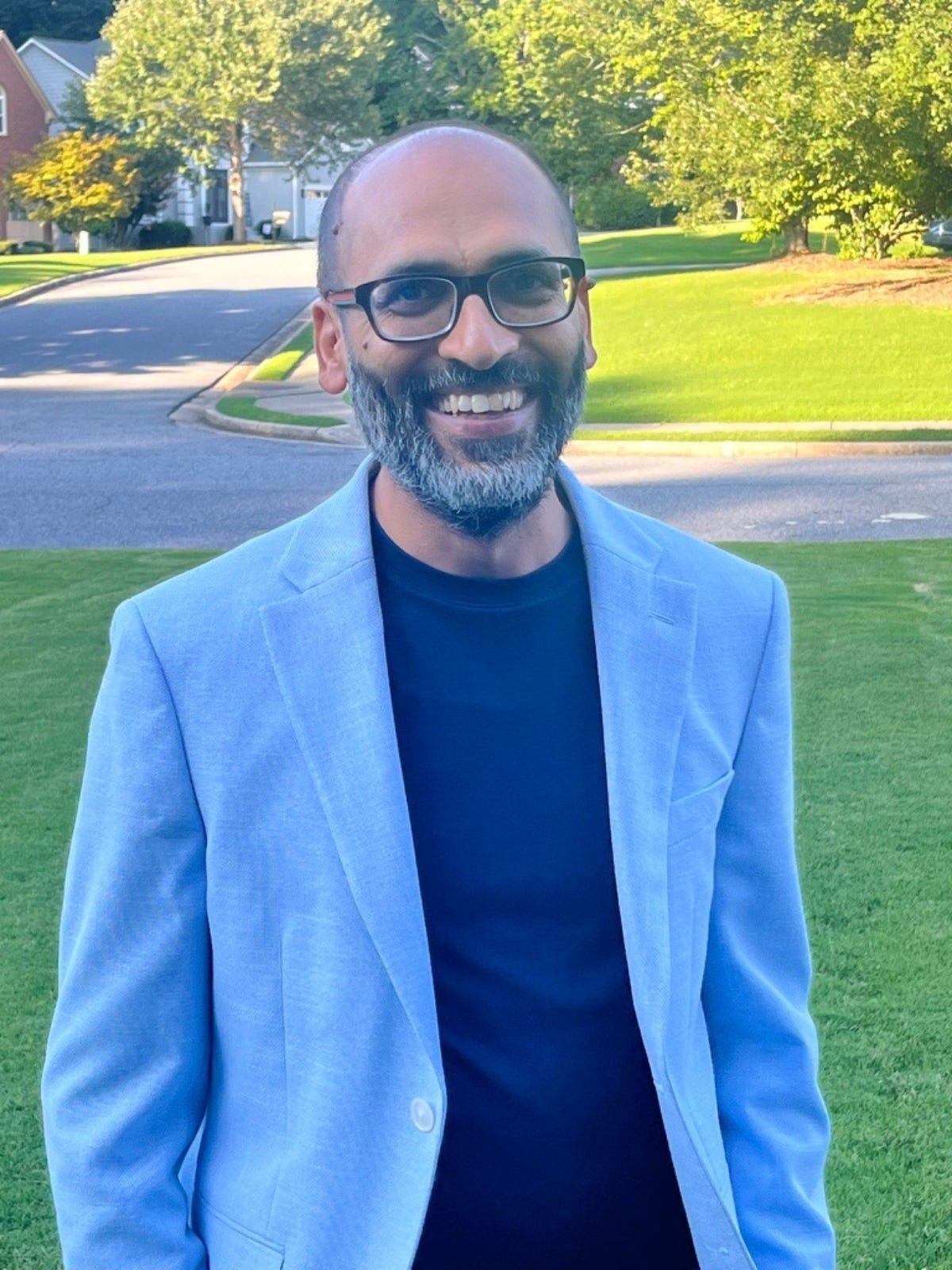
As part of this series, we had the pleasure of interviewing Chirag Agrawal.
With over 15 years of leadership at the intersection of Data Science, Artificial Intelligence, and Cloud Transformation, Chirag Agrawal drives enterprise-wide innovation through AI, ML, Generative AI, and Agentic AI. As the Global Head of Data Science at a leading manufacturing organization, he has spearheaded transformative initiatives that solve complex, real-world challenges at scale. His unique blend of engineering rigor, grounded in a Mechanical Engineering background, and advanced expertise in Machine Learning enables him to architect AI solutions that are both technically robust and strategically aligned with business outcomes.
Thank you so much for joining us in this interview series! Before we dive in, our readers would like to learn a bit about your origin story. Can you share with us a bit about your childhood and how you grew up?
Absolutely, and thank you for having me. I grew up in an environment that valued curiosity, discipline, and community. From a young age, I was drawn to patterns, whether in numbers, nature, or behavior, which naturally led me toward analytical thinking. My childhood was shaped by a strong emphasis on education and a deep respect for learning, as well as a sense of responsibility to contribute meaningfully to whatever I was a part of. I was fortunate to be surrounded by mentors, teachers, family, and early colleagues who encouraged me to ask questions and challenge assumptions. That mindset stayed with me and became foundational in my approach to data science and leadership. Whether solving math puzzles or organizing school events, I always found joy in connecting dots and creating structure from complexity. This early grounding helped me develop not just technical skills, but also a collaborative spirit. I learned that insights are most powerful when shared and that innovation thrives in diverse teams. These values continue to guide me today in my role as Global Head of Data Science & Insights at Novelis, where I lead multicultural teams and drive strategic analytics initiatives across global business units.
Can you share with us the ‘backstory” of how you decided to pursue a career path in AI?
Absolutely. My journey into AI began long before the term became mainstream. Early in my career, while working at Ernst & Young and Case New Holland, I was deeply involved in building demand forecasting models using regression techniques. These experiences sparked my fascination with harnessing data to drive strategic decisions and operational efficiency.
Around 2014–2015, I began to notice a surge in interest and innovation in machine learning. That shift intrigued me, and I started exploring ML literature, examining algorithms such as Decision Trees, Support Vector Machines, Bayesian models, and Neural Networks. The more I read, the more captivated I became. It wasn’t just about prediction anymore; it was about understanding patterns, behaviors, and systems at a deeper level.
To formalize my growing passion, I pursued a Master’s degree in Analytics with a focus on Machine Learning. That academic foundation, combined with hands-on experience, accelerated my transition into data science and AI. I found myself not just studying the field but actively applying it in my roles—whether it was optimizing pricing strategies at The Kini Group, building unified data platforms at Novelis.
Can you tell our readers about the most interesting projects you are working on now?
Currently, we’re optimizing the ICT Shear Cut process using predictive analytics to enhance yield and minimize waste. We’re also building simulation models, known as digital twins of our production lines, to test scenarios and improve efficiency. Another exciting area is quality defect detection, where we utilize computer vision to identify surface issues in real-time. And we’re rolling out AI-powered chatbots that let employees interact with complex datasets conversationally, streamlining operations and decision-making.
None of us are able to achieve success without some help along the way. Is there a particular person who you are grateful for who helped get you to where you are? Can you share a story about that?
Success is never a solo journey, and I have been fortunate to have had incredible support along the way from colleagues, friends, professors, and, especially, family. Early in my career, mentors at Ernst & Young and Case New Holland helped me see the power of analytics in solving real business problems. Their guidance gave me the confidence to delve deeper into machine learning. Later, during my Master’s in Analytics, I had professors who not only taught the theory but also inspired me to apply it creatively. Their encouragement played a significant role in shaping my technical foundation.
I’m also profoundly grateful to my colleagues at Novelis, where collaboration and innovation are part of the culture. Working with talented individuals across geographies has pushed me to grow as a leader and a technologist. And of course, my family has been my anchor. Their unwavering belief in me, especially during times of transition and challenge, has been the quiet force behind every milestone. There’s no single story, but rather a mosaic of moments and people who’ve helped me become who I am today. I carry their influence with me in every decision I make and every team I lead.
As with any career path, the AI industry comes with its own set of challenges. Could you elaborate on some of the significant challenges you faced in your AI career and how you managed to overcome them?
The AI industry is full of exciting possibilities, but it can also be overwhelming. One of the biggest personal challenges I have faced is navigating the sheer breadth of the field. There are countless algorithms, architectures, and approaches to solving a problem, and it’s easy to feel lost or unsure which path to take.
Early in my career, while working at Ernst & Young and Case New Holland, I was building forecasting models using regression. However, around 2014–2015, I witnessed the rapid growth of machine learning and realized I needed to catch up. I started reading about Decision Trees, SVMs, Bayesian models, and Neural Networks—and I’ll be honest, some of it was hard to grasp at first. But I didn’t let that discourage me. I kept learning, experimenting, and eventually pursued a Master’s in Analytics with a major in Machine Learning to deepen my understanding.
Ok, let’s now move to the main part of our interview about AI. What are the 3 things that most excite you about the AI industry now? Why?
Rapid Evolution & Continuous Learning: AI is advancing faster than ever. New tools, frameworks, and algorithms emerge constantly, and staying current is both a challenge and a thrill. I love that the field demands continuous learning. It keeps me sharp and curious.
Solving Real Business Problems: AI allows us to tackle complex challenges that were previously out of reach. Whether it’s optimizing manufacturing, detecting defects, or building intelligent systems, I’ve seen firsthand how AI can drive real impact across industries.
Unlocking New Possibilities: What excites me most is how AI enables things that weren’t possible before—processing massive datasets in seconds, combining insights from multiple models, and accelerating decision-making. It’s not just about automation; it’s about augmentation and transformation.
What are the 3 things that concern you about the AI industry? Why? What should be done to address and alleviate those concerns?
Lack of ROI Focus Early On: One of my biggest concerns is that many AI initiatives begin without a clear path to business value. I’ve seen this firsthand across industries, and it’s something I’ve worked hard to address at Novelis. By aligning AI use cases such as optimization and quality defect detection with strategic goals, approved value was delivered. But across the industry, too many projects chase innovation without grounding it in impact. To address this, organizations must prioritize ROI from the outset: define clear success metrics, engage stakeholders early, and develop solutions that address real-world problems.
Limited Explainability in LLMs and Advanced Models: With the rise of large language models (LLMs), we are seeing incredible capabilities, but also a growing gap in explainability. Many of these models operate as black boxes, making it hard to understand why they produce specific outputs. This is especially risky in regulated industries or when making high-stakes decisions. To address this, we need to invest in XAI (Explainable AI) frameworks, build transparency into model design, and ensure human oversight remains central to deployment.
Misunderstanding What AI Can and Can’t Do: There’s a lot of hype around AI, and while that brings attention and investment, it also creates unrealistic expectations. I’ve encountered situations where stakeholders expected AI to be a magic wand, solving problems instantly without considering data quality, user context, or operational constraints. The truth is, AI is powerful but not omnipotent. We need broader education, within organizations and in society, about what AI can do, what it can’t, and what it needs to succeed. That includes better awareness of data governance, model limitations, and the importance of iterative development.
For a young person who would like to eventually make a career in AI, which skills and subjects do they need to learn?
To build a successful career in AI, a strong foundation in software engineering, mathematics, and statistics is essential. Understanding algorithms, data structures, probability, and linear algebra will help you grasp how models work and how to optimize them.
But beyond technical skills, the most important trait is curiosity. You need to be inquisitive—constantly asking questions, challenging assumptions, and exploring new approaches. AI is not just about building models; it’s about solving problems creatively and persistently.
Another key skill is adaptability. Often, the first solution won’t work. You have to be willing to iterate, refine, and tailor your approach based on feedback and the needs of end users. That mindset of staying flexible and user-focused is what turns good AI into a great impact.
If you combine technical depth with a problem-solving attitude and a passion for learning, you’ll be well on your way.
As you know, there are not that many women in the AI industry. Can you advise what is needed to engage more women in the AI industry?
Geoffrey Hinton recently mentioned that we need ‘motherly AI’ to ensure that artificial intelligence doesn’t harm humans. That idea resonates deeply—and it highlights why it’s so important to have more women shaping the future of AI. If we want AI to be empathetic, ethical, and human-centric, we need diverse voices at the table, especially those who bring nurturing, inclusive, and socially aware perspectives.
To engage more women in AI, we need to:
Start early by introducing AI concepts in schools and making them relatable—not just technical, but creative and impactful.
Showcase role models and success stories of women in AI to inspire confidence and ambition.
Create inclusive learning environments where women feel safe to ask questions, experiment, and grow.
Support mentorship and sponsorship programs that help women navigate career paths and build networks.
Highlight the human side of AI, including areas like change management, user experience, and ethical design, domains where women often excel and where their contributions are vital.
Ethical AI development is a pressing concern in the industry. How do you approach the ethical implications of AI, and what steps do you believe individuals and organizations should take to ensure responsible and fair AI practices?
Ethical AI is not just a technical challenge—it’s a leadership responsibility. In my role as a leader, I’ve seen how critical it is to embed ethics into every stage of AI development, from data sourcing to model deployment.
One of the biggest challenges is change management. AI often disrupts traditional workflows and decision-making processes. Ensuring ethical adoption means helping stakeholders understand not just what AI can do, but what it should do. That requires transparency, education, and empathy—especially when AI impacts jobs, autonomy, or fairness.
We also need to address foundational issues like:
Data quality and governance: Biased or incomplete data leads to biased outcomes. Building unified, well-governed data pipelines has been a key part of my strategy.
Return on investment vs. responsible deployment: It’s tempting to chase ROI, but ethical AI demands that we balance performance with accountability.
Keeping up with evolving technologies: As AI evolves rapidly, so do its risks. Staying informed and continuously evaluating model behavior is essential.
For individuals, the most important step is to stay curious and ask hard questions. Don’t just accept outputs, challenge them. For organizations, it’s about creating frameworks that prioritize fairness, transparency, and human oversight. That includes cross-functional collaboration, clear documentation, and inclusive design practices.
Ultimately, ethical AI is about building trust. And trust is earned through thoughtful design, responsible leadership, and a commitment to doing what’s right—even when it’s not easy.
Ok, here is the main question of our interview. Can you please share the “Five Things You Need To Create A Highly Successful Career In The AI Industry”? If you can, please share a story or an example for each.
1 . Strong Foundation in Software, Math, and Statistics: AI is built on algorithms, data structures, and statistical modeling. Early in my career at Ernst & Young and Case New Holland, I used regression models for demand forecasting. That hands-on experience with data and modeling laid the groundwork for everything I do today.
2 . Curiosity and Inquisitiveness: The most essential skill is asking questions. Around 2014 and 2015, I noticed the rise of machine learning and began reading about Decision Trees, SVMs, Bayesian models, and Neural Networks. That curiosity led me to pursue a Master’s in Analytics with a major in Machine Learning, and it continues to drive my exploration of GenAI, simulation, and intelligent systems.
3 . Persistence and Adaptability: AI solutions rarely work perfectly the first time. You have to iterate, challenge assumptions, and adapt based on user feedback. At Novelis, I’ve led projects that required multiple pivots, whether it was refining quality defect detection models or customizing chatbots for internal operations. Staying persistent and flexible is key.
4 . User-Centric Problem Solving: AI is not just about building models; it’s about solving problems for people. I’ve learned that success comes from aligning solutions with business needs. Whether it’s optimizing ICT Shear Cut processes or building simulation models, I always focus on how the end user will benefit.
5 . Leadership and Collaboration: AI is a team sport. Leading global teams at Novelis has taught me the importance of cross-functional collaboration, clear communication, and shared ownership. Delivering a sustainable solution to a use case wouldn’t be possible without strong partnerships across IT, business, and data.
Continuous learning and upskilling are vital in a dynamic field like AI. How do you approach ongoing education and stay up-to-date with the latest advancements in the AI industry? What advice do you have for those looking to grow their careers in AI?
In a field as dynamic as AI, continuous learning isn’t optional; it’s essential. My approach is structured yet flexible. I block one hour on my calendar every day to focus on learning. That time might be spent listening to a podcast, reading a new research paper or book, or experimenting with a proof of concept (PoC) using a new framework or model.
I also make it a point to attend conferences and industry events. These gatherings are invaluable for understanding emerging trends, networking with thought leaders, and seeing how others are solving real-world problems. They help me stay grounded in both the technical and strategic dimensions of AI.
For those looking to grow their careers in AI, my advice is to dedicate time to doing or learning something new and engaging with the AI community.
What is your favorite “Life Lesson Quote”? Can you share a story of how that had relevance to your own life?
“It always seems impossible until it’s done.” — Nelson Mandela.
This quote perfectly captures multiple pivotal moment in my career. One of them is relevant to my career in AI. Around 2014, I was deeply involved in building demand forecasting models using regression techniques. At the time, machine learning was gaining momentum, and I started exploring more advanced algorithms.
Initially, it felt overwhelming. The math was complex, the concepts were abstract, and the possibilities seemed endless. I remember thinking, “How will I ever master this?” But I didn’t let that doubt stop me. I committed to learning, reading books, listening to podcasts, experimenting with models, and eventually pursued a Master’s in Analytics with a major in Machine Learning.
Fast forward to today, I lead a global data science team at Novelis.
You are a person of great influence. If you could start a movement that would bring the most amount of good to the most amount of people, what would that be? You never know what your idea can trigger. :-)
If I could start a movement, it would be called “AI for All: Empowering Every Mind”.
The goal would be to democratize AI education and access, making it understandable, usable, and impactful for people from all walks of life, not just those with technical backgrounds. I’ve seen firsthand how transformative AI can be when applied to real-world problems.
Imagine a world where a farmer can use AI to predict crop yields, a teacher can personalize learning for every student, and a small business owner can optimize operations, all without needing a PhD in machine learning.
This movement would be about unlocking human potential through intelligent systems, and ensuring that AI serves everyone—not just the few.
How can our readers further follow your work online?
The best way to follow my work is through LinkedIn. I regularly post updates there—whether it’s articles I’ve written, insights from conferences I’ve spoken at, or reflections on the latest in AI and data science. I also share behind-the-scenes stories from projects I lead at Novelis, including innovations in GenAI, simulation, and quality defect detection.
If you're interested in where I'm headed next or want to stay connected with the evolving AI landscape, feel free to connect with me or follow me on LinkedIn. That’s where I share the most up-to-date and personal view of my journey.
This was very inspiring. Thank you so much for joining us!
Thanks for having me.
About The Interviewer: David Leichner is a veteran of the Israeli high-tech industry with significant experience in the areas of cyber and security, enterprise software and communications. At Cybellum, a leading provider of Product Security Lifecycle Management, David is responsible for creating and executing the marketing strategy and managing the global marketing team that forms the foundation for Cybellum’s product and market penetration. Prior to Cybellum, David was CMO at SQream and VP Sales and Marketing at endpoint protection vendor, Cynet. David is a member of the Board of Trustees of the Jerusalem Technology College. He holds a BA in Information Systems Management and an MBA in International Business from the City University of New York.