When I left theatre, I honestly believed I had no marketable skills and had to go back to school to be employable!
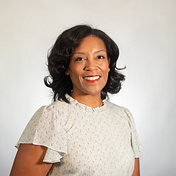
As part of my series about “individuals and organizations making an important social impact”, I had the pleasure of interviewing Cathlyn Melvin, a copywriter, editor, and advocate for mission-driven businesses.
Cathlyn Melvin is a copywriter, editor, and advocate for mission-driven businesses. With a degree in theatre performance, a minor in writing, and over a decade of experience as an educator, professional actor, and entrepreneur, Cathlyn lifts the voices of mission-driven businesses, helping them grow their reach, their impact, and their revenue so they can change their own lives and change the world.
Cathlyn was inspired to support mission-driven businesses after nearly a decade battling stigma as the owner of an LLC in a predominantly nonprofit field, even weathering a period of homelessness to support her mission.
Through her work as a copywriter and advocate, Cathlyn seeks to shape our collective understanding of the value of “nonprofit” and “for-profit” organizations by redefining what makes a business “good” or “bad” — leading us toward the impact-driven service culture we all deserve.
Discover Cathlyn’s Top 10 (Surprisingly Simple) Ways to Show Up as The Expert.
Thank you so much for joining us in this interview series! Can you tell us a story about what brought you to this specific career path?
Absolutely! Like a lot of entrepreneurs, I took a bit of a circuitous path to find my “forever role.”
In college, I studied classical theatre performance, so I spent a lot of time with the “old, dead, white guys”: Shakespeare, Ibsen, Chekov, Shaw, Moliere . . . After graduation, I worked for about a decade as an actor and I also founded a national-touring arts education company.
In that organization, my co-founder and I split our roles between executive and artistic responsibilities. So as the Artistic Director, I oversaw all the artistic and creative elements of the organization — I worked with our set designers, managed the costume shop, and wrote almost everything that ever needed to be written. Scripts, music, training and operations manuals, internal communications, sales copy . . . So it was through that experience that I started to learn about SEO and all the other elements that go into writing for sales and marketing.
And then when I decided to leave the theatre industry, I had been doing all this copywriting for my arts ed company, and people in my network had started sending me people from their own networks, people who needed help with websites or emails or blogs or what-have-you, but it still didn’t click that I had this really great skill that people needed — and that I loved using!
So instead of setting out as a full-time copywriter at that time, I decided to go to law school. I studied for the LSAT, applied to a few schools, and I earned a full-ride scholarship to UF, which is currently the #6 public law school in the U.S. That full-ride scholarship really felt like the biggest gift the universe ever gave me, so in the middle of the pandemic I packed up my apartment in Chicago and moved to Gainesville, FL to study law.
Fast-forward seventh months, I’m on the Dean’s list, I’m having all these great interviews for summer associateships, I’m making connections in the industry . . . and I knew all the right things to say in my interviews, I was getting fantastic feedback . . . but I would get off the calls and feel like such a liar. I knew I wasn’t being my authentic self: I didn’t want to be a lawyer.
But I did want to write. I wanted to work more deeply with the businesses I had been serving as a copywriter and editor. That’s where I found my joy and my calm. I often tell people that editing is a meditative exercise for me. Because it really is!
So I looked up at the universe, and said “thanks, but no thanks” for this amazing gift I had been given.
I withdrew from school and haven’t had even a fraction of a portion of a slice of a percentage of a moment of regret.
I know I’m exactly where I’m supposed to be.
Can you share the most interesting story that happened to you since you began leading your company or organization?
I mean, I think the most interesting thing about my journey as a copywriter is how much I loved it from the start — but I fought making it my full-time career! I think — I should say, I know — I had limiting beliefs around my abilities. When I left theatre, I honestly believed I had no marketable skills and had to go back to school to be “employable!” Two years later, I’m confident in my skills (years of gushing, glowing service reviews will do that to you) and I no longer care about being employable. Maybe I’ll be an employee again one day, who knows what the future holds . . . but I’m super happy running my business and directly impacting the lives of my clients.
Can you share a story about the funniest mistake you made when you were first starting? Can you tell us what lesson you learned from that?
I wouldn’t necessarily say this is a “mistake,” but when I named my business “Right Cat Creative” I didn’t realize folks would start calling me “Cat!” It makes so much sense now (and, in fact, my sisters have always called me “Cat”), but my business name was actually inspired by an old cat-shaped stamp and blue inkpad I used to use as a bookplate! And my logo is inspired by my own cat, Tucker.
Can you describe how you or your organization is making a significant social impact?
I work with businesses who are led by their values and missions. People whose passions light up the room and have potential to change the world. I’m pretty picky about the organizations I write and edit for. When I choose to work with a potential client, it’s important to me that I can wholeheartedly stand behind the work they do.
So much of our world is written down. If you don’t have a good copywriter or editor, you’re probably going to struggle to reach your target audience and convert them to your services. By lifting the voices of mission-driven businesses, I’m part of what enables those businesses to make the biggest impact possible.
I’m proud to be one of the innermost ripples in the ocean of change my clients are making.
Beyond the work I do directly with clients, I’m also constantly advocating for our mission-driven businesses. I won’t get too far onto my soapbox quite yet, but I’ve experienced the stigma of being a mission-driven business owner, an owner of a social enterprise, in a predominantly nonprofit field. It’s a constant uphill battle and the truth is that there are nonprofits out there doing great things and terrible things, and there are for-profit businesses that do great things and ones that do terrible things. I think we put too much focus on an organization’s business entity, when our focus really should be on impact. And in that way, mission-driven businesses deserve to be placed up on the same social pedestal as nonprofits.
Can you tell us a story about a particular individual who was impacted or helped by your cause?
Earlier this summer, I edited a really personal piece. My client, a nonbinary person in the legal field, was coming out publicly. She was nervous and I was nervous for her. We both wanted this article to be absolutely perfect. I was able to revise her draft in a way that made her feel confident posting it — as scary as it was! And it’s experiences like that that really light me up. I love to see the shift in my clients’ confidence when they see how I’ve shaped their own ideas into wonderful storytelling.
Are there three things the community/society/politicians can do to help you address the root of the problem you are trying to solve?
Ugh, yes! I got into it a little bit before, but we’re looking at business all wrong. It should be okay for businesses to make money, for CEOs to be wealthy. If you’ve never started a business or run a giant corporation, you can’t know how much you have to give of yourself just for the possibility of being rewarded. There has to be a balance of reward for the incredible amount of risk entrepreneurs and business leaders take on.
(Although there are definitely a lot of business people I wish would take greater individual responsibility to impact the world by sharing their wealth. But that’s a different soapbox.)
What we should be focusing on is the impact that organizations are making, not whether their name ends in “501(c)3.”
But especially in some industries, like health, education, animal care, and the arts, a 501(c)3 designation is a credibility marker. When my former business partner and I co-founded our arts ed company in 2012, there was this expectation to file for nonprofit status because we were both an arts organization and an educational program.
And we did consider that option. For a lot of reasons, it wasn’t the best fit for us. So we filed as an LLC — not realizing, as first-time, young business owners — the uphill battle we had just cemented for ourselves.
Over the decade-ish that I was with the company, we fielded a lot of questions, asked with knitted eyebrows, from prospects and professional peers. We were turned away from events that our nonprofit peer organizations were participating in.
Our “for-profit” status made us suspect, even though we were serving children and families, and our salary over nearly a decade averaged less than $15,000 a year — much lower than the average for executives at our nonprofit peer organizations.
During the most dramatic part of my life with that organization, I was facing the choice to continue leading that organization for much less than minimum wage so that I could serve the students, families, and communities who needed us . . . or quit and do something that would pay my bills.
I chose to become homeless, eliminating my rent payment so that I could afford to continue serving our students.
And I realize that’s drastic, and probably not what I’d recommend to other business leaders. But it is the choice I made, and I’m glad I did it. It allowed me to expand my impact so much further than I could have had I quit right then and there.
And I remember during that time, we received an email from a parent who had missed a refund deadline — the second time she had done so for two consecutive programs. The first time, we made an exception to the policy and refunded her daughter’s summer camp fee.
The second time, we offered to hold the funds for a future enrollment for her own child or a friend.
In her response, she told us we were “greedy.”
“Greedy” — while I was living out of a suitcase and sleeping on the couches of generous friends so I could afford to teach her child.
Ouch.
So that’s the sort of attitude we were up against as a social enterprise in the arts and education fields.
Meanwhile, we often want to blindly trust that organizations with nonprofit status are really in it for the mission.
We’re shocked when it’s exposed that only 2.5% of all donations to the Cancer Fund of America actually go to cancer services, while the organizer’s salary is almost a quarter million.
We feel duped when Children’s Wish Foundation spends ten times as much on its donors as it does granting wishes for kids. (Although that in and of itself is a skewed statistic, since they’ve gotta spend money to make money.)
We want to assume good intentions just because of their status, but in doing so we place nonprofits on a social pedestal, presuming that anyone who doesn’t register as a 501(c)3 is only “in it for the money.”
And it’s clear that nonprofits aren’t always what we expect them to be.
There are a lot of ways to run a business, regardless of your legal entity. You might be familiar with for-profit organizations Ben & Jerry’s Ice Cream, Tom’s Shoes, or Uncommon Goods. These are all for-profit businesses on a mission to improve the human experience.
I want everyone to understand that for-profit business owners often live to impact their local and global communities, just like our non-profit counterparts do. We’re just taking a different path to get there.
So here’s what community leaders can do:
They can help shift our understanding of what makes a business “good” or “bad” by celebrating impact regardless of business entity.
They can connect for-profit and nonprofit leaders whose missions are compatible — showing us all that we can work together to make a bigger difference in the world, no matter what boxes we check on our tax forms.
They can reduce local and other restrictions on business to allow for more — and more diverse — for-profit and nonprofit businesses to open and thrive.
How do you define “Leadership”? Can you explain what you mean or give an example?
The best form of leadership, I think, is behaving like you want others to behave. No matter who you are, if you can be the person you want to see, you are impacting the people around you. You’re encouraging that behavior. For me, it’s important to be kind, candid, and conscientious. It’s not always easy to be those things. I’ve been known to have a temper! But it’s something I continue to focus on and I learn as I live.
What are your “5 things I wish someone told me when I first started” and why. Please share a story or example for each.
#1 Trust your clients. For years, I was getting all this fantastic feedback from the folks I was writing for (at the time I didn’t call them “clients!”) but I still didn’t understand how I could make this my career. They were right. I was wrong. And I wish I had trusted them sooner!
#2 Create a personal values statement. This is something I encourage all my clients to do right off the bat, and I have a workshop that takes folks through the process. I believe that your values come first, then your vision for the world, and finally your mission — how you’re going to work toward that vision. Deliberating on my values allowed me to finally realize that I needed to leave law school and allow myself to grow my copywriting business. It’s made an enormous difference and I’m so happy.
#3 Get a mentor or a coach. Someone you can brainstorm with, ask questions of, and rely on for advice. It can be a big expense, but it doesn’t have to be. Find someone who has 1% more experience than you do. That’ll be enough to start, probably with a smaller financial investment.
#4 Dream big, act small. This is something I heard on a podcast back when I was in school but daydreaming about writing full-time. I have it written on a post-it note and stuck to my wall! It goes along with lessons I learned from the book “The Slight Edge,” about compound action adding up over time.
#5 Patience + consistency = success. For a while, after I decided to go from side-hustle to full-time, I felt like I was standing at the top of a hill holding a tiny snowball. At some point, that snowball was going to drop and start rolling, and I could just feel that potential. Now the snowball is rolling, the momentum is building, and it’s so exciting. It might take a while! But keep moving. Keep taking small and big actions. They add up. They compound. And they make magic.
You are a person of enormous influence. If you could inspire a movement that would bring the most amount of good to the most amount of people, what would that be? You never know what your idea can trigger. :-)
I want to shift our economic mindset from financial growth to impact growth. By focusing on impact, we can do good and “make good” . . . and then do even more good on top of it all. Increased profits means more flexibility for compounding our impact!
Can you please give us your favorite “Life Lesson Quote”? Can you share how that was relevant to you in your life?
One semester in undergrad, when I was studying acting, we had this great adjunct professor, Brent Hazelton, who at that time was part of the arts admin team at The Milwaukee Repertory Theatre.
Brent taught us to consider our work, our businesses, and our art in new ways.
We talked a lot about the sorts of things that determine what sort of work an actor can be hired for. Some of it was within our control (dialect and fight skills, musicianship, work ethic) and some of it less so (height, race, gender, body type, age).
He encouraged us to think about it like this:
“Find the moment when your skills fit the opportunity.”
I wrote that mantra on a post-it note. And over the last decade-plus, it’s hung on my bulletin board in every place I’ve had a desk.
You can’t control everything. There will always be elements of work, society, teams, whatever — where you don’t 100% fit.
The timing is wrong. You’re underqualified. You don’t mesh with the manager. You’re overqualified. The work doesn’t light you up. Someone else beat your pricing. You didn’t have room in your calendar.
And whatever it is, that’s okay.
Keep your eye out for the moment when your skills fit the opportunity.
There’s more than one out there for you.
This nugget of wisdom that’s guided and calmed me for so many years (and will, I think, continue to do so for a long, long time).
Is there a person in the world, or in the US with whom you would like to have a private breakfast or lunch with, and why? He or she might just see this, especially if we tag them. :-)
There are so many mission-minded entrepreneurs out there doing cool things! I’d love to meet Ben Cohen and Jerry Greenfield of Ben & Jerry’s Ice Cream (now owned by Unilever). I really admire how they use their incredible platform, which they built from scratch, to speak out against white supremacy, voting rights, and LGBTQIA2S+ issues.
A few years ago, they did a Reddit AMA and said, “Business should be using its power to help address social and environmental issues, and not just making money.” 100%. Yes. Yes. Yes!
Ben & Jerry’s partners with a ton of nonprofits, so they really are emblematic of the impact-driven world I want us to live in: one in which all organizations can work side-by-side to serve our local and global communities.
How can our readers follow you on social media?
You can find personal development and plain-old-personal essays on Medium at cathlynmelvin.medium.com.
Professionally, you can find me at www.facebook.com/rightcatcreative and www.linkedin.com/in/cathlynmelvin, where I post professional updates, silly things, and strategies for building your brand voice through writing!
This was very meaningful, thank you so much. We wish you only continued success on your great work!