When I first started my business in Los Angeles, I felt like if I was going to 'make it,' I needed to be cut throat. Carrie’s community invited me to put my metaphorical swords down and embrace collaboration over competition.
The B2B marketing landscape is a complex and evolving space, with its unique challenges and opportunities. Navigating it effectively requires well-thought-out strategies and insightful tactics. With a myriad of digital channels available, what are the best ways to connect, engage, and convert potential business clients? As a part of this series, we had the pleasure of interviewing Bernadette Marciniak of Solhaus Media.
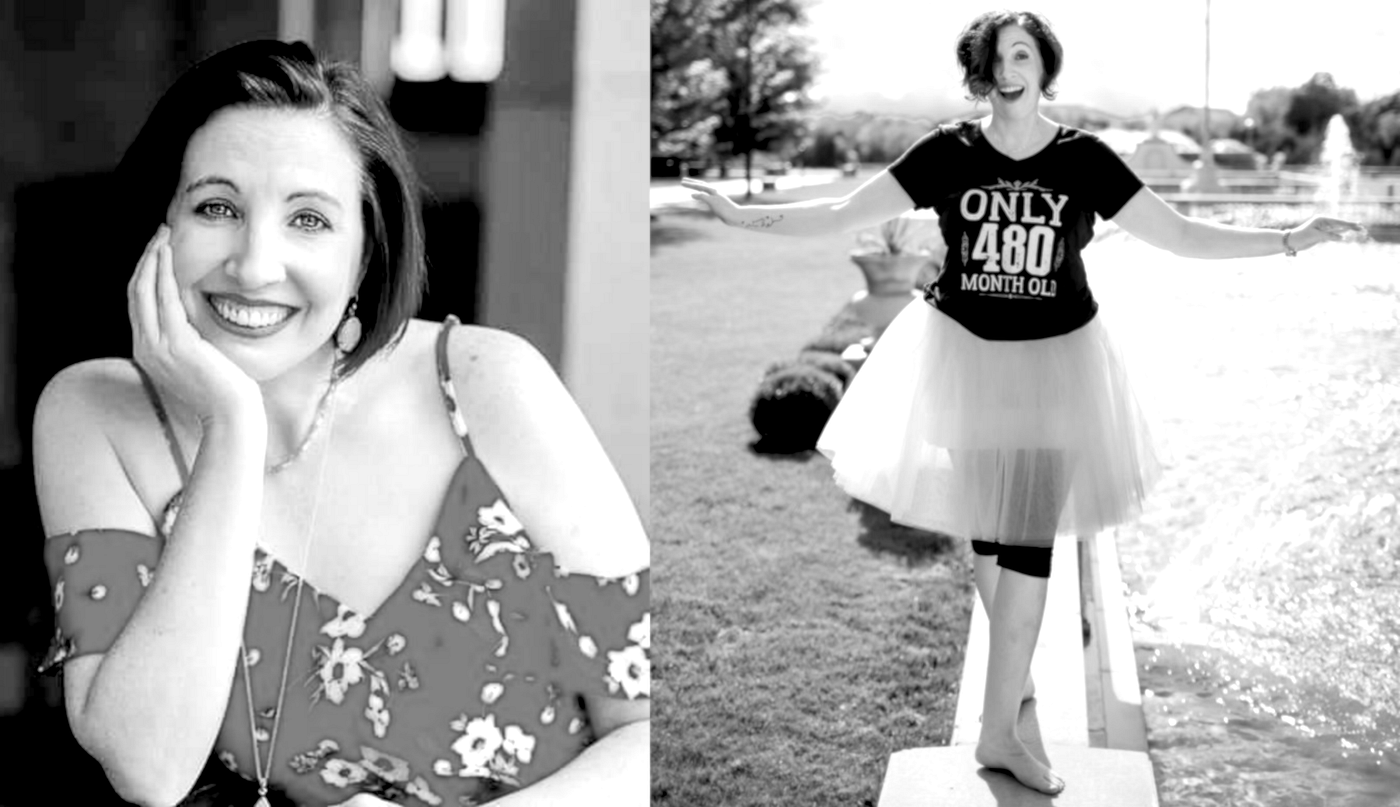
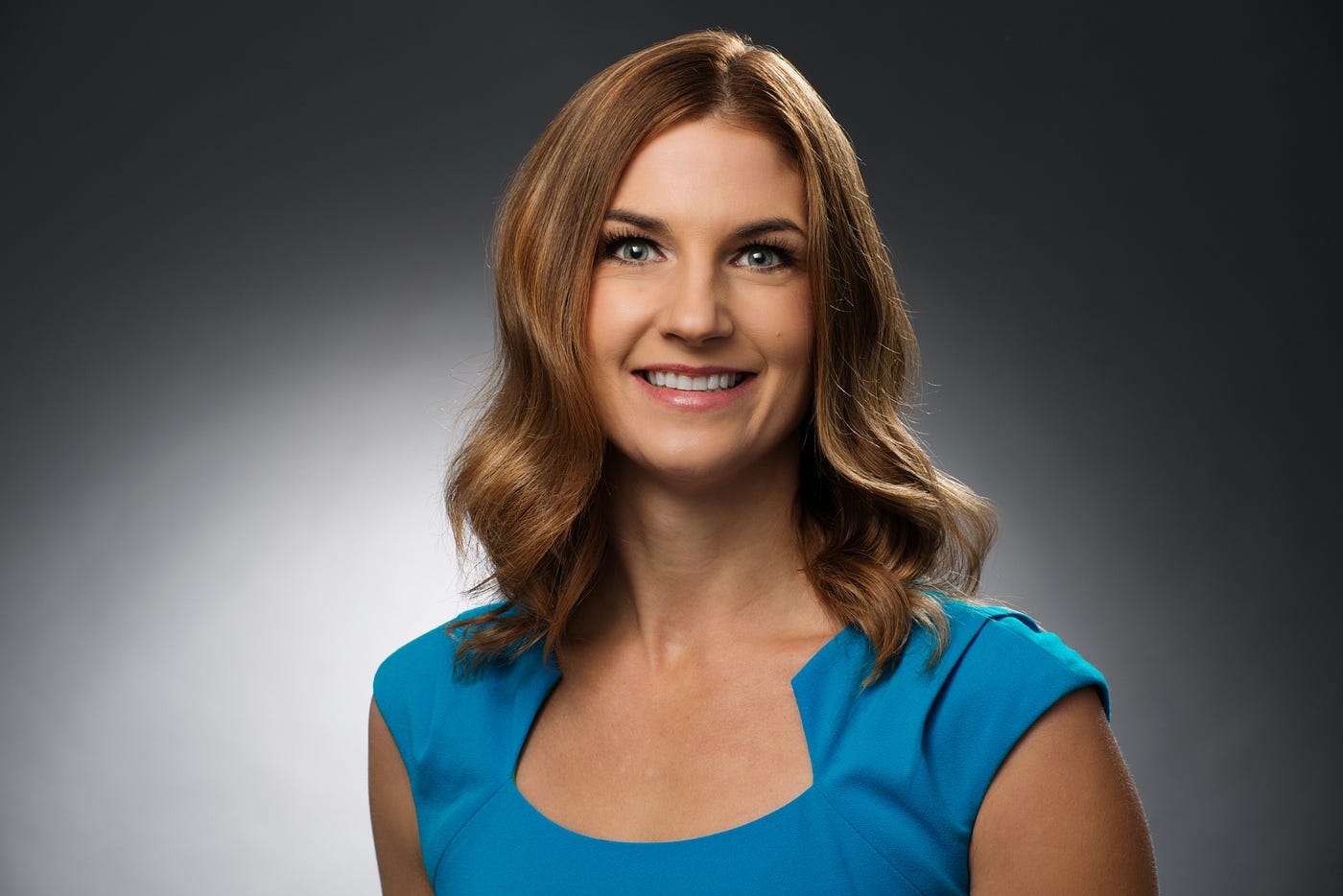
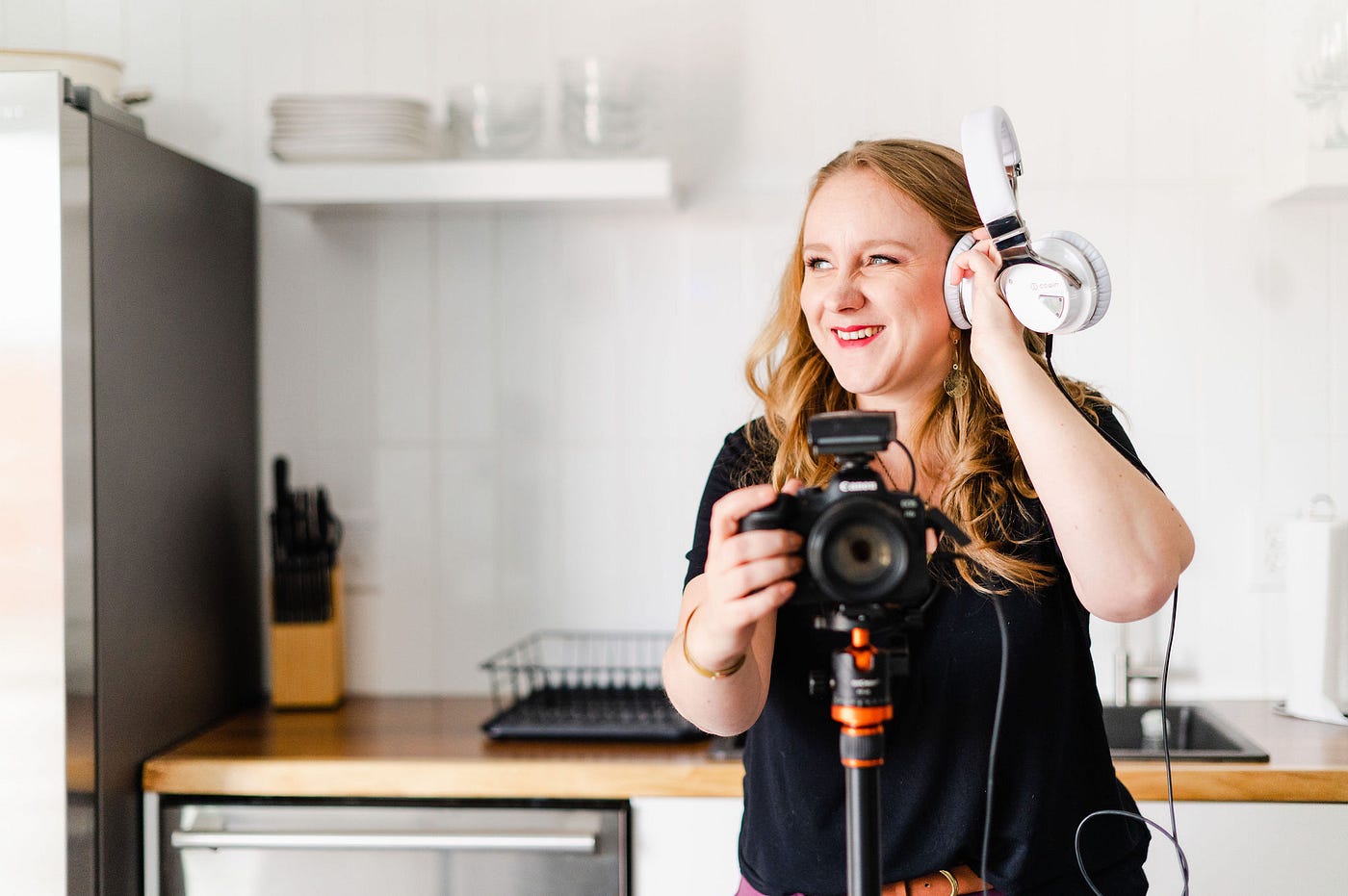
Bernadette Marciniak is a speaker, best-selling author, and brand videographer and photographer for six- and seven-figure entrepreneurs. A former reporter, photojournalist, and video journalist, she now uses a very specific storytelling approach to amplify the message and maximize the impact of business owners through powerful visuals. Today, she runs Solhaus Media, a boutique, all-female media agency, which has serviced over 100 clients with images and videos that creatively convert audiences into customers.
She is based out of the Los Angeles and the NYC tri-state area.
Thank you so much for doing this with us! Before we dive in, our readers would love to "get to know you" a bit better. Can you share your personal backstory with us?
Thank you so much for having me! I’m truly honored.
Listen, at the risk of sounding truly cliche, it did all start when I was four years old. I was given a Polaroid camera by my grandfather and then just a few years later my dad gifted me a 35mm camera and unofficially made me the family photographer. Whenever we’d go to family functions, or even if we were just carving pumpkins on our front steps in the fall, he’d always ask, “Where’s your camera? Take some pictures of the family.” As a kid, I was kind of resentful because I just wanted to enjoy the moments instead of document them, but joke’s on me now, I guess. I ended up following in both my parents’ footsteps and became a photojournalist, and then a video journalist in the early days of the digital space shifting to video. When I went full-time in my business in 2018, I remember being one of the first Chicken-Little-criers that the marketing scene was moving fast towards video and that we all needed to prepare.
None of us are able to achieve success without some help along the way. Is there a particular person who you are grateful for who helped get you to where you are? Can you share a story about that?
I’m a big champion of mentors and educators. I went full-time in my photography business in 2018, when my partner and I moved cross-country from New Jersey to Los Angeles, one of the most competitive markets in the world. When I was first starting out, I had a rubbish attitude filled with scarcity, and I’m forever grateful that I stumbled upon Ben Hartley’s Six Figure Photography podcast and then later taking his courses and meeting him in person. Ben’s approach prioritizes mindset and it was just the shift I needed at that time to be able to even conceive the idea of being successful in photography, or heck, in business overall. Finding his podcast really opened the door for me to be able to receive and register all of the mentorship that came after it. Mindset really is 90% of success.
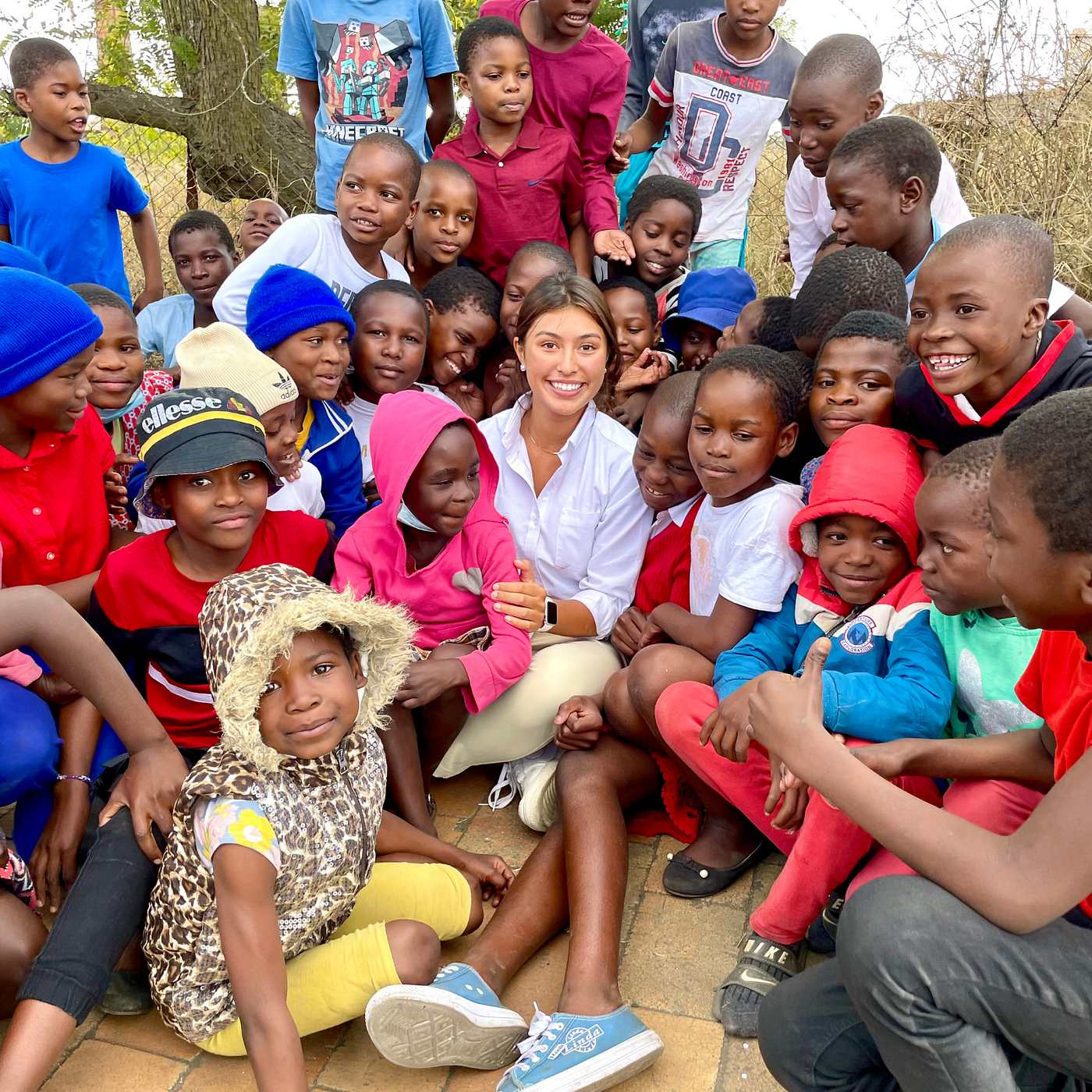
I also want to give a huge shout out to Carrie Murray, Founder of The BRA Network (Business Relationship Alliance). When I first started my business in Los Angeles, I felt like if I was going to “make it,” I needed to be cut throat. Carrie’s community invited me to put my metaphorical swords down and embrace collaboration over competition. I received support and guidance from other photographers instead of being shunned away. And Carrie herself saw in me what I often lacked seeing in myself – she’s hired me for some of the biggest projects in her business and I do not take that gift lightly. I am always truly humbled and honored.
Can you please give us your favorite "Life Lesson Quote"? Can you share how that was relevant to you in your life?
Another cliche, but “nothing changes if nothing changes.” I’ll be the first to admit that when I started working with a business coach last year, I was so incredibly resistant to their advice. I just wanted someone to come in and tell me that what I’m doing is all good and dandy in my business and wave a magic wand to turn that good into great. But the reality is that if it was actually good or was helping me achieve my goals, then I wouldn’t have invested in mentorship. And I know most of us and your readers know this, but sometimes we need a gentle reminder. So I’ve really been embracing that adage in this season, unlearning and releasing strategies that used to make sense but don’t anymore.
Can you share with us three strengths, skills, or characteristics that helped you to reach this place in your career? How can others actively build these areas within themselves?
The biggest one for me was doing things scared. For me, when I first started my business in a new market, that meant networking. Everyone thinks I’m an extrovert because of all the events I go to and the community I’ve garnered, but I’m a lifelong sufferer of unpopular girl syndrome. I’ve always felt like the odd one out in rooms full of people. That never changed (still hasn’t to a degree to this day), but I go do the things anyway. I go out and put myself out there, even when I feel like a fraud.
Second, empathy is at the forefront of my approach, and I know that’s why all of my clients have chosen to work with me. Especially when I’m wielding a giant camera and microphones in their face. I am a journalist and storyteller at heart, so that means I spend a lot of time laying groundwork to make my clients feel like humans and not dollar signs, before they ever set foot in front of my lens.
Lastly, and this is one that I’ve had to really practice exercising, is adaptability. I learned video back when I was still working in journalism, but I did it kicking and screaming. I didn’t want anything to do with it at first. I just wanted to take photos. Not only did I end up falling in love with the medium and all its potential, but it was my saving grace when I got to my new market in Los Angeles and I had a new business. Photographers are a dime a dozen in this city, but video was still new and more than half of my revenue in my first year of business was from video.
Which skills are you still trying to grow now?
Well, as an “unpopular girl”, I very often still enter spaces feeling like I don’t belong or “so far behind everyone else.” It’s a complete fable I’ve fabricated in my head, with a lot of receipts to prove just the opposite. So the skill I’m trying to grow is remembering those receipts when I am meeting new people and presenting myself in a manner that reflects that. It’s not “fake it ‘til you make it,” over here – it’s “fake it ‘til you believe it.”
Let’s talk about B2B marketing. Can you share some insights into how you perceive the current landscape of B2B marketing?
Honestly, I think we’re at a whole new frontier when it comes to B2B marketing. Throwing graphics up on Instagram with 20 hashtags and calling it a marketing strategy is just not going to cut it anymore. I’d argue that even showing up consistently isn’t a great tactic anymore either. You can show up every day, but if your content sucks every day, then it’s not going to move the needle.
I think we should start treating our marketing like entertainment you can stream. In the past, TV shows were picked up for 20-24 episodes per season, right? After having rewatched many of these shows in the last few years, their “filler” episodes are so much more obvious to the consumer now. They literally just needed to fill time.
Today you get 8-12 episodes a season. There’s no room for filler content. And as far as consistency goes, you don’t have these shows coming back at a set date or season every year. You can go 1.5-2 years in between seasons sometimes.
But if it’s a GOOD show, people will swarm back to it in droves. They don’t need consistency – they need quality.
And they also need variety. So you’ll see smaller webisodes attached to these shows. You’ll see a whole campaign with late night interviews, and outlets doing fun content with the actors on YouTube.
This is how we should approach marketing our own businesses – creating less content with more quality that leaves our audiences drooling for more. Creating DIFFERENT types of content in your campaigns and dripping out variety like short-form videos, long-form videos, carousels, and static photos. Dressing up your email newsletters with some imagery and even videos.
How have recent market trends and changes influenced your approach to outperforming competitors?
The photography industry has become incredibly saturated in the last decade. Now you have AI creating very convincing images that a lot of photographers feel threatened by, in the context of job security. So the industry is rapidly evolving and changing.
Looking back, I now find it funny that when I was still just doing photography, I resisted learning video so much. Then I still resisted marketing it after I had already learned it, but it has turned out to be my saving grace as a photographer. I am a one-stop shop for both services, while most of my competition can still only offer one of those services.
I also work with a lot of women and videography is a very male-dominated industry. I harness that to my advantage, creating a much more feminine and soft approach to video, which puts my clients at ease. And you best believe that I capitalize on making that the forefront of my marketing, which makes me stand out in the field. Some may argue that’s an unfair advantage to call out, but hey…my approach is still what ultimately has my clients raving.
B2B buying cycles can often be lengthy and complex. How do you maintain engagement and nurture leads throughout the various stages of the buyer's journey?
I feel like this question is so incredibly relevant now. Inflation is up. Talks of a recession have been looming for a year now. And I feel like during and after the pandemic, a lot of business owners were able to obtain grants and loans, and that money has dried up now, so they’re not as quick to spend – I’ve definitely noticed not only a slowdown in inquiries, but a shift on what people are willing to spend.
So, off the bat, we have to get used to the idea that buying cycles are going to take longer than they have, especially for higher ticket offers and services.
I believe visibility in the context of positioning yourself as a leader and expert is more important now than ever. So it starts with putting your message out on reputable channels, such as yours, for example. But it can’t stop there.
First and foremost, you need to have a good funnel in place to collect email addresses and stay in touch with those who you share your message with. Create nurture sequences that ensure they are hearing from you and getting value from you.
If you’re working with a smaller audience, use that to your benefit to connect with your audience and leads more intimately. Send personalized DMs with voice or video messages. Schedule coffee chats.
And lastly, remind yourself that the buying cycle is just taking longer now. So you have to release the expectation of immediate gratification, and instead, reframe it as planting seeds for the future.
Personalization is gaining prominence in B2B marketing. What are some ways marketers can effectively leverage data to deliver personalized experiences?
Running a small business is a lifelong experiment of collecting data, so get ready to channel your inner Elizabeth Zott and let’s get to work.
First things first, we need to get clear on who you are looking to attract to your business. I personally have had a hard time working with client avatars because I feel that we as humans are more than the labels slapped on us. Instead, when I’m creating content and crafting my messaging, I picture a real person that I know and would love to work with, and pretend I’m talking to them. Because we as humans create our own micro communities of like-minded people, that message is going to land with more than the one person I’m envisioning in my head when I’m crafting it. But at least I have a tangible starting point of who I am speaking to.
Then, I pay attention to how my audience is speaking to ME. Whether that’s during workshops I lead, or how they engage with my content, I collect the data points they share with me – challenges, fears, expectations, goals, etc.
I parrot these data points back to them in the content I create, using their own words in my marketing content.
Lastly, I segment who that message goes to. But I do want to point out that I am speaking from the perspective of being a solopreneur and having a small but engaged audience. So while you can segment platforms such as your email list for instance, that segment could start out as a small 10 or 20 person subscriber list.
I want your readers to keep in mind that you can still sell to small lists. I made five-figures marketing my group program for photographers with an email segment of only 29 subscribers. It’s actually EASIER to be personal to such an intimate list.
And you can broadcast that same personal message to channels where you have bigger audiences. Make it clear from your first-line hook who you are speaking to. For me, that platform is Instagram. So I’m also using tools like polls and stickers, and watching who is engaging with them. I send personalized DMs, sometimes with video messages to keep the conversation going.
ABM has also gained traction for its personalized approach to targeting high-value accounts. What advice would you give to fellow B2B marketers looking to adopt this strategy?
So, again, I’m going to approach this answer from the perspective of a solopreneur or very small business. In our world, I see ABM as extremely thoughtful cold pitching, and I mean that in the best way. Instead of making a blanket list of clients or businesses you could work with, refine the list to businesses you want to work with. And this list can’t just be the business’s name and info@ email address. It needs to be flushed out with all the details of that business. If it’s a bigger enterprise, dig deep and find out who the decision maker behind hiring your business would be. Is it someone in marketing? HR?
If it’s a fellow solopreneur, or even an entrepreneur with a small team, this part will be easy.
Second, start collecting all the data and/or talking points you can on them. Scour their socials. Engage with their posts in thoughtful ways (remember that content engagement vs content creation strategy I mentioned earlier? This is a prime example of it.) Comments with three emojis are not going to cut it here. The idea is to start a conversation, not tick a box on your to-do list.
Refer to those posts in your emails. Is there something more you can say or expand on? Is there a way you can relate it to your business?
The ultimate goal of doing all of this is to a) stand out and b) nurture the relationship you’re building with the person or people who will ultimately decide whether or not to hire you. You don’t come out the gate with a sales pitch – instead you’re building professional and personal brand awareness, providing value, and striking when the iron is hot with a pitch.
If you’re a solopreneur without a team, this approach is most likely an alternative rather than an addition to your marketing strategy. But it’s a lot more targeted, which will lead to some dream clients hiring you for your services.
Fantastic. Here is the primary question of our interview. What are 5 Tips for Your B2B Marketing Strategy to Help You Beat Competitors? Please share a story or example for each.
1 . Having visibility at the top of your list of priorities. That means attending networking events and connecting with others. When I first moved to Los Angeles from New Jersey and started my business, I went to networking events 3-4 times a week. I joined local Facebook Groups for photographers and entrepreneurs and found networking groups that way. I would visit sites like Eventbrite.com every week and search for business events going on that week (most of them were free!). Los Angeles seems like a big city, but the more I went out and networked, the tighter my community got, and the more my name started to float around. Soon enough, I was seen as a leader in those communities and was asked to host workshops as an expert.
2 . Putting yourself in spaces that your competition ISN’T. If you are the only photographer, life coach, product, what-have-you, in the room, use that to your benefit. Attend conferences or expos for industries you’d like to work alongside. I am part of a business coaching program that focuses on scaling your business using public relations. You know what a big part of public relations is? Visuals. The number of members of this group is somewhere in the 50s or 60s, with an even larger general audience, but there are only a few photographers, which means there is plenty of business for all of us.
3 . Teaming up with adjacent partners to offer unique packages to your clients, and access both of your client bases. For example, after I started doing videography, I teamed up with a lot of photographers so that they could offer video to their clients, and vice versa. Doing so will allow you to create collaborators out of your competition, benefitting the both of you.
4 . Be an early adopter, or at least early experimenter of new platforms and services. I was one of the first businesses in my circle to adopt TikTok, and then implement what I had learned from it to Reels when Instagram introduced it. That year also became my most successful year of business to that date. I signed up for Threads the night it launched, and gained a lot of followers on both Threads and Instagram by doing so.
5 . Don’t just have a content creation strategy - have a content engagement strategy. Instead of spending so much time pumping out your own content, go straight to the people you’d like to work with and engage with their content.
How do you utilize data or AI to refine your B2B marketing approach, and what tools have been particularly impactful in gaining a competitive advantage?
AI has been incredibly helpful in my business overall. I know a lot of people are scared of it, and we should be using it with caution, but it can also be an extremely powerful tool. I’ve been using it to help create and repurpose marketing content. Of course, I refine before it gets pushed out, but so much of our action paralysis comes from not being able to take that first step, and AI takes care of that for you. You don’t have to start out with an empty slate anymore.
Which digital channels have you found most effective in reaching your target audience, and how do you optimize your presence across these channels to outshine competitors?
Personally, I’m still an Instagram junkie. Of course the algorithm has changed since I started using it professionally 10 years ago. But change is inevitable, so I find it’s better to embrace it than resist it. I use all the tools Instagram offers on a regular basis. From Reels, to carousels, to guides, to now Threads – using all of these regularly keeps my audience entertained and engaged.
I’ve also found YouTube extremely helpful in my SEO. I don’t have a lot of subscribers right now, but just embedding videos from my channel to my website helps keep me at the top of the results for several powerful keywords, including “Los Angeles Brand Photographer.” As of the time we’re doing this interview, I’m #1 on Google for that keyword, actually!
Lastly, don’t forget about your good ol’ email list. I have an extremely small list, but like I mentioned before, I still had five-figure launches this year when I ran my program for photographers called Pics to Flicks, where they learn how to shoot, edit and offer video to their clients.
Are there any underrated skills or qualities that you encourage others not to overlook?
Don’t underestimate the power of slowing down. So many of my clients come to me and say they had lukewarm, or even awful experiences with photographers or videographers in the past. They’d just be treated like an item on a to-do list, instead of like a human. There’d be a few clicks of the camera without any direction or empathy for how someone feels in front of it. It takes just a few extra minutes to slow down, gain your client’s trust, and be kind. I never thought I’d be labeling kindness as a skill, but my goodness…the world humbles us every day, doesn’t it? Be an active participant in the success of your clients. Truly listen to them, and validate their concerns. That has fortunately and sadly been one of the reasons I stand out in my market.
You are a person of great influence. If you could inspire a movement that would bring the most amount of good for the greatest number of people, what would that be? You never know what your idea can trigger.
This is a great question! I had to think about this one for a minute! I’m going to call it the “Ted Lasso Movement” and its goal is to “be curious, not judgmental.” I’m a huge advocate for mental health and I always, always, always wish for a world where we are treating everyone with kindness, and empathy. I know I’m really drilling into this, but I believe the world would truly be a better and nicer place if more people defaulted to asking questions first before casting uninformed opinions.
We are very blessed that some very prominent names in Business, VC funding, Sports, and Entertainment read this column. Is there a person in the world or in the US with whom you would love to have a private breakfast or lunch, and why? He or she might just see this if we tag them.
So to continue with my fangirling over Instagram, Adam Mosseri is someone I would LOVE to meet in person one day. I really admire the way he shows up on his platform. I feel like he genuinely cares about the experience users have on it, and it comes through in how he promotes creators, posts videos about hidden gems on the platform, and interacts with users on Threads.
And I’m going to be selfish here for a minute because there is another CEO I’d also love to meet one day for the same reason, and it’s Brian Chesky from AirBnb. I feel like AirBnb can be a divisive brand nowadays for a lot of justified reasons. But I still believe in AirBnb’s original mission to “create a world where anyone can belong anywhere, ” especially when you hear Brian relate it to the loneliness epidemic that’s afflicting the world right now.
Because I believe in shooting your shots, I would love to have lunch with these gentlemen, and then collaborate on some projects together – I know a female videographer could bring some great approaches to their visions!
Thank you for these fantastic insights. We greatly appreciate the time you spent on this.
Thank you as well! This was so much fun!