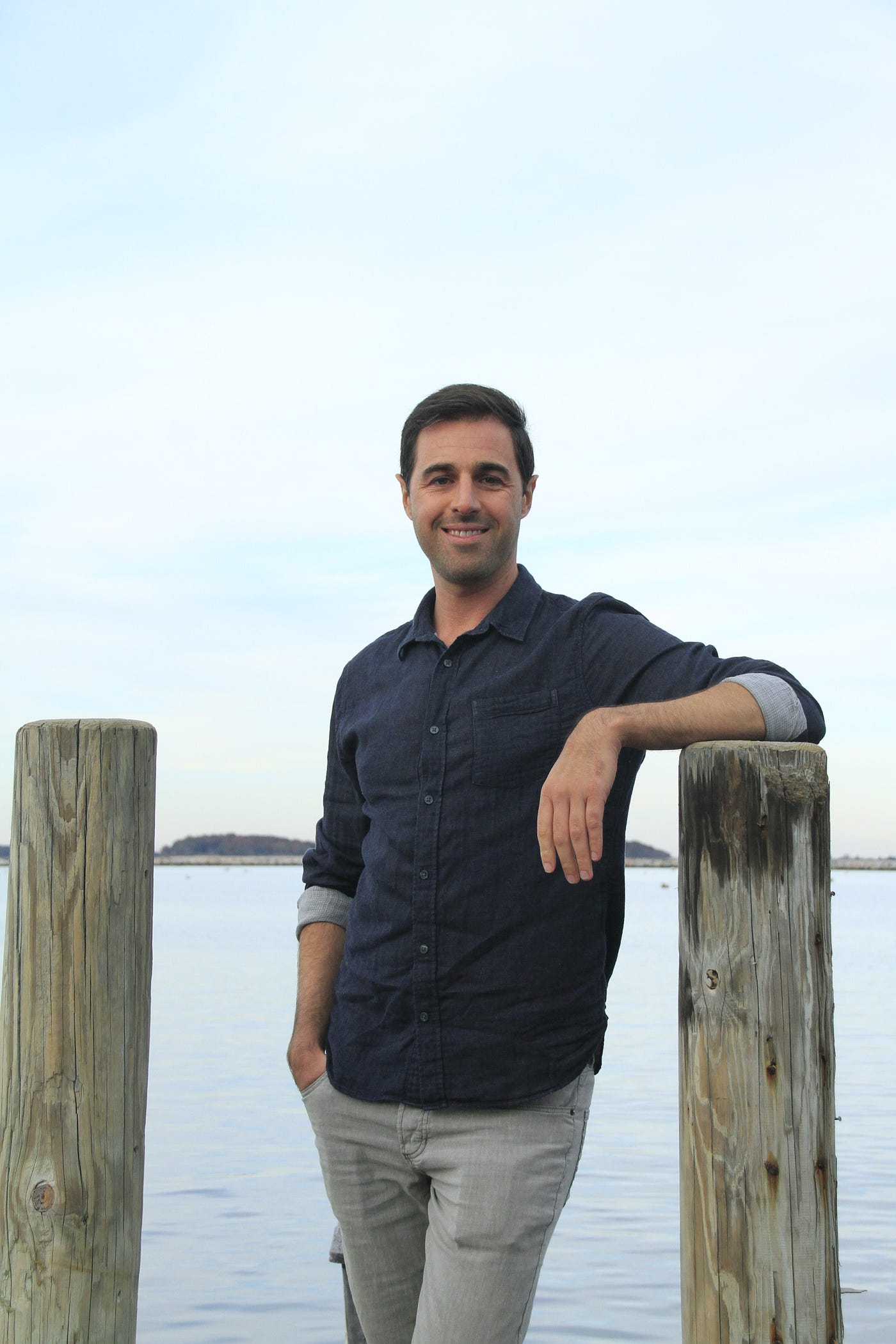
I am the co-founder and CEO of re-origin, a neuroplasticity start-up dedicated to helping people reclaim their health, well-being, and life through brain retraining.
So many people suffer from chronic pain. Often people believe that they have tried everything, and that there is no real hope for them to live pain-free. What are some things these individuals can do, to help reduce or even eliminate their pain? In this interview series, called “Becoming Pain-Free: How to Alleviate Chronic Pain” we are talking to medical professionals, pain management specialists and authors who can share their insights and strategies about how to alleviate chronic pain. As a part of this series we had the pleasure of interviewing Ben Ahrens.
Ben Ahrens is a chronic illness recovery expert and co-founder and CEO of re-origin, a brain retraining program and community. Ben has spent the last two decades working in the health and medical field as a neuroscience researcher and worked alongside cutting-edge doctors and neuroscientists to decode complex conditions such as Long Covid, chronic pain, anxiety, and depression. Having personally overcome debilitating, chronic Lyme disease using self-directed neuroplasticity, Ben is now dedicated to empowering others to reclaim their lives using this transformative brain retraining approach. He holds advanced certifications in biological medicine and is an AADP Board Certified Holistic Health Practitioner in the state of New York.
Thank you so much for joining us in this interview series! Before we dive in, our readers would love to “get to know you” better. Can you share your “backstory” with us?
I am the co-founder and CEO of re-origin, a neuroplasticity start-up dedicated to helping people reclaim their health, well-being, and life through brain retraining. I began my journey in health and wellness at an early age, working as a personal trainer and corrective exercise specialist. I was always fascinated with how people could change their bodies through their own actions. Then in my mid-20s, I got sick with chronic neurological Lyme disease and spent three years bedbound. During that time, I learned a lot about Eastern and Western medicine, as well as neuroscience, which focuses on how the brain and nervous system regulate every aspect of our bodies, including all organs, cells, and systems. In 2015 I had the opportunity to deliver a TEDx talk where I shared my personal journey of healing and recovery. I discussed how I used brain retraining techniques to reset my limbic system and repair my body. Since then, I’ve spent the past two decades working with some of the world’s most renowned doctors and neuroscientists to decode complex chronic conditions, including chronic pain, anxiety, and depression. Our aim is to apply the latest cutting-edge neuroplasticity tools and techniques to help people lead healthier and happier lives.
Can you share the most interesting story that happened to you since you started your career? What were the main lessons or takeaways from that story?
One of the most interesting stories is how I met one of my co-founders. We met in a waiting room while both undergoing treatment for chronic Lyme disease. We maintained sporadic contact over the years, and then one day during the pandemic, about 12 years after our initial encounter, she reached out to me with an idea to start a company. When she shared her idea, it was exactly what I had been working on for the past several years. At that point in time, I had already invested considerable effort in developing a curriculum for advanced brain retraining to help people with chronic conditions like fibromyalgia, chronic pain, chronic fatigue syndrome, post-viral fatigue, and the initial symptoms observed in Long Covid.
The key lesson I learned is that you never know who you’re going to sit down next to and the role they may play in your life or how and when a chance encounter may play out. While this isn’t the type of event that you can plan for, my greatest takeaway is to stay optimistic, stay active, and expand your network to encourage good things to happen.
It has been said that our mistakes can be our greatest teachers. Can you share a story about a mistake you made when you were first starting? Can you tell us what lesson you learned from that?
My most important lessons have come from disregarding my intuition or delaying action. It took me a while to overcome my perfectionism, but I eventually realized that the only way to achieve progress is to make mistakes and keep moving forward. This lesson resonates with my experience in fitness, strength training, and conditioning, as well as chronic illness recovery where improvement comes through repetition and continuous learning.
When it comes to health and wellness, how is the work you are doing helping to make a bigger impact in the world?
When people join our brain retraining program and community, they realize, first and foremost, that they have far more power than they ever thought they did over their own body, brain, and recovery system. We have had people come to us who have been sick for 10, 20, 30 or more years. The moment they realize they can change the wiring in their brain and the impact this has on their health and ability to recover, a lightbulb goes off. Suddenly, they transition from feeling stuck and helpless to feeling empowered, encouraged, and ready to move forward.
Apart from helping thousands of people actively recover from chronic conditions, we are working diligently on conducting more research and clinical trials and expanding the efficacy of self-directed neuroplasticity (brain retraining). Our aim is to shift self-directed neuroplasticity from being a last-resort option to becoming the primary response for individuals with chronic conditions.
Let’s jump to the main focus of this series. For the benefit of our readers, can you please tell us why you are an authority on the subject of chronic pain?
I have collaborated with some of the world’s top doctors, pain psychologists, and Ph.D. neuroscientists who study central sensitization syndrome (chronic pain) and utilize evidence-based mind-body therapies in clinical settings. I have also personally suffered from chronic pain and made a full recovery using these brain-based techniques.
Can you please share with us a few of the most common causes of chronic pain?
When it comes to the common causes of chronic pain, it’s essential to understand what initially triggered the pain and the factors sustaining it. A traumatic injury like a bone break, concussion, or a structural abnormality can cause acute pain, but when the pain persists beyond the point of peripheral pathology, then it makes sense to look at the nerves, the brain, and even life stressors as potential contributing factors. The gate control theory of pain has taught us that pain is not solely confined to the body. It encompasses a significant perceptual component that sends pain signals from the nerves that then travel up the spinal cord and to the brain, but only when they have permission. This, along with research, shows that pain sensations can be regulated through self-directed top-down interventions similar to the techniques we teach.
There are many different types of pain that people struggle with. Which specific form of pain would you like to focus on in this interview? Why that one?
I would like to focus on the pain that stems from central sensitization as opposed to the remaining physical damage in the body. I believe it’s important to educate people experiencing this type of chronic pain that it’s not psychological it’s neurological and that they have the human agency to ignite the healing process and reclaim their life. We can think of chronic pain as a software issue as opposed to a hardware issue. And the great thing about software is that it can be recoded.
Here is the main question of our interview. Can you share your top five “lifestyle tweaks” that you believe will help support people’s journey toward becoming pain-free? Please give an example or story for each.
1 . Discover the power of your brain: The majority of people who join the re-origin program have seen numerous doctors, often being told that their pain is all in their heads. However, it’s important to know that there is, in fact, a mechanism behind the pain experienced and that the pain sensations are not psychological but neurological. When people hear this, they breathe a sigh of relief and feel acknowledged, validated, and truly understood for the first time. Moreover, when people learn that they have the ability to influence these pain sensations, a sense of hope and excitement emerges, motivating them to take action.
2 . Change your perception: When the brain and body enter the sympathetic state, also known as fight or flight, it’s extremely helpful to reduce stress. Our body’s stress response is responsible for activating the limbic system, which becomes hyper-sensitive to bodily sensations. Although people may not have control over all the stressful events in their life, if they can practice dancing with discomfort and reframe obstacles as opportunities (a process known as cognitive reappraisal), they can facilitate the transformation of the threat response into something called a “challenge-response.” This shift is far more advantageous for promoting overall health and facilitating the healing process.
3 . Activate natural painkillers: When people experience pleasurable emotions, it’s possible to trigger the release of natural pain-blocking compounds in their bodies, known as neurochemicals. These neurochemicals include dopamine, oxytocin, serotonin, and endorphins. Whether they are out and about having fun or simply sitting on their couch and imagining that they are having fun or listening to an uplifting song, all of these experiences can trigger the release of these natural painkillers. With some practice, people can learn to evoke this response on demand.
4 . Compassion is also key: I know firsthand how difficult it can be for someone to accept their current state of being, especially if chronic pain is involved. I’ve been there. When I was diagnosed with chronic Lyme disease and could no longer do the things I loved, I started to create wiring in my brain that held me back. I was hard on myself, but once I started to accept my situation, I realized it was what was needed to let go of resistance. It’s this resistance that can lead to increases in the inflammatory process and make it harder for us to get better. The more people can practice self-compassion and be gentle with themselves and stop resisting their situation, the more they can help alleviate tension, reduce inflammation, and assist in the natural dissipation of their pain.
5 . Connection is paramount. In the early 2000s, researchers studied blue zones, which are regions in the world with a high concentration of centenarians — people that lived to be over 100. They sought to find commonalities in their diet, environment, and physical activities. The most significant common factor they discovered among all blue zones was the presence of a strong sense of community. Modern neurobiology teaches us that community and connection have the ability to release oxytocin and serotonin. This helps us to feel safe, aids in regulating our nervous system, and helps keep the pain in perspective. Brain-based techniques like PRT (Pain Reprocessing Therapy) are all based on broadening our perception and feeling connected to something bigger than ourselves. When we engage with people who provide support, love, and understanding, the limbic system calms down. Consequently, we experience less pain and more positivity.
If you could start a movement that would bring the most amount of wellness to the most amount of people, what would that be?
I genuinely believe I’m doing it. I’m able to leverage my skills, education, and past experiences to help people feel empowered and take control of their own health and well-being using the latest and most exciting neuroscientific discoveries.
What is the best way for our readers to further follow your work online?
Readers check out our YouTube at @re_origin and follow us on Instagram @reorigin_official. I love hearing from people and seeing what questions they have about chronic pain, illness recovery, and neuroplasticity. I always do my best to reply, so keep in touch.
Thank you for these fantastic insights! We wish you continued success and good health.
About the Interviewer: Maria Angelova, MBA, is a disruptor, author, motivational speaker, body-mind expert, Pilates teacher, and founder and CEO of Rebellious Intl. As a disruptor, Maria is on a mission to change the face of the wellness industry by shifting the self-care mindset for consumers and providers alike. As a mind-body coach, Maria’s superpower is alignment which helps clients create a strong body and a calm mind so they can live a life of freedom, happiness and fulfillment. Prior to founding Rebellious Intl, Maria was a finance director and a professional with more than 17 years of progressive corporate experience in the telecommunications, finance, and insurance industries. Born in Bulgaria, Maria moved to the United States in 1992. She graduated summa cum laude from both Georgia State University (MBA, Finance) and the University of Georgia (BBA, Finance). Maria’s favorite job is being a mom. Maria enjoys learning, coaching, creating authentic connections, working out, Latin dancing, traveling, and spending time with her tribe. To contact Maria, email her at angelova@rebellious-intl.com. To schedule a free consultation, click here.