When you’re earlier, you meet everyone on set, get the energy going, and be helpful to everyone, even PAs. Make friends on set, because we are one big family, all working together to make this movie very successful.
As a part of our series about pop culture’s rising stars, we had the distinct pleasure of interviewing Ayhan Tongadur.
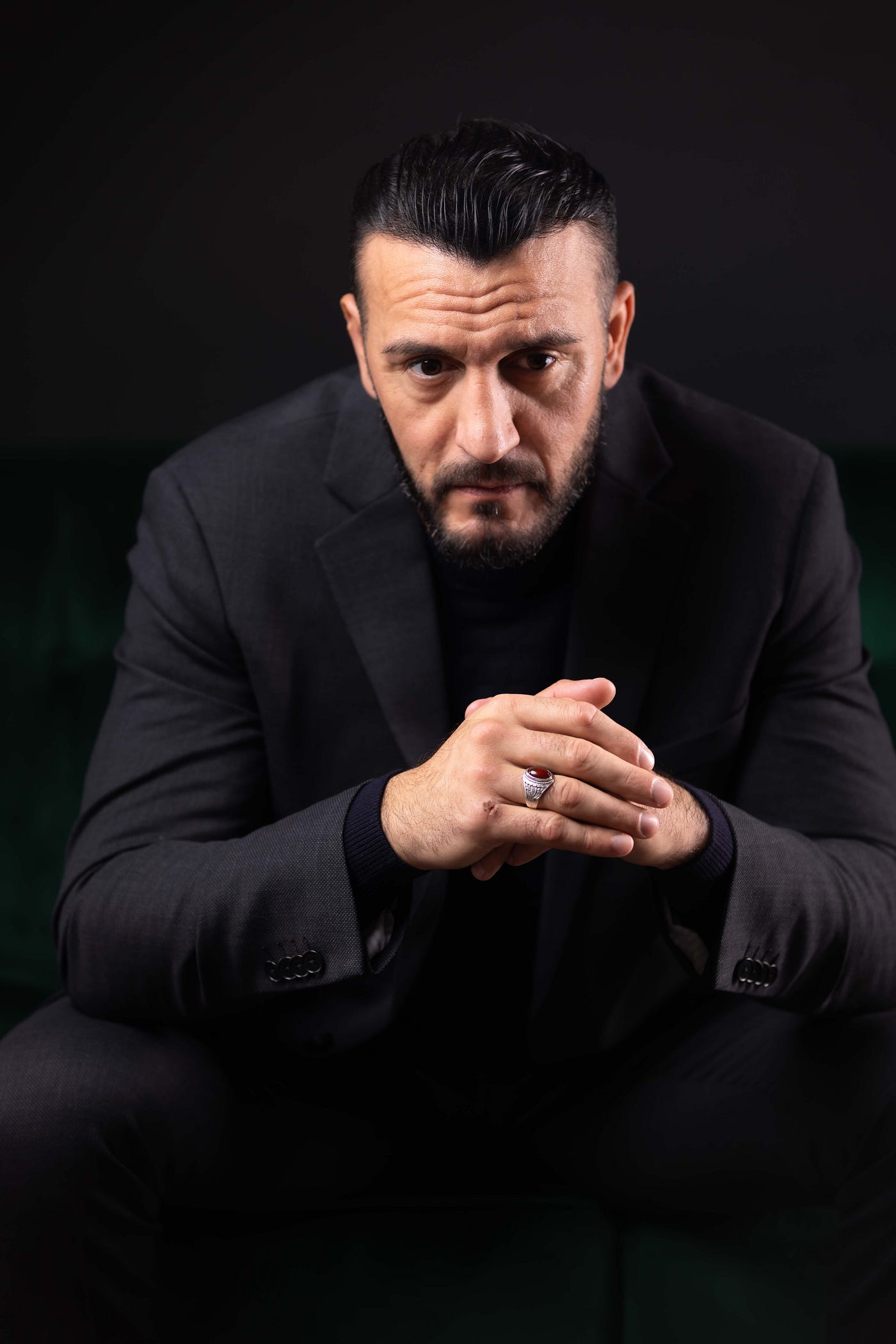
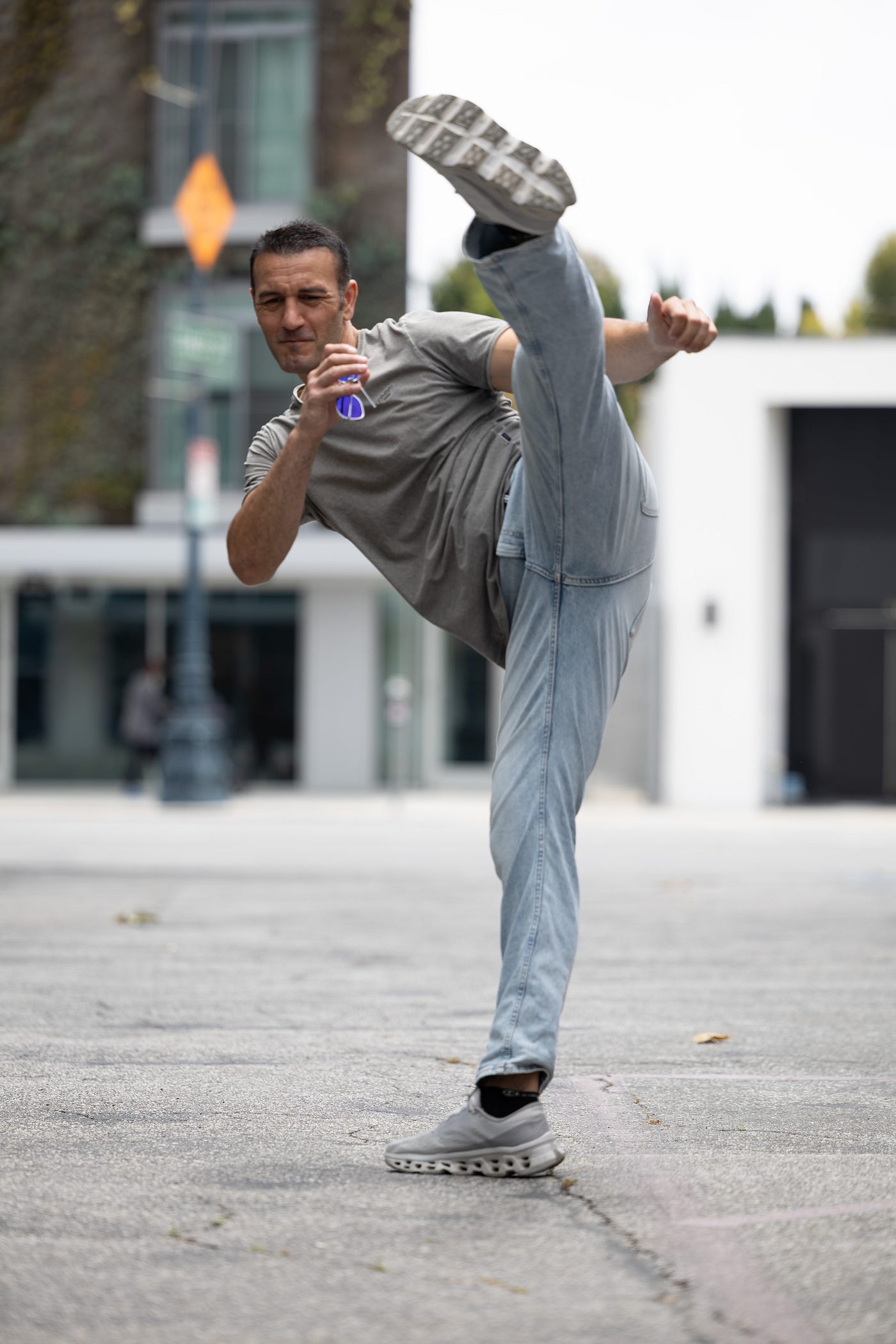
Ayhan Tongadur is a stuntman and actor who lives in Los Angeles, California. He is also a personal trainer, training actors and business executives, and sometimes travels for his training work. He is an entrepreneur and likes business. He feels an obligation to guide people to the right path through martial arts.
Thank you so much for joining us in this interview series! Can you tell us the story of how you grew up?
I grew up in Germany with my two older siblings in a town called Karlsruhe — they call it the city of art. I was always active as a kid — climbing trees and doorways in the house, hanging on things — since I was about five or six. Officially I started with Tae-Kwon-Do around 10 under my trainer and coach, who brought Taekwondo to Europe from Korea. Around age 13 I was introduced to boxing. Near my home there was a police academy boxing studio, and I started boxing there. I fought for the state championship. I really enjoyed boxing and started combining it with Taekwondo, and I was a big fan of Bruce Lee. So my journey started to move to America when I was in my 20s.
Can you share a story with us about what brought you to this specific career path?
My story began when I started training with my trainer and coach in Germany. He inspired me to become an expert in martial arts. His dream was also to be in the land of dreams, the USA, to become like Bruce Lee, and I wanted to follow his footsteps. I followed him and moved to the States. One of his best friends was JJ Perry, a very successful stuntman and director. I met JJ through my trainer, and JJ took me under his wing and introduced me to the best stunt school in the world, called 8711. They do all the action design for movies like Wolverine, 300, Captain America and many more. I met one of the owners at 8711, Chad Stahelski, and I trained under him in stunts. He is one of the most talented people I have met, and he is the director of all the John Wick movies. So I started doing stunts for films and my career started. Of course I had to work, so I started working in nightclubs as a bouncer at night and pursuing stunt training during the day.
Can you tell us the most interesting story that happened to you since you began your career?
My whole life I was a martial artist, and I was doing stunts throughout my career. One day my friend Stan called and asked me if I wanted to play a bad guy character in one of his independent films. I said yes, I would love to. So I took over the character Viktor from Romania. He is a vicious gangster, and of course there was a scene where I had to torture a woman. It was the most uncomfortable thing to do — I am a nice guy, how do I do that? I started watching movies like Robert De Niro in Cape Fear, how he was playing his character, and practicing in front of a mirror. On the day, when I acted my character, I did feel like a bad guy. The movie is called Cash — I played in 1, 2 and 3. And since then I like acting a lot, also playing a bad guy in films.
What are some of the most interesting or exciting projects you are working on now?
Yes, I am working on a few projects right now and planning more. I haven’t booked yet, but there is a project I’m working on that I can’t really talk about right now. The characters I like are the bad guys, like the villains in the James Bond movies — vicious and mean. I feel like the villain is the opposite character of mine, and that’s why I like to play a villain — for my other side. I’m not that person; I’m a kind, loving person.
As a rising star, you’ve likely faced challenges along the way. How do you stay motivated and overcome obstacles in your career?
Yes, there are many challenges in my life and obstacles. The more challenging it is, the more motivated I get, and I push myself smarter and harder. Challenges for me mean I have to train harder to overcome them and not get emotional about it. Hard work pays off, and I have to be smart enough that it doesn’t stop me from pursuing it.
We are very interested in diversity in the entertainment industry. Can you share three reasons with our readers about why you think it’s important to have diversity represented in film and television? How can that potentially affect our culture?
In this whole world there are seven, eight billion people, and everyone is different and has a different culture. Showing the audience that every culture is different gives a different feeling and a perspective on life. That’s why diversity is a good thing to put in movies or TV shows — so the audience can understand and feel where other people come from: other cultures, other thinking, other beliefs.
What are your “5 things I wish someone told me when I first started” and why? Please share a story or example for each.
1. Understanding the technical aspects of film
If you want to become an actor, you have to understand that it’s not just about acting. You should know about the camera, camera angles, lenses, the colors on set, and what to wear to show yourself much better on screen — the presentation.
2. Be prepared
Understand the story of the script and what character you are playing, so you can become that character — even a stuntman plays that character. When you arrive on set, they give you the sides, so read your sides in your trailer: what’s the scene, how the scene evolves. Remember your lines — it’s very important, because when you remember your lines you can also add onto that line. Be prepared to give your best when the camera is rolling.
3. Listen to the director
Always listen to the director and do what he says, because he has a vision. Be a good listener. Don’t just have your own opinion — also think about what the director wants from you. One time my director friend told me, when I was working on his project: don’t act, just answer the way you really would answer. Just be you. And one time a director said: less is more.
4. Be punctual
Be on time — always come about 30 minutes earlier than your call time. One time we parked the cars in the crew parking and the shuttle didn’t arrive on time, so I kept my stunt coordinator waiting. It wasn’t really my mistake, but if I had been 45 minutes earlier, it wouldn’t have been a problem. That’s why I don’t try to make it 10 minutes early, but at least 30–45 minutes is better. When you’re earlier, you meet everyone on set, get the energy going, and be helpful to everyone, even PAs. Make friends on set, because we are one big family, all working together to make this movie very successful. Be on time, and connect with people.
5. Sacrifice and persistence
It takes lots of training, lots of sacrifices, and not giving up. Don’t be too emotional when they don’t accept you for whatever reason — if you get rejected or get a no, it means you are not the right fit or it didn’t match. If you just hang on that and say, oh, I’m not good enough, you will never grow. If you see something you’re not good at, learn it, make it better, and keep moving forward. One time a stunt coordinator told me: know three falls or three moves the best you can do, and be the best at that — so when you get hired, they know you can do that with your eyes closed. And whatever comes, safety first — if there is an unsafe situation, then you stop. Always check everything before any big action, and never point any gun or weapon at someone.
Which tips would you recommend to your colleagues in your industry to help them to thrive and not “burn out”?
Always stay active, but don’t burn yourself out or overtrain. Take your time and let your body rest. Also pamper yourself — go to spas, get massages, go to saunas — and eat healthy. These are very important. Your body is your temple. And one more thing about what life is about: life is about three days — yesterday, tomorrow and today. Yesterday is gone; we can’t bring it back. Tomorrow, we don’t know what’s going to happen. Today is the day, and what you do today prepares you for tomorrow. So live for today. And learn from your mistakes from yesterday.
You are a person of enormous influence. If you could inspire a movement that would bring the most amount of good to the most amount of people, what would that be? You never know what your idea can trigger. :-)
Treat people the way you want people to treat you. Always remember, we are a mirror of each other. Give love, receive love — that’s what I believe in. Just be the best version of yourself that you can be. Be honest, be real, be respectful, be truthful. No lies, no cheating. Be you — be the person the way you want other people to treat you.
None of us are able to achieve success without some help along the way. Is there a particular person who you are grateful towards who helped get you to where you are? Can you share a story about that?
Someone who really helped and inspired me when I was a kid was my trainer and coach. I call him a big brother. He was also a martial artist. He inspired me to move to America, because he came to America in the ’90s pursuing his dream of becoming an actor and stuntman, and I followed his footsteps. He taught me about life — how to be humble, how to be grounded. One of his best friends was JJ Perry, who was a big-time stunt coordinator and second unit director. Now he’s an action director — he’s a director who has done a bunch of films, very respected in this industry. My trainer introduced me to JJ Perry, and JJ Perry took me to a stunt school called 8711, where I started training under Chad Stahelski, one of the owners, who is also the director of the John Wick franchise. So I started training there, and one movie after another I started doing a lot of stunts and acting, playing characters in films. JJ Perry here in America took me under his umbrella and helped me pursue my stunt career.
Can you please give us your favorite “Life Lesson Quote”? Can you share how that was relevant to you in your life?
My favorite life-lesson quote is a saying attributed to Rumi: ‘Either appear as you are, or be as you appear.’ For me, ‘be as you appear’ means be who you are. If you show yourself in a way which you are not, you’re cheating on yourself — you’re not real. Be who you are. Be like an open book: when people see you, when you talk to people, they feel the truth about you, and it should be how it is. No lies. Mean what you say. Don’t try to look like somebody you are not.
Is there a person in the world, or in the US whom you would love to have a private breakfast or lunch with, and why? He or she might just see this, especially if we tag them. :-)
Honestly, in the movie business, the person I would really have a breakfast or meeting with is Brad Pitt. I feel like Brad Pitt has been through a lot in his life, and I can feel his heart — he’s a wonderful, beautiful soul, always trying to help people with his kindness. One time I did a movie with him — The Further Mis-Adventures of Cliff Booth — which comes out in IMAX on November 25. I was doing my stunt — I was doubling an actor — and I did my stunt and fell down. When it was cut and he was walking by, I was still on the floor. It was very kind of him — he reached out his hand and tried to pick me up from the floor. That showed me his beautiful spirit, his beautiful soul. He’s a phenomenal, phenomenal good actor and a great, great looking person. That’s the one person I would like to meet.
How can our readers follow you online?
You can follow me on Instagram at @ayhantongadur, and on my website ayhan.la, which is my website for my training.
This was very meaningful, thank you so much! We wish you continued success!
About The Interviewer: Tavares Beverly ( www.tavaresbeverly.com ) is the Founder and CEO of Beverly Boy Productions, a national video production company that has helped organizations tell their stories through video for more than two decades. Over the course of his career, he has worked with everyone from Fortune 500 executives and healthcare professionals to politicians, nonprofit leaders, educators, and artists, gaining a unique perspective on the role communication plays in leadership, business, and human connection. A frequent contributor on topics including communication, entrepreneurship, leadership, and personal development, Tavares believes that the ability to communicate effectively is one of the most valuable skills a person can develop. His work is driven by a passion for helping organizations connect with their audiences and helping individuals unlock their potential through mentorship, perseverance, and meaningful relationships. To learn more, connect with Tavares on LinkedIn or visit www.BeverlyBoy.com . If you’re interested in using the power of storytelling and communication to grow your organization, strengthen your brand, or inspire your audience, he welcomes the opportunity to connect.