
I learned early on in life that if I want something, I need to put in the time and work to get it done. I don’t expect anything to come easy and I hold myself to a high standard.
The veteran entrepreneur and logistics executive shares essential strategies for maintaining supply chain integrity, leveraging technology, and navigating high-risk sectors.
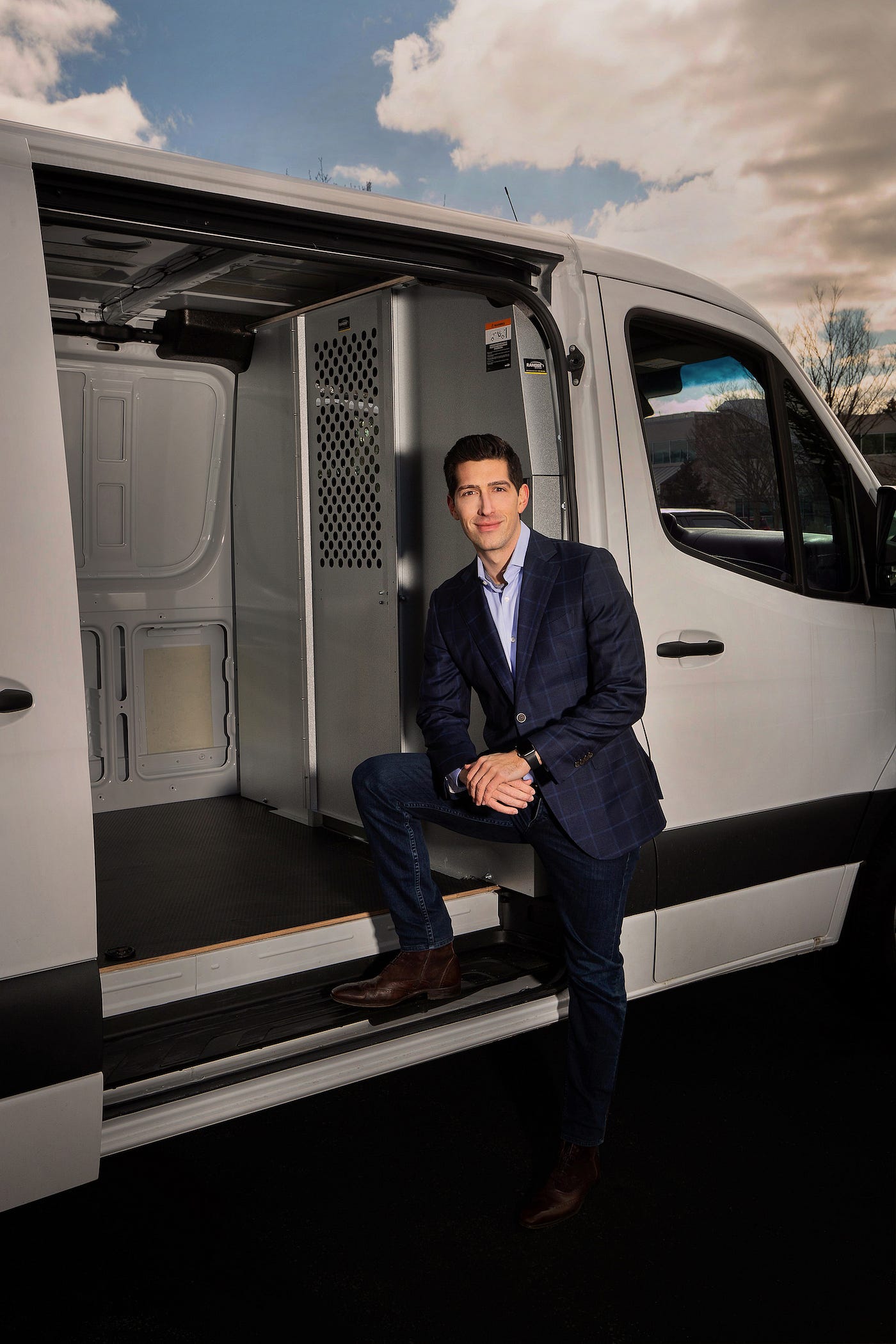
I learned early on in life that if I want something, I need to put in the time and work to get it done. I don’t expect anything to come easy and I hold myself to a high standard.
Supply chain security is a critical aspect of the manufacturing industry. With numerous suppliers and partners involved, the potential for security risks is high. How do product security managers ensure supply chain security? How do they identify and address potential risks associated with suppliers and partners? As a part of this series, we had the pleasure of interviewing Ari Raptis CHIEF EXECUTIVE OFFICER.
Ari is the founder and visionary behind Talaria.He is a serial entrepreneur with over 15 years in logistics and business management leading the company with a wide range of real-world experience. With a specialized focus in secure logistics, his businesses background and leadership skills make him an integral part of Talaria and our community outreach efforts. Ari has been an advocate for the industry and is regarded as one of the industries leading voices for reliable and safe logistics in the cannabis industry.
Thank you so much for joining us in this interview series! Before we dig in, our readers would like to get to know you. Can you tell us a bit about how you grew up?
I was born and raised in Philadelphia and developed an interest in entrepreneurship early on. Even as a young kid, I wanted to follow my father’s footsteps and own a business. I had a typical childhood with lots of fun and play, but I also had a serious, business-minded side, as evidenced by my early business ventures. For example, I ran a pencil sharpening business in elementary school that made me just enough money to buy chocolate milk for my class. That was one of many business ventures I took on as a kid, and it’s no surprise that I ended up here.
Can you share the most interesting story that happened to you since you began this fascinating career?
One of the most interesting parts of my career in cannabis so far has been the chance to notice, and then seize, gaps in the market. I started off launching Talaria Transportation with the goal of providing secure logistics for the industry. Quickly into this foray came the realization that the industry is also lacking cash management solutions and ways to deliver necessary cannabis products to patients in legal states. All of these tie together seamlessly and fell into place quicker than I could have imagined because they are so closely tied to one another.
You are a successful leader. Which three character traits do you think were most instrumental to your success? Can you please share a story or example for each?
Are you working on any exciting new projects now? How do you think that will help people?
We’re working on many things right now. Talaria is rolling out a new distribution platform that will allow us to warehouse and manage products on behalf of brands and dispensaries. MellyGO Home Delivery is also expanding into several new states, which will allow patients to access their plant medicine without having to leave home.
Ok super. Thank you for all that. Let’s now shift to the main focus of our interview. Can you provide an example of a real-world incident where compromised integrity in the supply chain led to product security issues? How was the situation addressed, and what lessons can other organizations learn from that experience?
A well-known example of this would be the 2013 Target data breach. Hackers stole 40 million credit and debit records during the holiday season, upending lives and ruining customer trust in the company. Target quickly notified customers and implemented more secure chip-and-pin cards, but I wouldn’t be surprised if they lost a lot of customers because of the incident. The takeaway from that data breach is to never get comfortable with your security. Just because something has worked up until this point without incident doesn’t mean it’s immune from threats. Regular and thorough security audits need to be a non-negotiable part of any logistics company.
Are there any regulatory frameworks or industry standards that address the importance of supply chain integrity in the manufacturing sector? How can organizations align their practices with these standards to enhance product security?
It’s all about tracking, traceability, and ensuring the customer ends up with an unadulterated product. Utilizing a Supply Chain Integrity and Security (SCIS) system, which is a software program that manages the flow of information in supply chains, can be a helpful tool to keep companies on top of their data every step of the way.
How does the concept of traceability tie into ensuring integrity in the manufacturing supply chain? What role does it play in identifying potential security breaches or vulnerabilities?
Traceability is a huge and critical part of the manufacturing supply chain. Keeping track of every step makes for easy identification of any and all issues. By tracking from creation to consumption, you can identify the origin of any breach or vulnerability and fix it from the source.
Are there any emerging trends or technologies in the manufacturing sector that can help enhance product security and supply chain integrity? How can organizations leverage these trends to stay ahead of potential threats?
Technology is evolving rapidly and AI continues to pop up in just about every industry. It makes a lot of sense in the supply chain management industry, especially when it comes to predictive analytics. These predictions can help us stay on top of inventories and make management decisions easier.
What are the “5 Things We Must Do To Ensure Product Security in the Manufacturing Sector?” and why?
1 . Regular security audits: If you want to make sure that you are operating in a secure and compliant manner, you need to constantly be checking for vulnerabilities. Insider threats are no myth, either. It’s a good idea to have penetration testers and similar professionals check your systems for vulnerabilities — even ones that could be exploited by employees, contractors, or others with access to your facilities. I’ve heard plenty of stories about companies discovering vulnerabilities they would have never seen coming if it weren’t for regular audits.
2 . Procedures for threats of theft: Theft is a serious problem in the cannabis industry. And when it comes to our role as transporters of these goods, we’re moving targets. Our employee safety is of the utmost importance, so we make a point of going over procedures for situations that could put our staff in harm’s way. This includes policies and procedures to prevent theft in the first place.
3 . Monitor, monitor, monitor: Keep on top of blind spots and security by monitoring everything, every step of the way, all the time. There’s no way around it. If you want to detect threats before they happen, this is the way. As I mentioned with the security audits, I’ve heard enough horror stories about failing to detect threats, so I make monitoring our systems a top priority.
4 . SCRM plans: Supply Chain Risk Management Plans, which implement some of what I’ve mentioned above, are key to ensuring product security. I’ve heard that there’s been a huge increase in companies experiencing disruptions since the onset of the pandemic. Implementing plans to mitigate these potential threats is an easy way to stay out of trouble.
5 . Stay informed: The manufacturing sector changes constantly. So does the cannabis industry. We must always be vigilant, and this means keeping on top of latest trends, challenges, and news in the industry. I make a point to read industry news and reports on a daily basis.
You are a person of enormous influence. If you could inspire a movement that would bring the most amount of good to the most amount of people, what would that be? You never know what your idea can trigger. :-)
I’m passionate about delivering health. With my companies, this means delivering cannabis to people who benefit from the plant. I’m also a big proponent of mindfulness and would love to see the world move toward a more mindful, self-judgment-free way of living.
How can our readers further follow your work online?
They can follow us on Linkedin at @TalariaTransportation.
This was very inspiring and informative. Thank you so much for the time you spent with this interview!
About The Interviewer: David Leichner is a veteran of the Israeli high-tech industry with significant experience in the areas of cyber and security, enterprise software and communications. At Cybellum, a leading provider of Product Security Lifecycle Management, David is responsible for creating and executing the marketing strategy and managing the global marketing team that forms the foundation for Cybellum’s product and market penetration. Prior to Cybellum, David was CMO at SQream and VP Sales and Marketing at endpoint protection vendor, Cynet. David is a member of the Board of Trustees of the Jerusalem Technology College. He holds a BA in Information Systems Management and an MBA in International Business from the City University of New York.
David Leichner is a senior columnist at Authority Magazine covering Tech and Business, conducting primary-source Q&A interviews with founders, executives, and industry leaders.

Exclusive, curated interviews with the leaders and changemakers shaping tomorrow. Leadership lessons, industry deep dives, and executive profiles.

The Heartbreakers host and digital creator shares how a background of overcoming adversity fueled her entrepreneurial success and shaped her transparent approach to audio storytelling.

The CEO of IQT shares how embracing contrarian strategies, fostering A-player autonomy, and bridging technology with national security are redefining modern venture capital investments.
The co-founder and president shares how breaking through male-dominated industry norms and lifting communities globally transformed her approach to authentic leadership.
The Director of Operations shares valuable insights on overcoming idea overload, prioritizing core competencies, and building a proactive customer service culture.

The Global President of Stanley details how his unconventional career path and a deep commitment to brand building and consumer connection drive massive commercial success.

The Director of HR at Course Hero shares how her background in architecture informs her approach to employee engagement, empathy, and building a collaborative workplace culture.
The Clase Azul Spirits founder and CEO shares how integrating mindfulness and personal spiritual growth into daily operations creates an authentic, compassionate, and thriving company culture.

The CEO of Dandelion Energy shares how navigating the COVID-19 pandemic reshaped their geothermal heating business and accelerated essential virtual sales innovations.