I grew up with a typical suburban upbringing in NJ: always active, either playing soccer, skateboarding, or riding my bike to the beach to play volleyball.
Getting a good night’s sleep has so many physical, emotional, and mental benefits. Yet with all of the distractions that demand our attention, going to sleep on time and getting enough rest has become extremely elusive to many of us. Why is sleep so important and how can we make it a priority?
In this interview series called “Sleep: Why You Should Make Getting A Good Night’s Sleep A Major Priority In Your Life, And How You Can Make That Happen” we are talking to medical and wellness professionals, sleep specialists, and business leaders who sell sleep accessories to share insights from their knowledge and experience about how to make getting a good night’s sleep a priority in your life.
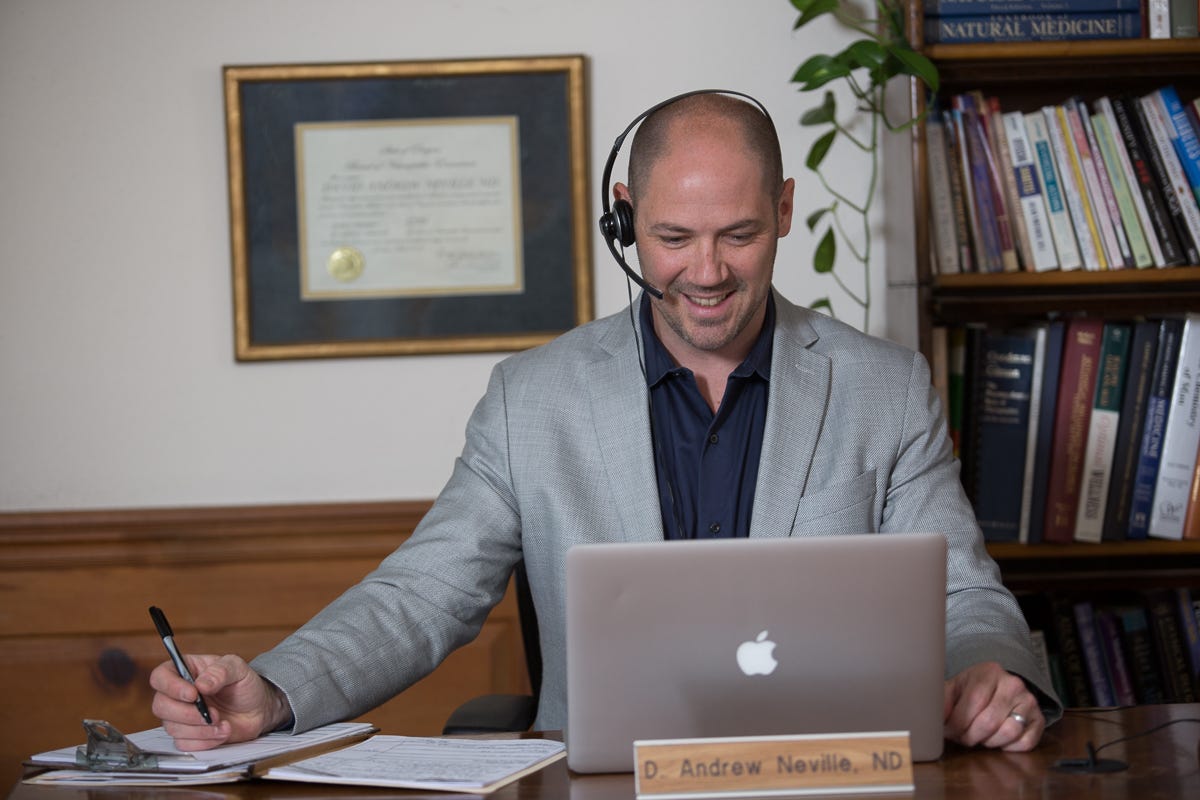
As part of this interview series, we had the pleasure to interview Dr. Andrew Neville.
Dr. Andrew Neville, ND, is a specialist in Adrenal Fatigue and Chronic Fatigue with 20 years experience. His holistic treatments have helped thousands get their lives back from mysterious chronic illnesses. He has an online treatment program for Adrenal Fatigue, which enables him to work with patients all over the USA.
Thank you so much for doing this with us! Before we dig in, our readers would like to ‘get to know you’. Can you tell us a bit about your background and your backstory?
I am a Naturopathic doctor with over 2 decades of specialization in treating a condition called Adrenal Fatigue. I did not grow up steeped in alternative medicine. I grew up with a typical suburban upbringing in NJ: always active, either playing soccer, skateboarding, or riding my bike to the beach to play volleyball.
Once I discovered my passion, through a rather circuitous route, my wife and I moved out to Seattle for me to go to medical school. She worked as a Special Education teacher to support us. After med school, I found a residency in Bucks County, PA, where we raised our family. To this day, I continue to practice here, in addition to my online treatment program.
Can you share a story with us about what brought you to this particular career path?
I came to natural medicine because of my own health concerns. I became unwell just before starting my undergraduate degree, and my symptoms were only getting worse. Conventional medicine wasn’t helpful in treating me beyond symptom suppression, and that was limited at best. As many people do, I gravitated toward alternative forms of assessment and treatment, like nutrition and chiropractic practice, for answers that were gentler and more helpful. But they still weren’t getting to the bottom of my issue.
I then discovered Naturopathic Medicine, which I had never heard of before. Naturopathic philosophy, especially in treating the cause of disease, just made sense to me and fit with my developing world view of health and disease. My path was decided. I attended five years of naturopathic medical school in Seattle, which was where I discovered my predecessor’s book, Chronic Fatigue Unmasked 2000.
That book, written by Dr. Poesnecker, changed my life. It was like I was reading about myself. It explained Adrenal Fatigue so well that I eventually went to Pennsylvania to seek private treatment from Dr. Poesnecker. I then moved my family out there, and I pursued a residency with Dr. Poesnecker. I wanted to learn directly from him and have since dedicated my life’s work to carrying his torch, treating others with Adrenal Fatigue.
Can you share with our readers a bit about why you are an authority in the sleep and wellness fields? In your opinion, what is your unique contribution to the world of wellness?
A medical degree in naturopathic medicine requires students to study both conventional medicine as well as natural or alternative medicine. Naturopathic medicine also has a focus not just on the diagnosis and treatment of disease, but also on health and well-being and addressing the root causes of disease.
My specialty is in Fatigue which often crosses over with chronic fatigue. One of the foremost symptoms of Adrenal Fatigue is insomnia and poor sleep. Prior to seeing me, these patients have gone through traditional medical interventions, as well as many alternative treatments, with limited success.
My main unique contribution to the world of wellness is in providing people with an understanding of health and disease that helps them move away from chasing symptoms or secondary and tertiary dysfunctions and toward treating the underlying cause of their conditions. I help them understand how to create the physiologic balance that leads to healing, and I give them tools to be able to reestablish the basis for health and well-being.
I’ve helped many patients heal insomnia and get deeper sleep by focusing on their overall health. The body knows how to heal itself; it’s been doing it for thousands of years. We all just have to turn that part of our physiology back “on.” Not an easy task in our modern world, but it can and must be done. When we normalize that physiology, not only do the symptoms go away, but you also put yourself in an anti-inflammatory, anti-cancer, and anti-aging state. There is nothing more powerful.
Is there a particular book that made a significant impact on you? Can you share a story or explain why it resonated with you so much?
Chronic Fatigue Unmasked 2000, originally titled The Adrenal Syndrome, by Dr. Gerald Poesnecker.
I discovered this book at my medical school library doing research. My research consistently led me to research several poorly understood conditions, like Chronic Fatigue Syndrome and Fibromyalgia. These conditions are more severe versions of my specialty, Adrenal Fatigue.
Like I said, I was and had been dealing with some of my own health issues that flared up during medical school. The discovery of this book not only changed my life, but saved it. With the guidance in this book, I was able to heal myself of symptoms gradually. All of my symptoms were ultimately caused by years and years of Adrenal Fatigue. It was then I knew I wanted to help others who were dealing with the mistreatment of this incredibly poorly understood, often debilitating condition.
Do you have a favorite “Life Lesson Quote”? Do you have a story about how that was relevant in your life or your work?
“Life in all its fullness is mother nature obeyed.” Weston A. Price
I encourage all readers to look at the work of this pioneering man. After traveling to all the world’s continents and studying humans who were untouched by modern civilization, he found that the people who lived in accordance with nature’s laws were healthier in all ways.
I also love this quote by Mark Twain: “It ain’t what you know that gets you in trouble, it’s what you know for sure that just ain’t so.”
I find this quote to be central to my work. It helps me keep an open mind when reading research, as I work to fine-tune my treatment protocols for my patients. We all are biased by our upbringing, education, experiences, and environmental exposures. This creates sets of beliefs that may not be factually accurate. As I learn more about health and disease through my constant research, I truly find that the more I learn, the more I realize how much more there is to learn.
Ok, thank you for all that. Now let’s move to the main focus of our interview. Let’s start with the basics. How much sleep should an adult get? Is there a difference between people who are young, middle-aged, or elderly?
The research varies a bit on this, but the consensus lands in the range of 7–9 hours of sleep per day for most age ranges, outside of babies, who of course will sleep more. Sleep quantity declines as we age, however; we don’t know if this is a result of dysfunction and is suboptimal, or if it is that we “need” less sleep as we age. This, too, is controversial.
Is the amount of hours the main criteria, or the time that you go to bed? For example, if there was a hypothetical choice between getting to bed at 10PM and getting up at 4AM, for a total of 6 hours, or going to bed at 2AM and getting up at 10AM for a total of 8 hours, is one a better choice for your health? Can you explain?
The amount of sleep we obtain at all ages is crucial, but timing is important as well. Research supports the effects of earlier bedtimes to improved academic performance, improved metabolic function (weight regulation), and more.
Research also supports increased risk of heart disease, stroke, diabetes, and cancer rates in shift workers who get adequate sleep quantity but have altered circadian rhythms.
“Disruptions of the rhythmogenetic system can cause internal desynchronization of important biological cycles. Over time, these desynchronizations can have secondary pathological effects. Sustained disturbances can lead to depression, insomnia, cardiovascular
disease, cancer, and even premature death.” (Clin Neuropharm 2019;42: 80–87)
We, as non-nocturnal mammals, are designed to wake with the sun and go to bed with the sun. This is a law of nature, as true as the law of gravity. However, this law is easy for us to break in our modern culture. When we break the law of our optimal circadian rhythm, the detrimental effects are not seen immediately, only over time. We as humans are wired to pay much more attention to immediate consequences, as opposed to looking at them in the long-term.
On a biochemical level, this correlation the above study found is likely due to the suboptimal levels of the hormones melatonin and growth hormone nocturnal shift workers experience. Suboptimal levels of these hormones are connected to all of the aforementioned diseases and dysfunctions, as well as more rapid aging.
Melatonin production is a crucial step for initiating sleep and important for immune, cardiac, endocrine, metabolism and weight, reproductive and even psychiatric health. Growth Hormone is primarily released at night when we sleep. It is associated with bodily functions beyond growth and repair. Growth hormone is important for cardiac health, bone strength and density, metabolism and weight, muscle development and strength, as well as healthy aging.
As an expert, this might be obvious to you, but I think it would be instructive to articulate this for our readers. Let’s imagine a hypothetical 35-year-old adult who was not getting enough sleep. After working diligently at it for 6 months he or she began to sleep well and got the requisite hours of sleep. How will this person’s life improve? Can you help articulate some of the benefits this person will see after starting to get enough sleep? Can you explain?
As sleep improves, literally everything improves. All physiologic mechanisms, from hormones to the immune system to nerves and digestion, improve with optimal sleep. Mood stabilizes, energy increases, cognition sharpens, and joy and happiness return.
Not only will the person feel better physically, mentally, and emotionally, they will also be improving their long-term health. Sleep is the physiologic state of healing and repair during which we turn on our rest-and-digest physiology, (our parasympathetic nervous system). During our waking hours, we are functioning in more of a fight-or-flight state, or we are using our sympathetic nervous system to perform tasks, make decisions, and handle the trials and tribulations of our days. Fight-or-flight, or “stress” physiology, generates wear and tear on the body from which we must repair, and that repair primarily occurs during sleep.
Many things provide benefits but they aren’t necessarily a priority. Should we make getting a good night’s sleep a major priority in our life? Can you explain what you mean?
Absolutely. As stated above, the balance between rest-and-digest and fight-or-flight physiology is crucial to our health and well-being. A person spending too much time in fight-or-flight is creating excess wear and tear on their body. They are not spending enough time in rest-and-digest physiology in order to heal and repair. Over time, insidiously and gradually, the person will lose their health. Excess wear and tear coupled with decreased healing and repair is not a good equation for health and well being.
Deep, restorative sleep is absolutely a major priority, not only to prevent disease, but in order to live long, healthy lives. Research strongly supports that poor sleep quality and/or quantity increases the risk of almost every chronic disease, from heart disease to diabetes to obesity to immune system problems.
The truth is that most of us know that it’s important to get better sleep. But while we know it intellectually, it’s often difficult to put it into practice and make it a part of our daily habits. In your opinion what are the 3 main blockages that prevent us from taking the information that we all know, and integrating it into our lives? How should we remove those obstacles?
Habit and inertia, lack of life balance, and technology.
First and foremost, we need to prioritize sleep and all the other variables that lead to good health and well-being. Our focus must shift toward better balance in our lives.
We can still excel in school, work, sport, and all of the other things we “do” in life, but we have to understand the importance of and learn to excel in “not doing.” The challenge here is that the act of “not doing” is not valued in our society today. It’s not productive. We do not value the siesta as other cultures may, and we certainly do not value the long-term benefit of a good night’s sleep.
To accomplish this is to go against human nature; long-term benefits are hard for humans to quantify, but cleaning the house or completing a project at night gives us immediate gratification.
We have numerous ways to cheat Mother Nature in our current technologically advanced society that get in the way of a good night’s sleep. We can blame Edison for our lights or the multiple TV screens, or even the minicomputer that we all have in our pockets. All of these technological advances steer us away from our body’s natural biological rhythms and subvert the subtle cues that the day should be coming to an end. It’s important to remember that less is more, especially in the evening.
Once we learn to value and prioritize sleep, and once we have the awareness of the need to make changes in our life, then we have to take steps to make it easy to get good quality sleep. We can’t make any changes in our day-to-day lives and our habits until we have the awareness of the need to change. Once that awareness is present, we can take steps in the direction of health and well-being.
Do you think getting “good sleep” is more difficult today than it was in the past?
Human lives are very different than they were a thousand or even a hundred years ago. Unless you’re living in a country or region where a lack of food and safety are still regular issues, the stress of today’s world is quite different.
In the past, we primarily dealt with more physical stresses and hardships, where our “bucket of tolerance for stress” would fill up all at once; our physiology would shift into fight-or-flight to respond to the stress. If we lived through the threat, then the bucket emptied and we’d shift out of fight-or-flight, thus turning off the excess wear and tear and turning on our rest-and-digest physiology, which stimulated healing and repair. We would live to fight another day.
These days, most of us don’t have to deal with those kinds of stresses anymore. These days we start filling up our buckets at an early age due to our modern, fast-paced, toxic, loud, and controversial world. Poor diet and nutrition, trauma and abuse, toxins and exposures all affect us early on in life. The pace of changing technology, globalization and information overload, and societal, financial, and economic pressures add to the intense stress of just being.
When our body is in fight-or-flight too often, we are generating excess wear and tear on the body, and almost all mechanisms contributing to good sleep quality are compromised. This includes hormones, nerves and neurotransmitters, and the immune system.
Ok. Here is the main question of our discussion. Can you please share “5 things you need to know to get the sleep you need and wake up refreshed and energized”? If you can, kindly share a story or example for each.
- Routine: As discussed earlier, as mammals, we are designed to wake with the sun and go to bed with the sun. Parents inevitably find that establishing nightime routines consistently helps children wind down in the evening until they’re ready for bed. We adults also need healthy nighttime wind-down routines. My advice is to work to shut your life down after dinner, so you can get to bed at the optimal time.
- Sleep hygiene: Sleep hygiene advice is readily available everywhere on the internet, and it works! Moderating daytime exercise and sun exposure, keeping a dark, cool, tidy bedroom, and reserving only bedroom activities for the bedroom are all perfect tips. Avoid watching the clock. White noise from a fan and machine can be helpful as well. Caffeine consumption should be reduced — if not eliminated — because of its long half life (it stays in the body for many hours). A journal at the bedside table can be a useful tool; if you find your mind ruminating on trying to remember something for the following day, you can write it down and let your subconscious mind let it go. Lastly, some form of a relaxation exercise, like deep breathing, visualization, or repetitive prayer in the evening or right before bed is well documented to assist in improved sleep.
- Snack before bed: Our blood sugar drops overnight. In most people, this minor stress generates a minor response, and we sleep right through it. In other people, notably someone with Adrenal Fatigue, this minor stress of a blood sugar dip generates a more profound response. The mid-night blood sugar dip causes us to wake up as if a tiger just jumped out at us. A small snack of protein and fat, like a couple of bites of dinner, a handful of nuts or seeds, or a scoop of nut butter can help stabilize the sugar overnight and can remove this trigger for waking.
- Supplements: There are nutritional supplements that assist with sleep as well. Magnesium is a mineral that helps us relax. Melatonin, which is commonly suppressed, can be used to help initiate sleep. Precursors to serotonin like tryptophan or 5-HTP can be used to help this neurotransmitter. I also recommend calming herbs like chamomile, lemon balm, and skullcap, commonly found in “sleepytime” teas; they can settle our systems in the evening and assist in sleep. Gaba (another calming neurotransmitter) support, like L-theanine, can be used safely as well
- Get Your Cortisol Levels Checked: Cortisol is not only our major “stress” hormone, but it also creates our circadian rhythm. Cortisol is highest in the morning, waking us up and getting us animated for the day. Then, it continuously declines and is at its lowest level before bed, allowing us to crawl into bed and sleep. If cortisol is too high at night, which is a very common situation, especially in anyone dealing with Adrenal Fatigue, sleep will be compromised. Even if you can sleep, when you have elevated nighttime cortisol, deep restorative sleep will be inhibited. Cortisol levels in anyone with sleep issues should be assessed, especially if the above recommendations yield limited results.
What would you advise someone who wakes up in the middle of the night and can’t fall back to sleep?
First and foremost, have a protein snack before bed, as I previously mentioned. A snack including some protein and fat can stabilize the blood sugar overnight and prevent waking. This could even be that warm glass of milk before bed that grandmothers everywhere knew would help you sleep well. Prevention of the waking is far more effective than trying to deal with it once you’re awake.
If you still wake in the middle of the night then you should take action to get yourself back to sleep. Start with a snack. A handful of nuts or a couple of bites of leftover dinner should suffice. Try not to watch the clock. If your mind is too busy, do a quick brain dump in your journal. You can also try a relaxation exercise in which you focus your mind on one thing, like counting sheep, as quaint as that is, to quiet the mind. Aside from that, if you’re truly wide awake, you should get up and out of bed, perhaps get a small snack, do something non-stimulating until your system settles and you feel sleepy enough to return to bed. Try to avoid TV screens, technology, and especially that cell phone, if possible.
What are your thoughts about taking a nap during the day? Is that a good idea, or can it affect the ability to sleep well at night?
As with much of the sleep research, the napping issue is also disputed. For many people, especially people that are somewhat sleep deprived, a nap of 20–30 minutes during the day and before the evening meal does not compromise sleep at night. For others, a nap during the day will throw off their sleep at night. So, this is a personal issue that requires some trial and error.
For the patient population that I see, those with Adrenal Fatigue, Chronic Fatigue Syndrome, or Fibromyalgia, the vast majority can nap during the day and still sleep at night because of their fatigue, their overall lack of energy, and compromised sleep over time.
Wonderful. We are nearly done. Is there a person in the world, or in the US, with whom you would like to have a private breakfast or lunch, and why? He or she might just see this, especially if we tag them. :-)
This is an interesting question. I’d like to break some bread with Robert Sapolsky. Sapolsky is a brilliant neuroendocrinologist and primatologist that has done extensive research on the stress response system itself and the detrimental effects of stress on mammals and humans over time. He is the author of one of my favorite books on the subject, Why Zebras Don’t Get Ulcers. Sapolsky also worked with another prolific pioneering neuroscientist and researcher on the subject, Bruce McEwen, who passed away in January of 2020. A tremendous loss.
How can our readers further follow your work online?
Dr. Andrew Neville on YT: https://www.youtube.com/channel/UC6XlVIx6XfBrQaNWasTNllQ
Instagram: https://www.instagram.com/drandrewneville/
Website: https://drandrewneville.com/
Facebook: https://www.facebook.com/docandrewneville
LinkedIn: https://www.linkedin.com/in/dr-andrew-neville-nd/
This was very meaningful, thank you so much. We wish you only continued success on your great work!