Being convinced one is right is probably the biggest obstacle. If you have to be right, you are likely going in judgmental and will be more concerned with what you are thinking or wanting to say rather than reflecting on what the person just said to you.
Successful Rule Breakers: Business Outliers Achieving Success by Doing Things Differently
In the world of business, it often takes a unique perspective and the courage to challenge the status quo to bring something truly revolutionary to the market. These brave souls, these outliers, venture into uncharted territories, breaking the rules that once defined success in their fields. As a part of this series, I had the pleasure of interviewing Andrew Houvouras.
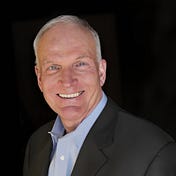
A father, surfer, swimmer, dog lover, hiker, and thinker, Andrew Houvouras lives in Cocoa Beach, Florida, and believes science and its many branches are gifts to humanity. Applied behavior analysis, the natural science of human behavior, has been the focus of Andrew’s career and interest for 30 years. Andrew works as the Director of Experiential Training at the Florida Institute of Technology, where he supervises students of behavior analysis attempting to hone their scientific, practitioner, and empathic skills.
Thank you so much for doing this with us! Before we start, our readers would love to “get to know you” a bit better. Can you tell us a bit about your childhood backstory?
I grew up in Palm Beach Gardens, Florida, as one of 5 boys in the family raised by my parents, who were both educators: My father was a principal, my mother, an art teacher. My parents are kind, decent people who always appealed to our morality and intellect. They raised us to believe in the importance of education, giving back to others, and loving your family. We played sports, spent lots of time at the beach and in our pool, and our home was kind of a central gathering place for our circle of friends. As we grew older and would go out, our parents would insist our friends stay over to prevent driving tired or under the influence, so on any given Saturday, there would be multiple boys, in a house already filled with boys, mulling around, playing basketball, swimming, eating, and talking sports, music, or girls. Our house was loud, lively, and full of love.
Can you please give us your favorite "Life Lesson Quote"? Can you share how that was relevant to you in your life?
One of my favorite quotes comes from B. F. Skinner, who said, "When you run into something interesting, drop everything else and study it." I think this quote reflects an enthusiasm for learning that has marked much of my life since I was 16 years old. I didn’t know the quote then, but I have always had a penchant for pursuing things I became interested in quite vigorously. Decades into behavior science, I am still amazed at the complexity of people and human behavior and am lucky to have a job that allows me to follow interesting ideas and people.
Is there a particular book, podcast, or film that made a significant impact on you? Can you share a story or explain why it resonated with you so much?
During the time I started studying behavioral science, the movie Awakenings came out. Not only was the acting extraordinary, but the story captured the humanity behind neurological and behavioral challenges. It reminded me that science and compassion are not opposites—they can coexist; they must coexist. At the time, I was working with individuals similar to those portrayed in the movie, and the agency I worked for brought Dr. Oliver Sacks, portrayed by Robin Williams in the movie, to a conference. I got to meet him and hear him speak. For someone who had read his books and loved the movie, to have these experiences at this juncture reinforced my decision to pursue behavior science.
Let’s now shift to the main part of our discussion. Let’s begin with a definition of terms so that each of us and our readers are on the same page. What exactly does being a good listener mean?
A good listener is one who attends to the verbal and nonverbal cues of others. The listener is primarily interested in the person with whom they are speaking, and the listening demonstrates unconditional positive regard for the person and their vantage point.
Why is effective listening such an important quality? Can you give a story or example to explain what you mean?
Listening costs nothing but may be the most effective way to build rapport, pair with reinforcement, and cultivate a relationship. The bulk of behavior in which human beings engage is verbal. By verbal behavior, I do mean speaking but verbal behavior is not limited to speaking. If it is true that most of our behavior is verbal, then it’s likely the most important behaviors we engage in are verbal—conversations, telling someone we love them, the songs we sing, the speeches we remember—they are reflective of verbal behavior. Imagine a world where each interaction you had was started by you or someone else saying, “I am here to listen.” I have a feeling that alone would make the world a better place, where we would be seeking understanding.
From your experience or perspective, what are some of the common barriers that hold someone back from being a good listener?
Being convinced one is right is probably the biggest obstacle. If you have to be right, you are likely going in judgmental and will be more concerned with what you are thinking or wanting to say rather than reflecting on what the person just said to you. Another barrier is starting statements with “No.” Even when we agree, we sometimes fail to convey our agreement or support. Affirming what someone says is a much better beginning to convey we are listening.
Can you please share a few practical techniques that have helped you become a more effective listener?
To be effective, good listening starts with removing our biases. We then attend to what the person is saying but also how they are behaving. I would argue we listen better as we observe more. Once the person makes their point, we deliver a summary statement, something to the effect of, “What you seem to be saying is _____.” This serves important functions: It confirms what the person was saying and demonstrates the willingness to listen. I have always found people feel valued when they know their words have been received accurately.
Here is the central question of our discussion. What are five ways that listening effectively can help someone succeed personally and professionally? If you can, please share a story or an example for each.
Listening demonstrates empathy. Listening is a way to say to another person, “You matter.” It moves us away from being advisors. In my book, I talk about an incident with a young man named Silas who had just had a very severe behavioral episode. When he and I sat down shortly thereafter, he was calmed down not by what I said, but what I didn’t say: I listened. I was present. It made all the difference.
Listening allows you to understand the preferences of a person. There are many ways to help people. People would not approach others if they did not believe their interaction could be helpful. There are oftentimes many potential solutions. The client may not know the solution, but being allowed to select the intervention increases choice, which all of us value.
Good listeners are curious, not judgmental (nod to Ted Lasso). Years ago, I was at a meeting for a young man who was falling behind academically as well as regularly threatening and fighting. If he wasn’t getting into altercations, he was walking off campus and engaging in any number of less-than-productive actions. Rather than dictate a plan, we brought him in and asked him to tell us about his passions: He talked to us for minutes on end about his love of art and aptitude with computers, two things none of us knew. We designed a program to allow him to do some courses online and start his day with an art class, and he never again had a problem in school.
Listening may condition the listener as a reinforcer. There have been numerous times in my career where certain people (at times, me, but not always) seemed to have that “it” and their time with clients’ challenges are minimal. As I have studied human behavior, I often notice those people have no magic abilities, no special qualities, rather, they are often astute listeners.
Listening builds trust. When people know they are heard, they are more likely to be open, honest, and collaborative. Teams that practice active listening will almost always communicate more effectively and perform with greater precision.
You are a person of great influence. If you could inspire a movement that would bring the most amount of good to the most amount of people, what would that be?
I would inspire a movement centered on quietly connecting—teaching people to slow down, observe, and listen before they speak. In a world filled with noise, clickbait, and instant reactions, cultivating the ability to pause and attend could transform relationships, workplaces, and entire communities. Listening, after all, is the foundation of understanding, and understanding is where change begins.
Is there a person in the world whom you would love to have lunch with, and why? Maybe we can tag them and see what happens!
Lera Boroditsky, PhD. She gave a brilliant TEDx talk, and to spend time talking with someone as intelligent as her about listening and language would be fascinating.
How can our readers continue to follow your work online?
I am writing on Substack and will be sharing research on ResearchGate. I am hoping to launch a podcast, Trending, in the very near future.
Thank you so much for sharing these important insights. We wish you continued success and good health!
About the Interviewer: Douglas E. Noll, JD, MA was born nearly blind, crippled with club feet, partially deaf, and left-handed. He overcame all of these obstacles to become a successful civil trial lawyer. In 2000, he abandoned his law practice to become a peacemaker. His calling is to serve humanity, and he executes his calling at many levels. He is an award-winning author, teacher, and trainer. He is a highly experienced mediator. Doug’s work carries him from international work to helping people resolve deep interpersonal and ideological conflicts. Doug teaches his innovative de-escalation skill that calms any angry person in 90 seconds or less. With Laurel Kaufer, Doug founded Prison of Peace in 2009. The Prison of Peace project trains life and long terms incarcerated people to be powerful peacemakers and mediators. He has been deeply moved by inmates who have learned and applied deep, empathic listening skills, leadership skills, and problem-solving skills to reduce violence in their prison communities. Their dedication to learning, improving, and serving their communities motivates him to expand the principles of Prison of Peace so that every human wanting to learn the skills of peace may do so. Doug’s awards include California Lawyer Magazine Lawyer of the Year, Best Lawyers in America Lawyer of the Year, Purpose Prize Fellow, International Academy of Mediators Syd Leezak Award of Excellence, National Academy of Distinguished Neutrals Neutral of the Year. His four books have won a number of awards and commendations. Doug’s podcast, Listen With Leaders, is now accepting guests. Click on this link to learn more and apply.