Public schools aren’t created equal. Schools that serve mostly students of color receive $23 billion less in state and local funding each school year.
Tech
Alix Guerrier of DonorsChoose on Bridging Educational Inequity, Classroom Data, and the Enduring Power of Mentorship
The DonorsChoose CEO and veteran educator discusses how data-driven transparency can help bridge racial and economic divides in modern public education.
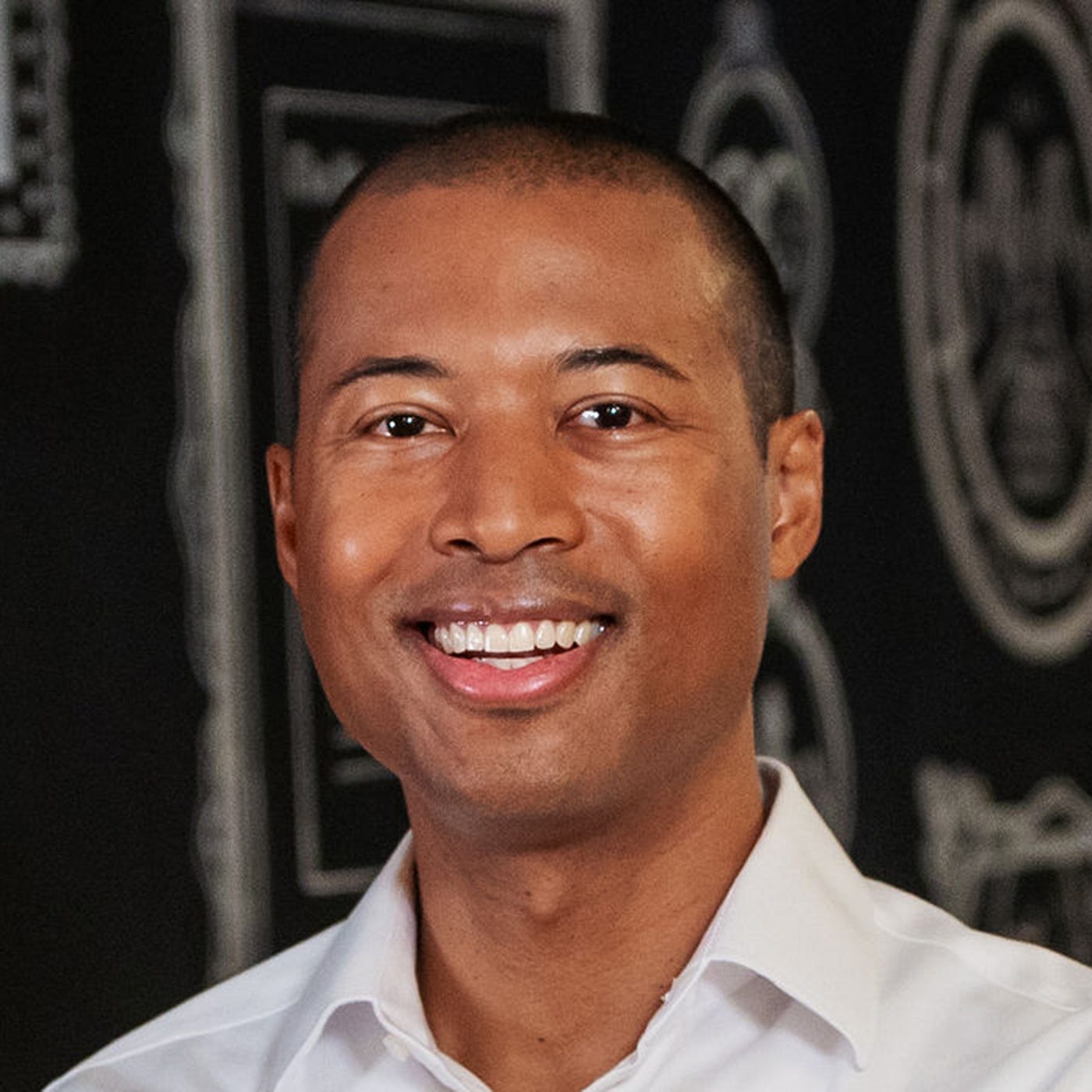
In recent years, Big Tech has gotten a bad rep. But of course, many tech companies are doing important work making monumental positive changes to society, health, and the environment. To highlight these, we started a new interview series about “Technology Making An Important Positive Social Impact”. We are interviewing leaders of tech companies who are creating or have created a tech product that is helping to make a positive change in people’s lives or the environment. In this particular installment, we are talking to leaders of Education Technology companies, who share how their tech is helping to improve our educational system. As a part of this series, I had the pleasure of interviewing Alix Guerrier.
Alix leads DonorsChoose, a nonprofit website that enables anyone to help a classroom in need. Prior to DonorsChoose, he co-founded an educational technology company, Learn Zillion (acquired in 2019) and served as CEO of the philanthropic platform Global Giving. His previous work experience includes consulting in McKinsey & Company’s education practice, teaching middle school and high school mathematics, and working in the public finance department at Citigroup. His awards include the New Schools Venture Fund Entrepreneur of the Year, Fast Company’s Most Innovative Education Company, DC’s Top 40 Entrepreneurs Under 40, Washington Post top workplaces, and Nonprofit Times Power & Influence Top 50. Alix has a Masters in Education from the Stanford University School of Education and an MBA from Stanford’s Graduate School of Business. He graduated from Harvard University with an AB in physics and is a proud product of New Haven Public Schools. A first-generation American and child of parents from Haiti and rural Brazil, he lives in Washington, D.C., with his wife and two daughters.
Thank you so much for joining us in this interview series. Before we dive in, our readers would love to learn a bit more about you. Can you tell us a bit about your childhood backstory and how you grew up?
My family has prioritized education for generations; in fact, my parents’ journey from their countries of origin (Haiti and Brazil, respectively) to the United States were both driven by their academic pursuits. At the same time, growing up, I wasn’t a match for the traditional picture of academic success. The fact that English was my second language (my first was Haitian Creole), my identity as a multiracial Black American, and my family’s nationality and citizenship status all meant that I faced added structural and interpersonal barriers.
Can you share the most interesting story that happened to you since you began your career?
I became a math teacher after I did investment banking, and I found teaching to be by far the more challenging! It remains the toughest job I’ve had, and one of the most interesting aspects of that time to me is how applicable teaching is to so many other professional roles. Since leaving the classroom, I’ve been a consultant, a start-up founder, a nonprofit leader, an advisor — in each of these roles, I find myself drawing from a collection of practices that I started building while I was in the classroom. Fundamentally, teaching is a job in which your responsibility is helping others succeed in doing something that challenges them. That is a useful orientation to have in many other roles.
None of us are able to achieve success without some help along the way. Is there a particular person who you are grateful towards who helped get you to where you are? Can you share a story about that?
Byron Auguste, the first Black director at McKinsey, was an incredible mentor to me. He created opportunities explicitly to help me develop within the firm, and I still emulate his model of leadership and excellence.
Can you please give us your favorite “Life Lesson Quote”? Can you share how that was relevant to you in your life?
“Communities are built of people who feel they are part of something that is bigger than themselves: a shared goal or enterprise, like righting a wrong, or building a road, or raising children, or living honorably, or worshiping a god. To build community requires only the ability to see value in others: to look at them and see a potential partner in one’s enterprise.” ― Suzanne Goldsmith, A City Year: On the Streets and in the Neighborhoods with Twelve Young Community Service Volunteers
I was introduced to this quote by my co-founder at the ed-tech company I started in 2011. The quote captures what I think is special about the communities I’ve been privileged to lead. From math classrooms to consulting to leading nonprofits, I’ve seen that to achieve real change, no one can’t do it alone — the work of community-members, funders, researchers, institutions, and social good organizations combined propels real progress.
Let’s now shift to the main part of our discussion about the tech tools that you are helping to create that can make a positive social impact on our educational systems. To begin, what problems are you aiming to solve?
Public schools aren’t created equal. Schools that serve mostly students of color receive $23 billion less in state and local funding each school year. This inequity is reflected in teacher out-of-pocket spending; teachers working at schools in lower income communities and with more students of color reach into their own wallet more to buy classroom materials. Our DonorsChoose platform gives members of the public a transparent, accountable way to bridge that inequity.
How do you think your technology can address this?
Every time a teacher submits a project to DonorsChoose, we receive a collection of data points on that classroom: number of students, subject area, items requested, teacher demographics, and more — not to mention a whole essay describing those students’ needs. We use this data to uncover and shout out trends in what teachers need and why, and what that means for the people and groups trying to build a more equitable education system.
We also integrate national data into our platform to help donors and institutional partners target their support where it will make the biggest impact. By highlighting schools that have been historically underfunded due to racial and economic inequity, we’ve made it easy for anyone to help us move the needle towards equity — whether they have $5 or $5 million to give.
Can you tell us the backstory about what inspired you to originally feel passionate about education?
Like many educators, I was inspired by a teacher that I had growing up: Mr. Moore. Throughout my K–12 education at New Haven Public Schools, the majority of my classmates were Black or Latino, yet among all the teachers at the school, across my entire primary and secondary educational career, Mr. Moore was one of just four or five Black teachers I was exposed to.
Mr. Moore was my teacher for several years through the Gifted and Talented program, and there was something special about having a Black teacher at the front of that class. Not only was he the best at connecting with us students, he was also one of the few teachers who my parents could connect with. He helped me find opportunities like “nerd camp” — a free summer program at a nearby university doing math and science with other similar kids — which proved to be really transformational to me. He related to me in a way that focused on my potential, and didn’t take my identity as a barrier.
A decade and a half later, I purposefully emulated Mr. Moore — how he made me feel, how he encouraged me — when I became a teacher.
How do you envision the landscape of education evolving over the next decade, and how does your technology fit into that future?
DonorsChoose has always embraced technology as a fuel for social good; crowdfunding wasn’t even a word when we launched. Teachers have similarly embraced tech advancements, and their resource requests over the past 24 years show that progress within education.
Right now, there are a lot of conversations about the potential benefits and harms of AI for both education and technology overall. Wherever you stand, it’s clear that AI is a remarkably powerful tool that isn’t going away — teachers and students are already engaging with it on a daily basis. We need to listen to the educators on the frontlines of this progress and make sure they’re a part of our national conversation about AI so that we can create a just and equitable future for our children.
In the realm of EdTech, there’s often data collection involved. How do you ensure the ethical handling of user data, especially when it concerns students?
Security is of the utmost importance to all of us at DonorsChoose, and we’ve developed our measures in consultation with experts. In addition to best-in-class online site and security practices, we don’t track any student data and have rigorous screening in place to make sure identifying student information is never present on our site. We’re laser focused on building trust and addressing threats to the integrity of our mission.
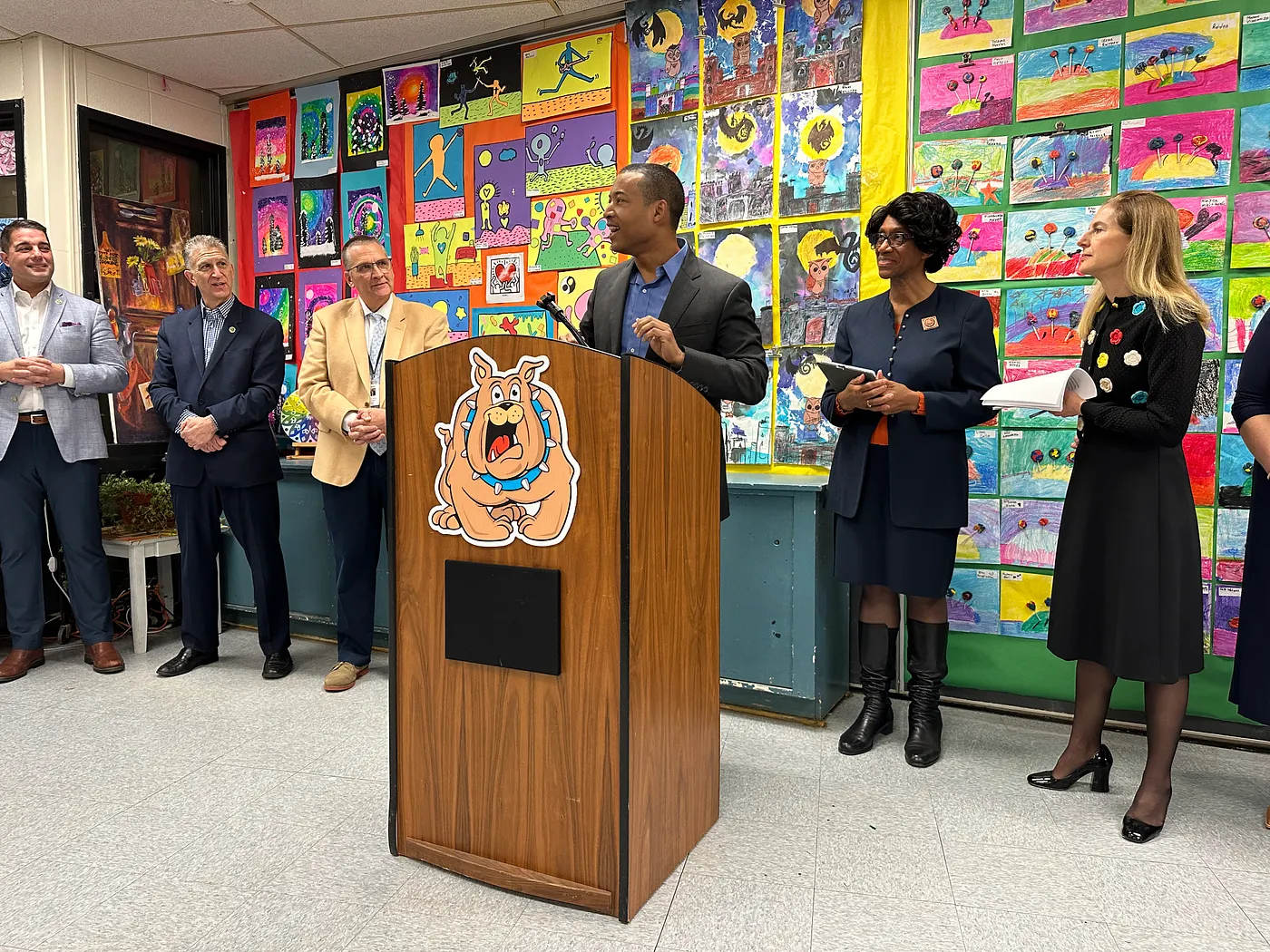
Based on your experience and success, can you please share “Five things you need to know to successfully create technology that can make a positive social impact”?
- Time is the most valuable currency. In most sectors, the most useful value that a product can offer is saving its users’ time. This is particularly true in education and other sectors where people are working hard to improve the lives and opportunities of others, often with minimal resources.
- It doesn’t need to work in theory if it works in practice. Theories of change are common in the social sector, and it can be a useful exercise for a team to think through, logically, how positive impact might be achieved. However, theories often don’t play out as planned, and sometimes a huge difference can be made even if we don’t exactly understand how it will happen ahead of time. An example is direct philanthropy, where decision making is done entirely at the grassroots level, with as little direction from founders as possible.
- The value of every enterprise ultimately comes down to its people. If you’re building a company, spend as much time on the team as your product. Over time, this balance becomes only more and more skewed toward the team.
- Don’t neglect the processes. Most technology, even when it seems like magic, still requires a fair amount of human-powered work. These workflows should be a part of the design process for a tech product.
- Most problems are overconstrained. This is especially true for social enterprises — a product has to deliver value to customers, have a price they can afford, be sustainable to scale, and achieve a positive impact. Many great ideas will fail at least one of these requirements even when they’re exceptional at the others. This means that entrepreneurs need to be willing to shift often even when an idea seems to be working quite well with the exception of one constraint that simply can’t be met.
How can our readers further follow your work online?
https://www.linkedin.com/in/alixguerrier and https://www.donorschoose.org/
Thank you so much for joining us. This was very inspirational, and we wish you continued success in your important work.
AM
Written by
Authority Magazine Editorial Staff
Editorial Desk · Authority MagazineThe Authority Magazine Editorial Desk produces, verifies, and edits long-form primary-source interviews with executives, innovators, clinicians, creators, and social impact leaders across Business, Tech, Pop Culture, Wellness, and Social Impact.

Published inAuthority MagazineTop Lessons, Top Authorities · 42K Followers
Exclusive, curated interviews with the leaders and changemakers shaping tomorrow. Leadership lessons, industry deep dives, and executive profiles.